


Wild Camping in Wales 2026: The Rules & 8 Best Spots
Wild Camping in Wales 2026: Rules, Best Spots and Essential Gear
Wild camping in Wales is not yet a legal right — but it is widely practised, informally tolerated in the right locations and deeply embedded in the mountain traditions of Welsh walking. Eryri (Snowdonia) and Bannau Brycheiniog (Brecon Beacons) offer wild camping terrain that rivals anywhere in Britain.
This guide covers the current legal position in 2026, the eight best wild camping locations in Wales, Leave No Trace principles and the gear you actually need for Welsh mountain conditions.
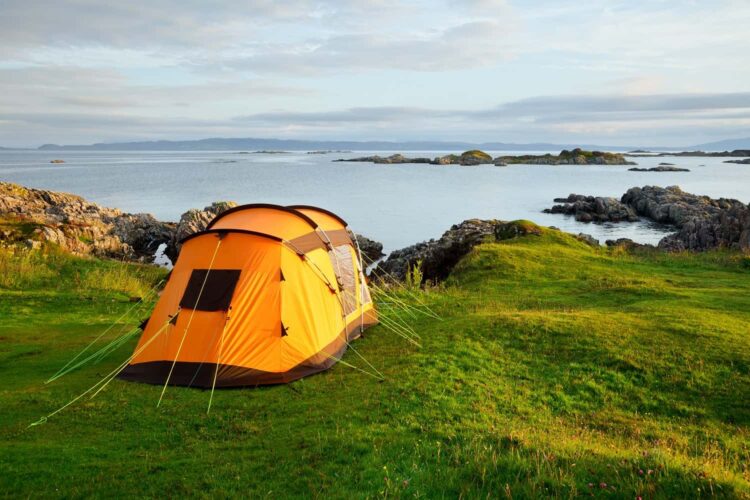
Is Wild Camping Legal in Wales? The 2026 Position
Wild camping — camping on unenclosed land without landowner permission — is not a legal right in England and Wales. This distinguishes Wales from Scotland, where the Land Reform (Scotland) Act 2003 grants a statutory right to responsible wild camping on most unenclosed land. In Wales, wild camping without permission is technically trespass; however, trespass is a civil rather than criminal matter in England and Wales, making prosecution extremely rare in the right locations.
The Wild Camping (Wales) Bill: A Wild Camping Bill granting statutory access rights on open land in Wales has been introduced to the Senedd with cross-party support. As of early 2026, the Bill is progressing through committee stages. If passed, it would extend rights broadly similar to Scotland’s to open mountain and moorland in Wales. Check senedd.wales for the current legislative status — this may have changed since publication.
De facto tolerated locations in 2026: Wild camping is culturally accepted and practically tolerated at higher altitudes on open mountain land in Eryri (Snowdonia) National Park — above approximately 450–500 metres on unenclosed mountain. The same applies on open ridgelines in Bannau Brycheiniog (Brecon Beacons) National Park, away from farmland and visitor infrastructure. The National Park Authorities’ position is managed tolerance rather than active enforcement, provided campers follow Leave No Trace principles. In Pembrokeshire Coast National Park, wild camping is not tolerated — use the excellent network of designated campsites instead.
Leave No Trace: Wild Camping Rules for Wales
The continuation of de facto tolerance in Eryri and the Brecon Beacons depends entirely on wild campers behaving responsibly. These principles are not optional — they are why wild camping remains tolerated in Wales at all.
Arrive late, leave early. Pitch after 7pm and leave before 8am. Avoid setting up in visible locations during daylight hours in busy seasons.
Two nights maximum in any one location. Moving on preserves the landscape and avoids creating worn pitch areas.
Pack out everything. All food wrappers, scraps, cans, bottles and waste. Leave no trace of your presence.
No campfires — ever. Open fires cause lasting damage to mountain vegetation and soil communities that can remain visible for decades. Use a lightweight camp stove for all cooking. This applies in all conditions, in all seasons.
Human waste. Use a small trowel to dig a cat hole 15–20cm deep, at least 50 metres from any watercourse, path or camping area. Pack out all other waste including sanitary products.
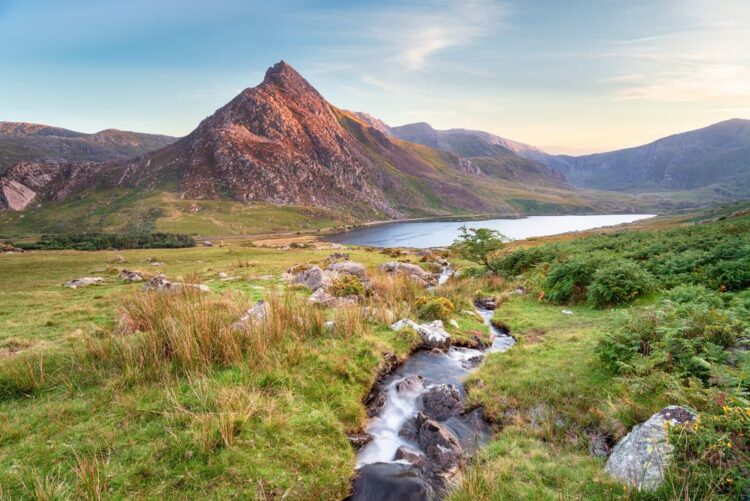
8 Best Wild Camping Spots in Wales 2026
1. Llyn y Gadair, Cadair Idris, Southern Eryri
Altitude: ~730m | Type: Glacial lake cirque | Access: 2–3 hour ascent from Minffordd car park | Level: Intermediate
The cirque beneath Cadair Idris (Cadair meaning “Giant’s Chair” in Welsh) contains Llyn y Gadair — a black glacial lake enclosed by vertical crags on three sides. One of the most dramatic and atmospheric wild camping positions in Wales. The Welsh legend that anyone who spends a night on Cadair Idris returns either a poet or a madman makes camping here carry a particular resonance. Views at sunrise across Cardigan Bay to the Llŷn Peninsula are exceptional. A quieter, less-trafficked location than the Snowdon area.
2. Glyder Ridge Above Cwm Idwal, Eryri
Altitude: ~900m | Type: High mountain ridge | Access: 2–3 hour ascent from Ogwen Valley | Level: Intermediate–Advanced
The high ridge connecting Glyder Fach and Glyder Fawr provides some of the finest high-level wild camping in Wales — a lunar landscape of fractured quartzite with views north to Anglesey and the sea, south to Cadair Idris and Cardigan Bay. Flat pitching sites are limited and must be found carefully. The effort is richly rewarded at sunset and sunrise. Advanced navigation skills recommended in poor visibility.
3. Carneddau Plateau, Northern Eryri
Altitude: 700–1,000m | Type: High moorland plateau | Access: 2–3 hour ascent from Bethesda or Conwy Valley | Level: Intermediate
The most underestimated wild camping terrain in Wales. Unlike the sharper ridges of Yr Wyddfa and the Glyders, the Carneddau offer genuine wild plateau — miles of high ground above 800m with numerous small mountain lakes and far fewer walkers than anywhere in the Snowdon area. The semi-feral Carneddau ponies (a herd that has roamed the plateau for thousands of years) add a remarkable wildlife dimension. Excellent flat pitching on short mountain turf between the lakes.
4. Pen y Fan Summit Ridge, Bannau Brycheiniog (Brecon Beacons)
Altitude: ~850m | Type: Sandstone ridge | Access: 1.5–2 hour ascent from Pont ar Daf or Neuadd | Level: Beginner–Intermediate
Pen y Fan (886m) is the highest peak in southern Britain and the most accessible wild camping summit in Wales. A broad, flat-topped summit ridge with views in all directions. The International Dark Sky Reserve status means clear nights offer some of the finest stargazing in Wales. The Brecon Beacons plateau can be boggy — bring a sleeping mat with a minimum R-value of 3 and test ground stability before pitching.
5. Black Mountain — Llyn y Fan Fach, Western Beacons
Altitude: 500–800m | Type: Moorland escarpment | Access: 1.5–2 hour approach from Llanddeusant | Level: Intermediate
The wild western end of the Brecon Beacons contains Llyn y Fan Fach and Llyn y Fan Fawr — two of the most remote and beautiful glacial lakes in Wales, associated with the medieval Welsh legend of the Lady of the Lake. Wild camping on the escarpment above gives access to the most remote-feeling landscape in South Wales, with far fewer people than Pen y Fan. The most peaceful dark sky wild camping in the Beacons.
6. Rhosydd Quarry, Cwmorthin, Blaenau Ffestiniog, Eryri
Altitude: ~450m | Type: Industrial heritage landscape | Access: 1 hour walk from Tanygrisiau | Level: Beginner–Intermediate
The most atmospheric and unusual wild camping location in Wales. The ruins of Rhosydd Slate Quarry above Cwmorthin — a hidden hanging valley above Blaenau Ffestiniog — contain remarkable Victorian industrial archaeology: derelict barracks, a flooded quarry pool of extraordinary blue-green colour and near-complete silence. The lower altitude means this is accessible in conditions that preclude higher mountain camping. Nothing else in Wales offers this combination of industrial heritage and wild overnight experience.
7. Pumlumon (Plynlimon) Summit, Cambrian Mountains, Mid Wales
Altitude: 752m | Type: Moorland summit | Access: 2 hour walk from Eisteddfa Gurig | Level: Intermediate
Pumlumon Fawr is the highest point of the Cambrian Mountains and the source of both the River Severn and the River Wye — the two rivers rising within metres of each other on the same boggy summit plateau. No other summit in Wales is more remote from a town or road. Almost zero light pollution in any direction. The darkest accessible wild camping location in Britain.
8. Preseli Hills, Pembrokeshire — By Permission Only
Altitude: 300–400m | Type: Ancient moorland | Access: Various points from the B4329 | Level: Beginner
The source of the Stonehenge bluestones — transported 240 miles to Salisbury Plain approximately 5,000 years ago — and the most historically charged camping landscape in Wales. Carn Ingli above Newport Pembrokeshire, Foeldrigarn hillfort and Carn Meini (where the bluestones were quarried) create an extraordinary overnight location. Wild camping here requires landowner permission — the Preseli Hills are not in the de facto tolerated mountain zone. Contact Pembrokeshire Coast National Park for guidance on how to arrange access.
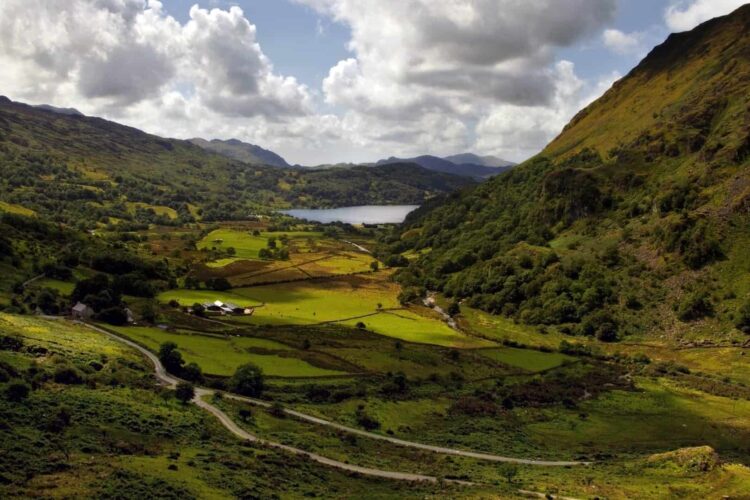
Wild Camping Gear Checklist for Wales
Welsh mountain weather is notoriously changeable at any time of year. This is the minimum gear for a safe wild camp in Welsh conditions:
Tent:
A quality three-season mountain tent — geodesic or semi-geodesic — with proven wind resistance. Minimum hydrostatic head 3,000mm; 5,000mm+ for ridge camping. Not a festival tent.
Sleeping bag:
Rated to at least 0°C for summer high-altitude camping; -5°C or lower for spring, autumn and ridgeline locations. Mountains are significantly colder than valleys after dark.
Sleeping mat:
R-value of at least 3 — mountain ground is cold. Inflatable mats offer the best weight-to-warmth ratio for wild camping.
Navigation:
1:25,000 OS map and compass. Do not rely solely on a phone — batteries fail, screens don’t work in gloves, and mobile signal is non-existent on most Welsh ridges.
Water:
A water filter or purification tablets. Most Welsh mountain lakes and streams are suitable for filtering — avoid sources below obvious paths or grazing land.
Other essentials:
Lightweight camp stove and fuel; head torch with spare batteries; waterproof jacket and trousers (10,000mm HH minimum); small trowel; basic first aid kit; emergency shelter.
Frequently Asked Questions: Wild Camping in Wales
Is wild camping allowed in Wales?
Wild camping is not currently a legal right in Wales — it requires landowner permission and is technically trespass without it. However, it is de facto tolerated on open mountain land above approximately 450–500 metres in Eryri (Snowdonia) National Park and on open ridgelines in Bannau Brycheiniog (Brecon Beacons) National Park, provided Leave No Trace principles are strictly followed. A Wild Camping (Wales) Bill is progressing through the Senedd in 2026 — check senedd.wales for the current status. In Pembrokeshire Coast National Park, wild camping is not tolerated; use designated campsites instead.
Where are the best wild camping spots in Wales?
The best wild camping in Wales is in Eryri (Snowdonia) — particularly the Carneddau plateau (most peaceful), the Glyder ridge above Cwm Idwal (most dramatic) and the Cadair Idris cirque (most atmospheric and historically resonant). In Bannau Brycheiniog (Brecon Beacons), the Pen y Fan summit ridge and the Black Mountain above Llyn y Fan Fach are outstanding. For Mid Wales, Pumlumon (Plynlimon) is the most remote and darkest wild camping location in the country. Rhosydd Quarry above Blaenau Ffestiniog offers the most historically distinctive wild camping experience.
Can you have a campfire when wild camping in Wales?
No. Campfires are not acceptable when wild camping in Wales. Open fires cause long-lasting damage to mountain vegetation and soil communities — fire scars on Welsh mountain land can remain visible for decades. All National Park Authorities and mountain safety organisations explicitly advise against campfires during wild camping. Use a lightweight camp stove for all cooking without exception. This applies in all weather conditions, in all seasons.
What gear do I need for wild camping in Wales?
The essentials: a three-season mountain tent (not a festival tent) with HH 5,000mm+ rating; a sleeping bag rated to 0°C minimum for summer and -5°C or lower for spring and autumn; an insulating sleeping mat (R-value 3+); a reliable camp stove and fuel; a water filter or purification tablets; a 1:25,000 OS map and compass; a head torch with spare batteries; a waterproof jacket and trousers (10,000mm+ HH); and a small trowel for human waste disposal. Always pack more insulation than you think you need — Welsh ridge temperatures drop significantly below valley temperatures after dark.
Is wild camping free in Wales?
Wild camping on open mountain above the de facto tolerated altitude (approximately 450–500m in Eryri and the Brecon Beacons) is free, subject to Leave No Trace principles. There is no charge for wild camping in the tolerated zones. Landowner-permission camping on private or agricultural land would typically involve a small fee agreed directly with the landowner. Designated campsites provide legal alternatives from approximately £10 per person per night for the most basic sites in Eryri.

Nick, your trusted guide to Wales travel and exploration, shares a deep passion for this enchanting land. With years of exploration, Nick offers expert insights into the best of Wales. Join him on a journey through its captivating history, culture, and hidden gems, as he inspires you to create unforgettable Welsh travel experiences.
Planning a trip to Wales?
Find the perfect holiday cottage for your Welsh adventure.


