


Water Sports in Wales 2026: Surfing, Kayaking, Paddleboarding, White Water and Wild Swimming
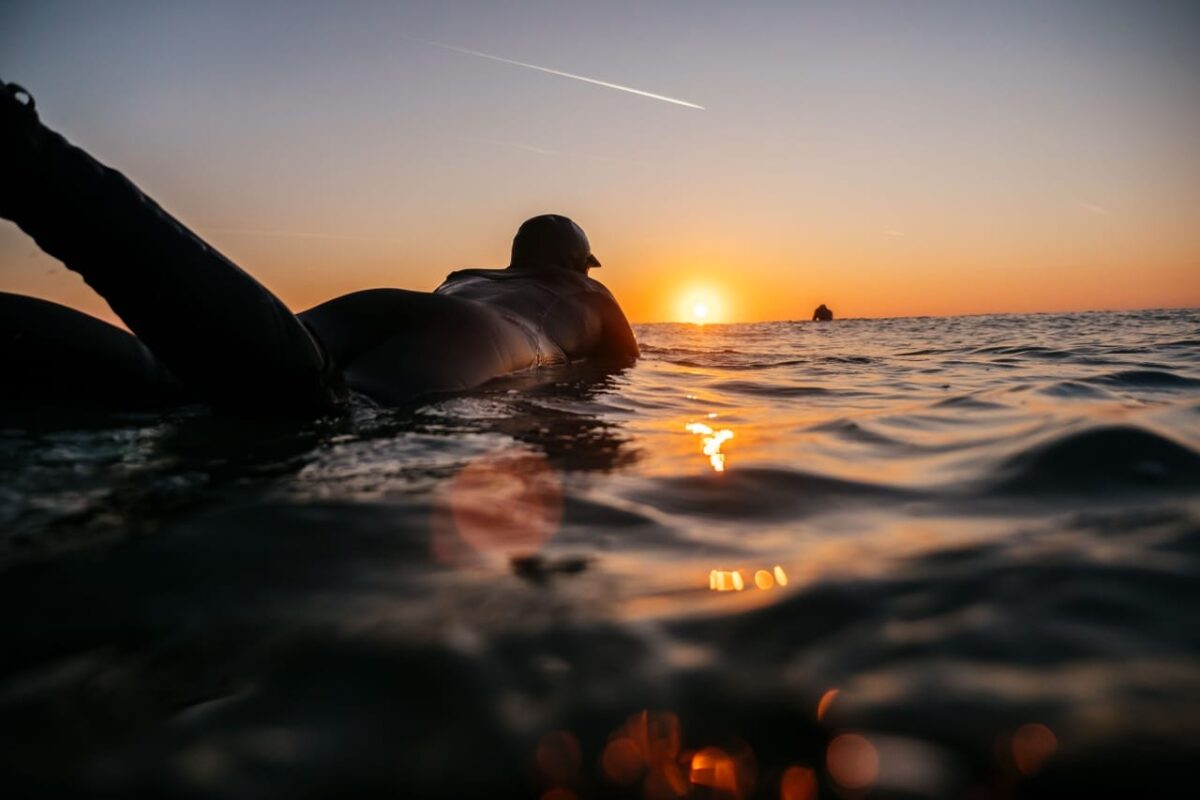
Wales has 1,200 miles of coastline, the only Olympic-grade white-water course in the UK, Europe’s largest resident bottlenose dolphin population and surf beaches that face directly into Atlantic swells.
This guide covers every major water sport available in Wales in 2026 — surfing, sea kayaking, paddleboarding, white-water rafting, wild swimming and coasteering — with specific locations, operators and planning detail for each.
Surfing in Wales
Wales has 65 surfable beaches — and several that rank among the best in Britain for consistency and power. The best conditions occur September to March when Atlantic low-pressure systems push clean swell to the coast. Summer is gentler and better for lessons.
Llangennith, Gower (SA3 1HU)
Overview: Wales’s most popular surf beach — a 4-mile south-southwest facing bay that picks up Atlantic swell reliably. The WSF has used the beach for international competition.
Opening Times & Prices: The beach is accessible 24/7. Parking is primarily at the private Hillend Campsite car park (a 200m walk through the dunes to the beach) and typically costs £3 per day. Overnight parking is not permitted.
Operators: Surf hire and lessons are available from PJ’s Surf Shop in the village year-round. Several other surf schools operate directly on the beach, including Llangennith Surf School and South Wales Surf Lessons, with group sessions averaging £30–£35 for 2 to 3 hours.
Visitor Info: Toilets and basic refreshments are located at the campsite rather than directly on the sand. The beach is dog-friendly year-round, making it a favorite for walkers as well as surfers.
Freshwater West, Pembrokeshire (SA71 5HS)
Overview: The most powerful surf beach in Wales — a remote, exposed bay facing directly southwest into the open Atlantic. Consistent beach break with strong rip currents. No lifeguard patrol. Suitable for experienced surfers only — beginners should go to Newgale instead.
Opening Times & Prices: Open 24/7. There are two small car parks (the main one is near the south end) that are completely free of charge. Roadside parking is possible but visitors must be careful not to block passing places on the narrow country lanes.
Operators: Café Môr, a multi-award-winning street food vendor operating out of a renovated fishing boat, is usually parked in the southern car park from spring to autumn. National Trust public toilets are also located here.
Visitor Info: Because of its rural nature, there is no village backing the beach. Visitors should be aware that it is a famous filming location (notably for Harry Potter and Robin Hood), which can draw crowds on sunny weekends despite its remote location.
Newgale, Pembrokeshire (SA62 6AS)
Overview: A 2-mile south-facing beach with a surf school operating on site and consistent small-to-medium waves in most conditions. The best beach for first lessons in West Wales. Lifeguarded in summer. Café and car park behind the beach.
Opening Times & Prices: Accessible 24/7. There are three car parks situated along the two-mile stretch of the beach; two of these operate on a Pay & Display basis.
Operators: Newsurf is located right on the beachfront for lessons and gear hire, alongside the Outer Reef Surf School. The northern end of the beach features a cluster of amenities, including a cafe, a surf shop, and the Duke of Edinburgh Inn.
Visitor Info: Access to the sand requires crossing a steep pebble bank, which can be challenging for wheelchairs and buggies. Dog restrictions apply to the middle third of the beach between May 1st and September 30th. Lifeguards are generally on duty from June through September.
Rhosneigr, Anglesey (LL64 5QA)
Overview: The most consistent surf spot in North Wales — multiple breaks within walking distance of each other. Also used for kitesurfing and windsurfing. The beach faces west-northwest across Caernarfon Bay. Best in autumn and winter on northwesterly swells.
Opening Times & Prices: Open 24/7. There is Pay & Display parking in the village (such as on Awel-Y-Mor and the High Street), which is just a few minutes’ walk from the sand.
Operators: The village is very well-equipped for watersports, with Funsport offering windsurf, kitesurf, and surf hire. There are plenty of food and drink options nearby, including Café Notos, the Surf Cafe, and the highly-rated Oystercatcher restaurant just down the road.
Visitor Info: There is no lifeguard cover at this beach. However, dogs are welcome year-round. The shallow, clear waters of Traeth Crigyll (the main beach) make it an excellent spot for paddle boarding on calmer days.
Abereiddi, Pembrokeshire (SA62 6DT)
Overview: A sheltered pebbly cove with consistent small waves — better for body-boarding and beginners on smaller days. Adjacent to the Blue Lagoon (flooded slate quarry) — one of the most distinctive spots on the Pembrokeshire coast.
Opening Times & Prices: Accessible 24/7. There is a informal parking area situated directly above the pebble beach. It costs £4 for the day (often cash only), though it is sometimes free during the quieter winter months.
Operators: Facilities are very minimal. There are seasonal public toilets, but no permanent cafes directly on the beach (though an ice cream van frequently visits in the summer). The nearest substantial food option is The Shed Bistro, a short drive or coastal walk away in Porthgain.
Visitor Info: The car park has a very uneven, natural stone surface, so visitors should drive carefully. The Blue Lagoon is an easy 5-minute walk along the coastal path from the car park. The area is highly popular for Coasteering and wild swimming, but the paths leading to the quarry have steep drops, so caution is advised.
For a full breakdown of all surf beaches and seasonal conditions, see Surfing Beaches in Wales.
Sea Kayaking in Wales
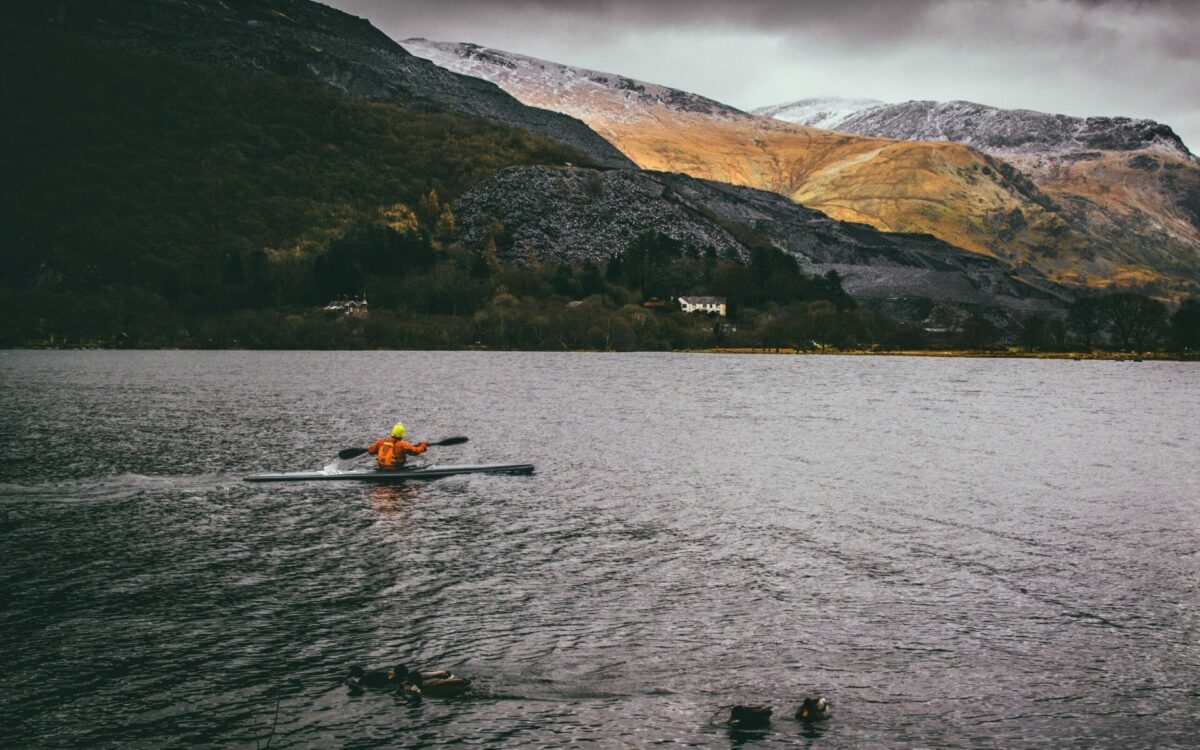
Wales’s combination of sheltered sea caves, tidal races, offshore islands and diverse wildlife makes Pembrokeshire and the Llŷn Peninsula two of the finest sea kayaking destinations in Europe.
Pembrokeshire Coast (St Davids to Marloes)
Overview: The Pembrokeshire coast between St Davids and the Marloes Peninsula is the premier sea kayaking area — sea caves at St Govan’s Head (SA71 5DL), tidal races off Ramsey Island and the possibility of paddling alongside grey seals on Skomer.
Opening Times & Prices: The coastline is accessible to independent paddlers year-round, but commercial guided tours generally run from Easter through October (typically operating from 9:00 AM to 5:00 PM). A half-day (approx. 3.5 hours) guided sea kayaking session costs around £65 per adult.
Operators: The leading, verified sea kayaking specialists currently operating out of the St Davids area are TYF Adventure (offering distinct ‘Discovery’ and adult-focused ‘Explorer’ sea kayak sessions) and Preseli Venture (specializing in sustainable, guided sea kayak tours to remote coves and sea caves).
Visitor Info: Essential gear like kayaks, heavy-duty wetsuits, helmets, and buoyancy aids are provided by the operators. To protect the resident grey seal pup population (especially in late summer/autumn), all paddlers must adhere strictly to the Pembrokeshire Marine Code, keeping a minimum distance of 50 meters from wildlife.
Llŷn Peninsula (Aberdaron to Bardsey Island)
Overview: The Llŷn Peninsula offers less-frequented sea kayaking along a coastline with very few roads — remote coves, sea stacks and clear water. The crossing to Bardsey Island (Ynys Enlli) from Aberdaron (LL53 8BE) is a serious undertaking on a tidal passage — suitable for experienced sea kayakers only.
Opening Times & Prices: Launch times are dictated entirely by the tides rather than business hours. Parking at the National Trust car park at Porth Meudwy (the safest launch point for Bardsey) is £5 for the day. For advanced paddlers booking multi-day coaching in this area, expect to pay £180–£200+ for a 2-day itinerary.
Operators: Because Bardsey Sound involves treacherous tidal races, there are no casual “turn up and hire” beachfront operators here. For the serious crossing, highly experienced among you, expedition companies like Coastal Spirit or Sea Kayaking Anglesey run advanced tidal passage courses in the region. Alternatively, for complete beginners, the National Trust occasionally runs short, highly sheltered kayaking taster sessions directly off Aberdaron beach during the peak summer weeks.
Visitor Info: Independent paddlers attempting the Bardsey crossing must meticulously consult local tidal charts, as the Sound’s currents can exceed 6 knots and create dangerous standing waves. If landing on Bardsey Island, kayakers should be aware that it is a protected nature reserve with very limited facilities (a compost toilet and a small seasonal cafe), and dogs are strictly prohibited anywhere on the island.
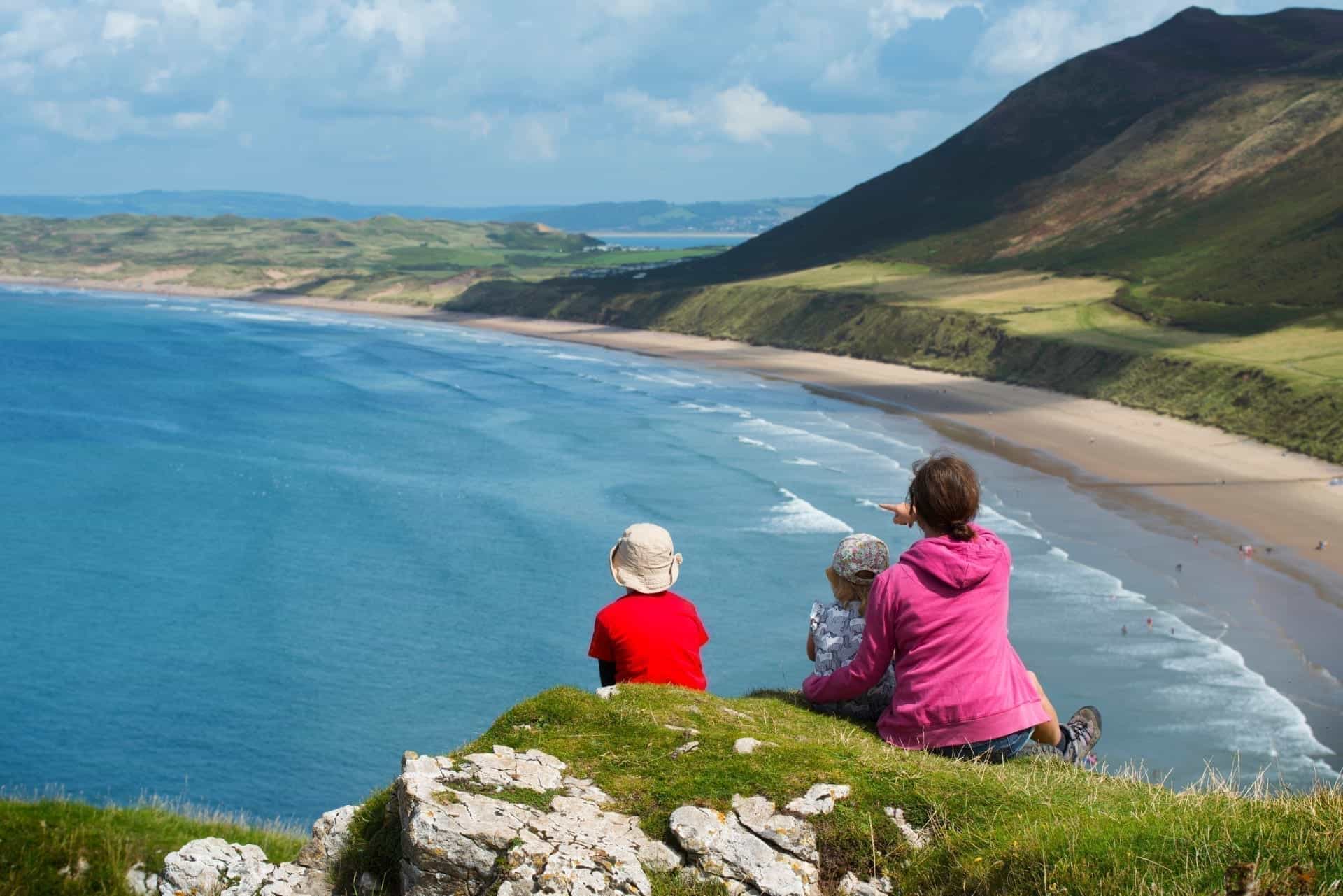
Cardigan Bay (New Quay to Aberaeron)
Overview: Cardigan Bay between New Quay (SA45 9PT) and Aberaeron (SA46 0BT) offers calmer, sheltered paddling in the presence of Europe’s largest resident bottlenose dolphin population.
Opening Times & Prices: Kayaking bases generally operate from 9:30 AM to 5:00 PM between April and October. Guided half-day sea kayaking tours in the bay average £50–£60 per person.
Operators: For dedicated, paddle-in-hand sea kayaking, the current verified operators are Cardigan Bay Active and Adventure Beyond. Both companies specialize in guided sea kayaking along this specific stretch of coast, launching from sheltered beaches and navigating the marine-rich waters.
Visitor Info: Cardigan Bay is a Special Area of Conservation. Sea kayakers are bound by strict Marine Wildlife Code regulations and must never actively paddle toward, chase, or crowd the resident bottlenose dolphins. If dolphins approach the kayaks, paddlers are instructed to raft up, stop paddling, and allow the animals to pass peacefully.
White Water Rafting and Kayaking in Wales
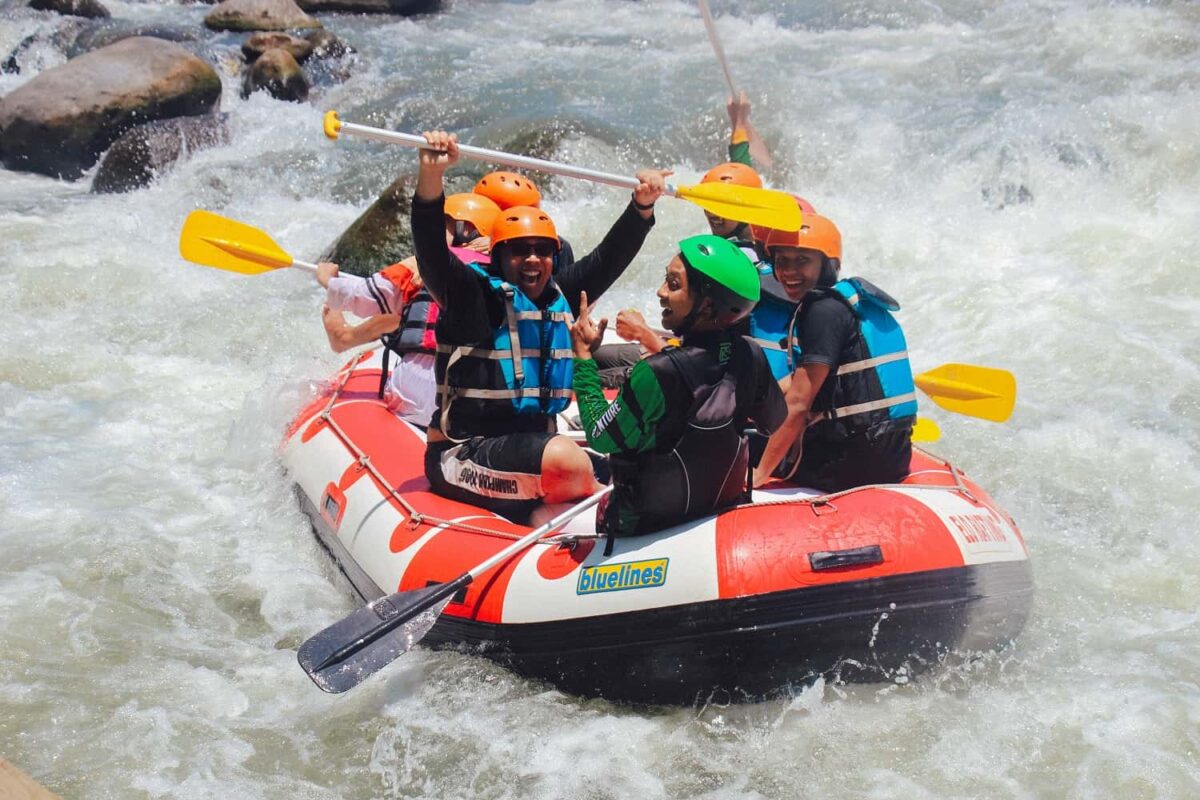
Wales has the best white-water kayaking infrastructure in the UK — the only Olympic-grade course in Britain, plus several natural white-water rivers running year-round.
The National White Water Centre, Bala (LL23 7NU)
Overview: The only Olympic-grade white-water course in the UK. Because it relies on regulated water releases from the Llyn Celyn reservoir dam, it guarantees surging Grade 3–4 rapids year-round, making it a highly reliable itinerary option regardless of recent rainfall. It features 1 mile of continuous white water on the River Tryweryn.
Opening Times & Prices: The centre operates daily through the summer and most weekends year-round (tethered to dam release schedules, usually running from 9:00 AM to 4:00 PM). A 2-hour “Ultimate Rafting” session (ages 12+) is £82–£84 per person. A shorter 1-hour “Rapid Session” is £52–£54 per person.
Operators: The National White Water Centre operates the site directly. They provide all the commercial rafting experiences. For independent, experienced kayakers, you can simply purchase a day pass from the centre to paddle the course.
Visitor Info: The site is incredibly well-equipped for visitors and spectators. It features Manon’s Riverside Café, hot showers, changing rooms, and the Tryweryn Trail—a footpath that runs alongside the rapids, perfect for taking photos of the rafts. Wetsuits, boots, helmets, and buoyancy aids are all included or available to hire on-site. Dogs are welcome on the grounds provided they are on a lead.
River Wye (Glasbury to Hay-on-Wye)
Overview: Offering Grade 1–2 beginner-friendly flat water and gentle rapids, this stretch of the River Wye is the most accessible and popular canoe trip in Mid Wales. It’s perfect for families, couples, and complete beginners.
Opening Times & Prices: The main paddling season runs from Easter through to October. A standard half-day trip (covering the 5.5 miles from Glasbury to Hay-on-Wye, taking about 2–3 hours) typically costs £30 to £35 per adult.
Operators: There are two highly-rated, verified operators based right at the launch point in Glasbury: Wye Valley Canoes (established in 1968, offering a great cafe on site) and the River Wye Activity Centre (which specializes in multi-day canoe camping expeditions and offers convenient riverside bunkhouse accommodation and free parking).
Visitor Info: Operators make logistics completely stress-free. The hire price includes your Canadian canoe (or kayak), paddles, buoyancy aids, dry barrels for your belongings, and—crucially—minibus transport from the endpoint back to your car in Glasbury. A highly recommended stop en route is “The Warren,” a public meadow and pebble beach just outside Hay-on-Wye with gentle, fun rapids perfect for a mid-paddle picnic.
River Conwy (near Betws-y-Coed)
Overview: Unlike the Tryweryn, the River Conwy (and its tributary, the Llugwy) is a natural, rain-fed river. It features intermediate to advanced white-water sections (Grades III and IV) flowing through ancient woodland.
Opening Times & Prices: Access to the river is free for independent paddlers (though a British Canoeing membership/waterways licence is required), but conditions are entirely dependent on recent rainfall. Local guides offering private “White Water Improver” coaching days generally charge around £80–£100 per person.
Operators: There are no casual beachfront boat hires here due to the dangerous nature of the rapids. For experienced paddlers looking for a guide, verified local expedition and coaching companies include Seren Ventures and Sea2Summit, both of which operate in and around Betws-y-Coed.
Visitor Info: This area is for experienced white-water kayakers only. Spectators or family members not paddling can get a great view of the action by standing on the footbridge at Pont-y-Pair (affectionately known by kayakers as “Chip Shop Drop”) in the center of Betws-y-Coed, where paddlers often finish their run by dropping down the waterfall.
Paddleboarding in Wales
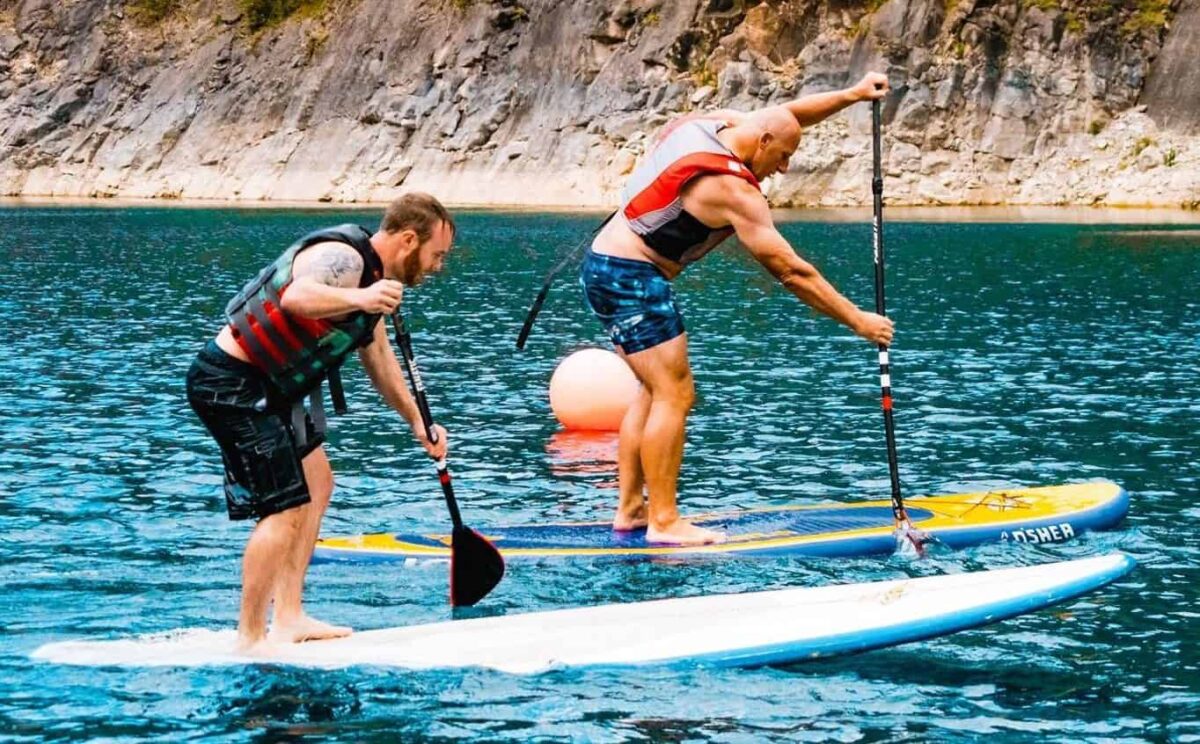
Stand-up paddleboarding has grown rapidly in Wales over the past decade — sheltered estuaries, reservoir lakes and calm bay beaches provide ideal flatwater SUP conditions, particularly in summer.
Llangorse Lake (Llyn Syfaddan) (LD3 7TR)
Overview: The largest natural lake in South Wales — 2 miles long in the Brecon Beacons. The lake is also used for sailing and windsurfing.
Opening Times & Prices: The main boating and paddling season runs from Easter through to October. SUP hire starts at roughly £13.50 for a half-hour or £21 for a full hour. If visitors have their own boards, a daily self-launch permit is required and costs £13.80 per craft.
Operators: The primary hub for equipment hire and launching is the Lakeside Caravan Park (Llangorse Lake Boat Hire), located right on the water’s edge.
Visitor Info: Because the lake is a highly protected conservation area within a National Park, there are strict zoning arrangements in place to protect local wildlife and nesting birds. Visitors must only launch from the designated boathouse area and adhere to the marked exclusion zones on the water.

The Menai Strait (Anglesey / Mainland)
Overview: The Menai Strait between Anglesey and the mainland offers tidal SUP for those with sea paddling experience — the current runs at up to 8 knots at springs, so timing the tide is essential. The calmer sections near Beaumaris (LL58 8AP) and Menai Bridge (LL59 5AD) are more forgiving.
Opening Times & Prices: Access is entirely dictated by the complex local tides rather than business hours. For guided sessions or skills training, expect to pay anywhere from £35 for a beginner “Discovery” session up to £60+ for specialized coastal tours.
Operators: Psyched Paddleboarding, based in Menai Bridge, is the premier, highly-rated SUP specialist in the area. They offer top-tier guided tours and advanced skills training. Plas Menai (The National Outdoor Centre for Wales) also runs excellent, structured SUP sessions nearby.
Visitor Info: The Menai Strait is notorious for its massive tidal range and dangerous currents. Independent paddling here is strictly for highly experienced sea paddlers who are confident reading tide tables. Anyone unsure of their abilities should book a guided session with an instructor.
Aberaeron Harbour (SA46 0BT)
Overview: The sheltered harbour and adjacent bay make this the best flatwater SUP location on the Ceredigion coast — calm water in all but strong onshore winds.
Opening Times & Prices: Harbour access is 24/7, but it is highly tidal—at low tide, the harbour empties out to mudflats, so timing is everything. Stand-up paddleboard hire in the region generally costs around £20–£22 per hour.
Operators: Beachfront hire in Aberaeron itself can be seasonal and informal. However, just a short drive down the coast in New Quay, Cardigan Bay Watersports is a highly reliable, verified operator offering comprehensive SUP hire and fitness sessions.
Visitor Info: Paddling inside the harbour walls is incredibly sheltered and safe, but visitors must watch out for boat traffic and submerged harbour ropes. If venturing out past the harbour walls into the open bay, paddlers should strictly avoid offshore winds, which can quickly and dangerously push them out to sea.
Wild Swimming in Wales
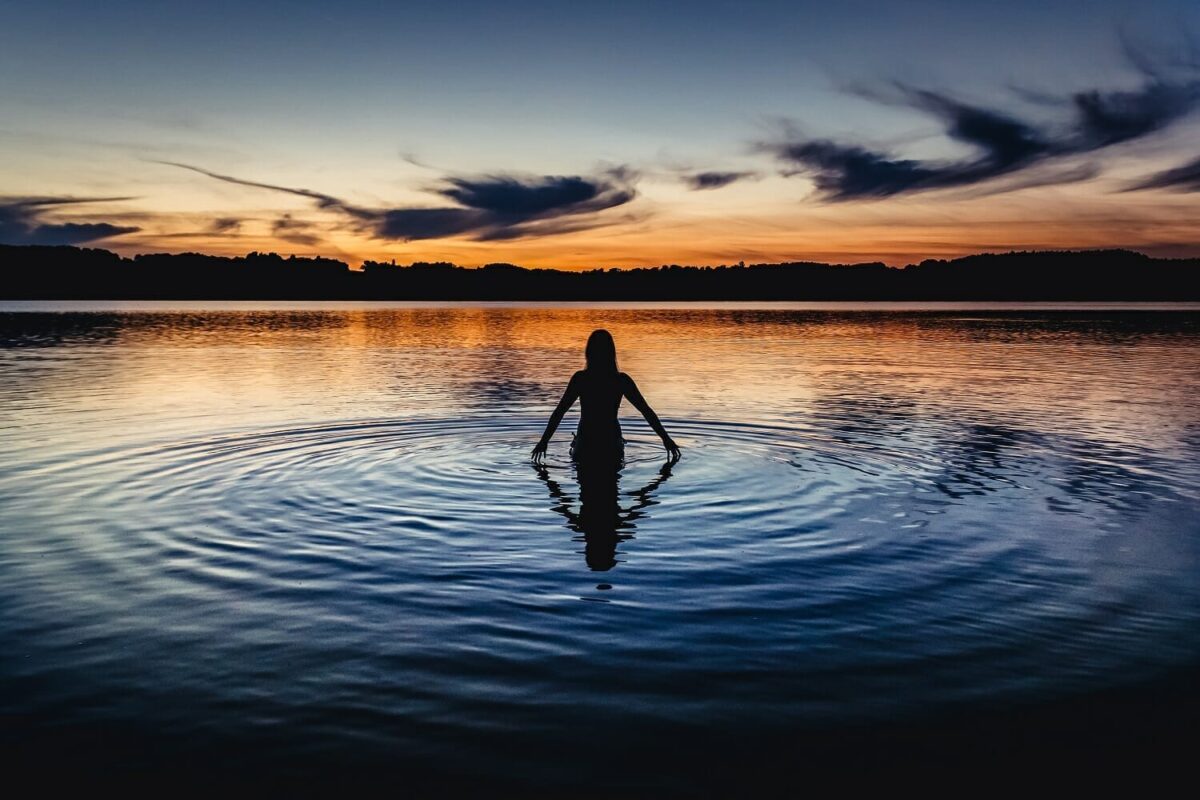
Wales’s clean rivers, mountain lakes and sheltered sea coves make it one of the best wild swimming destinations in Britain. Water quality in most upland rivers and lakes is excellent — though always check conditions before entering.
Blue Lagoon, Abereiddi (SA62 6DT)
Overview: A flooded former slate quarry connected to the sea — 10–25 metre walls above deep water. The most dramatic wild swim in Wales.
Opening Times & Prices: Accessible 24/7, though parts of the surrounding cliffs are sometimes cordoned off in the autumn to protect breeding seal pups. Parking is at the Abereiddy Beach car park and typically costs £4 to £5 for the day.
Safety: The water here is incredibly deep (around 27 metres) and exceptionally cold year-round. While cliff jumping is popular, it is highly dangerous to do independently due to submerged rocks and tidal changes. It is strongly recommended to only jump under the guidance of a licensed, local coasteering operator.
Visitor Info: It’s a short, highly accessible 5-minute walk from the car park to the lagoon. There are seasonal public toilets at the car park, but no cafes, make sure to bring a hot flask and a changing robe for after your swim!
River Glaslyn at Beddgelert (LL55 4YD)
Overview: The river pools below Beddgelert bridge are the most accessible river swim in Eryri — clear water over slate bedrock, sheltered from the wind. Best after dry spells when water levels are lower.
Opening Times & Prices: Access to the river is free and open 24/7. Visitors can use the main Pay & Display car parks in Beddgelert village.
Safety: River conditions can change rapidly. The pools are generally safe after dry spells, but visitors must never swim here after heavy rainfall, as the River Glaslyn becomes incredibly fast-flowing and dangerous. Swimmers should also be careful of slippery slate underfoot when getting in and out.
Visitor Info: The swim spot is wonderfully convenient, located less than a 5-minute walk from the village centre. This makes it incredibly easy to warm up afterwards with a hot drink, a pub lunch, or ice cream from one of Beddgelert’s excellent local businesses.
Sgwd yr Eira, Pontneddfechan (SA11 5NR)
Overview: Part of the famous Four Waterfalls Walk. Swimming in the pool at the base of this waterfall (where the path famously leads behind the falling water) is possible in low water conditions.
Opening Times & Prices: The trail is open year-round. The best parking is at the Cwm Porth or Gwaun Hepste car parks, which cost £5–£6 for the day (often card-only).
Safety: The plunge pool is extremely cold, and the undercurrents created by the waterfall can be surprisingly strong and unpredictable. Swimmers must check water levels locally and strictly avoid entering the water after heavy rain. Accessing the pool requires navigating around 170 steep, uneven, and often muddy steps down the gorge, so extreme care is needed.
Visitor Info: There are seasonal toilets and a snack van at the main car parks, but no facilities out on the trail or at the waterfall itself. Make sure to bring sturdy footwear for the hike and your own snacks and water.
Check out our in-depth guide to wild swimming in Wales
Coasteering in Wales
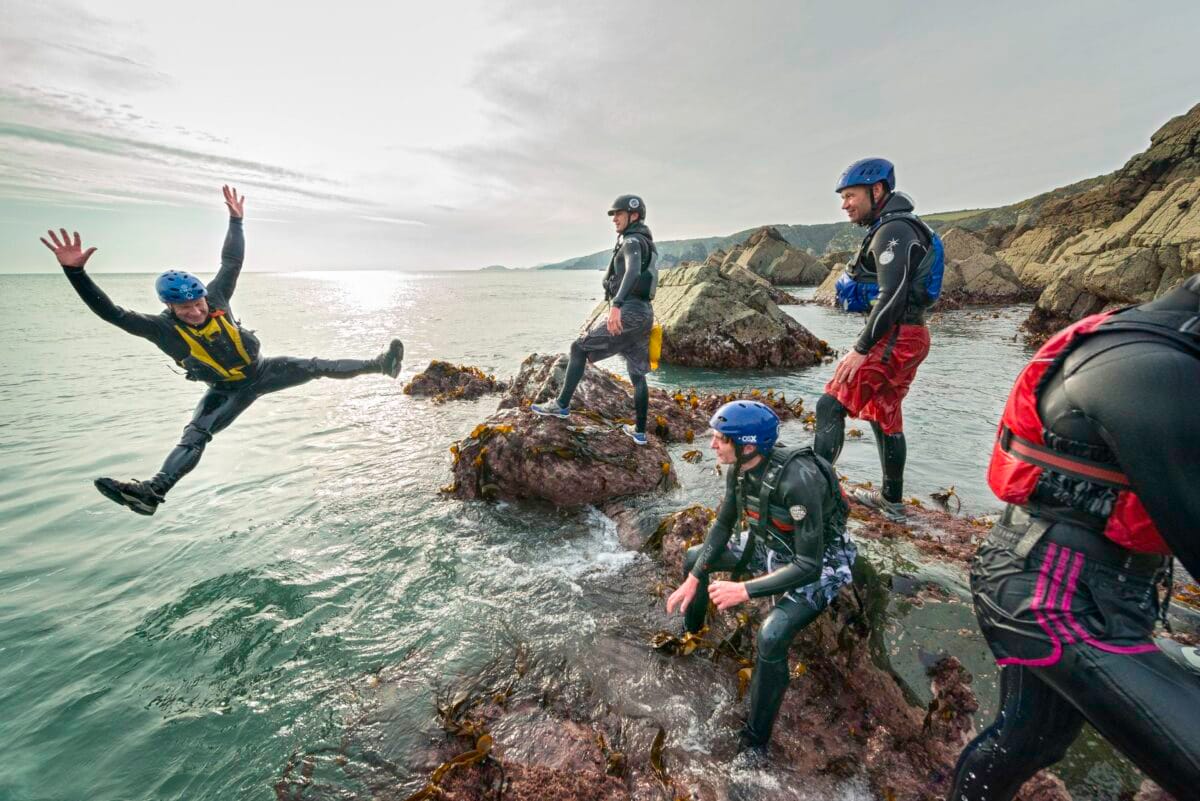
Coasteering — traversing sea cliffs by swimming, scrambling and jumping — was developed in Pembrokeshire in the 1980s. Wales remains the home and best location for the sport.
The limestone coastline around St Davids and Abereiddi has the most varied and technically interesting terrain — sea caves, arches, gullies and natural jumping platforms. Guided sessions are available for complete beginners; the only requirement is that you can swim 25 metres. All equipment (wetsuit, helmet, buoyancy aid) is provided.
The Gower Peninsula offers more sheltered coasteering conditions — better for first-timers or groups with younger participants.
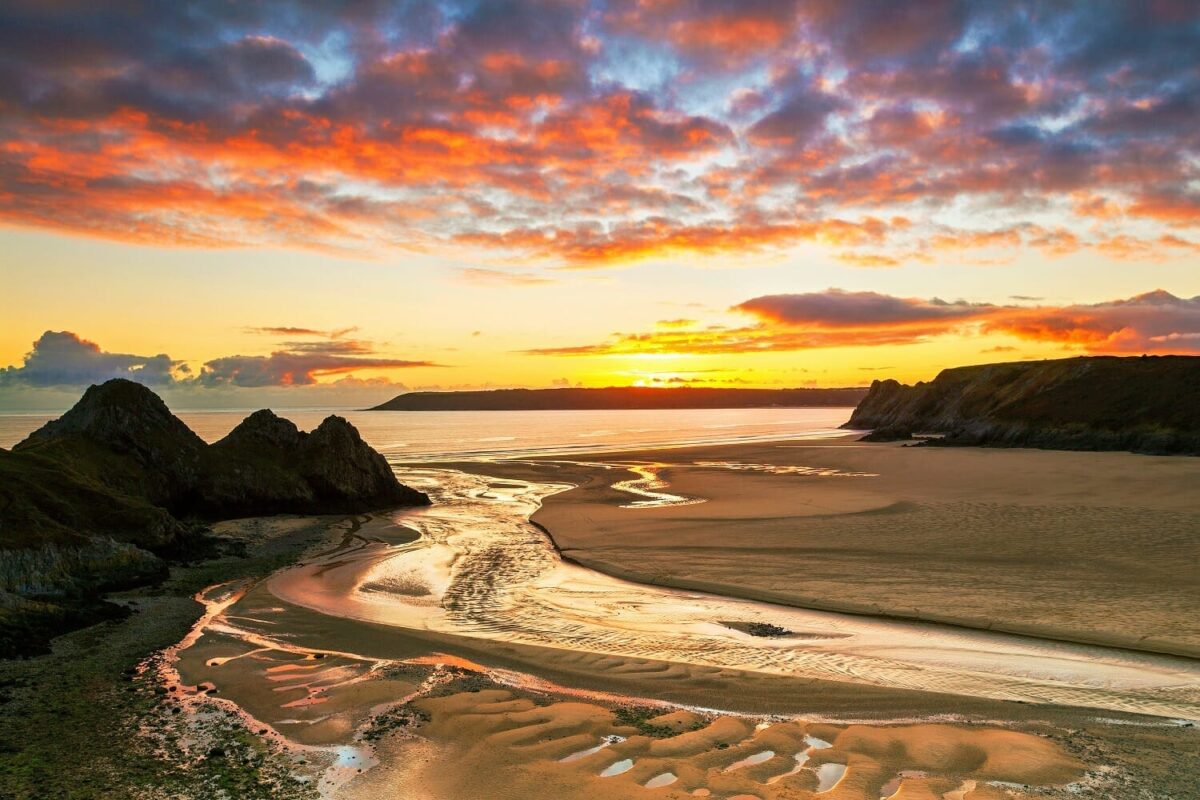
St Davids and Abereiddi
Overview: The undisputed home of coasteering, which was pioneered right here in the 1980s. This spectacular stretch of coastline offers the most varied and technically interesting terrain in Wales, featuring sea caves, arches, gullies, and natural jumping platforms.
Opening Times & Prices: The commercial coasteering season generally runs from Easter through to the end of October. A standard half-day guided session (lasting about 3 to 4 hours) typically costs around £65 to £75 per adult.
Operators: TYF Adventure is the premier choice here. Based in St Davids, they are actually the company credited with inventing commercial coasteering and remain a highly trusted operator for guiding groups around the St Davids and Abereiddi coastline.
Visitor Info: Guided sessions are perfectly suited for complete beginners; the only strict requirement is that participants must be able to swim 25 metres. The operator provides all the necessary safety and thermal equipment, including thick wetsuits, helmets, and buoyancy aids. All you need to bring is an old pair of lace-up trainers you don’t mind ruining!
The Gower Peninsula
Overview: The beautiful Gower Peninsula offers slightly more sheltered coasteering conditions compared to the wilder Pembrokeshire coast. This makes it an ideal, confidence-building location for first-timers or family groups with younger participants.
Opening Times & Prices: Tours usually operate from April to late October, with launch times often dependent on the daily tides. A guided half-day session in this area generally costs between £50 and £60 per person.
Operators: Rip N Rock is a highly-rated, verified local operator that specializes in exploring the Gower’s scenic, rocky coves and offers fantastic, family-friendly coasteering packages.
Visitor Info: While the wave action is less intense, the experience is still thrilling, involving plenty of swimming, scrambling, and optional jumps tailored to the group’s comfort level. As with Pembrokeshire, all technical and safety gear is provided by the guide, remember to bring your own swimwear and a towel for the car park afterwards.
For the full location and operator guide, see Coasteering in Wales.
Windsurfing and Kitesurfing in Wales
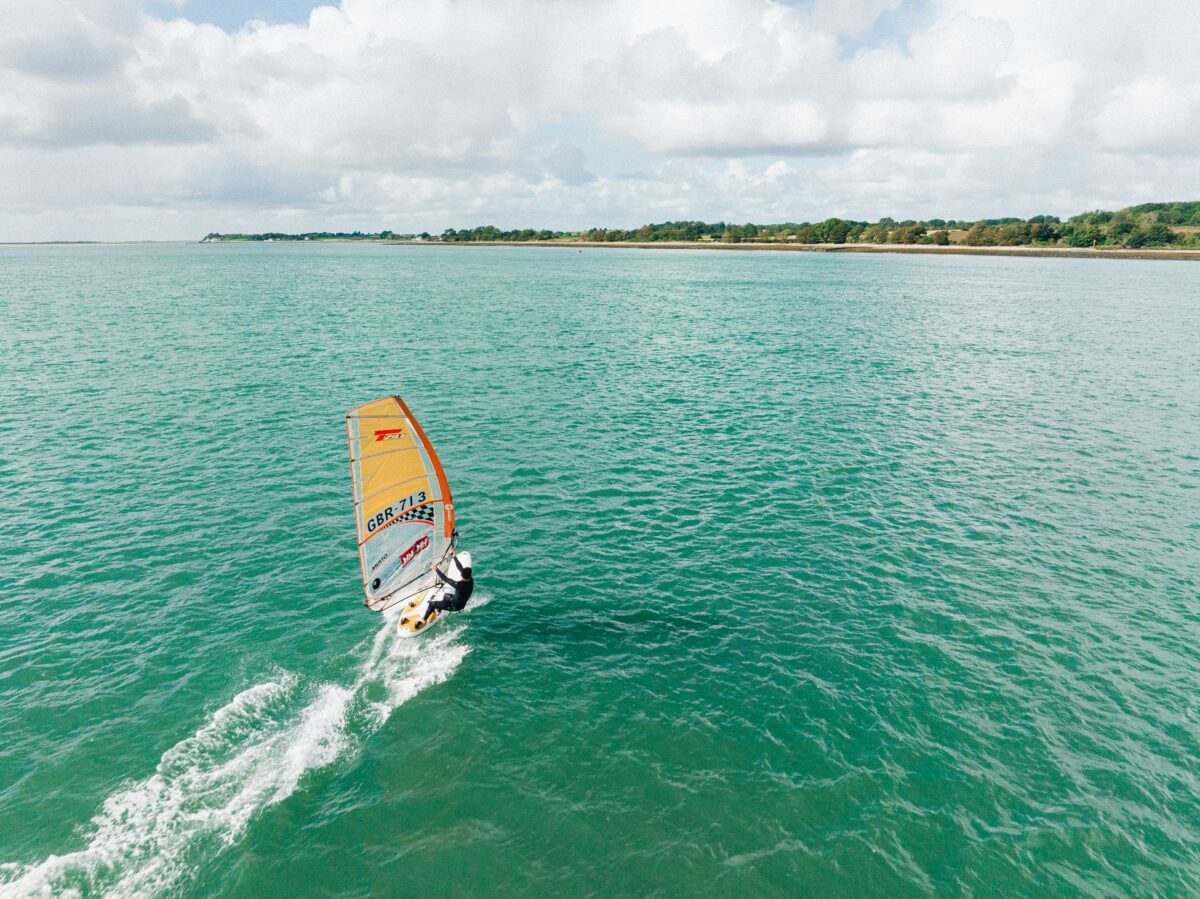
Wales’s exposed western coastline and reliable Atlantic winds make it a strong destination for wind-powered water sports, particularly on Anglesey and the Gower.
Rhosneigr, Anglesey (LL64 5QA)
Overview: The best kitesurfing beach in Wales — consistent westerly winds, flat water in the bay, and a watersports school offering lessons. The beach is also used by windsurfers and wingsurfers.
Opening Times & Prices: The beach is accessible 24/7, though watersports operations depend heavily on the wind forecast and tides. For beginners, a half-day introductory kitesurfing lesson typically costs between £120 and £150, which includes all the specialized safety and kite gear.
Operators: Funsport is the primary, verified operator located right by the beach. They offer comprehensive lessons, a massive retail shop for gear, and a great cafe for post-session coffees.
Visitor Info: The designated launch point is strictly at the northern end of the main beach (Traeth Crigyll) to keep fast-moving kites and boards safely away from casual beachgoers and swimmers. The wind here can be powerful, so checking a reliable forecast (like Windguru) beforehand is essential.
Abersoch, Llŷn Peninsula (LL53 7DS)
Overview: The south-facing bay at Abersoch is the main sailing and dinghy racing centre on the Llŷn. The local sailing club holds races throughout the summer season, providing a fantastic spectacle from the shore.
Opening Times & Prices: The main sailing season runs from Easter through to late October. Access to the main beach car parks operates on a Pay & Display basis (expect to pay around £5 to £7 for a full day). Dinghy or windsurf taster sessions generally start around £50 to £70.
Operators: Abersoch Sailing School is the premier, verified operator directly on the beach, offering dinghy sailing tuition, boat hire, and powerboat courses for all ages and abilities.
Visitor Info: Abersoch gets exceptionally busy during the peak summer weeks and regatta days. The bay is quite sheltered from the prevailing south-westerly winds, making it an incredibly forgiving and safe environment for visitors learning to sail or windsurf for the first time.
Bala Lake (Llyn Tegid) (LL23 7SR)
Overview: The main inland windsurfing location in Wales — the prevailing wind direction channels reliably down the valley, creating excellent, consistent conditions without the complication of ocean tides or coastal swell.
Opening Times & Prices: Accessible year-round. If visitors are bringing their own windsurfing rig, they must purchase a daily self-launch permit from the Snowdonia National Park authority (currently £5 per craft). To hire windsurfing equipment locally, prices sit around £25 to £35 for a two-hour block.
Operators: Bala Adventure and Watersports is the dedicated operator located right on the foreshore. They provide equipment hire for experienced windsurfers as well as RYA-certified beginner courses.
Visitor Info: Because Bala is a freshwater lake, visitors will find they have slightly less natural buoyancy than they would in the sea, which can make uphauling the sail feel slightly different at first. Wetsuits are highly recommended year-round due to the cold mountain water temperatures.
Frequently Asked Questions: Water Sports in Wales
Is Wales good for surfing?
Yes — particularly autumn and winter when Atlantic storms deliver consistent swell. Pembrokeshire and the Gower receive the most reliable surf. Llangennith on the Gower and Freshwater West in Pembrokeshire are the benchmark beaches. Summer is calmer and better for lessons — Newgale in Pembrokeshire has an on-site surf school and is the best beginners’ beach in West Wales.
Where is the best kayaking in Wales?
For sea kayaking, Pembrokeshire — particularly the coast between St Davids and the Marloes Peninsula — is the best in Wales. For white water, the National White Water Centre at Bala on the River Tryweryn is the only Olympic-grade course in the UK and offers guaranteed conditions year-round. For calm lake kayaking, Bala Lake and Llangorse Lake are the main venues.
Can beginners do water sports in Wales?
Yes. Surf schools operate at Llangennith (Gower) and Newgale (Pembrokeshire) for complete beginners. The National White Water Centre at Bala runs guided beginner rafting sessions. Coasteering sessions in Pembrokeshire and on the Gower are designed for beginners with no experience — the only requirement is swimming 25 metres. SUP hire with instruction is available at Bala Lake and Aberaeron.
Where can you wild swim in Wales?
The Blue Lagoon at Abereiddi is the most dramatic — a flooded slate quarry connected to the sea. Llyn Idwal in Eryri is the finest mountain lake swim. The River Glaslyn at Beddgelert is the most accessible river swim in Snowdonia. The Sgwd yr Eira waterfall plunge pool in the Brecon Beacons is possible in dry conditions. Always check water levels and temperature before entering any open water in Wales.
Where can you see dolphins while kayaking in Wales?
Cardigan Bay between New Quay and Aberaeron is Europe’s most reliable location for paddling alongside bottlenose dolphins. The resident population of 400+ animals feeds in the bay year-round. Guided kayak tours from New Quay are the most structured option — or paddle independently from the beach at New Quay (SA45 9PT) in calm conditions and scan the bay.
More Water Sports and Activity Guides on Wales.org
- Surfing Beaches in Wales
- Coasteering in Wales
- Adventure Sports in Wales
- Best Beaches in Wales
- Dog-Friendly Beaches in Wales
- Pembrokeshire Destination Guide
- Swansea Bay and Gower Guide
- Anglesey Destination Guide
- Ceredigion and Cardigan Bay Guide
- Eryri (Snowdonia) Destination Guide
- West Wales Guide
- North Wales Guide
- South Wales Guide
- Holiday Cottages near Water Sports Venues
- Hotels near Water Sports Venues in Wales
- Camping near Water Sports in Wales

Pembrokeshire-born travel writer and founder of Wales.org. Born in Haverfordwest, now based in Hertfordshire — covering Welsh castles, national parks, festivals and family staycations across all 22 Welsh counties.