


Nature & Landscapes in Wales: The Complete 2026 Guide
Wales is one of the most naturally beautiful countries in Europe — and one of the least crowded. Packed into an area smaller than Massachusetts, you will find three National Parks, five Areas of Outstanding Natural Beauty, the longest unbroken coastal path in Britain, and some of the darkest night skies on the planet.
Whether you are planning a slow walk through ancient bluebell woodland, a week exploring sea cliffs and tidal islands, or simply want to know where to go in each season, this guide covers everything.
⚡ Wales Nature: At a Glance
- National Parks: 3 — Eryri (Snowdonia), Brecon Beacons (Bannau Brycheiniog), Pembrokeshire Coast
- Areas of Outstanding Natural Beauty: 5 — Gower, Wye Valley, Llŷn Peninsula, Anglesey, Clwydian Range & Dee Valley
- Coastline: 870 miles — fully walkable via the Wales Coast Path
- National Nature Reserves: Over 70 across the country
- Dark Sky Areas: 3 — Eryri, Bannau Brycheiniog, Elan Valley
- Highest Peak: Yr Wyddfa (Snowdon) — 1,085 metres
- Largest Natural Lake: Llyn Tegid (Bala Lake) — 4 miles long
- Best season to visit: May–September for walking; November–March for dark skies and storms

Wales’s Three National Parks
Three National Parks cover roughly 20% of Wales. Each has a completely different character, and each rewards a very different kind of visitor.
← Swipe left and right to view the full table →
| National Park | Region | Size | Best known for |
|---|---|---|---|
| Eryri (Snowdonia) | North Wales | 2,130 km² | Yr Wyddfa (Snowdon), glacial lakes, slate heritage |
| Bannau Brycheiniog (Brecon Beacons) | Mid/South Wales | 1,347 km² | Pen y Fan, waterfalls, dark sky reserve, wild ponies |
| Pembrokeshire Coast | West Wales | 620 km² | Sea cliffs, puffin colonies, Blue Flag beaches, tidal islands |
Eryri — Snowdonia National Park
Eryri is the largest National Park in Wales. It is also the most dramatic. Glaciers carved the valleys and ridges here over 10,000 years ago, leaving behind sheer cwms (cirques), knife-edge arêtes, and a chain of deep, cold lakes.
Yr Wyddfa — Snowdon — stands at 1,085 metres. It is the highest summit in Wales and England. You can walk it or take the historic mountain railway to the summit. Either way, the views across the Irish Sea on a clear day are extraordinary.
Beyond the summit, Eryri holds the Llanberis slate quarrying landscape (now a UNESCO World Heritage Site), the waterfalls of the Conwy Valley, and some of the finest hiking in Wales.
Bannau Brycheiniog — Brecon Beacons
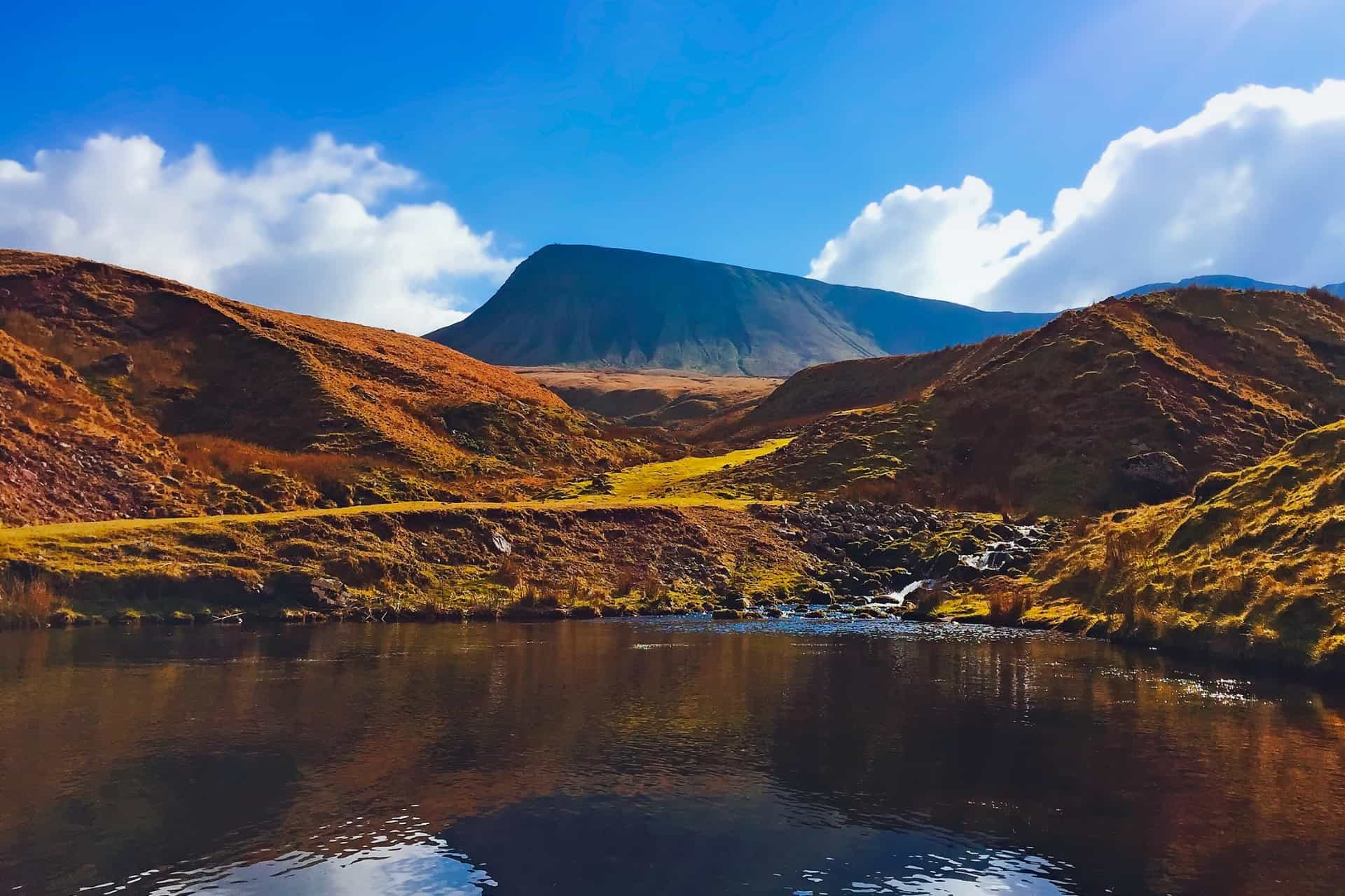
The Brecon Beacons are a softer, more rolling landscape than Snowdonia. The sandstone plateau runs east to west, with Pen y Fan (886m) the highest point. It is one of Wales’s most popular summits — and one of the most rewarding.
The south of the park is extraordinary for waterfalls. The Four Waterfalls Walk near Pontneddfechan links Sgwd yr Eira (where you can walk behind the curtain of water), Sgwd Clun-gwyn, Sgwd Isaf Clun-gwyn, and Sgwd y Pannwr in a single circular route.
The Beacons hold one of only three International Dark Sky Reserves in Wales. On a clear winter night, the Milky Way is clearly visible to the naked eye. This is one of the best places in England and Wales to stargaze.
Pembrokeshire Coast National Park
Pembrokeshire is the only National Park in Britain defined primarily by its coastline. The 186-mile Pembrokeshire Coast Path runs along the top of some of the oldest exposed rock in the world — Precambrian volcanic rock over 600 million years old.
The cliffs, caves, and tidal islands of Pembrokeshire are also one of Britain’s most important wildlife habitats. Skomer Island holds the world’s largest Manx shearwater colony and a puffin population of over 40,000 birds. For a full guide to the wildlife here and across Wales, see our dedicated Wildlife in Wales guide.
🌤️ Live Mountain Weather Forecasts
Welsh mountain weather is famously unpredictable. Conditions at the base of Yr Wyddfa (Snowdon) or Pen y Fan can be entirely different from the summits, where temperatures drop significantly, visibility changes rapidly, and wind speeds multiply. For your safety, always check the official Met Office Mountain Weather Forecast before heading onto the trails.
Eryri (Snowdonia)
Bannau Brycheiniog
Data provided officially by the Met Office. Always pack appropriate waterproofs and navigation tools when exploring high altitudes.
Wales’s Five Areas of Outstanding Natural Beauty
Outside the National Parks, five AONBs protect some of Wales’s most distinctive and fragile landscapes.
← Swipe left and right to view the full table →
| AONB | Location | Character |
|---|---|---|
| Gower Peninsula | South Wales | Britain’s first AONB (1956). Limestone headlands, sand dunes, saltmarsh |
| Wye Valley | South/Mid Wales border | Ancient broadleaved woodland, meanders, Tintern Abbey |
| Llŷn Peninsula | North Wales | Remote headland, Welsh language heartland, pilgrim route |
| Isle of Anglesey | North Wales | Coastal heath, sea arches, standing stones, estuary marshes |
| Clwydian Range & Dee Valley | North East Wales | Iron Age hillforts, heather moorland, the Pontcysyllte Aqueduct |
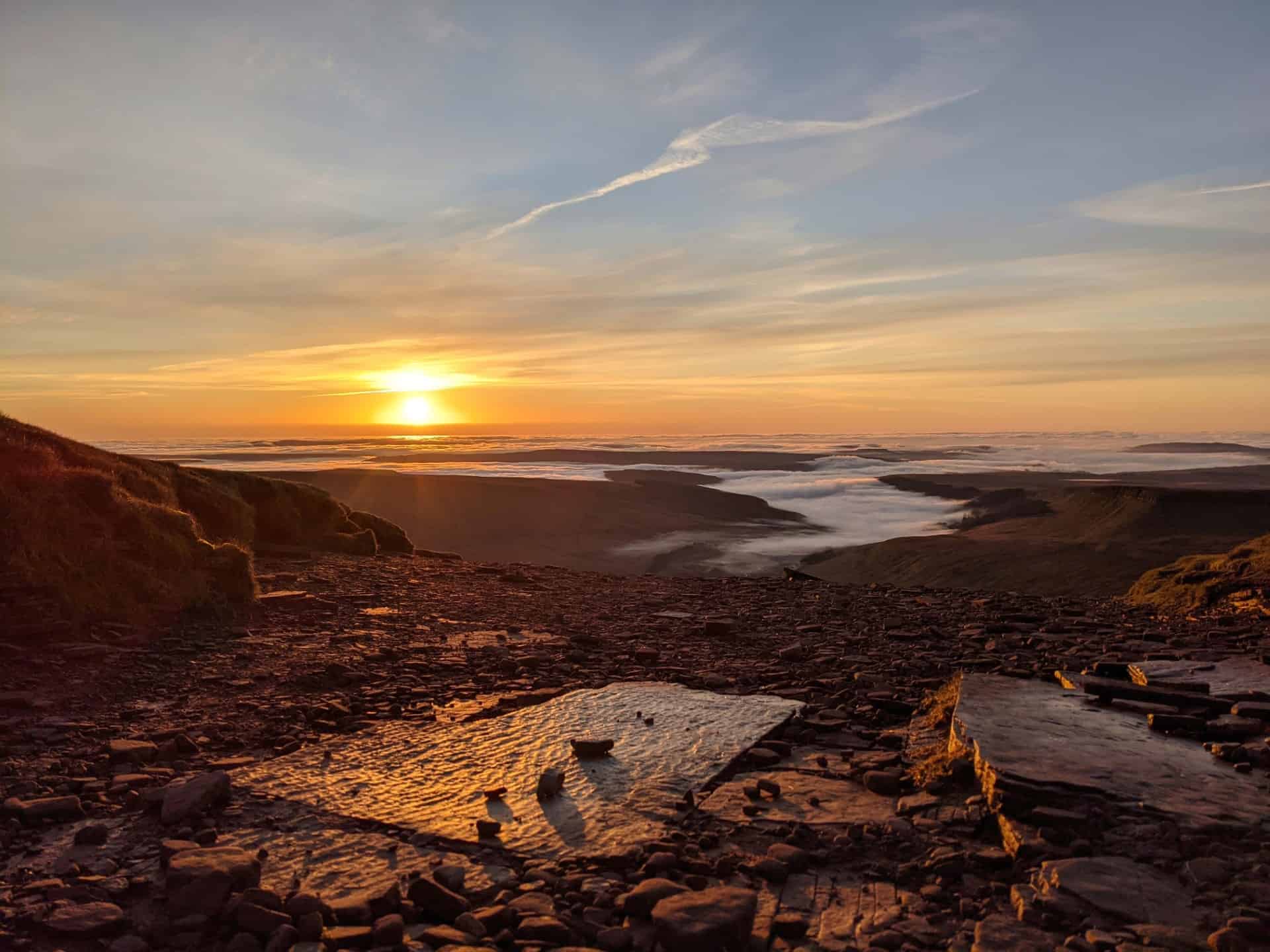
The Gower Peninsula is a 30-minute drive from Swansea and holds Rhossili Bay — consistently voted one of the best beaches in Europe. The bay faces west, and the sunsets here are some of the finest in Britain.
The Wye Valley is one of the most beautiful river landscapes in Britain. Ancient oak and ash woodland covers the valley sides from water’s edge to clifftop. In spring, the woodland floor is carpeted with wild garlic and bluebells.
Anglesey feels like a world apart from mainland Wales. Almost the entire coastline is protected AONB, and the island holds more registered ancient monuments per square kilometre than almost anywhere in Britain.

The Wales Coast Path: 870 Miles of Unbroken Coastline
Wales is the only country in the world with a continuous footpath along its entire coastline. The Wales Coast Path opened in 2012. It runs 870 miles from Chepstow in the south to Queensferry in the north, taking in sea cliffs, estuaries, sand dunes, harbour towns, and remote headlands.
Most visitors walk individual sections rather than the full route. The Pembrokeshire sections, the Gower cliffs, and the Anglesey Coastal Path are the most popular. The Llŷn Peninsula section is the most remote and peaceful.
Wales also has 41 Blue Flag beaches — a quality standard awarded only to beaches that meet strict criteria for water quality, facilities, and environmental management. The highest concentration is in Pembrokeshire.
📍 Coastal Wales: Key Facts
- Wales Coast Path: 870 miles — world’s first national coastal path
- Blue Flag beaches: 41 — highest density in the UK per mile of coastline
- Pembrokeshire’s Whitesands Bay: one of Europe’s cleanest beaches
- Freshwater West: finest surf beach in Wales, faces the Atlantic swell
- Three Cliffs Bay (Gower): no road access — reached on foot only
- Barafundle Bay: no car park — a 10-minute cliff walk from the nearest road
- The coast is never more than 50 miles from any point in Wales
For a full regional breakdown of where to swim, surf, and explore, visit our complete 2026 Wales Beach Guide.

Rivers, Valleys & Waterfalls
Wales has over 2,000 rivers and streams. The upland geology — ancient rock, thin soils, and high rainfall — creates the perfect conditions for dramatic waterfalls and fast-flowing rivers.
The Waterfalls of the Brecon Beacons
The Nedd Fechan and Mellte valleys in the south of the Beacons hold the greatest concentration of waterfalls in Wales. Sgwd yr Eira (“Spout of Snow”) is the most spectacular — a 15-metre curtain of water where the path passes behind the fall.
Henrhyd Falls, in the far west of the park, is the tallest waterfall in South Wales at 27 metres. It is a 20-minute walk through ancient woodland from the National Trust car park.
The Wye Valley
The River Wye flows 135 miles from its source on Plynlimon in mid Wales to its mouth at Chepstow. The lower valley, where the river meanders between 100-metre limestone cliffs, is one of the most beautiful landscapes in Britain. Tintern Abbey — roofless and ruined since the Dissolution — sits directly on the riverbank, framed by the wooded valley sides.
Cardigan Bay
The largest bay in Britain, Cardigan Bay holds Europe’s largest resident bottlenose dolphin population — around 200 individuals. Boat trips from New Quay give a strong chance of close sightings between May and September. The bay also holds grey seals, harbour porpoises, and Manx shearwaters on migration.
Dark Sky Areas in Wales
Wales is one of the best countries in Europe for stargazing. Light pollution is minimal across the rural interior and coast, and three areas carry formal International Dark Sky status.
← Swipe left and right to view the full table →
| Dark Sky Area | Status | Best viewing spot | Peak season |
|---|---|---|---|
| Eryri (Snowdonia) | Gold Tier Reserve | Llyn Gwynant, Rhyd Ddu | October–February |
| Bannau Brycheiniog | Gold Tier Reserve | Pen y Fan, Mynydd Illtud | November–March |
| Elan Valley Estate | Silver Tier Park | Craig Goch Dam, Claerwen | October–February |
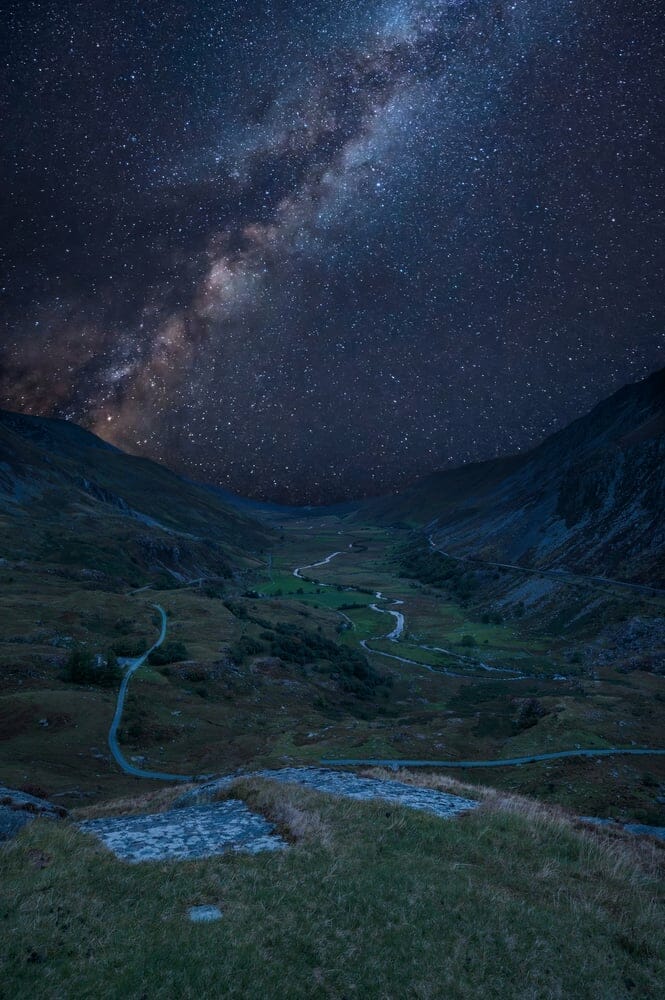
The Milky Way is clearly visible to the naked eye on a clear, moonless night from all three areas. Eryri and the Brecon Beacons also regularly record auroras during periods of high solar activity.
For the best experience, check the moon phase before you go and choose a night within five days either side of a new moon. Avoid weekends in summer, when car parks at popular viewpoints fill early.
Ancient Woodlands & Forest Landscapes
Wales is home to some of the most ancient and ecologically important woodlands in Europe. Sessile oak woodland clings to the valley sides of Eryri and the Wye Valley. These are not plantation forests — they are natural, unmanaged woodland communities that have been in place since the last Ice Age.
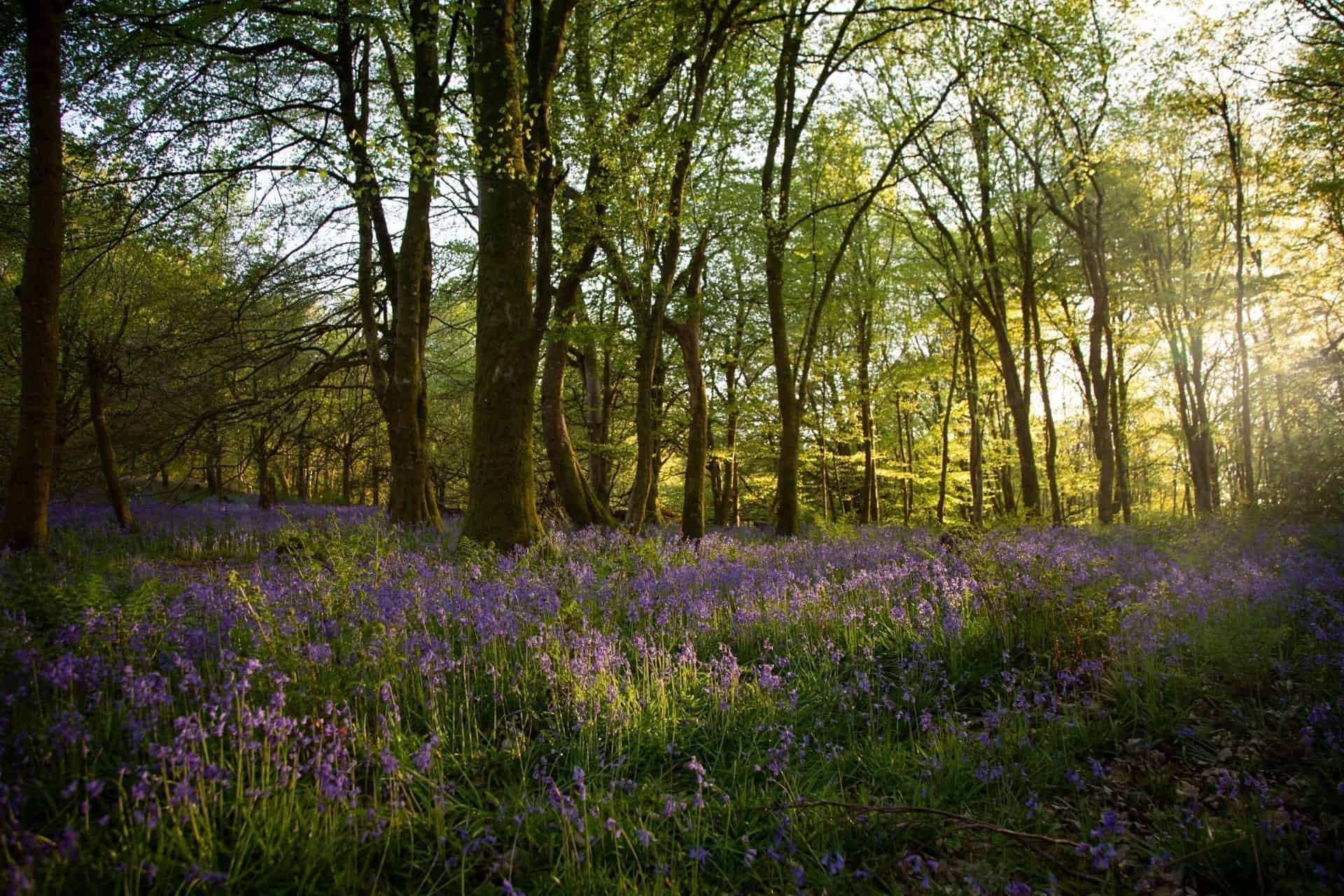
The best time to visit is spring. From mid-April through May, ancient woodland floors are carpeted with bluebells, wood anemones, and wild garlic. By early June the canopy has closed and the light becomes green and dappled.
Forests to Visit
- Coed y Brenin (Gwynedd): The largest forest park in Wales. Home to Wales’s best mountain bike trails and extensive waymarked walking routes through oak woodland.
- Hafren Forest (Powys): The source of both the River Severn and the River Wye lies within this remote conifer forest on the slopes of Plynlimon.
- Wye Valley woodlands: Ancient oak and ash on limestone. The valley between Monmouth and Chepstow is one of Britain’s finest woodland landscapes.
- Gwydir Forest (Conwy Valley): Mixed forest surrounding the historic market town of Llanrwst. Popular walking and cycling base within Eryri.
Wales by Season: When to Go and What to See
← Swipe left and right to view the full table →
| Season | Landscapes | Weather | Best for |
|---|---|---|---|
| Spring (Mar–May) | Bluebells, wild garlic, new bracken on hillsides | Mild, changeable — expect showers | Woodland walks, lambing, birdwatching (puffins return April) |
| Summer (Jun–Aug) | Full green canopy, heather starting on moors | Warmest and driest — coast can be busy | Beaches, mountain walking, coastal path, boat trips |
| Autumn (Sep–Nov) | Copper and gold in the Wye Valley and Eryri | Settled early September — wetter from October | Forest walks, waterfalls (higher flow), red deer rut |
| Winter (Dec–Feb) | Snowcapped peaks, frosted moorland, dramatic storms | Cold and wet — snow on higher ground from December | Stargazing, storm watching, quiet coastal walks |

Conservation & How Wales Protects Its Landscapes
Wales takes its natural environment seriously. Several organisations and legal frameworks work together to protect the country’s landscapes, habitats, and species.
Natural Resources Wales
Natural Resources Wales (NRW) is the Welsh Government’s environmental body. It manages the national forests, monitors water and air quality, regulates development near sensitive habitats, and oversees all 70+ National Nature Reserves. NRW also publishes free access maps for open access land across Wales.
Sites of Special Scientific Interest (SSSIs)
Wales has over 1,000 Sites of Special Scientific Interest. These are areas designated for their exceptional plant communities, geology, or animal populations. Many are freely accessible, including the limestone pavements of the Great Orme (Llandudno) and the raised peat bogs of Cors Caron in Ceredigion.
The Dyfi Biosphere
The Dyfi Valley in mid Wales is a UNESCO Biosphere Reserve — the only one in Wales. The designation recognises the exceptional biodiversity of the estuary, its peat bogs, and its ancient sessile oak woodland. The area is home to ospreys (reintroduced to Wales in 2004), red kites, and one of the finest examples of raised bog habitat in Europe.
🥾 The Countryside Code: Leave No Trace
Protecting these fragile environments is everyone’s responsibility. When exploring the Welsh countryside, please follow these core principles:
- Stick to marked paths: Venturing off-trail causes severe soil erosion, particularly in fragile upland areas like Eryri and the Brecon Beacons.
- Keep dogs under close control: Always use a short lead when walking near livestock (especially sheep) or ground-nesting birds on the coast.
- Leave gates as you find them: A closed gate keeps livestock safe; an open gate is often left that way for a reason by the farmer.
- Take all litter home: If you brought it into the mountains or onto the beach, take it back out with you. This includes organic waste like banana peels.
Wales by Region: Nature Highlights at a Glance
← Swipe left and right to view the full table →
| Region | Key landscapes | Don’t miss | Best month |
|---|---|---|---|
| North Wales | Mountains, glacial lakes, slate valleys, sea cliffs | Yr Wyddfa summit, Llyn Padarn, South Stack cliffs | May–September |
| Mid Wales | Moorland plateau, river valleys, dark sky reserves | Brecon Beacons, Dyfi Biosphere, Elan Valley | September–November |
| West Wales | Sea cliffs, tidal islands, estuaries, sand dunes | Skomer Island, Barafundle Bay, Strumble Head | April–August |
| South Wales | Limestone coast, river gorges, ancient woodland | Gower Peninsula, Wye Valley, Waterfall Country | April–June, September–October |
Plan Your Welsh Nature Break
The best way to experience the Welsh landscape is to stay in it — not drive through it. A cottage in the Brecon Beacons puts you under dark skies and within walking distance of Pen y Fan. A base on the Pembrokeshire coast puts you on the cliff path each morning before the day-trippers arrive.
♿ Accessible Wales: Nature for Everyone
Wales is increasingly ensuring that its natural landscapes are accessible to visitors of all mobility levels:
- All-Terrain Beach Wheelchairs: The Pembrokeshire Coast National Park Authority offers specially designed beach wheelchairs for hire at popular beaches like Saundersfoot, Broad Haven, and Whitesands.
- Boardwalk Trails: Cors Caron National Nature Reserve in Ceredigion features a fully accessible, flat wooden boardwalk that allows wheelchairs and prams to glide directly over the ancient peat bogs.
- Paved Mountain Views: Bannau Brycheiniog (Brecon Beacons) features excellent accessible trails, including the paved paths directly outside the National Park Visitor Centre (Libanus), offering spectacular, barrier-free views of Pen y Fan.
🏡 Find Your Nature Base in Wales
Search 2,400+ personally inspected properties — from mountain cottages in Eryri to coastal retreats in Pembrokeshire.
- Holiday Cottages in Wales — stone farmhouses, converted barns and coastal retreats
- Glamping in Wales — yurts, shepherd’s huts and off-grid pods under the stars
- Camping in Wales — coastal sites, lakeside pitches and wild camping in the National Parks
- Search all properties — filter by region, features and availability
Frequently Asked Questions
What is the most beautiful natural landscape in Wales?
This is genuinely subjective, but the most frequently cited are the Pembrokeshire coast, Rhossili Bay on the Gower, the Llanberis Pass in Snowdonia, and the Wye Valley near Tintern. Each is extraordinary in a different way. The Pembrokeshire coast is wildest; the Wye Valley is most intimate; Snowdonia is most dramatic.
How many National Parks does Wales have?
Wales has three National Parks: Eryri (Snowdonia) in the north, Bannau Brycheiniog (Brecon Beacons) in the south, and the Pembrokeshire Coast in the west. Together they cover around 20% of the country.
Is Wales good for wildlife watching?
Yes — Wales is outstanding for wildlife. Red kites, ospreys, puffins, bottlenose dolphins, grey seals and red squirrels are all accessible to visitors. For a full guide to species and locations, see our dedicated Wildlife in Wales page.
What is the best time of year to visit Wales for nature?
Each season offers something different. Spring (April–May) brings bluebells, puffins, and new lambs. Summer is best for beaches and mountain walking. Autumn delivers spectacular foliage in the Wye Valley and Snowdonia. Winter is the season for dark skies, waterfalls, and quiet coastal walks.
Can you visit Welsh National Parks for free?
Yes. There is no entrance charge for any of Wales’s National Parks. Car parks at popular trailheads typically charge, but the open land itself is free to access. Large areas of all three parks are designated Open Access land under the Countryside and Rights of Way Act, meaning walkers have a legal right to roam.
Does Wales have dark sky areas?
Wales has three formally recognised International Dark Sky places: Eryri and Bannau Brycheiniog (which hold Gold Tier Reserve status), and the Elan Valley Estate (Silver Tier Park). Together, they are among the best stargazing locations in Britain.

Pembrokeshire-born travel writer and founder of Wales.org. Born in Haverfordwest, now based in Hertfordshire — covering Welsh castles, national parks, festivals and family staycations across all 22 Welsh counties.