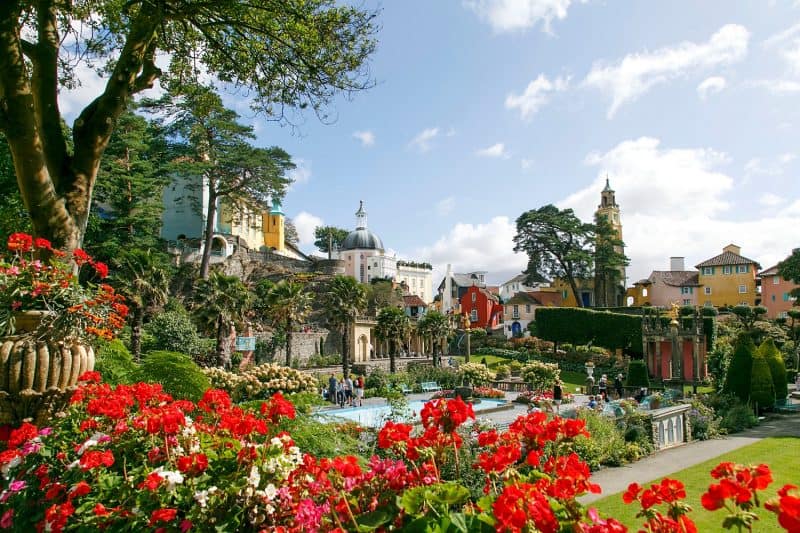


Bannau Brycheiniog (Brecon Beacons) 2026: The Complete Guide to South Wales’s National Park
Bannau Brycheiniog — officially renamed from the Brecon Beacons National Park in 2023 to restore the Welsh name, though Brecon Beacons remains widely used and understood — is one of the great upland landscapes of Britain.
Covering 520 square miles of South Wales, it is a national park of sweeping sandstone ridges, dramatic north-facing escarpments, hidden waterfalls, ancient cave systems and some of the darkest night skies in Wales.
It is also a place of genuine contrasts: wild open moorland above, pretty market towns below; some of the finest walking in the country alongside world-class food, independent bookshops and thriving arts scenes in the towns that fringe the park.
Pen y Fan (886 metres) is the highest point in South Wales and one of the most iconic hillwalks in Britain.
The Waterfall Country around Ystradfellte holds some of the most spectacular river gorges in Wales.
The eastern Black Mountains hide quiet valleys, ruined priories and the book town of Hay-on-Wye.
And the market town of Brecon itself — a handsome Georgian and medieval settlement at the northern gateway to the park — is an increasingly strong destination in its own right, with a thriving food scene and the internationally regarded Brecon Jazz Festival each August.
This guide covers everything you need to plan the perfect Bannau Brycheiniog visit in 2026.
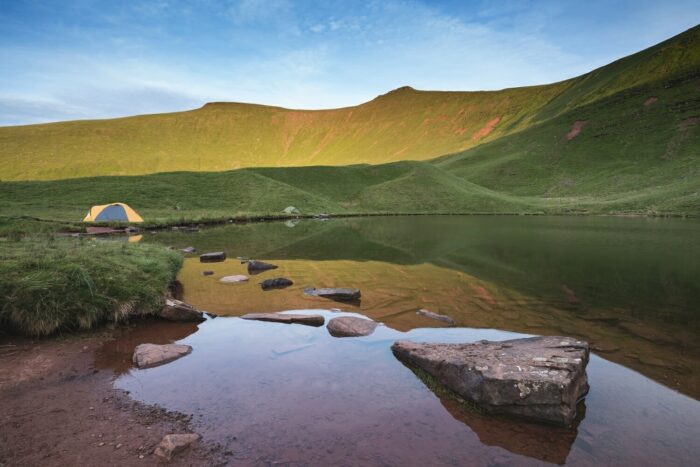
Pen y Fan: Walking the Highest Summit in South Wales
Pen y Fan (886 metres) is the defining Welsh mountain south of Snowdonia — a broad, flat-topped summit with some of the most dramatic north-facing views in Britain, dropping sharply to the Neuadd reservoirs hundreds of metres below.
It draws around 600,000 walkers a year, making it one of the busiest mountains in Wales — yet with the right route choice it is still entirely possible to walk in relative peace.
The most popular route is the Storey Arms Path from the A470 car park (LD3 8NL — approximately 4.5 miles return, 450 metres ascent, 2.5–3 hours). Clear, well-worn and straightforward, it suits most walkers of reasonable fitness.
The full central ridge traverse — ascending Corn Du, crossing to Pen y Fan, continuing to Cribyn and descending via the Fan y Big ridge — is a finer walk at approximately 10km with 720 metres of ascent, giving three distinct summits and outstanding views in all directions.
The Neuadd Reservoir approach from the south is considerably quieter than the northern routes, adds a full kilometre to the ascent but rewards with superb solitude and the most dramatic view of Pen y Fan’s northern escarpment.
Check weather with the Met Office Mountain Forecast before every ascent; the summit plateau can be significantly colder and wetter than the car parks.
See full hiking guide: hiking in Wales.
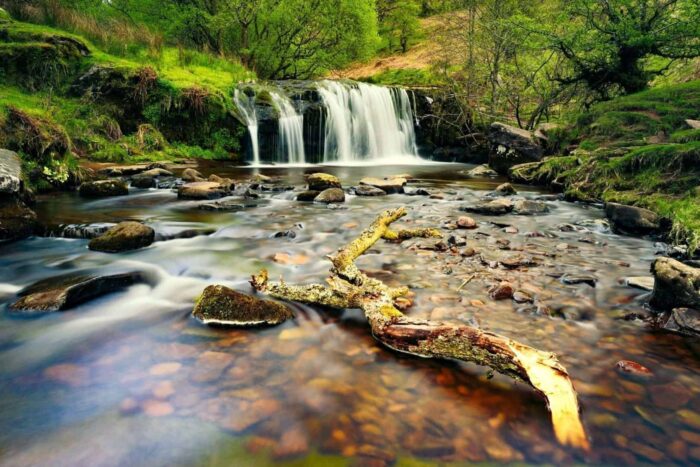
Waterfall Country: Wales’s Most Spectacular River Gorges
In the southern fringes of Bannau Brycheiniog, where four rivers — the Mellte, Hepste, Sychryd and Nedd Fechan — descend from the sandstone plateau through ancient oak woodland into deep limestone gorges.
You will find the most spectacular waterfall walking in Wales and arguably in Britain.
This area — known as Waterfall Country (Cwm Watkins) — packs an extraordinary concentration of waterfalls, natural arches and river scenery into a compact area centred on the village of Ystradfellte (LD3 8YF, where parking and the visitor pub are located).
Sgwd yr Eira (Waterfall of Snow) on the River Hepste is the headline attraction — the path behind the waterfall allows walkers to pass through the curtain of water and emerge on the other side. The sensation is one of the most memorable in Welsh walking.
The walk from the main Porthcawl car park takes approximately 45 minutes each way on well-maintained paths. Sgwd Clun-Gwyn and Sgwd Isaf Clun-Gwyn on the River Mellte offer the most dramatic gorge scenery — deep, wooded ravines with plunge pools directly below the falls.
The complete waterfall circuit linking all five principal waterfalls is approximately 6 miles, can be completed in 3–4 hours, and involves some steep and slippery sections.
Walking boots are essential; some paths are challenging in wet weather.
Porth yr Ogof (2 miles north of Ystradfellte, SA11 5US), the largest cave entrance in Wales, is where the River Mellte disappears underground — free access to the entrance, though cave exploration beyond requires experience and proper equipment.
See also: walking in Wales.
The Black Mountains: Quiet Ridges and Hidden Valleys
The eastern section of Bannau Brycheiniog — the Black Mountains (not to be confused with the Black Mountain in the west of the park) — is a group of long, flat-topped sandstone ridges running roughly north to south above the Usk and Wye valleys.
Quieter and less visited than the central Beacons, they offer some of the best ridge walking in South Wales with far fewer people than Pen y Fan.
Waun Fach (811 metres) is the highest point of the Black Mountains; the approach via the Gospel Pass from Hay-on-Wye is one of the finest half-day walks in the region.
The Grwyne Fawr and Llanthony valleys are among the most beautiful hidden valleys in Wales — long, sheep-grazed cwms enclosed by heather ridges, largely unchanged in centuries.
At the foot of the Llanthony Valley stands Llanthony Priory (Cadw, free access) — the evocative 12th-century ruins of an Augustinian priory set against the enclosing ridge in a setting of remarkable peace.
One of the pub bars operates within the priory itself — the Abbey Hotel at Llanthony is a unique and atmospheric stop.
The Offa’s Dyke Path (one of Wales’s four National Trails) runs along the eastern ridge of the Black Mountains from Hay-on-Wye to Pandy, crossing the ridge tops with outstanding views into England — one of the finest sections of the entire 177-mile trail.
See: hiking in Wales.
Hay-on-Wye: The World’s Book Town
On the northern edge of the Black Mountains, where the River Wye forms the boundary between Wales and England, Hay-on-Wye is one of the most distinctive small towns in Britain.
A community of fewer than 2,000 people that has more than 20 second-hand and antiquarian bookshops, making it the most famous book town in the world.
The transformation began in the 1960s when Richard Booth declared Hay an independent kingdom and himself king, with the explicit aim of drawing attention to the town through second-hand books.
It worked. Today Hay attracts bibliophiles, antique hunters and curious visitors from around the world throughout the year, and during the Hay Festival (late May/early June, hayfestival.com) — the most prestigious literary and ideas festival in Britain, founded in 1988 — the town swells with tens of thousands of visitors for 11 days.
Barack Obama once called it “the Woodstock of the mind.” The town itself is a delight regardless of bookshops and festivals — a Norman castle ruin in the town centre, excellent independent cafés and restaurants, and the weekly Thursday market giving it an authentic working-town character.
Hay is 25 miles from Brecon, 20 miles from Abergavenny, and sits equally well as a day trip from either.
See: Mid Wales guide.
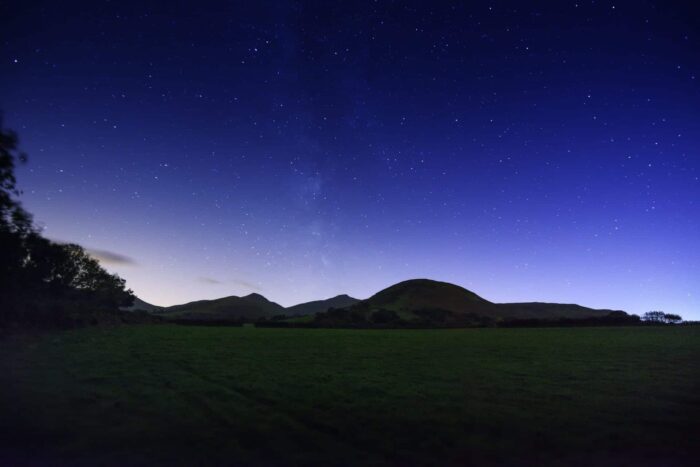
Dark Sky Reserve: Stargazing in Bannau Brycheiniog
Bannau Brycheiniog was designated an International Dark Sky Reserve in 2012 — one of the first five in the world and the largest in Wales.
The park’s low light pollution, combined with its elevated terrain and the clear skies that follow Atlantic weather fronts, makes it one of the finest stargazing destinations in Britain.
On a clear moonless night, the Milky Way is visible to the naked eye across much of the park, and shooting stars, the Andromeda Galaxy and numerous star clusters can be seen without any equipment.
The best stargazing locations are in the high central plateau away from the fringe market towns — the Storey Arms area, the Brecon Beacons Mountain Centre above Libanus (LD3 8ER, free car park), and the Mynydd Illtyd Common are all excellent.
The park’s Brecon Beacons Mountain Centre hosts regular dark sky events and guided stargazing evenings throughout the year — check beacons-npa.gov.uk for the 2026 programme.
Glamping properties and shepherd’s huts within the dark sky reserve zone are particularly popular with visitors who want to stargaze from their own accommodation — a powerful selling point that makes Bannau Brycheiniog one of the most distinctive glamping destinations in Wales.
See: glamping in Wales.
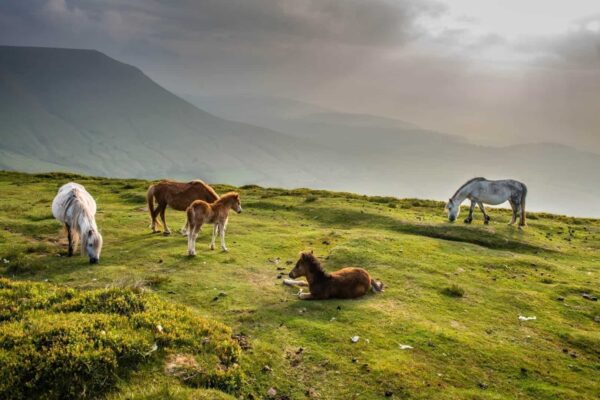
Abergavenny: The Gateway Town and Food Capital
Abergavenny (Y Fenni) sits at the southeastern gateway to Bannau Brycheiniog, enclosed by three distinctive hills — Sugar Loaf, Blorenge and Skirrid Fawr — that rise directly from the town’s edge.
It is one of the most appealing market towns in Wales: a lively independent high street, an excellent covered market (Tuesday, Thursday and Saturday), a Norman castle with a museum (free entry, NP7 5EE), and an increasingly strong food reputation that culminates each September in the Abergavenny Food Festival — the finest food and drink festival in Wales and one of the most respected in Britain.
The festival draws 40,000 visitors over a weekend in September, with chef demonstrations, producer stalls and tastings spanning every aspect of Welsh food culture.
The three surrounding hills each offer accessible summit walks of 2–4 hours from the town itself — Sugar Loaf (596 metres) is the most popular, with a car park at the National Trust site (NP7 7LP) and a straightforward 90-minute ascent.
Abergavenny is also the starting point for the Sugar Loaf Vineyard — Wales’s most awarded winery, producing sparkling wines on the lower slopes of the Sugar Loaf, with a shop and tasting room at NP7 9ER.
See: food and drink in Wales.
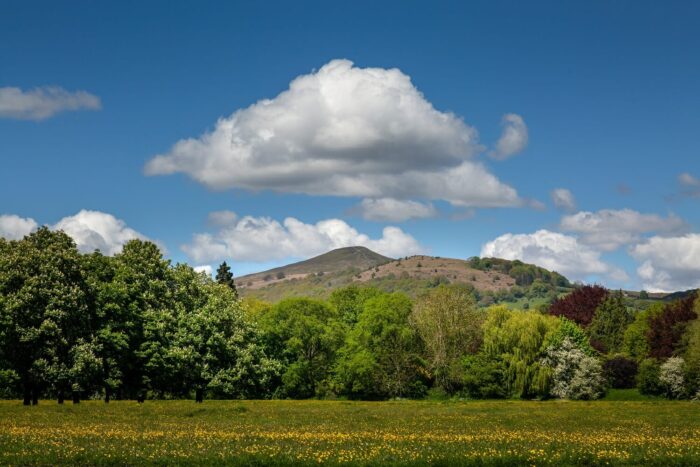
Adventure Activities in Bannau Brycheiniog
Beyond walking and hiking, Bannau Brycheiniog offers a strong range of outdoor and adventure activities that make it an excellent base for active holidays.
Caving is the most distinctive activity unique to the park — the southern limestone belt contains the most extensive cave systems in Britain outside the Mendips. Dan yr Ogof Showcaves (SA9 1GJ) is the largest show cave complex in northern Europe, offering three separate cave circuits accessible without specialist equipment.
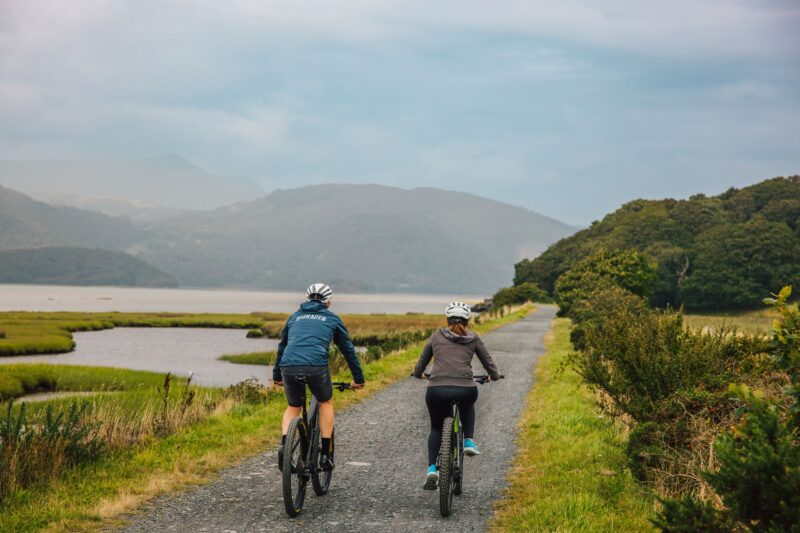
Mountain biking is strong across the park — Bike Park Wales at Merthyr Tydfil (on the park’s southern fringe) is the only lift-served bike park in Wales, with 40+ trails from beginner to expert; and the network of bridleways across the Black Mountains offers outstanding off-road touring.
Horse riding through the park’s bridleway network — particularly in the Black Mountains and on the open moorland around Mynydd Epynt is an exceptional way to experience the landscape. Multiple approved trekking centres operate within the park.
Canal boat holidays on the Monmouthshire and Brecon Canal, which runs 35 miles between Brecon and Cwmbran through the Usk Valley, offer a completely different and equally beautiful perspective on the national park — one of the most scenic canal routes in Britain, navigable only by narrowboats.
See: adventure sports in Wales | cycling and mountain biking in Wales.
Where to Stay in Bannau Brycheiniog
Bannau Brycheiniog has one of the most diverse and characterful accommodation scenes in Wales.
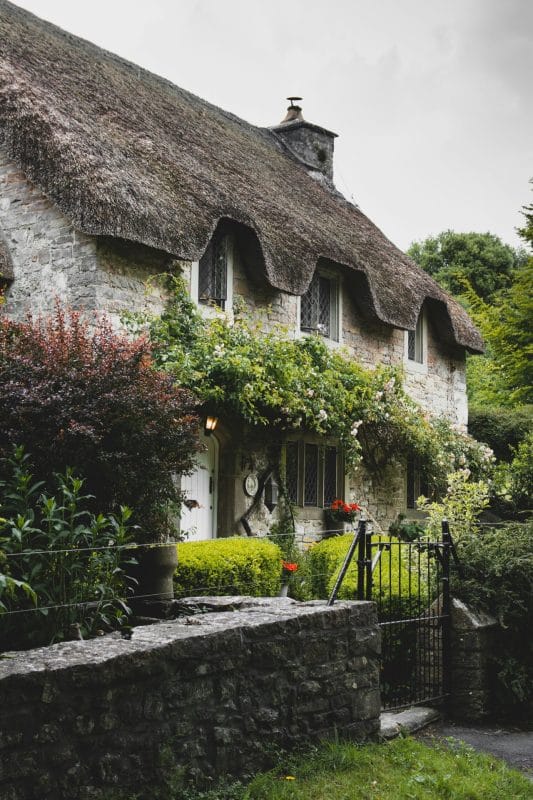
Holiday cottages span the full range — from stone farmhouses in the Usk Valley with open fires and mountain views to converted barns in the Black Mountains.
The area around Hay-on-Wye, the Llanthony Valley and the upper Usk are particularly rewarding for cottage stays.
Glamping is exceptional throughout the park and particularly well suited to the dark sky experience — shepherd’s huts, yurts, treehouse pods and bell tents with fire pits are available in genuinely dark locations.
Many glamping operators offer telescope loan or guided stargazing as part of their packages.
Hotels range from traditional coaching inns in Brecon and Abergavenny to country house hotels in the Usk Valley.
The Gliffaes Hotel (NP8 1RH) on the Usk, and the Llangoed Hall (LD3 0YP) near Llyswen are both exceptional country house stays.
Camping is available across the park, from organised campsites to wild camping on open access land above the intake walls.
Use the map below to browse all property types.
See also: holiday cottages in Wales | camping in Wales.
Frequently Asked Questions: Bannau Brycheiniog (Brecon Beacons)
How hard is it to climb Pen y Fan?
Pen y Fan via the Storey Arms Path (LD3 8NL) is a moderately challenging walk suitable for most adults of reasonable fitness — approximately 4.5 miles return with 450 metres of ascent, typically taking 2.5–3 hours. The paths are clear and well-maintained. The summit plateau is considerably colder and more exposed than the car park, so waterproofs and an extra layer are always necessary. Children of 8 and above can complete the Storey Arms route comfortably with appropriate footwear. For a longer, more rewarding day the full ridge traverse adds Corn Du, Cribyn and Fan y Big, approximately 10km with 720 metres ascent. See the complete guide: hiking in Wales.
Is the Brecon Beacons a Dark Sky Reserve?
Yes — Bannau Brycheiniog was designated an International Dark Sky Reserve in 2012, one of the first five in the world. The park’s low light pollution makes the Milky Way visible to the naked eye on clear moonless nights. The Brecon Beacons Mountain Centre above Libanus (LD3 8ER) hosts regular guided stargazing events throughout the year. For the best experience, stay in a glamping property within the park away from the market towns — many operators specifically market their dark sky credentials and some offer telescope hire or guided sessions.
What is the best base for visiting the Brecon Beacons?
Brecon town is the most central base for the national park as a whole — well-placed for Pen y Fan, the Waterfall Country and the western Black Mountains. Abergavenny is the best base for the eastern Black Mountains, Llanthony Valley and Hay-on-Wye. Hay-on-Wye itself suits those focused on books, the festival and the quieter Black Mountain ridge walks. For the Waterfall Country, self-catering accommodation near Ystradfellte or in the Neath Valley gives the most immediate access. See accommodation options: holiday cottages in Wales.
Explore all Brecon Beacons and South Wales guides:
EXPLORE MORE BRECON BEACONS & SOUTH WALES GUIDES