


Powys 2026: Powis Castle, Lake Vyrnwy & the Heart of Rural Wales
Powys is Wales’s largest county and its emptiest.
Covering a quarter of Wales’s total land area, it has a population of just 130,000 — fewer people than a medium-sized English market town spread across a landscape the size of a small country.
That emptiness is its greatest asset. The Cambrian Mountains at the county’s heart are the most remote upland plateau in Wales — roadless in places, with red kites overhead and rivers you can drink from.
Powys gives you the Wales of the imagination: ancient castles, market towns unchanged for centuries and a horizon that goes on forever.
Powis Castle near Welshpool is one of the National Trust’s great treasures anywhere in Britain.
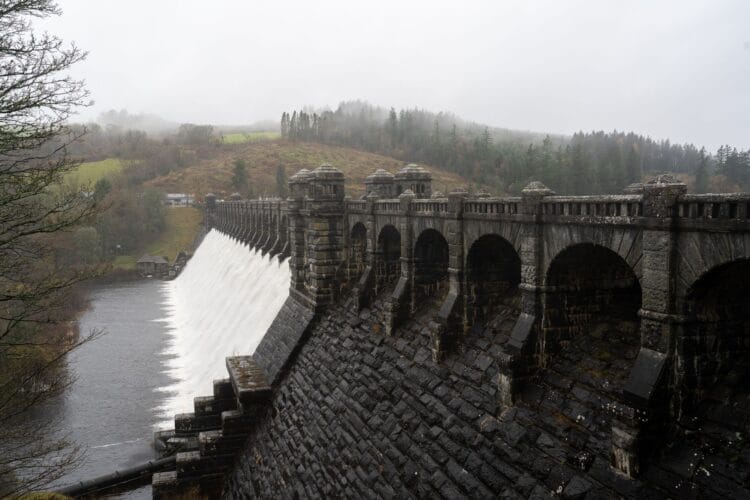
Lake Vyrnwy is an extraordinary Victorian reservoir estate with a castle-like tower and mountains on all sides.
And the market towns of Llandrindod Wells, Builth Wells and Brecon provide perfect bases for exploring the wilder country beyond.
This guide covers everything for 2026.
© Hawlfraint y Goron / © Crown copyright (2026) Cymru Wales
Powis Castle: The National Trust’s Greatest Welsh Treasure
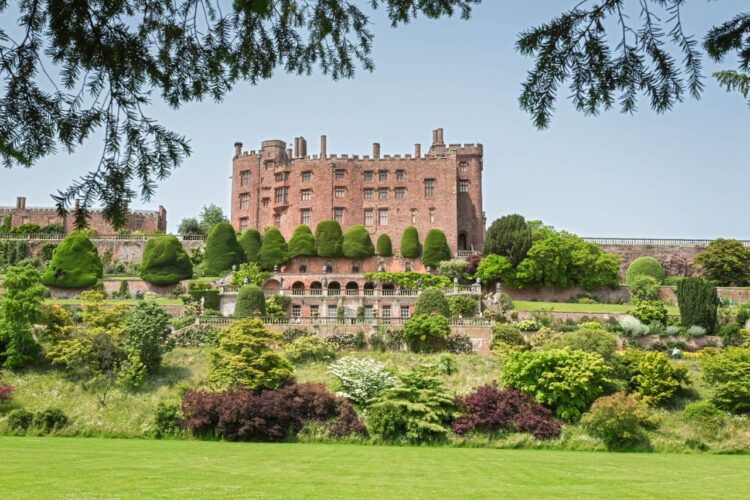
Powis Castle (SY21 8RF) above Welshpool is one of the most remarkable castle and garden combinations in Britain and among the finest National Trust properties anywhere in the country.
The castle itself has been continuously inhabited since the 13th century — built by Welsh princes, passed through English lords and eventually to the Clive family (of Clive of India).
The state rooms contain one of the richest collections of Indian artefacts in Europe, brought back by Robert Clive and his son from their time in Bengal.
The Hanging Gardens of Powis are the defining feature — four immense terraced gardens descending the south-facing hillside, first laid out in the late 17th century in the Italian and French style and never redesigned or destroyed.
Ancient yew trees clipped into enormous organic shapes line the terraces. The gardens are considered the finest surviving example of late 17th-century formal garden design in Britain.
The view from the upper terrace across the Severn Valley is outstanding. Allow a full half-day minimum — the castle, museum, gardens and café together deserve 3–4 hours.
Lake Vyrnwy: Victorian Reservoir and Mountain Estate
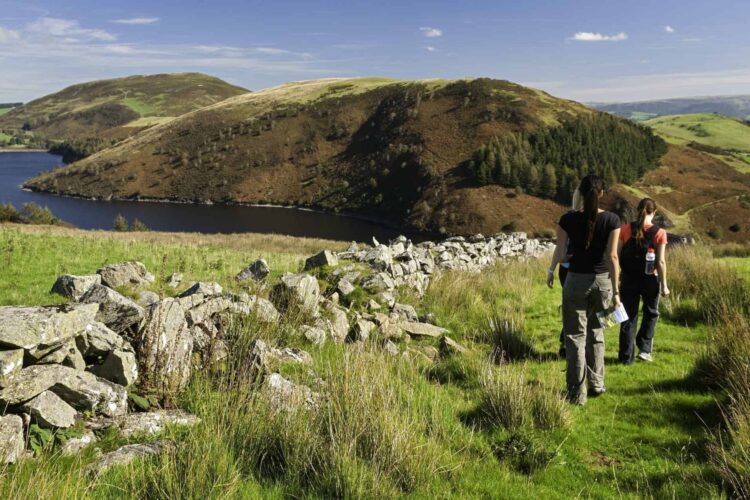
Lake Vyrnwy (SY10 0LY) in the Berwyn Mountains of northern Powys is one of the most beautiful reservoirs in Britain — and one of the most historically significant.
Built between 1881 and 1888 to supply Liverpool with water, it was the first large-scale reservoir in Britain and involved the complete submersion of the village of Llanwddyn.
The Gothic-style straining tower at the dam end gives Vyrnwy its distinctive castle-like appearance — photographed more than almost any other element of the Welsh uplands.
The 12-mile perimeter road around the lake makes an outstanding cycling circuit or scenic drive.
The lake and surrounding estate is managed as an RSPB nature reserve. Red grouse, peregrine falcon, red kite and merlin all breed on the moorland above.
The woodland fringe holds pied flycatcher, redstart and wood warbler — summer visitors that make Vyrnwy one of the best birdwatching estates in Wales between May and August.
The Lake Vyrnwy Hotel above the dam is one of the most dramatically situated hotels in Wales.
The RSPB visitor centre beside the lake is free and has an excellent café.
See: wildlife in Wales | cycling in Wales.
The Cambrian Mountains: Wales’s Last Great Wilderness
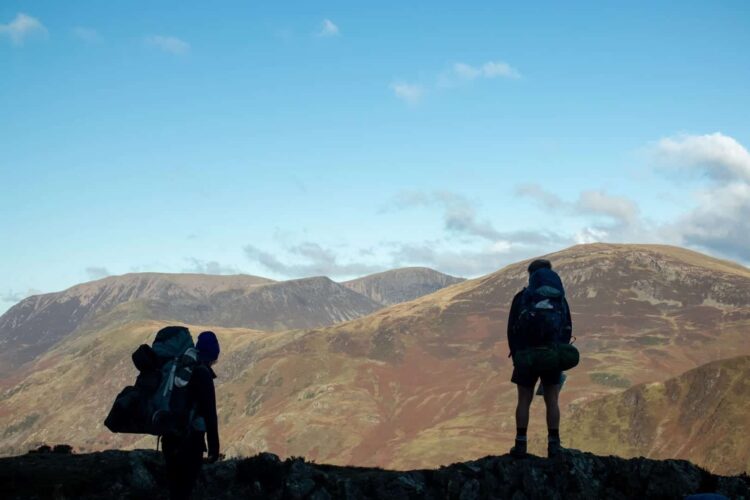
The Cambrian Mountains occupy the heart of Powys — a vast, roadless upland plateau of blanket bog, mountain streams and ancient droving tracks.
They are the source of both the River Severn and the River Wye, and arguably the most remote and least-visited upland landscape in Wales.
There are no dramatic peaks — the highest point, Pen Pumlumon Fawr (752 metres), is a broad, boggy summit reached by a rough track from Eisteddfa Gurig (SY23 3AB).
The reward is absolute solitude, vast skies and the knowledge that you are standing at the watershed of two of England and Wales’s greatest rivers.
The Cambrian Way long-distance trail (287 miles, Cardiff to Conwy) crosses the heart of the range — the section through Powys is the most remote and challenging, suited to experienced long-distance walkers with good navigation skills.
The Elan Valley (LD6 5HP), a chain of six Victorian reservoirs above Rhayader on the Powys-Ceredigion border, is more accessible and better known.
A 10-mile traffic-free cycling trail follows the reservoirs through extraordinary upland scenery.
Montgomery, Welshpool and the Powys Market Towns
Montgomery (Trefaldwyn) is one of the most perfectly preserved small market towns in Wales — a handful of Georgian streets around a central square, overlooked by the ruins of Montgomery Castle on its hill above.
The castle (Cadw, free entry) was the seat of the Earls of March and gives views across the Severn Valley into England.
The town itself has barely a modern building in its centre — time-stopped in the best possible sense.
Welshpool (Y Trallwng) is the largest town in northern Powys and the main gateway to Powis Castle.
The town also has the Welshpool and Llanfair Light Railway (SY21 7SD) — a narrow-gauge steam railway running 8 miles through the Banwy Valley to Llanfair Caereinion, one of the Great Little Trains of Wales.
Llandrindod Wells is a spa town of surprising Victorian grandeur in the centre of Powys.
It’s elaborate hotels and bath houses were built to serve the 19th-century spa visitors who came to take the sulphur and saline waters.
The annual Victorian Festival sees the town dress in period costume for a week — one of the most distinctive community events in mid-Wales.
See: castles in Wales.
Walking and Cycling in Powys
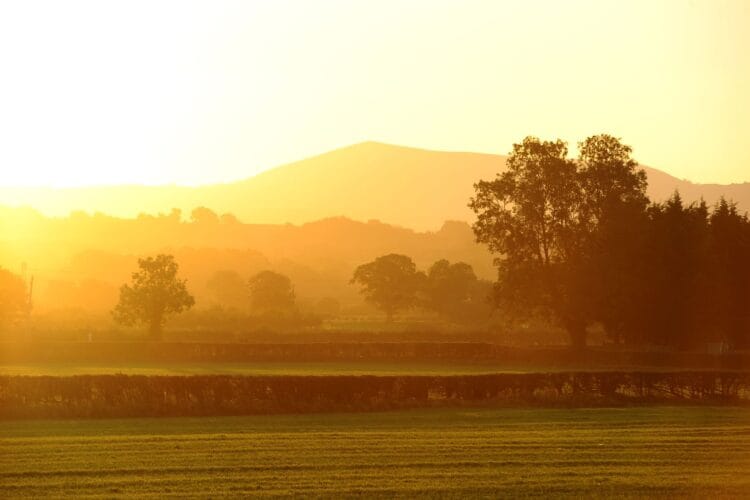
Powys is defined by its walking and cycling landscape.
The Offa’s Dyke Path national trail runs the full length of the county’s eastern border — the section from Montgomery to Knighton through the Shropshire Hills edge is among the best of the entire 177-mile route.
Glyndŵr’s Way (132 miles, Welshpool to Knighton via Machynlleth) passes entirely through Powys and is the most remote of Wales’s four national trails.
Following the route of Owain Glyndŵr’s 15th-century rebellion through ancient droving country. It is unsignposted in places and demands good navigation.
The Heart of Wales line railway — running from Shrewsbury to Swansea through the centre of Powys offers one of the great railway journeys in Britain
It has stations at Knighton, Llandrindod, Builth Road and Llandovery providing linear walk access to some of the county’s finest countryside.
See: walking in Wales.
Licence: Crown Copyright
Where to Stay in Powys
Holiday cottages in Powys are exceptionally good value — converted longhouses, drovers’ inns and hill farmhouses with mountain views at prices well below the national park equivalents. The areas around Rhayader, Montgomery, Knighton and the Elan Valley are particularly rewarding.
Glamping on Powys hill farms — yurts and shepherd’s huts with genuinely remote dark sky locations — is an outstanding experience unique to this part of Wales. The Cambrian Mountains are within the Cambrian Mountains Dark Sky Initiative area.
Hotels range from the Lake Vyrnwy Hotel (one of Wales’s most dramatically situated country house hotels) to Georgian coaching inns in Welshpool, Llandrindod Wells and Builth Wells.
Use the map below to explore all options.
Frequently Asked Questions: Powys
What is Powys known for?
Powys is known for Powis Castle and its exceptional National Trust hanging gardens, Lake Vyrnwy and the Victorian reservoir estate, the Cambrian Mountains (source of both the Severn and the Wye), the market towns of Montgomery, Welshpool and Llandrindod Wells, the Elan Valley reservoirs, and Glyndŵr’s Way national trail. It is Wales’s largest county and its emptiest — a destination for those seeking genuine rural remoteness.
Is Powis Castle worth visiting?
Powis Castle is one of the finest National Trust properties in Britain — not just in Wales. The combination of the continuously inhabited medieval castle, the Clive of India museum collection, and the extraordinary late 17th-century hanging gardens (considered the finest surviving formal gardens of their period in Britain) makes it genuinely exceptional. Allow 3–4 hours. Admission approximately £19 adult — verify at nationaltrust.org.uk/powis-castle.
How do you get to Powys?
By rail: the Heart of Wales line from Shrewsbury to Swansea serves Knighton, Llandrindod Wells and Builth Road. Welshpool is served by the Shrewsbury–Aberystwyth line. By car: the A483 from Chester to Swansea is the main north-south spine road through the county. Powys is approximately 2.5 hours from Birmingham, 2 hours from Cardiff and 3 hours from London by car.
See accommodation: holiday cottages in Wales.
Explore all Powys and Mid Wales guides:
Bannau Brycheiniog (Brecon Beacons)
Planning a trip to Wales?
Find the perfect holiday cottage for your Welsh adventure.