


What is Wales Famous For?
What is Wales Famous For? 20 Things That Make Wales Unique
Wales is famous for castles, rugby, coal, and a language spoken by over 800,000 people.
But the reality goes much further. Wales has Europe’s most castle-dense landscape, the oldest recorded language in Britain, a musical tradition stretching back over 1,000 years, and some of the most dramatic coastline on the Atlantic seaboard.
Here is exactly what Wales is famous for — and why each one deserves more than a passing mention.

© Hawlfraint y Goron / © Crown copyright (2024) Cymru Wales
1. The Welsh Language: Britain’s Oldest Living Language
Welsh (Cymraeg) is a Celtic language with written records going back to the 6th century. It is still spoken as a first language by over 800,000 people — around 30% of the Welsh population.
It is the only language in the UK that has legal equality with English in a devolved nation. Every road sign in Wales is bilingual. Schools, courts, and the Welsh Government conduct business in Welsh.
The language has survived conquest, suppression, and a century of mass emigration to the coal valleys where English dominated. That it still thrives is remarkable.
2. Castles: More Per Square Mile Than Anywhere on Earth
Wales has over 600 castles in an area of 20,778 square kilometres. No country on earth has more fortresses relative to its size.
Four of them — Beaumaris, Caernarfon, Conwy, and Harlech — are UNESCO World Heritage Sites. All four were built by Edward I between 1277 and 1295 as part of his campaign to control Wales.
Full guide at wales.org/castles-in-wales/.
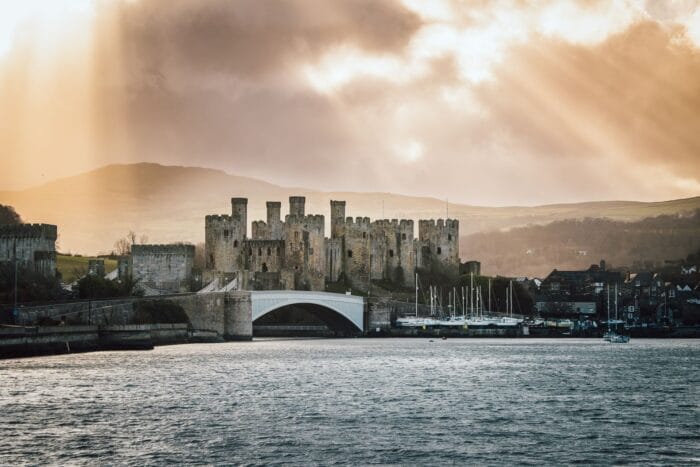
Conwy Castle
3. Rugby Union: The National Religion
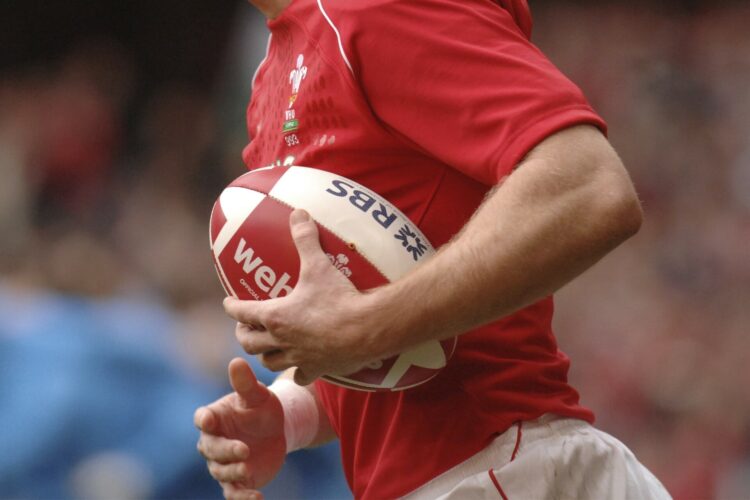
Rugby union is more than a sport in Wales. It is part of national identity in a way that is difficult to explain to outsiders but immediately obvious when Wales play at the Principality Stadium in Cardiff.
Wales has won the Grand Slam — defeating all four other nations in the Six Nations Championship — 12 times. The record for the most Six Nations titles is shared between Wales and England.
The Principality Stadium (CF10 1NS) holds 74,500 people. When Wales play, Cardiff city centre empties and fills the stadium and surrounding pubs. The singing — of Calon Lân or Hen Wlad Fy Nhadau — before kick-off is unlike anything in world sport.
4. Male Voice Choirs: A Living Tradition
The male voice choir tradition began in the industrial valleys of South Wales in the 19th century. Choirs were formed by miners who gathered to sing after shifts underground.
Wales still has over 100 active male voice choirs. The most famous — including Treorchy Male Choir and Morriston Orpheus Choir — perform internationally and can fill concert halls in New York and Sydney.
Many choirs welcome visitors to rehearsals, held weekly in town halls and chapels across the Valleys. It costs nothing to attend. Check visitwales.com for a current rehearsal schedule.
5. The National Eisteddfod: The Largest Folk Festival in Europe
The National Eisteddfod of Wales is an annual festival of Welsh language, music, poetry, and culture. It moves to a different location each year — alternating between North and South Wales.
Over 150,000 people attend each year across eight days. All events are conducted entirely in Welsh. The chairing and crowning of the winning bard are conducted with ceremonies dating back to 1176.
The Urdd National Eisteddfod, for children and young people, is held separately in May. It is the largest youth festival in Europe, with over 90,000 competitors.
6. Welsh Coal: The Industry That Shaped a Nation
At its peak in 1913, the South Wales coalfield employed 233,000 men and produced 56 million tonnes of coal — a third of Britain’s entire output.
The communities it created — terraced streets running up steep valley sides — still define much of South Wales. The closure of the pits between 1950 and 1994 reshaped the region as profoundly as the coal boom had a century earlier.
Big Pit National Coal Museum in Blaenavon (NP4 9XP) tells this story better than anywhere. A former miner leads you 90 metres underground. Free entry. Full guide at wales.org/south-wales-valleys/.
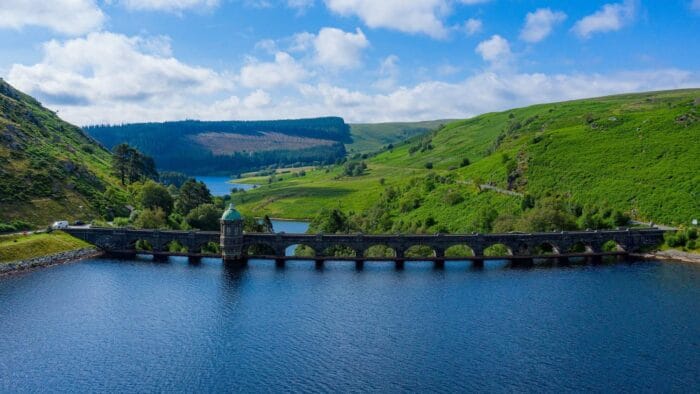
Elan Valley
7. The Welsh Dragon: The World’s Oldest National Flag Emblem
The red dragon on the Welsh flag — Y Ddraig Goch — is the oldest national flag symbol still in use in the world.
It appears in the Mabinogion, a collection of Welsh tales written down in the 12th century from much older oral traditions. The dragon was used as a battle standard by the Roman legions stationed in Wales and later by Welsh princes in the post-Roman period.
The current flag design was officially recognised in 1959. It is one of the few national flags in the world to feature a dragon.
8. Welsh Food: Cawl, Rarebit, Lamb and Laverbread
Wales has a distinct food culture built around lamb, leeks, cheese, and the sea.
Cawl is the national dish — a slow-cooked broth of Welsh lamb, leeks, potatoes, and root vegetables. Every family makes it differently. It is the food Welsh people associate most strongly with home.
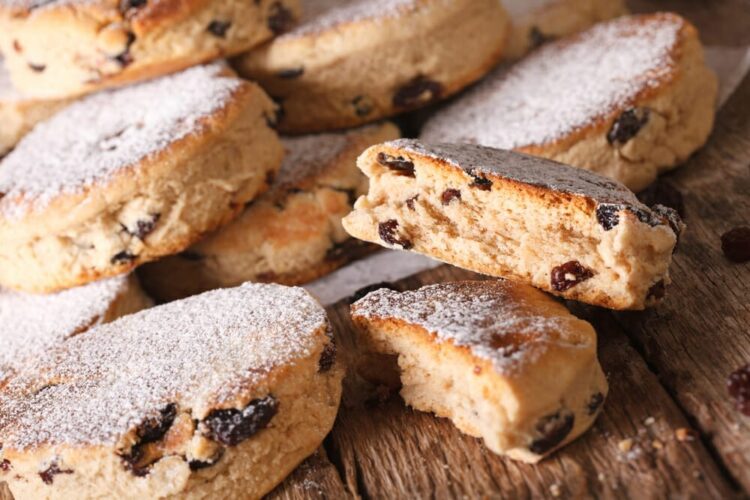
Welsh Rarebit is molten cheese sauce — made with Welsh Cheddar, mustard, Worcestershire sauce, and beer — poured over thick toast. It is nothing like the name suggests and everything like cheese on toast should be.
Laverbread (bara lawr) is made from seaweed (Porphyra umbilicalis) gathered off the Gower coast. It looks like dark green purée and is traditionally served with bacon and cockles for breakfast in South Wales.
Wales has Michelin-starred restaurants, a thriving craft food and drink scene, and more artisan producers than most visitors expect. Full guide at wales.org/welsh-food/.
9. Snowdon (Yr Wyddfa): The Highest Peak in England and Wales
Yr Wyddfa — known in English as Snowdon — stands at 1,085 metres. It is the highest peak in both Wales and England.
Around 500,000 people climb it each year. Six named routes ascend the mountain, ranging from the straightforward Llanberis Path (14.5km round trip, approximately 6 hours) to the technical Crib Goch scramble.
The Snowdon Mountain Railway has operated since 1896 and carries visitors to within 20 metres of the summit — the only public rack-and-pinion railway in Britain. Return journey approximately £35 adults (book in advance).
The summit is inside Eryri National Park (LL55 4UE for the Llanberis trailhead). Full guide at wales.org/snowdonia/.
10. The Wales Coast Path: The First Coastal Path to Encircle an Entire Country
The Wales Coast Path opened in 2012. It runs 870 miles around the entire Welsh coastline from Queensferry in the north to Chepstow in the south.
It was the first footpath in the world to follow the entire coast of a country. Combined with Offa’s Dyke Path on the English border, it forms a 1,030-mile circuit around the whole of Wales.
Full planning guide at wales.org/pembrokeshire-coast-path/.
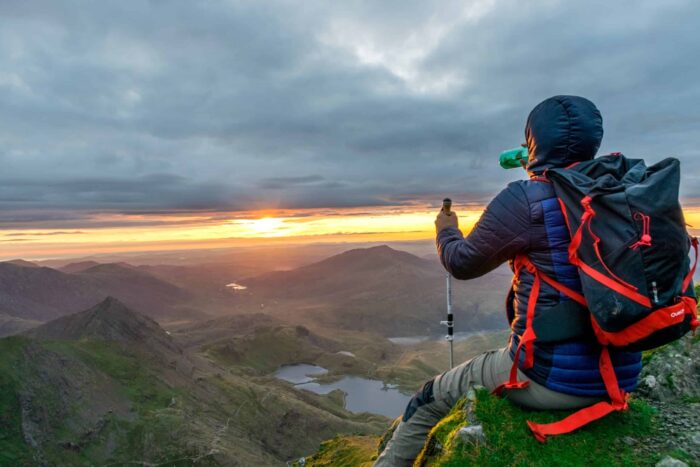
view from Mount Snowdon
Famous Welsh People: From Richard Burton to Gareth Bale
Wales has produced a disproportionate number of globally significant figures in the arts, sport, and politics.
Dylan Thomas (1914–1953) — born in Swansea, wrote Under Milk Wood and Do Not Go Gentle into That Good Night. His writing shed at the Boathouse in Laugharne (SA33 4SD) is open to visitors.
Richard Burton (1925–1984) — born in Pontrhydyfen in the Afan Valley. One of the most acclaimed screen actors of the 20th century. Nominated for seven Academy Awards.
Tom Jones — born in Pontypridd in 1940. One of the best-selling music artists in the world, with over 100 million records sold.
Gareth Bale — born in Cardiff in 1989. Five-time Champions League winner with Real Madrid. Wales’s all-time leading goalscorer with 41 international goals.
Aneurin Bevan (1897–1960) — born in Tredegar, Monmouthshire. Founded the National Health Service in 1948. One of the most consequential British politicians of the 20th century.
More Things Wales Is Famous For
Dark Sky Reserves: Wales has five International Dark Sky Reserves, more than any comparable area in the UK. Eryri (Snowdonia), Bannau Brycheiniog (Brecon Beacons), and the Elan Valley are among the darkest places in mainland Britain. See wales.org/bannau-brycheiniog/ for the Brecon guide.
Portmeirion: An Italianate village built on the North Wales coast between 1925 and 1976 by architect Clough Williams-Ellis. Celebrates its centenary in 2026. The filming location for cult 1960s TV series The Prisoner. See wales.org/portmeirion/.
Red Kites: Once reduced to fewer than a dozen breeding pairs in Wales, red kites have recovered to over 10,000 birds — one of the greatest conservation success stories in British history. Daily feeding stations operate at Gigrin Farm near Rhayader (LD6 5BL).
Hay-on-Wye: A small market town on the Brecon Beacons border with more bookshops per capita than anywhere else on earth. The Hay Festival — held each May — brings 250,000 visitors and world-famous authors annually. See wales.org/bannau-brycheiniog/.
Slate: The slate quarries of North Wales — particularly Penrhyn, Dinorwig, and Llechwedd — once supplied roofing slate for the entire British Empire. The Gwynedd Slate Landscape is now a UNESCO World Heritage Site, inscribed in 2021.
Frequently Asked Questions: What is Wales Famous For?
What is Wales most famous for?
Wales is most widely known internationally for castles, rugby union, the Welsh language, and coal mining. Within the UK, the choral tradition, Snowdon, and the coastline are equally defining. All five — castles, rugby, Welsh, coal, choirs — are genuinely significant, not tourist clichés.
What food is Wales famous for?
Wales is famous for cawl (lamb broth), Welsh Rarebit (cheese sauce on toast), laverbread (seaweed), Welsh lamb, and Caerphilly cheese. The food scene has evolved significantly — Wales now has Michelin-starred restaurants and a thriving artisan food and drink industry.
What sport is Wales famous for?
Rugby union is the national sport — Wales has won the Grand Slam 12 times. Football is the other major sport. Wrexham AFC, founded in 1864, is the third oldest professional football club in the world and gained global attention after Ryan Reynolds and Rob McElhenney purchased the club in 2021.
Is Wales its own country?
Yes. Wales is a country within the United Kingdom. It has its own devolved government (the Senedd), its own laws on areas including education and health, its own national identity, and its own language — Welsh — which has equal legal status to English in Wales.
Explore Wales:
Snowdonia — Eryri National Park

Nick, your trusted guide to Wales travel and exploration, shares a deep passion for this enchanting land. With years of exploration, Nick offers expert insights into the best of Wales. Join him on a journey through its captivating history, culture, and hidden gems, as he inspires you to create unforgettable Welsh travel experiences.
Planning a trip to Wales?
Find the perfect holiday cottage for your Welsh adventure.


