


Wye Valley 2026: The Complete Guide to Tintern Abbey, River Walks & Breaks
The Wye Valley is one of the great landscapes of Britain.
The River Wye carves through a deep limestone gorge between Monmouth and Chepstow, past wooded cliffs, ancient castles and the ruined arches of Tintern Abbey.
It sits on the Wales-England border — Wales on the west bank, England on the east.
The result is a destination that feels apart: quiet, green and surprisingly undiscovered for a landscape of this quality.
Whether you’re walking the Wye Valley Walk, kayaking the river, exploring Tintern or staying in a woodland cottage with valley views — this guide covers everything for 2026.
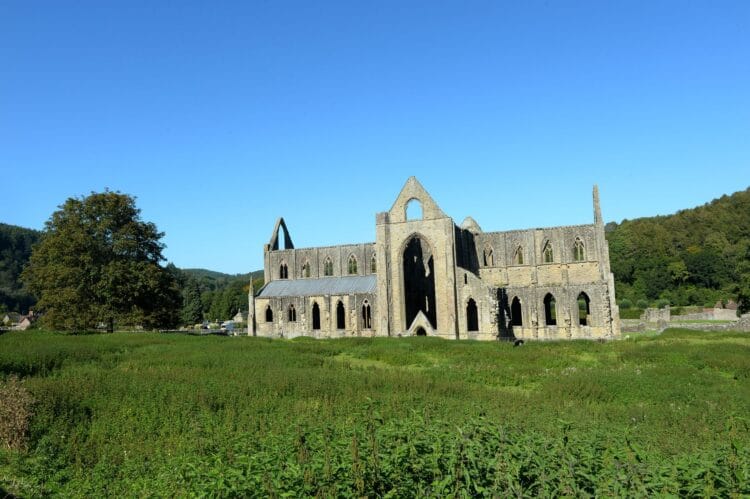
Tintern Abbey: The Most Romantic Ruin in Wales
Tintern Abbey (NP16 6SE) is the defining image of the Wye Valley.
Founded by Cistercian monks in 1131 and dissolved by Henry VIII in 1536, its Gothic arches have stood open to the sky for nearly 500 years.
Turner painted it. Wordsworth wrote a poem standing on the ridge above it. Today it remains one of the most complete and evocative medieval ruins in Britain — its nave, choir and great west window still largely intact.
Managed by Cadw and open year-round, with seasonal variations in hours.
The village of Tintern has good independent cafés and access to the Wye Valley Walk in both directions.
The best view of the abbey is from the Devil’s Pulpit viewpoint on the English hillside — a steep 30-minute climb rewarded with an iconic panorama across the ruins and river below.
See our full heritage guide: castles and historic sites in Wales.
The Wye Valley Walk: Britain’s Most Beautiful Gorge Walk
The Wye Valley Walk follows the river for 136 miles from Chepstow in the south to Plynlimon in Mid Wales.
The southern section between Chepstow and Monmouth — approximately 16 miles — is the finest.
It hugs the wooded gorge walls, passes Tintern Abbey, and delivers some of the best inland walking scenery in South Wales.
Two manageable day sections stand out.
Chepstow to Tintern (8 miles, 4 hours) follows the river upstream through the gorge.
The abbey emerges through the trees as you approach from the south, a genuinely memorable arrival.
Tintern to Monmouth (8 miles, 4–5 hours)
climbs out of the valley to the wooded plateau before descending to Monmouth at the confluence of the Wye and Monnow.
The walk connects to the Offa’s Dyke Path national trail at both ends.
Both routes share the same accommodation infrastructure of B&Bs, riverside inns and hostels.
A growing number of luggage transfer services operate along both trails — making inn-to-inn walking without a heavy pack entirely practical.
See: walking in Wales | hiking in Wales.
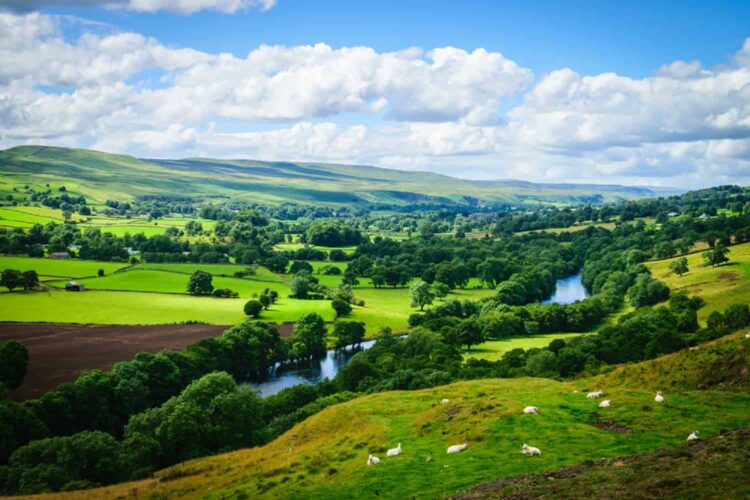
Kayaking the River Wye: One of Britain’s Best Canoe Rivers
The River Wye is one of the finest canoe and kayak touring rivers in Britain.
The section from Hay-on-Wye to Chepstow is widely considered the best multi-day paddle route in Wales.
It flows at Grade 1–2 — calm enough for beginners, long enough to satisfy experienced paddlers.
No specialist whitewater skills are required on the main touring sections.
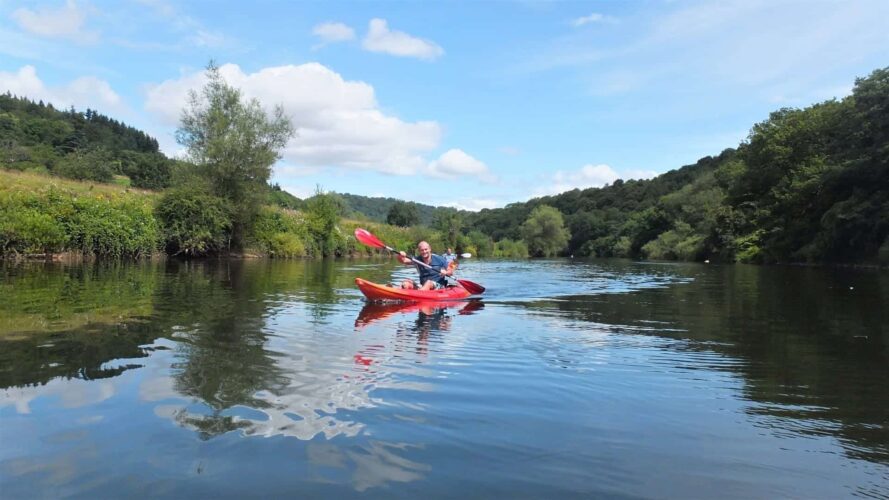
The most popular day trip is Symonds Yat to Monmouth (approximately 12 miles, 4–5 hours).
This section passes through the most dramatic part of the gorge, beneath the limestone cliff of Yat Rock — 150 metres above the river and accessible by footpath for outstanding views.
The three-day paddle from Hay-on-Wye to Chepstow is a classic multi-day journey — camping on the riverbank in some sections, staying in riverside pubs in others.
Canoe and kayak hire is available at Symonds Yat, Monmouth and several points between.
See: water sports in Wales.
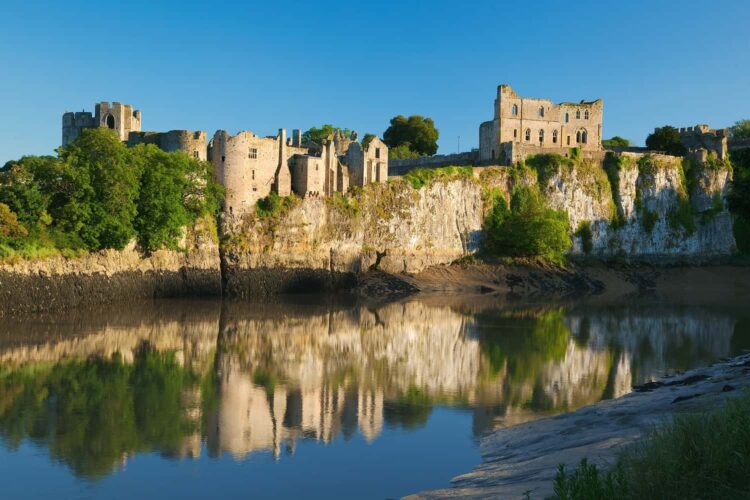
Chepstow: The Gateway Town and Its Castle
Chepstow sits at the southern tip of the Wye Valley where the river meets the Severn Estuary.
It is the natural entry point from England — and historically one of the most significant small towns in Wales.
Chepstow Castle (NP16 5EY) was the first stone castle built in Britain after the Norman Conquest.
Construction began in 1067 — just one year after the Battle of Hastings.
It sits on a narrow limestone ridge above the river, making it one of the most dramatically sited castles in Wales.
Seven centuries of building phases are visible in its towers and halls, from the original Norman keep to Civil War additions.
Chepstow is 20 minutes from the M4/M48 Severn crossings — the most accessible part of Wales from Bristol and the West of England.
The town itself rewards an hour of wandering beyond the castle — the old town walls survive in places, the high street has a cluster of independent shops, and the quayside below the castle gives the best view of the gorge from ground level.
Wednesday and Saturday markets run year-round in the town centre.
Raglan Castle: The Last Great Medieval Castle in Wales
West of the valley, the Vale of Usk is anchored by one of the most impressive castle ruins in Wales.
Raglan Castle (NP15 2BT) was the last great castle built in medieval Wales — construction began around 1435.
Unlike the austere fortresses of Edward I, Raglan was built as much for display as defence.
Its Great Tower — the moated, hexagonal Yellow Tower of Gwent is the finest piece of late medieval military architecture in Wales.
The castle fell after an 11-week siege in 1646 and was deliberately slighted, yet its ruins remain among the most substantial in the country.
The Vale of Usk between Abergavenny and Usk is excellent cycling and walking country with quiet lanes, the River Usk and the Brecon Beacons on the horizon.
See: South Wales guide | Bannau Brycheiniog (Brecon Beacons).
Monmouth: Market Town at the Heart of the Valley
Monmouth (Trefynwy) sits at the confluence of the Wye and Monnow rivers — the most central town in the Wye Valley and the best single base for exploring it.
It is an unusually handsome market town with a medieval core, a twice-weekly market and a quietly confident independent food and drink scene.
The Monnow Bridge is the centrepiece of Monmouth and one of the most photographed structures in Wales — a 13th-century fortified river bridge with its original gatehouse still standing above the central arch.
It is the only surviving medieval fortified bridge gateway in Britain.
Monmouth Castle (free entry, Cadw) is a substantial ruin in the town centre and was the birthplace of Henry V in 1386. The great hall and round tower remain largely intact.
The adjacent Castle and Regimental Museum tells the story of the Royal Monmouthshire Royal Engineers — the oldest regiment in the British Army reserve.
Abergavenny is 15 miles west and easily reached by car or bus — see our full guide to the town and the Bannau Brycheiniog gateway in the Brecon Beacons guide.
The two towns together make a compelling two-centre itinerary for a week in the borders.
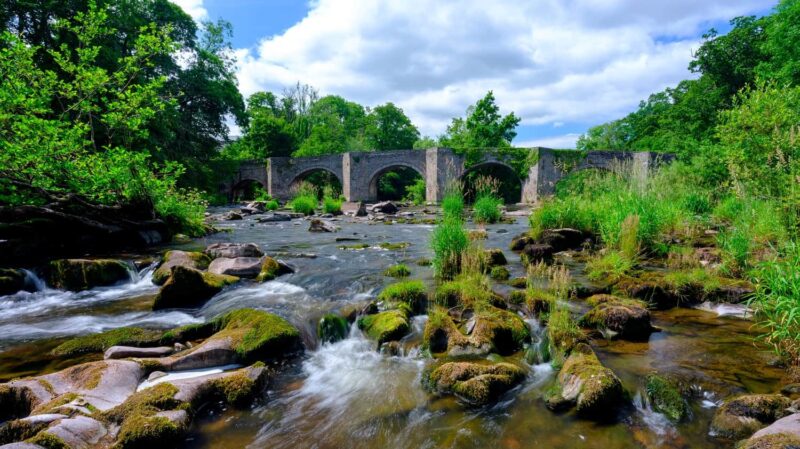
Wildlife in the Wye Valley
The Wye Valley AONB is one of the most ecologically rich landscapes in Wales.
The ancient oak woodland covering the gorge sides is among the finest in Britain — a continuous canopy largely undisturbed for thousands of years.
Peregrine falcons nest on the limestone cliffs and are regularly seen hunting above the river. The valley is also one of the most reliable places in South Wales to spot otters — dawn and dusk on quieter stretches offer the best chances.
Red kites are now a common sight throughout after Wales’s successful reintroduction programme. Their russet tails and forked silhouette are unmistakable against the tree canopy below.
Symonds Yat Rock is a well-known peregrine viewing point, the RSPB operates a seasonal watching station here during the nesting season (typically April to August).
The rock is accessible on foot from either bank; the Symonds Yat East car park (HR9 6JL) gives the most direct approach.
See: wildlife in Wales.
Where to Stay in the Wye Valley
Holiday cottages range from riverside properties in Tintern and Llandogo to woodland retreats on the valley slopes.
Properties with river or valley views book up quickly for summer and Hay Festival weeks — reserve early.
Hotels and country inns are strong throughout. The Whitebrook near Monmouth (NP25 4TX) holds a Michelin star and is one of the finest restaurants-with-rooms in Wales.
Glamping in the valley is exceptional — woodland bell tents and shepherd’s huts on the gorge sides offer one of the most immersive forest stay experiences in Wales.
Several operators run properties within the AONB boundary with no light pollution and direct access to the valley walking network.
Use the map below to browse and book all property types.
See also: holiday cottages in Wales | glamping in Wales.
Frequently Asked Questions: Wye Valley
Is the Wye Valley in Wales or England?
Both. The River Wye forms the border between Wales and England along much of its length. The west bank is Wales; the east bank is England. Most key visitor sites — including Tintern Abbey, Chepstow Castle and Raglan Castle — sit on the Welsh side. The AONB designation covers both banks.
How long does it take to walk from Chepstow to Tintern?
The Wye Valley Walk between Chepstow and Tintern is approximately 8 miles — most walkers allow 4 to 4.5 hours. The route is well-signposted through riverside woodland. The Wye Valley Wanderer bus runs seasonally between Chepstow, Tintern and Monmouth — check wyevalleyaonb.org.uk for 2026 timetables.
What is the best base for exploring the Wye Valley?
Monmouth is the best single base — well placed for Tintern (8 miles south), Raglan Castle (8 miles west) and Abergavenny (15 miles west). Tintern village suits those who want immediate access to the abbey and gorge walks. Chepstow is ideal for visitors arriving from Bristol and the M4. See accommodation: holiday cottages in Wales.
Explore all Wye Valley and South Wales guides:
Planning a trip to Wales?
Find the perfect holiday cottage for your Welsh adventure.