


Hay-on-Wye 2026: The Definitive Guide to Wales’s World-Famous Book Town
Hay-on-Wye is a picturesque market town on the border of Wales and England with one of the most distinctive identities of any town in Britain. While around 1,800 people live here permanently, on a bustling weekend, it draws thousands of visitors.
They aren’t drawn by sandy beaches or major theme parks, but by the magic of literature.
Known globally as the “Town of Books,” Hay holds more than twenty second hand and antiquarian bookshops. Some are open every day, while others are run on a charming honour system with an honesty box resting on unattended outdoor shelves.
When you add the annual Hay Festival of Literature and Arts—one of the world’s greatest literary gatherings—and the beautiful surrounding landscape of the Black Mountains and the River Wye, Hay-on-Wye easily earns its reputation as one of the most rewarding and culturally rich places to visit in the UK.
Whether you are a solo traveller hunting for a rare first edition, a family looking for accessible riverside walks, or a couple planning a romantic weekend getaway, this 2026 guide covers everything.
We will dive into the best bookshops, festival logistics, scenic walks, day trips, and where to stay, including fully updated accessibility and transport information.
(Note on Geography: Hay sits in Powys, technically in Wales, with the River Wye marking much of the border nearby. The English town of Cusop shares the immediate area. For visitors, it makes no difference—it functions as one incredibly welcoming town!)
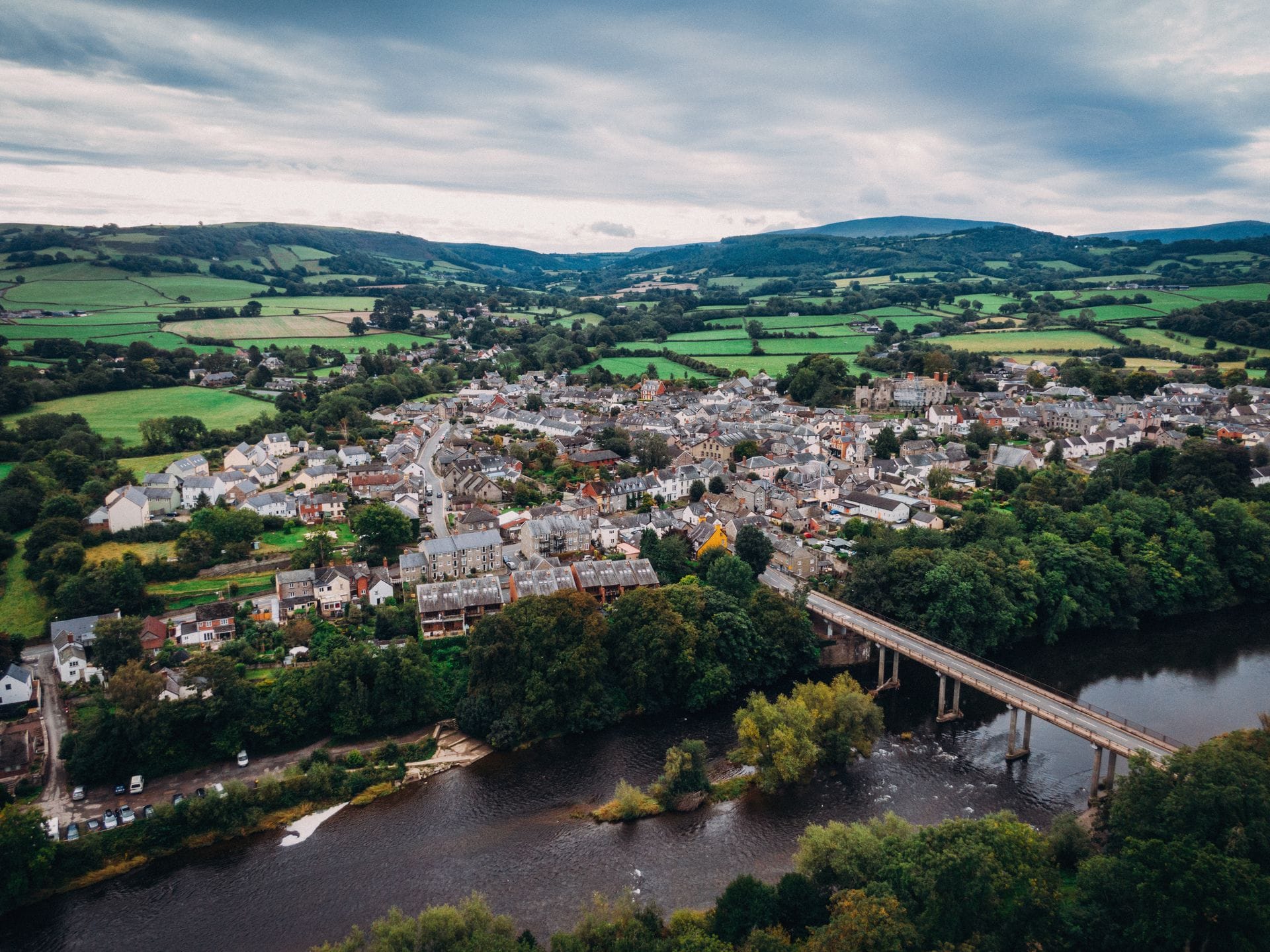
Arial shot of Hay-On-Wye – Licence: Crown Copyright
The Book Town: Exploring Hay-on-Wye’s Second hand Bookshops
Hay became a book town in the 1960s and 1970s when Richard Booth—an eccentric bookseller who later famously declared himself “King of Hay” in a brilliant piece of theatrical self-promotion—began filling the town’s empty buildings with second hand stock. What started as an economic experiment became a global cultural phenomenon.
Today, the bookshops are the town’s primary draw. They range from enormous, barn-like spaces with tens of thousands of volumes to tiny specialist shops with a single, narrow focus. No two are alike, and many have been updated to ensure aisles are more navigable for wheelchairs and pushchairs.
Richard Booth’s Bookshop
The shop that bears the founder’s name remains the dazzling anchor of the Hay book trade. It occupies a massive premises in the town centre with a beautifully curated stock that covers literature, history, travel, art and children’s books.. The cinema attached to the building screens independent and arthouse films and is worth checking for evening showings if you are staying overnight.
Accessibility & Facilities: The ground floor is fully wheelchair accessible, and a lift provides access to the upper floors. The building also houses a fantastic, accessible café serving locally roasted coffee and light lunches.
Hay Cinema Bookshop
The largest bookshop in Hay by floor space, the Cinema Bookshop fills a former cinema with over 200,000 books across multiple floors. The stock is deliberately broad—a general second hand bookshop in the truest sense, with shelves stretching from floor to ceiling. This is a place for explorers rather than researchers; the best way to use it is to give yourself an hour and see what treasures you unearth.
The breadth of stock makes it particularly good for filling gaps in a collection. Travel, biography, cookery, natural history, Welsh interest, and general fiction are all well represented. Paperbacks at the lower price points make it a practical stop even on a limited budget.
Specialist Bookshops Worth Seeking Out
Beyond the two principal giants, Hay has a cluster of specialist dealers that deeply reward those who dig a little deeper
Addyman Books (Lion Street): Particularly strong on literature, poetry, and sci-fi. Famous for its highly photogenic, eccentric interior design.
Murder and Mayhem (Lion Street): Focuses entirely on crime fiction, thrillers, and true crime, complete with police tape and chalk outlines on the floor!
Mostly Maps (Castle Street): Stocks antique maps, prints, and historical ephemera—a genuinely unusual collection in a beautiful space.
Several shops also operate outdoor shelving with honesty boxes — books left out on the pavement at reduced prices, sometimes as low as 50p. This is one of Hay’s defining characteristics and worth arriving early in the day to browse before stock is picked over.
The Hay Festival of Literature and Arts
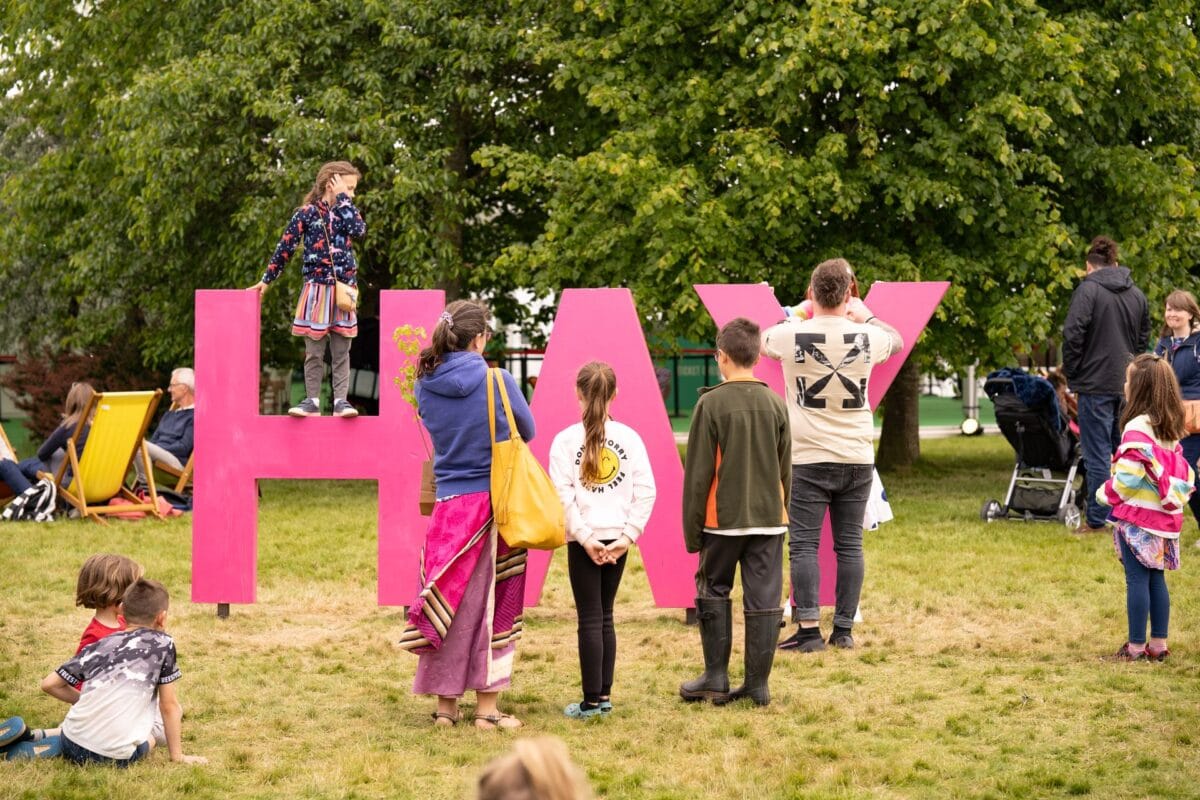
The Hay Festival runs annually over ten days in late May and early June. Since its founding in 1988, it has grown into one of the world’s major literary events — a gathering of writers, thinkers, politicians, scientists and artists that draws around 250,000 visitors over its run.
Bill Clinton once called it “the Woodstock of the mind.” That description has stuck, and while it slightly overstates the case, it captures something true: the festival has a genuinely democratic spirit, with events for children and first-time festivalgoers alongside sold-out appearances by the world’s most prominent authors.
What to Expect at the Hay Festival
Events take place in a series of large tents and marquees on a festival site a short walk from the town centre. The programme mixes author talks and readings, panel discussions, comedy, music, and events for children and schools. The biggest names sell out within hours of the programme being released — booking early is essential. Many smaller events remain available closer to the date and offer some of the best value on the programme.
2026 Dates: The festival traditionally runs for 11 days spanning the late May Bank Holiday. For 2026, events will run from Thursday, May 21 to Sunday, May 31, 2026.
Tickets & Pricing: Entry to the festival village itself is completely free! You only pay for the specific talks you wish to see. Individual event tickets typically range from £10 to £35. Early booking at hayfestival.com is absolutely essential, as headline speakers sell out within hours.
The festival site has multiple food and drink concessions, bookshops stocking signed copies, and spaces designed for waiting between events. The atmosphere is relaxed but busy — arriving with some time to spare before each event is advisable as seating fills quickly even with a ticket.
Planning a Non-Festival Visit to Hay
While Hay is at its most vibrant during festival week, outside these dates, the town is arguably easier to enjoy. Accommodation is much cheaper, the streets are less crowded, and you can chat at length with the local booksellers. Spring (March-April) and Autumn (September-October) are spectacular times to visit, particularly to see the changing colours of the Wye Valley.
Hay also hosts a smaller, incredibly cosy Winter Festival at the end of November, perfect for Christmas shopping.
Hay Castle and Historic Hay
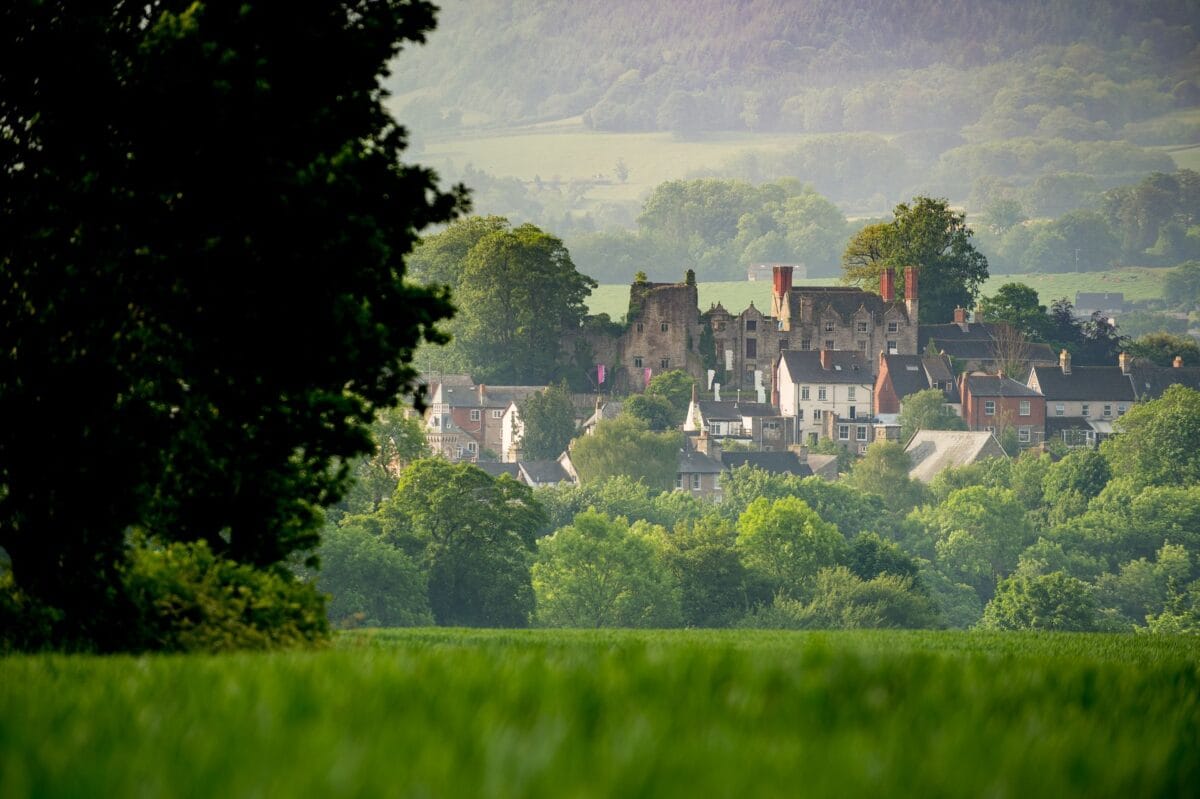
Most visitors come to Hay for books, but the town has a rich, bloody history that predates the printing press. Hay Castle—a Norman fortification built in the late 12th century—has survived sieges by King John, fires, and centuries of neglect.
Following a massive, multi-million-pound restoration project completed in 2022, the castle is now fully open to the public for the 2026 season, serving as a vibrant centre for the arts and community.
Hay Castle
The main structure is a beautiful Jacobean mansion house built directly into the remains of the medieval fortification.
The castle grounds and surrounding area offer good views across the Black Mountains to the south and the English countryside to the east. Even without going inside, the walk up to the castle through the old town streets gives a clear sense of how the settlement developed.
Historic Hay: The Town Walk
Hay’s compact size makes it easy to walk the whole town in a morning. The historical circuit takes in the castle, the old market hall on the high street, the medieval church of St Mary the Virgin, and the clock tower that marks the centre of the market town.
The town’s Norman grid layout is still visible in the street pattern — the lanes and alleys connecting Lion Street to the high street follow paths established in the twelfth century.
The Powys and English border runs through the area, and a number of plaques and markers in the town note historically significant buildings and events.
Walking and Cycling from Hay-on-Wye
Hay sits at the majestic meeting point of the Wye Valley and the northern edge of the Black Mountains — part of the Bannau Brycheiniog (Brecon Beacons) National Park. For outdoor enthusiasts of all abilities, from experienced hikers to visitors needing flat, accessible paths, this is one of the best basecamps in Wales.
Gospel Pass and Twmpa
The road over Gospel Pass — at 549 metres, the highest paved road in Wales — climbs sharply from Hay through Capel-y-ffin and over the ridge of the Black Mountains. It offers one of the most dramatic short drives or cycling climbs in South Wales. The summit of Twmpa (Lord Hereford’s Knob), at 690 metres, is accessible from the road on foot in around 45 minutes and gives panoramic views west to the Brecon Beacons and east across Herefordshire on a clear day.
The Capel-y-ffin valley below the pass contains the ruins of Llanthony Tertia — a small monastery — and several farmhouses offering basic refreshments. The descent into Abergavenny from the pass takes you through the Vale of Ewyas and past Llanthony Priory (see Day Trips below).
Offa’s Dyke Path at Hay
The Offa’s Dyke National Trail passes through Hay-on-Wye, making the town a natural staging post for long-distance walkers doing the full 177-mile route from Chepstow to Prestatyn. The trail follows the line of the eighth-century earthwork built by King Offa of Mercia along the Welsh border. The sections near Hay — across Hay Bluff to the south and along the Wye Valley to the north — offer some of the most scenic walking on the entire route.
Hay Bluff itself — the dramatically flat-topped escarpment visible from the town — is one of the landmark viewpoints of the southern Marches. The short walk from the car park near the top of Gospel Pass (a 2-mile drive from Hay) to the Bluff summit takes around 30 minutes and is manageable for fit walkers of any experience level.
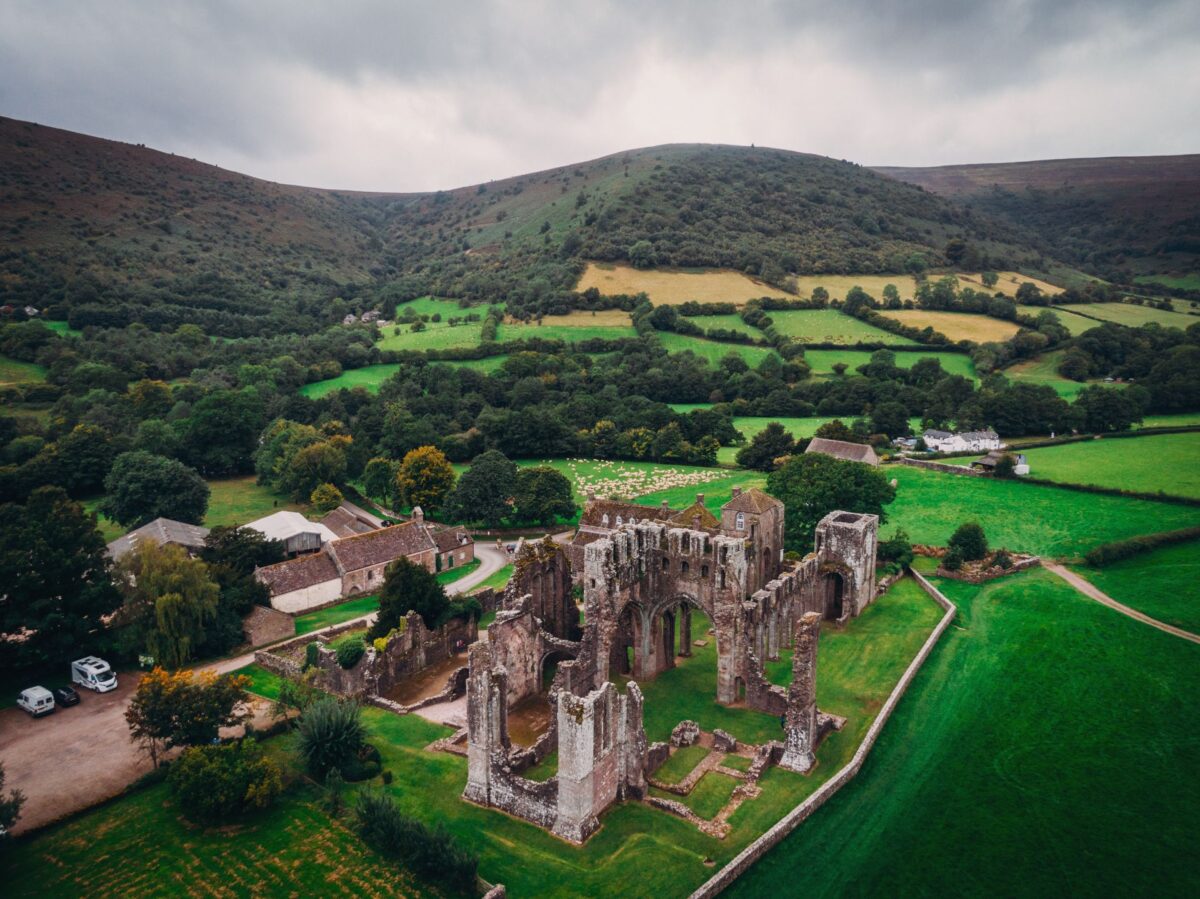
The dramatic ruins of Llanthony Priory offer a spectacular and historic detour for walkers trekking the Offa’s Dyke Path. – Licence: Crown Copyright
Cycling in the Wye Valley
The Wye Valley is one of the most accessible and scenic river valleys in Wales, making it an outstanding destination for cyclists of all ages and abilities. The road running south of Hay-on-Wye towards Glasbury is predominantly flat, closely hugging the riverbank, and experiences lighter traffic outside peak summer weekends. This gentle terrain is perfect for families or those looking for a relaxed afternoon ride. For the more adventurous, the surrounding Black Mountains offer thrilling, steep inclines that will deeply test your stamina.
Day Trips from Hay-on-Wye
Hay’s position on the border of Wales and England makes it a great launchpad for multi-day trips. Because the town sits within striking distance of the Brecon Beacons to the south and the winding Wye Valley to the north, visitors have incredible access to some of the country’s best heritage sites and national parks. Whether you are seeking ancient ruins or vibrant cultural festivals, these destinations are all within a 45-minute drive and offer accessible options for all travellers.
Llanthony Priory
Llanthony Priory is one of the most evocative and hauntingly beautiful ruined religious sites in Wales. Founded in the twelfth century, this Augustinian priory sits deep within the Vale of Ewyas, surrounded by steep, dramatic moorland. The ruins are remarkably atmospheric, especially in the low light of early evening. Uniquely, a historic country inn occupies one of the surviving sections of the priory, allowing you to enjoy a drink right in the crypt of the ruins. The site features flat, grassy areas making it broadly accessible for pushchairs and wheelchairs, though the ground can be uneven in places.
Brecon and Bannau Brycheiniog National Park
Brecon (Aberhonddu) is located 16 miles south of Hay and acts as the main gateway town to the central Bannau Brycheiniog (Brecon Beacons) National Park. It is an absolute must-visit if you plan to hike the iconic Pen y Fan, explore the Beacons ridge, or wander through the magical, moss-draped trails of Waterfall Country around Pontneddfechan. The town itself is highly welcoming, featuring a beautiful cathedral, an accessible flat promenade along the Monmouthshire and Brecon Canal, and plenty of independent cafes.
Builth Wells and the Royal Welsh Showground
Builth Wells (Llanfair ym Muallt) is a historic spa town situated 14 miles northwest of Hay on the River Wye. For most of the year, it is a peaceful mid-Wales retreat, but in late July, it transforms into the bustling host of the Royal Welsh Agricultural Show. This is the pinnacle event in the British agricultural calendar and the largest of its kind in Europe. It provides a deeply authentic, family-friendly Welsh experience packed with local food stalls, traditional craft tents, thrilling arena entertainment, and impressive livestock displays. The showground is fully equipped with accessible toilets, flat pathways, and dedicated viewing areas.
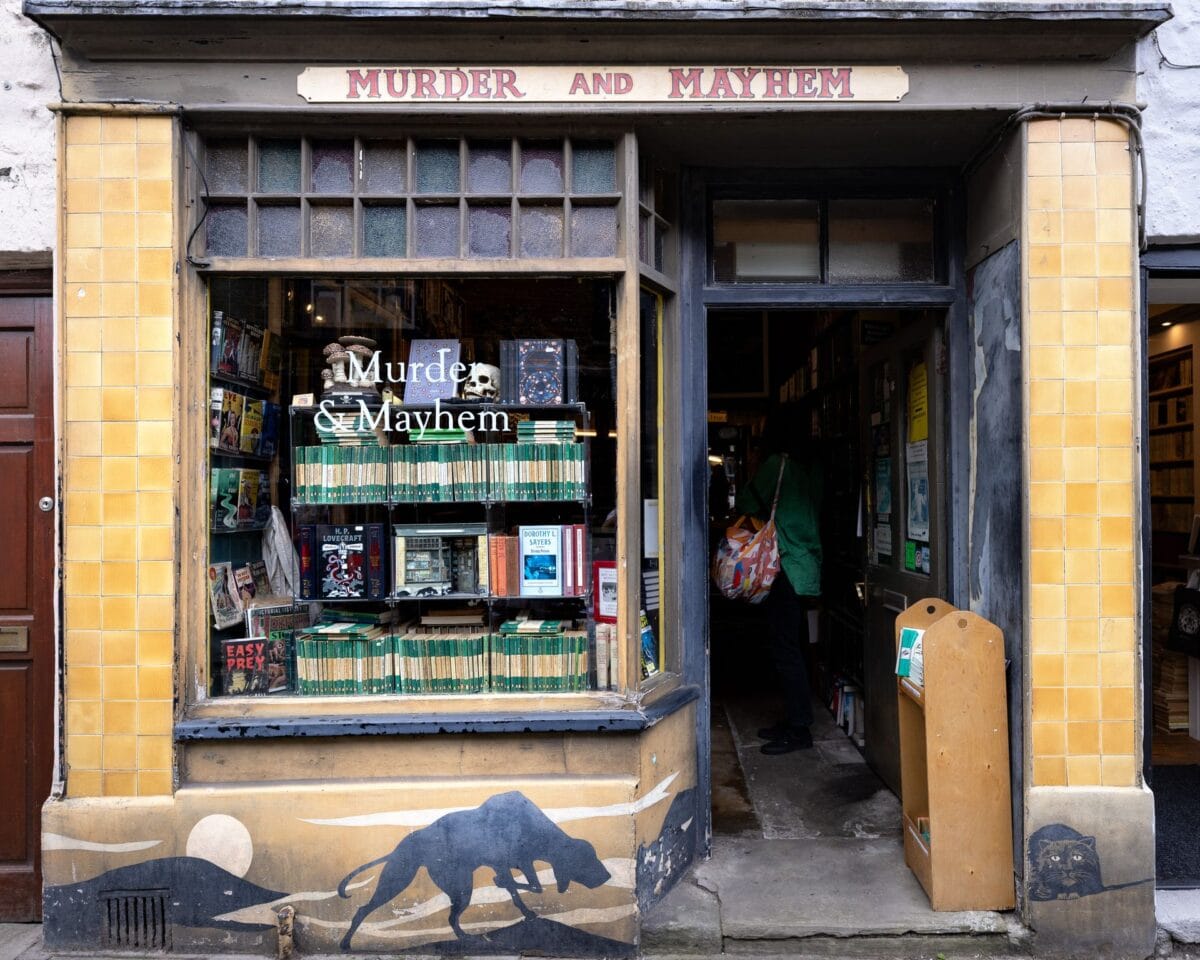
Murder and Mayhem book shop – Licence: Crown Copyright
Getting to Hay-on-Wye
Because it sits deep in the rural borderlands, Hay-on-Wye is not directly served by a railway network. However, reaching the town is incredibly straightforward with a little planning, whether you are driving through the scenic countryside or relying on public transport. The town is dedicated to welcoming all visitors, and recent transport upgrades have made travelling here easier than ever.
By train and bus: The nearest mainline train station is Hereford, located approximately 20 miles to the east. From Hereford station, you can easily catch the T14 TrawsCymru bus service operated by Stagecoach, which takes about an hour and drops you directly in Hay-on-Wye. This modern bus service features low-floor access, making it highly accommodating for wheelchair users, pushchairs, and those with limited mobility.
By car: If you are driving, Hay is remarkably well-connected. It takes approximately 2.5 hours from Cardiff, 3 hours from Manchester, and 3 hours from London by taking the M4 to Newport, then following the A449 and A40 northbound through beautiful scenery.
Parking information: The main long-stay pay-and-display car park is conveniently located on Oxford Road (HR3 5EQ). This facility is excellent for all visitors, featuring dedicated, extra-wide Blue Badge parking bays and newly installed EV charging points for electric vehicles in 2026. The town itself is wonderfully compact, meaning the bookshops and cafes are just a short, flat walk away. During the Hay Festival week in late May, this car park fills rapidly, so official Park & Ride fields are opened on the edge of town with accessible shuttle buses running continuously
Where to Stay in Hay-on-Wye
Hay has a small but brilliant selection of inclusive and welcoming accommodations, ranging from historic hotels to cozy guesthouses and flexible self-catering properties. Because the town centre is so compact, almost any central accommodation will place you within a convenient five-minute stroll of the bookshops, cafes, and the main festival site.
The Old Black Lion on Lion Street (HR3 5AD) is an exceptional four-star, 17th-century coaching inn offering gorgeous historic charm, roaring log fires, and a highly acclaimed AA Rosette restaurant. Rumoured to have once hosted Oliver Cromwell, the inn features ten beautifully appointed en-suite rooms blending period furniture with modern comforts. It is also dog-friendly in the bar and den areas, meaning your four-legged friends can join you for a relaxing evening.
The Swan at Hay on Church Street is a beautifully renovated, independent boutique hotel. It offers elegant, spacious rooms, including accessible ground-floor options for guests with mobility needs. Their fantastic, locally-sourced breakfast is the perfect way to start a long day of exploring the bookshops.
Crucial 2026 Booking Advice: If you are planning to attend the 2026 Hay Festival (May 21 to May 31), you absolutely must book your accommodation 9 to 12 months in advance. The town and the surrounding 20-mile radius sell out entirely every single year, so securing your room early guarantees a stress-free trip.
Ready to secure your perfect Hay-on-Wye getaway?
You can easily browse and book the best local accommodation using the interactive map widget directly below, or simply scroll down to use our dedicated holiday cottage search tool at the very bottom of the page.
Whether you are looking for a cosy B&B in the centre of town or a remote, dog-friendly retreat in the Black Mountains, finding your ideal stay has never been easier.
Hay-on-Wye: Frequently Asked Questions
How many bookshops are in Hay-on-Wye?
Hay currently has more than twenty second hand, antiquarian, and specialist bookshops. While the exact number naturally changes as new shops open and others retire, the town’s renowned book trade has been firmly established since the 1960s and remains the primary reason most visitors make the journey today.
When is the Hay Festival 2026?
The 2026 Hay Festival of Literature and Arts is officially confirmed to run over eleven days from Thursday, May 21 to Sunday, May 31, 2026. You should check the official hayfestival.com website early in the spring for the confirmed 2026 programme, headline speaker announcements, and priority ticket release dates.
Is Hay-on-Wye in Wales or England?
Hay-on-Wye is administratively split right across the border. The vast majority of the town itself, including the main high street, castle, and bookshops, sits in Powys, Wales. However, the eastern edge of the community crosses directly into Herefordshire, England. The town functions seamlessly as a single community, with postal addresses using either HR3 (English) or LD3 (Welsh) postcodes depending on the exact street.
How do I get to Hay-on-Wye without a car?
The easiest route without a car is to take a mainline train to Hereford, which is served directly from London Paddington, Newport, and Cardiff Central. From Hereford train station, you can catch the regular T14 TrawsCymru bus service directly into Hay-on-Wye. During the Hay Festival in late May, exceptional additional transport links are in operation, including dedicated direct shuttle coaches running from both Hereford and Worcester stations right to the festival gates.
What walks can I do from Hay-on-Wye?
The most popular challenging walk is the route up to Hay Bluff on the Offa’s Dyke Path. This is approximately 4.5 miles with 600 metres of ascent, offering a steep but well-marked climb with highly rewarding views. The Gospel Pass road gives access to the stunning Black Mountain ridge for those with their own transport to reach the higher starting points. Alternatively, much flatter, fully accessible walks along the River Wye are available directly from the town centre for those wanting a gentle, scenic outing.
Is Hay-on-Wye worth visiting outside the festival?
Yes. The famous bookshops are open year-round, and the surrounding breathtaking landscape is accessible in all seasons. Spring (April to May) and autumn (September to October) offer the very best conditions for walking and the most pleasant weather. The town is noticeably quieter outside of the frantic festival week, which perfectly suits visitors who want to browse the bookshops at their own pace without navigating through massive crowds.
Explore more of Wales:
Your Welsh adventure doesn’t have to end in Hay-on-Wye! If you are looking for more inspiration to round out your 2026 itinerary, dive into our other expert guides below to discover everything else this beautiful country has to offer.
Planning a trip to Wales?
Find the perfect holiday cottage for your Welsh adventure.