


45 Fun Facts About Wales
45 Fun Facts About Wales 2026:
Things You Didn’t Know
Wales is one of the most statistically unusual countries on Earth.
It has more castles per square mile than any other nation, more sheep than people, and the longest place name in Europe printed on its bus stop signs.
Here are 50 facts about Wales — the kind that change how you see the country when you arrive.
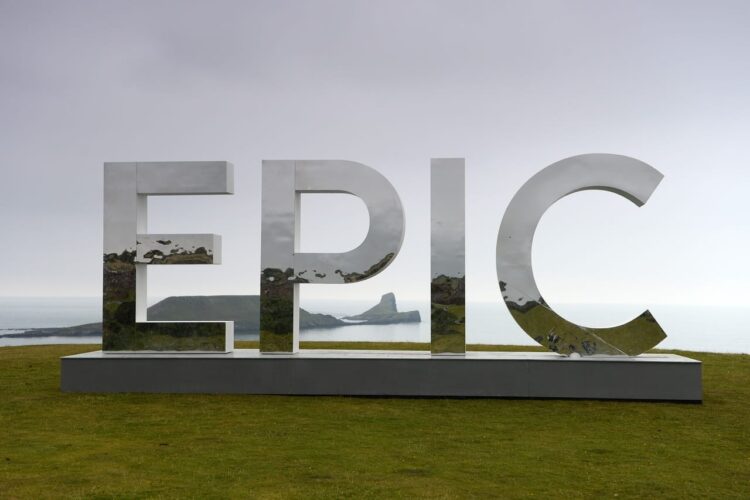
© Hawlfraint y Goron / © Crown copyright (2026) Cymru Wales
Facts About Welsh Geography
1. Wales covers 20,778 square kilometres — slightly smaller than the state of New Jersey and about the same size as Slovenia.
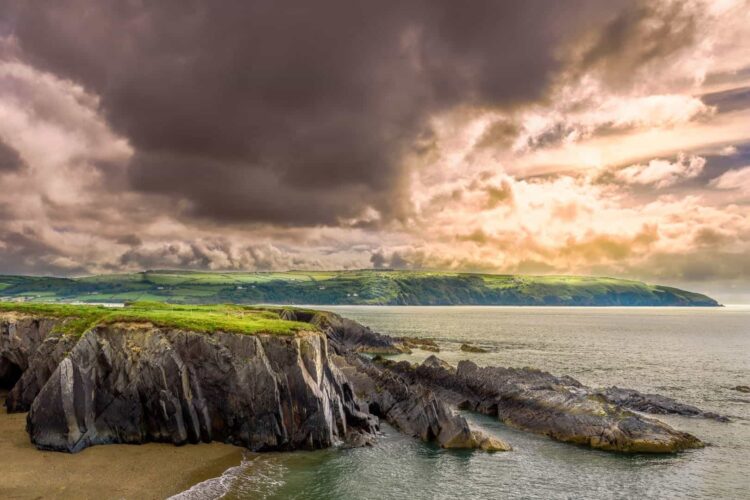
2. Wales has 1,680 miles (2,700km) of coastline. No point in Wales is more than 50 miles from the sea.
3. The Wales Coast Path (870 miles) was the world’s first footpath to follow an entire country’s coastline when it opened in 2012.
4. Yr Wyddfa (Snowdon) is 1,085 metres — the highest point in Wales and England. Approximately 500,000 people attempt to reach the summit every year.
5. Wales has five Areas of Outstanding Natural Beauty, three National Parks, and five UNESCO World Heritage Sites.
6. The Brecon Beacons — now officially named Bannau Brycheiniog — was designated Europe’s first International Dark Sky Reserve in 2013.
7. The Elan Valley reservoirs in Mid Wales supply drinking water to Birmingham — a distance of over 70 miles via gravity-fed aqueduct, with no pumping stations.
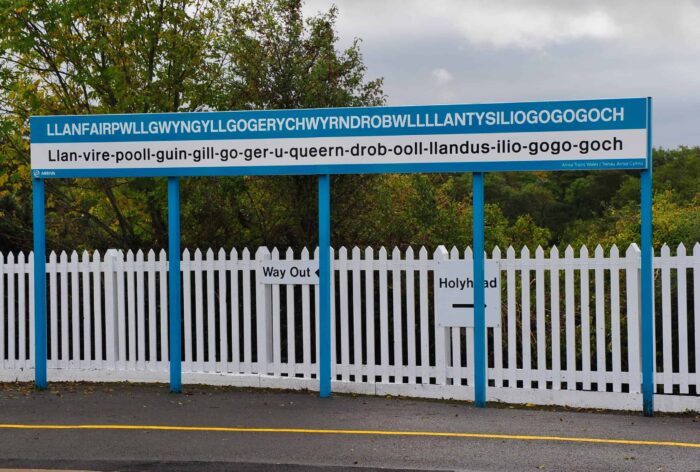
8. The village of Llanfairpwllgwyngyllgogerychwyrndrobwllllantysiliogogogoch on Anglesey has the longest place name in Europe — 58 letters. It is on road signs and a working railway station.
Facts About Welsh History and Castles
9. Wales has over 600 castles — more per square mile than any other country on Earth.
10. Four Welsh castles are UNESCO World Heritage Sites: Beaumaris (LL58 8AP), Caernarfon (LL55 2AY), Conwy (LL32 8AY), and Harlech (LL46 2YH).
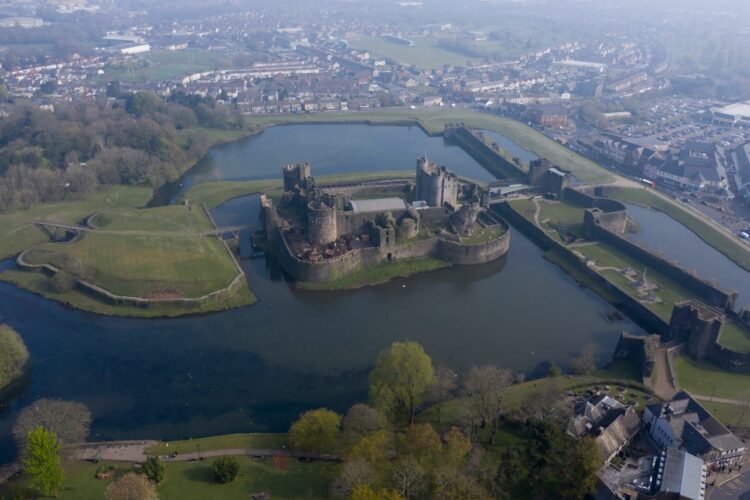
11. Caerphilly Castle (CF83 1JD) is the largest castle in Wales at 12 hectares. Its leaning tower leans further than the tower in Pisa.
12. Chepstow Castle (NP16 5EY) — started in 1067 — is the oldest surviving post-Roman stone fortification in Britain.
13. Edward I built eight castles in Wales between 1277 and 1295. It was the largest castle-building programme in medieval European history. The total cost in today’s money is estimated at over £500 million.
14. The Welsh language — Cymraeg — has been spoken continuously in Wales since at least the 6th century. It is the oldest living language in Britain.
15. Wales was the first country in the world to achieve 100% literacy — in Welsh — in the 18th century, through the circulating schools movement established by Griffith Jones of Llanddowror.
16. Richard Trevithick built and ran the world’s first steam locomotive on the Merthyr Tramroad in 1804 — two years before any other steam engine ran on rails.
Facts About Welsh Culture and Language
17. Welsh is spoken by approximately 800,000 people — about 29% of the Welsh population. It has equal legal status with English in Wales.
18. Welsh has no native words for “yes” or “no.” Instead, verbs are repeated: “Are you coming?” “Coming.” (Wyt ti’n dod? — Ydw.)
19. The National Eisteddfod of Wales — an annual festival of music, literature, and performance conducted entirely in Welsh — attracts 150,000 visitors and dates to 1176.
20. Wales has over 100 active male voice choirs. The Treorchy Male Voice Choir has performed at the Vatican and the Royal Albert Hall.
21. The Welsh dragon — Y Ddraig Goch — is the oldest national flag emblem still in use. It appears in the Mabinogion, the collection of Welsh mythology written down in the 12th century from much older oral traditions.
22. St David’s Day (Dydd Gŵyl Dewi) on 1 March is Wales’s national day. St David — patron saint of Wales — died around AD 589 and is buried in the cathedral at Tyddewi (St Davids).
23. The leek and daffodil are both official symbols of Wales. The leek is the older symbol — Welsh soldiers wore leeks on their helmets at the Battle of Heathfield in 633 to distinguish themselves from their enemies.

© Hawlfraint y Goron / © Crown copyright (2024) Cymru Wales
Facts About Welsh Sport
24. Wales has won the Rugby Union Grand Slam 12 times — including three consecutive titles in 2005, 2008, and 2012.
25. Principality Stadium in Cardiff (CF10 1NS) holds 74,500 people and has a retractable roof — the first in Britain when it opened in 1999.
26. Gareth Bale scored 41 goals for the Welsh national football team — a record. His 2016 free kick against Slovakia is the most watched moment in Welsh football history.
27. Joe Calzaghe retired undefeated in 2009 as WBO and WBA super-middleweight champion — widely considered the best boxer Wales has ever produced.
28. Cardiff City played in the FA Cup final in 1927 — the only non-English club to win the FA Cup, beating Arsenal 1–0.
29. Wales hosted the first ever Rugby World Cup match played under floodlights — at Cardiff Arms Park in 1987.
Facts About Famous Welsh People
30. Dylan Thomas was born in Abertawe (Swansea) in 1914. He wrote most of Under Milk Wood in the Boat House at Laugharne (SA33 4SD), where he is buried.
31. Richard Burton — born Richard Walter Jenkins Jr in Pontrhydyfen in 1925 — was nominated for seven Academy Awards. He remains the most globally celebrated Welsh actor.
32. Tom Jones was born in Pontypridd in 1940. He has released over 100 singles. His 1965 debut “It’s Not Unusual” reached number one in 11 countries simultaneously.
33. Aneurin Bevan — born in Tredegar (NP22 3XN) in 1897 — founded the National Health Service in 1948. The NHS was launched at Trafford General Hospital on 5 July 1948.
34. Roald Dahl was born in Cardiff in 1916. His childhood home — Ty Mynydd — is now a heritage site. The Roald Dahl Museum is in Great Missenden, Buckinghamshire, but his grave is in the village where he lived.

Facts About Welsh Food, Nature and Wildlife
35. Wales has approximately 10 million sheep — roughly three per person. Lamb and Welsh Black beef are designated Protected Geographical Indication products.
36. Wales has more than 10,000 red kites. In the 1930s, only 3 breeding pairs remained in Britain — all in Mid Wales. The species recovered entirely through a Welsh conservation programme.
37. Laverbread (bara lawr) — made from boiled seaweed gathered from Welsh beaches — has been eaten in Wales for over 400 years. Richard Burton called it “the Welshman’s caviar.”
38. The Pembrokeshire coast is home to one of Britain’s largest Atlantic grey seal colonies — approximately 5,000 individuals pup on the beaches around Ramsey Island and Skomer each autumn.
39. Skomer Island (SA62 3BJ) hosts the world’s largest Manx shearwater colony — approximately 316,000 breeding pairs. The birds return to the same burrow every year for up to 50 years.
40. Wales has five designated International Dark Sky areas — more per square mile than any country in the world. The Elan Valley, Bannau Brycheiniog, and the Llŷn Peninsula are three of them.
Facts About Wales That Surprise Most Visitors
41. Wales introduced a 20mph default speed limit in urban areas in September 2023 — the first nation in Britain to do so.
42. Hay-on-Wye (HR3 5AE) has over 30 second-hand bookshops in a town of 1,500 people — the highest bookshop-to-resident ratio in the world.
43. Portmeirion — the Italianate village in Gwynedd (LL48 6ET) — was designed and built by Sir Clough Williams-Ellis between 1925 and 1975. It celebrates its centenary in 2026. The village was used as the filming location for The Prisoner (1967–68).
44. Wales produces more than 100 varieties of cheese, including Caerphilly — a crumbly, mild cheese with a protected geographical designation dating to the 19th century.
45. The Ffestiniog Railway — running from Porthmadog to Blaenau Ffestiniog (LL49 9NF) — is the world’s oldest independent railway company, founded in 1832.
46. Wales has more organ music per capita than any other country in Europe, owing to the concentration of chapel culture in the 19th and 20th centuries.
47. The world’s first million-pound football transfer was a Welsh player — John Charles, from Leeds United to Juventus in 1957 for £65,000 — a world record at the time.
48. Aberystwyth was designated a UNESCO City of Literature in 2026 — the first city in Wales to receive the designation.
49. Wales was the last country in the British Isles to make Sunday pub opening legal — finally permitted in 1961 following a referendum. Some areas had remained dry on Sundays since the Welsh Sunday Closing Act of 1881.
50. The longest mountain range entirely within one country in Britain is the Cambrian Mountains in Mid Wales — running 80 miles from north to south with no major break.
Frequently Asked Questions: Facts About Wales
What is Wales most known for?
Wales is most internationally known for its castles (600+, more per square mile than anywhere on Earth), rugby union (12 Grand Slams), the Welsh language (spoken by 800,000 people), and its dramatic mountain and coastal landscapes.
What are some interesting facts about Welsh geography?
Wales has 1,680 miles of coastline and no point is more than 50 miles from the sea. The Wales Coast Path (870 miles) was the world’s first footpath to encircle an entire country’s coastline. Wales has five International Dark Sky areas — more per square mile than any country in the world.
How many sheep are there in Wales?
Approximately 10 million sheep — roughly three sheep for every person in Wales. The precise figure varies by season as farming practices change, but Wales has been a sheep-farming nation since the medieval wool trade and the ratio has remained consistent.
What language do they speak in Wales?
English and Welsh (Cymraeg) are both official languages with equal legal status. Welsh is spoken by approximately 800,000 people — about 29% of the population. Concentration is highest in North and West Wales. All road signs are bilingual. Welsh is the oldest living language in Britain, spoken continuously since at least the 6th century.
Read next:
What is Wales Famous For? — full guide

Nick, your trusted guide to Wales travel and exploration, shares a deep passion for this enchanting land. With years of exploration, Nick offers expert insights into the best of Wales. Join him on a journey through its captivating history, culture, and hidden gems, as he inspires you to create unforgettable Welsh travel experiences.
Planning a trip to Wales?
Find the perfect holiday cottage for your Welsh adventure.


