


Anglesey (Ynys Môn) 2026: Things to Do, Beaches and the Complete Island Guide
Anglesey is Wales’s largest island — 276 square miles of sandy beaches, sea cliffs, ancient monuments and farmland separated from the mainland by the Menai Strait. Beaumaris Castle, South Stack RSPB Reserve and Llanddwyn Island are the big draws, but it’s the 125-mile coastal path and the island’s concentration of prehistoric sites that reward visitors who slow down and explore.
Top Things to Do on Anglesey
Whether you are planning a 2026 family holiday or a weekend getaway, Anglesey’s most visited attractions divide between wildlife and history — the RSPB’s South Stack lighthouse reserve on the island’s western tip and Beaumaris Castle at the eastern end are both outstanding. Between them you’ll find burial chambers, a Victorian coastguard station and some of the cleanest air in Wales.
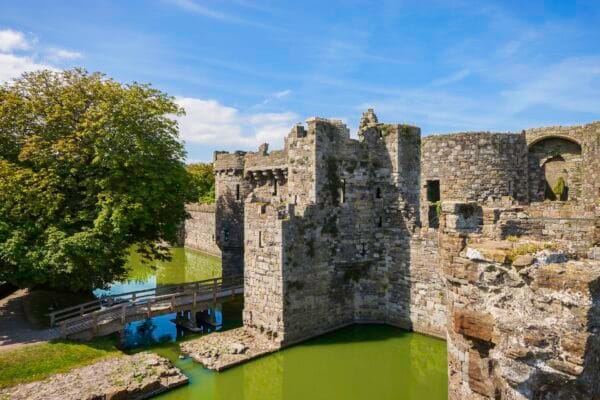
Beaumaris Castle – Licence: Crown Copyright
South Stack RSPB Reserve, Holyhead (LL65 1YH)
Overview: South Stack is one of the finest seabird colonies accessible to the public in Britain. Between April and July the sea cliffs hold thousands of breeding razorbills, guillemots, choughs and — the main draw — Atlantic puffins nesting in cliff-top burrows. The lighthouse itself, built in 1809 on a tidal island reached by a 400-step descent and an aluminium bridge, is one of the most dramatic settings in Wales. Ellin’s Tower visitor centre, run by the RSPB, has telescope viewing of the colony. On calm evenings the clifftop path gives views west over the Irish Sea as far as the Wicklow Mountains.
Opening Times & Prices: The clifftop paths and coastal heath are open at all times — no charge for RSPB reserve access. Ellin’s Tower visitor centre is open daily from 10:00 am to 5:00 pm between Easter and September. The lighthouse is typically open for tours daily from late March to September between 10:30 am and 4:30 pm (weather permitting). Lighthouse admission costs £10.00 for adults, £5.00 for children (5-16 years), and £25.00 for a family ticket. Puffin season runs from late April to mid-July, with May and June being the best time to visit when birds are feeding chicks.
Did you know? You must pay by cash only if you buy your tickets on the lighthouse island itself.
Visitor Info: Located 4 miles west of Holyhead town centre — follow the B4545 then minor roads to the car park at LL65 1YH. The 400-step descent to the bridge is steep; the clifftop walk without descending is worthwhile in itself. Binoculars are highly recommended for the best puffin views. Dogs on leads are allowed on the reserve, but not on the lighthouse island. The RSPB visitor centre has a wonderful café with locally sourced food.
Safety: The cliffs at South Stack are unfenced in places and drops are severe. Keep children close to the path edge. The 400 steps to the lighthouse bridge are steep and can be slippery in wet weather. Holyhead Mountain above the reserve (220m) has a hillfort at the summit — the path is clear but wear appropriate footwear.
Beaumaris Castle (LL58 8AP)
Overview: Beaumaris is considered the most technically perfect medieval castle in Britain — an unfinished masterpiece of concentric design built by Edward I from 1295. It was never fully completed because Edward ran out of money, but what survives is a textbook of medieval military architecture: a perfectly symmetrical plan with inner and outer ward, water-filled moat, and shooting galleries designed so defenders could fire from multiple angles simultaneously. Beaumaris never faced a serious siege in its history, which may explain why so much of it survives. It is a UNESCO World Heritage Site, listed as part of the Castles and Town Walls of Edward I in Gwynedd.
Opening Times & Prices: Open daily most of the year with reduced winter hours (9:30 am to 5:00 pm in summer). For the 2026 peak summer season (June to August), adult admission is £10.90, juniors/students are £7.60, and a family ticket is £34.90. Cadw members and children under 5 enter for free. The castle is in the centre of Beaumaris town, walking distance from the Green and the Victorian pier.
Visitor Info: Beaumaris town is 5 miles from the Britannia Bridge on the A545. Town centre car parking (charged). Allow 1.5 to 2 hours including the wall walks. The moat is shallow — ducks and herons are regular visitors. Beaumaris also has an early Victorian courthouse and gaol (LL58 8EP) worth visiting, which typically opens Monday to Friday from 9:00 am to 2:00 pm. The covered market and harbour front have independent cafés and a good fish and chip shop.
Bryn Celli Ddu Burial Chamber, Llanddaniel (LL61 6EQ)
Overview: Bryn Celli Ddu — “the mound in the dark grove” — is the best-preserved Neolithic passage grave in Wales, built around 3000 BC and aligned so that at midsummer sunrise, light enters the 8-metre passage and illuminates the chamber at the far end. It was built on top of an even older henge monument, making the site one of continuous ritual use over thousands of years. The original carved stone from the chamber is in the National Museum Cardiff; a replica stands in the chamber today. Walking out to the mound across farmland — approaching it just as Neolithic people would have — is a significant part of the experience.
Opening Times & Prices: Open all year round during daylight hours. Entry is completely free, and the site is managed by Cadw. The midsummer sunrise event typically draws a small crowd of visitors. A torch is useful for entering the chamber at other times of year.
Visitor Info: Signposted from the A4080 near Llanddaniel Fab, 6 miles from the Britannia Bridge. A farm track leads to a small, free gravel car park. The final approach is a 10-minute walk across a working field. Wellies useful in wet weather. No facilities on site. A second significant Neolithic monument, Din Dryfol, is nearby — check Cadw’s map at cadw.gov.wales for locations.
Anglesey’s Best Beaches
Anglesey has over 30 beaches around its 125-mile coastline — from the wide Atlantic-facing sands of Rhosneigr to the sheltered tidal lagoon of Trearddur Bay. Most are easily reached by car and uncrowded outside July and August.
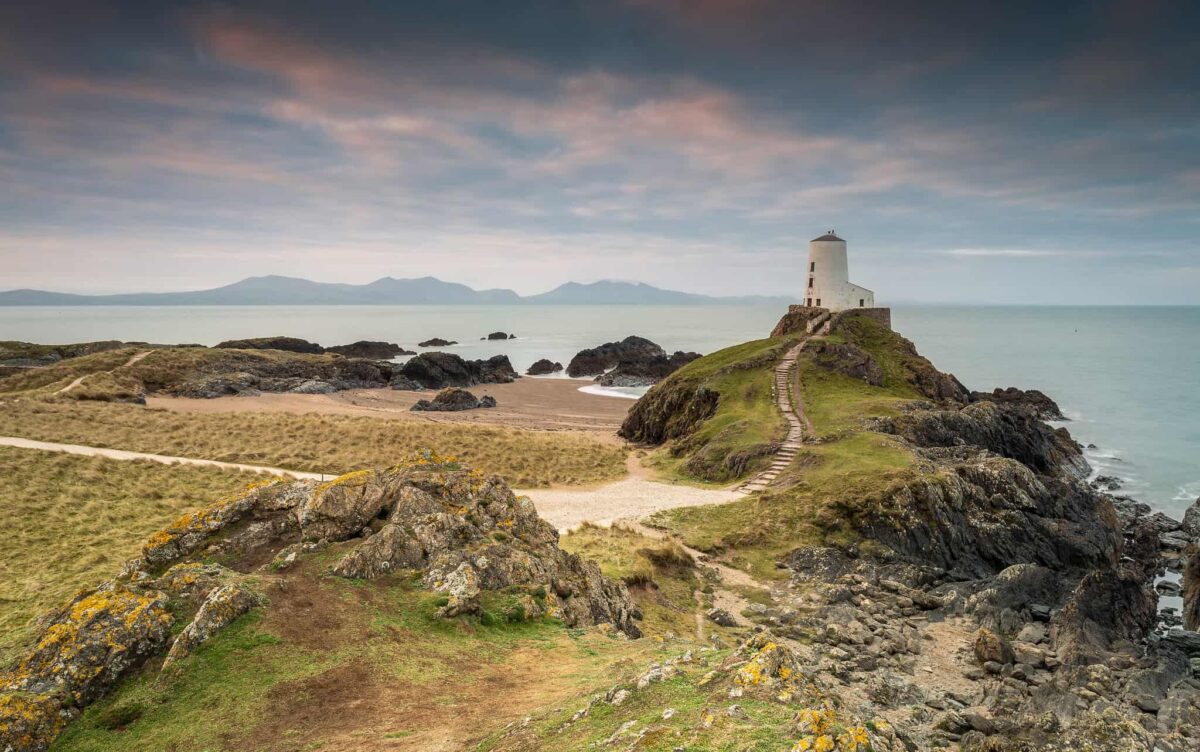
Tŵr Mawr lighthouse
Llanddwyn Island, Newborough (LL61 6RS)
Overview: Llanddwyn is Anglesey’s most celebrated coastal location — a tidal peninsula extending from the southern end of Newborough Beach, reachable on foot across sand at low tide and surrounded by water at high tide. The ruins of a medieval church dedicated to Saint Dwynwen, the Welsh patron saint of lovers, stand near the tip. A pair of restored lighthouse buildings and a Celtic cross mark the headland. The view west from the tip towards the mountains of Llŷn Peninsula and northeast towards Eryri (Snowdonia) is one of the great views in North Wales. Walk to Newborough Forest behind the beach to complete one of the island’s finest circuits.
Parking & Access: Newborough Forest uses an automated ANPR barrier system for parking. As of May 2025, daily charges have increased to £15 for a full day, or £5 for the first two hours (plus 70p per additional 20 minutes). The walk to Llanddwyn tip from the main beach car park (LL61 6SG) is approximately 2 miles each way across open beach. Check tide times before setting out — the peninsula is accessible at all but the highest tides, but crossing times can be tight. Free access to the beach itself.
Visitor Info: The eastern end of Newborough Beach is dog-friendly all year, but dogs are banned from the western section (Llanddwyn Beach) from May 1 to September 30. The beach faces southwest — evening light is best for photography. There are no facilities on the beach itself; toilets and a snack van are usually at the main car park. Sain Ffagan (St Ffagan’s) patron saint connections make this a significant destination around 25 January, Dydd Santes Dwynwen (Saint Dwynwen’s Day — the Welsh Valentine’s Day).
Rhosneigr Beach (LL64 5QA)
Overview: Rhosneigr is Anglesey’s surf and water sports village — a small coastal settlement on the island’s west coast with a wide, west-facing beach that catches Atlantic swell when conditions align. The beach is split between a main surf strand and the calmer Cors Bodeilias lake nearby, making it suitable for both beginners in the water and families on the sand. The village has grown into a hub for kitesurfing, windsurfing and stand-up paddleboarding and is one of the best surfing beaches in Wales. It is a regular recipient of the prestigious Blue Flag award.
Surf conditions: Best swells arrive September to April on northwest winds. Summer conditions are generally small and slow — better for paddleboarding and beginners. Local operators like Gecko Surf and Funsport offer board hire and surf or windsurfing lessons right in the village. Water temperature: approximately 15–16°C in summer, 8–10°C in winter — wetsuit required year-round for extended sessions.
Visitor Info: Rhosneigr village is on the A4080, 8 miles south of Holyhead and 12 miles from the Britannia Bridge. Pay and display parking near the beach. The village has cafés, a pub and a small surf shop. Rhosneigr station is on the North Wales Coast Line — trains from Bangor and Holyhead stop here, making this one of the few Anglesey beaches accessible without a car.
Trearddur Bay (LL65 2TN)
Overview: Trearddur Bay is Anglesey’s most sheltered beach resort — a natural bay on Holy Island with a split beach, rocky outcrops and turquoise water that turns an unlikely shade of blue on sunny days. The sheltered nature of the bay makes it ideal for families with young children, and the rock pools at low tide are among the best on the island. An RNLI lifeboat station operates from Trearddur, and the bay is a popular sea kayaking and snorkelling location. The village above the bay has holiday accommodation, a sailing club, and a couple of good restaurants with sea views.
Facilities: Pay and display parking above the beach. Public toilets. Beach café open in season. RNLI lifeguards patrol the beach daily during the peak summer season. It is a regular recipient of the prestigious Blue Flag award.
Visitor Info: 2 miles south of Holyhead on the B4545. The coast road south from Trearddur follows the Holy Island shoreline — a scenic 20-minute walk south leads to South Stack. Dogs are restricted from designated areas of the beach between May 1 and September 30. Rock pools are best at low tide, 2 hours either side.
Walking the Anglesey Coast Path
The Isle of Anglesey Coastal Path runs 130 miles around the entire island — making it one of the finest long-distance walking routes in Wales. The full circuit takes most walkers 8 to 12 days to complete. However, many visitors choose to walk shorter day sections or weekend loops from specific starting points.
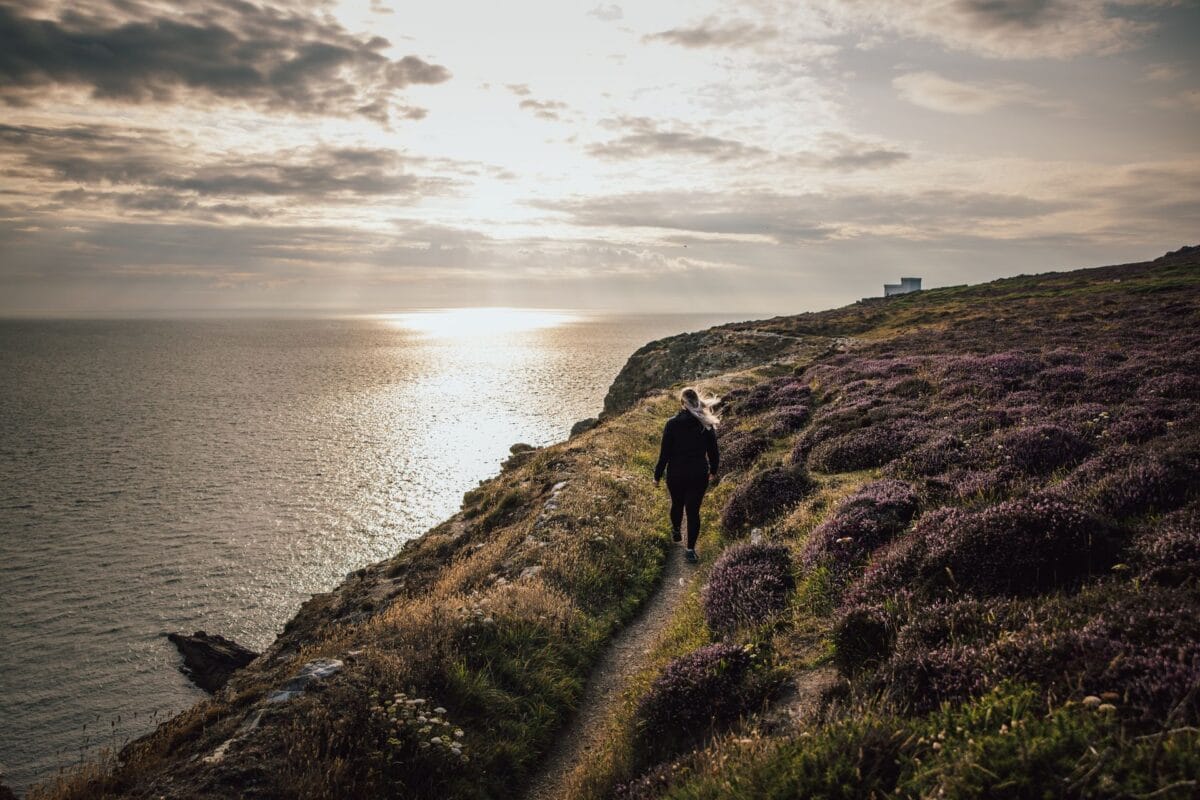
Anglesey Coast Path – Licence: Crown Copyright
The Full Coastal Path — Planning and Sections
Overview: The Isle of Anglesey Coastal Path was designated in 2006 and is clearly waymarked throughout. It covers every type of coastal terrain the island offers — plunging sea cliffs, peaceful salt marshes, shingle beaches, busy harbour towns, sandy bays, and rich farmland headlands. The path is divided into 12 official stages, each typically 9 to 12 miles long, though most walkers combine or split stages to suit their pace. The western sections between Holyhead Mountain and Aberffraw are the most dramatic, featuring high cliffs and endless sea views. The eastern sections between Beaumaris and Penmon Point are flatter and more intimate, passing through lovely estuary woodland and crossing the edge of Beaumaris town.
Walking facts: Total distance: 130 miles. Typical completion time: 8 to 12 days. Total ascent: approximately 4,174 metres — which is very modest for a walk of this distance. Terrain: mostly clear, well-waymarked paths; some sections cross farmland stiles and shingle beaches. There are no technical or climbing sections. It is perfectly suitable for regular walkers wearing appropriate footwear. Waymarking is excellent, but it is always smart to check visitanglesey.co.uk for any short-term path diversion notices before you set out.
Logistics: The path is circular with no designated start or finish line. Most walkers choose to begin at Menai Bridge or Beaumaris, as these towns have excellent public transport connections. Accommodation is available most nights without having to divert more than a mile or two from the path. If you do not want to carry a heavy rucksack, a baggage transfer service is readily available through local providers like Anglesey Walking Holidays. The official Anglesey Coastal Path guidebook by Carl Rogers is highly recommended and available online or in local bookshops.
Safety: Sections of the western coastal path run very close to unfenced cliff edges, so stay alert. Tidal sections (particularly near Newborough and the Malltraeth estuary) require careful planning. Always check local tide tables and never attempt a tidal crossing in rising water. Mobile phone signal is generally very good on Anglesey, but a few remote western cliff sections have poor coverage.
Holyhead Mountain and North Stack (LL65 1YH)
Overview: Holyhead Mountain (Mynydd Tŵr) sits at 220 metres, making it Anglesey’s highest point. While it is modest in height, its position is exceptional. You get a stunning 360-degree sea view that takes in Eryri (Snowdonia) to the southeast, the Llŷn Peninsula to the south, and, on clear days, the Isle of Man and the coast of Ireland to the west. The summit holds the ancient remains of a large Iron Age hillfort, Caer y Tŵr, and a historic coastguard lookout tower. The descent to North Stack — the northern tip of Holy Island — follows one of the most dramatic cliff paths on the entire Anglesey Coastal Path.
Walk details: Start your walk from the South Stack car park (LL65 1YH). The summit circuit to North Stack and back is approximately 5 miles with about 300 metres of ascent. Allow around 3 hours to enjoy it fully. The path is clear and well-waymarked. There are no technical sections, but the cliff path near North Stack requires extra care in high winds. This walk is best enjoyed in clear weather, as the summit is frequently hidden in clouds during westerly winds.
Visitor Info: The start point at the South Stack car park also gives you direct access to the RSPB reserve and lighthouse. You can easily combine both for a brilliant half-day visit. Parking costs around £5 for the day, but is entirely free for RSPB members. The heathland on the mountain slopes is a managed RSPB habitat, rich in chough and peregrine falcons.
Did you know? Choughs — the rare, red-billed members of the crow family — are easier to spot here than almost anywhere else in Wales!
Anglesey’s Towns and Villages
Anglesey’s towns are quite small compared to mainland Welsh standards, but each boasts a distinct and vibrant character. From the Norman-planned grid of Beaumaris to the busy working port of Holyhead and the Victorian bridge town of Menai Bridge (Porthaethwy), there is plenty to explore. Most visitors choose to base themselves in one town and take easy day-trips to the rest.
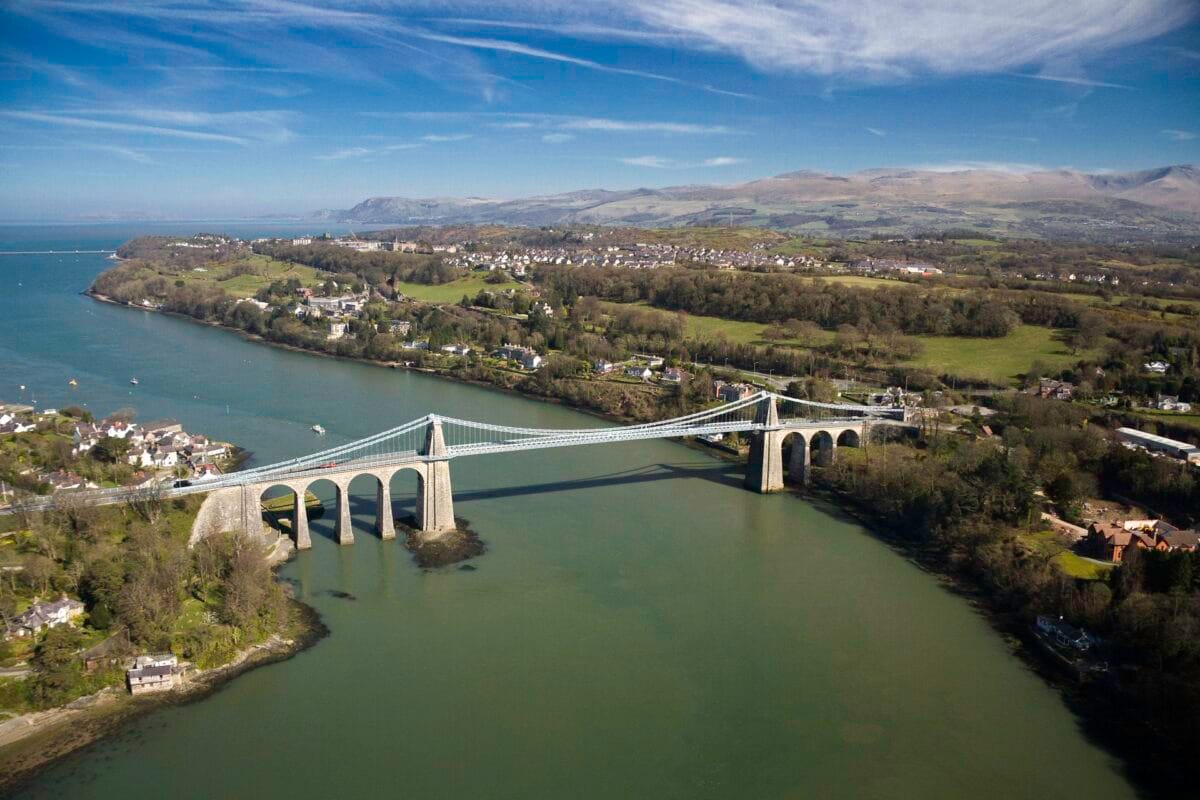
Menai Bridge – Licence: Crown Copyright
Beaumaris (LL58 8AP)
Overview: Beaumaris is widely considered Anglesey’s most handsome town. It was originally a planned medieval settlement laid out by King Edward I alongside his castle in 1296. Today, it is lined with beautiful Georgian terraces, independent shops, and cozy restaurants looking out over the Menai Strait. The castle dominates the town centre, but the rest of the town heavily rewards wandering. The Victorian pier stretches around 170 metres into the strait, the town Green is one of the most photographed spots on Anglesey, and a growing cluster of excellent cafés and restaurants have turned the town into a true food lover’s destination. Did you know? The courthouse and gaol on the high street offer a fascinating glimpse into dark Victorian tourism at its absolute best.
Getting there and around: Beaumaris sits on the A545, just 5 miles from the Britannia Bridge. There is ample town centre parking on the Green, which costs roughly £6 for a full day. There is no train station, but a regular bus service runs directly from Bangor. The Victorian pier is free to walk at all times and offers great crabbing spots for kids. Beaumaris also has an early Victorian courthouse and gaol (LL58 8EP) worth visiting, which is typically open from 10:30 am to 5:00 pm between April and October. For Beaumaris Castle opening hours and prices, see the Top Things to Do section above.
Menai Bridge (Porthaethwy) (LL59 5AB)
Overview: Menai Bridge town takes its name from Thomas Telford’s magnificent 1826 suspension bridge. It was the first major iron suspension bridge in the world and incredibly, it still carries daily traffic across the Menai Strait. The town is the most convenient Anglesey base for visitors without a car. The suspension bridge leads directly into the town centre, local buses radiate out across the island from here, and Bangor is just a scenic 15-minute walk across the bridge. The waterfront Church Island viewpoint gives the absolute finest view of Telford’s bridge, particularly at night when it is beautifully illuminated. The town also boasts a great selection of bed and breakfasts, highly-rated restaurants, and independent shops.
Getting there: Cross the A5 suspension bridge directly from Bangor — and great news, there is absolutely no toll charge to cross it! Bangor station is the nearest rail connection, located just 1 mile away across the bridge. Bus services to most parts of Anglesey depart right from the town centre. There are several affordable pay-and-display car parks available in town. Be sure to walk the Belgian Promenade, a picturesque waterside path built by grateful Belgian refugees during World War I, which offers a peaceful and historic stroll along the strait.
Getting To and Around Anglesey
Anglesey is connected to the North Wales mainland by two bridges — Telford’s 1826 suspension bridge carries the A5 and Stephenson’s 1850 Britannia Bridge carries the A55 and the North Wales Coast Line railway. The island is easily reached from Manchester in 2.5 hours, from Birmingham in 3 hours, and from London in 4.5 hours by road.
By Car — Menai Bridges and Island Roads
Overview: The A55 Expressway crosses the Britannia Bridge and continues to Holyhead — the main port for Irish Sea ferries to Dublin. The A5 suspension bridge route is more scenic and leads into central Anglesey via Menai Bridge town. Anglesey’s road network is mostly single-carriageway A and B roads with modest traffic outside summer. A car is essential for reaching most beaches, coastal path starting points and rural villages. Fuel stations are available in the main towns — Llangefni, Holyhead, Amlwch and Menai Bridge.
Parking: Most beaches have pay and display car parks in season, which generally cost around £5 for a full day. Free parking is available at many rural spots but fills very quickly in July and August. Arriving before 10am at South Stack, Llanddwyn and Beaumaris in peak season is highly recommended to avoid the worst congestion. The Anglesey Coastal Path car parks are scattered around the island
By Train and Bus
Overview: The North Wales Coast Line runs from Chester through Bangor, then across the Britannia Bridge to Holyhead, stopping at Llanfairpwll, Rhosneigr and Valley on Anglesey. Bangor is the main interchange for connecting services. Direct trains from Manchester to Bangor take approximately 2 hours and 30 minutes on average, with the fastest services completing the journey in just 1 hour and 57 minutes. Bus services from Bangor and Menai Bridge reach most of Anglesey’s towns and some coastal locations; Beaumaris and Llangefni are well served, but remote beaches require a car or taxi.
Bus connections: While the TrawsCymru long-distance network (like the T2 route) brings visitors from Mid and South Wales directly into Bangor, local bus routes across Anglesey are actually operated by regional providers like Arriva Buses Wales. Cycling is a brilliant option on Anglesey given the relatively flat terrain, and you can easily hire bikes from local shops in towns like Llangefni or Holyhead.
Where to Stay on Anglesey
Anglesey has a broad range of accommodation from luxury hotels in Beaumaris to family holiday cottage parks near the best beaches. Beaumaris and Menai Bridge give the best access to the whole island; Rhosneigr is popular with surfers; Trearddur Bay suits families wanting a beach-focused stay.
Holiday Cottages and Hotels on Anglesey
Overview: Self-catering holiday cottages are the dominant accommodation type on Anglesey — the island has hundreds of properties ranging from working farm cottages inland to beachfront apartments and luxury barn conversions. Availability in July and August is tight — booking 6 to 9 months in advance is highly recommended for the most sought-after properties. Château Rhianfa (LL59 5NS), a stunning Grade II listed French-style château near Menai Bridge, is the island’s most notable four-star hotel. It features beautiful views over the Menai Strait and is now fully operated by the Interesting Hotels Group. Meanwhile, Beaumaris boasts a great concentration of good B&Bs and smaller boutique hotels.
Booking: Use the accommodation map above for hotels and B&Bs and our holiday cottage booking tool at the bottom of the page. Camping and glamping options are covered in the Camping and Glamping guide.
Frequently Asked Questions: Anglesey
What is Anglesey famous for?
Anglesey is famous for Beaumaris Castle — a UNESCO World Heritage Site and the most technically perfect medieval castle in Britain — along with South Stack RSPB Reserve and its Atlantic puffin colony, Llanddwyn Island, and the stunning 130-mile Isle of Anglesey Coastal Path. Did you know? The island also boasts the longest place name in Europe: Llanfairpwllgwyngyllgogerychwyrndrobwllllantysiliogogogoch (a staggering 58 letters long!), located in the village of Llanfairpwll.
When is the best time to visit Anglesey?
May and June give the best combination of the puffin breeding season at South Stack, long daylight hours, uncrowded beaches, and settled weather. July and August are the warmest but busiest months, so the main beaches and car parks fill quickly. September is a fantastic alternative; it offers the warmest sea temperatures of the year, smaller crowds, and the best light for coastal photography. Winter visits are quieter, but Anglesey’s coastal walks are accessible year-round as long as you have appropriate waterproof clothing.
How do you get to Anglesey from London?
By train, take the Avanti West Coast service from London Euston directly to Bangor. Direct trains run regularly, with the fastest services completing the journey in just 3 hours and 17 minutes. From Bangor, you can easily cross the Menai Bridge on foot, or take a local bus or taxi. By car, the fastest route is typically taking the M1 or M40 north to the M6, then joining the M56 which seamlessly merges onto the A55 North Wales Expressway. It is a 250-mile journey that takes around 4.5 to 5 hours depending on traffic. The island has no commercial airport; the nearest major airports are Manchester and Liverpool.
Is Anglesey good for families?
Anglesey is excellent for families. Trearddur Bay and Rhosneigr beaches are shallow and sheltered. Bryn Celli Ddu burial chamber is accessible and fascinating for children. Beaumaris Castle has wall walks and moat views that work well with younger visitors. South Stack puffin colony is one of the best wildlife experiences in Britain for children aged 5 and up. The flat terrain across much of the island makes cycling a good family activity.
What does Ynys Môn mean?
Ynys Môn is the Welsh name for Anglesey — it means “island of Môn”, with Môn being the ancient Celtic name for the island used by the Romans, who called it Mona. The English name Anglesey derives from Old Norse, likely meaning “Öngull’s island” after a Viking leader. Today, Welsh speakers and official Welsh Government communications proudly use Ynys Môn, while Anglesey remains the standard English usage.
More Anglesey and North Wales Guides on Wales.org
Planning a trip to Wales?
Find the perfect holiday cottage for your Welsh adventure.
 Share icon below and select Add to Home Screen to install the free app.