


Caerdydd (Cardiff) 2026: The Complete Visitor Guide to Wales’s Capital City
Cardiff is the capital and largest city of Wales — a compact, walkable city with a medieval castle in its centre, a regenerated waterfront at Cardiff Bay, Europe’s largest civic centre, a Victorian indoor market and one of the best rugby atmospheres in the world on match day.
This guide covers what to do, where to eat, how to get around and what to see in Cardiff in 2026 — including the best day trips within 30 minutes of the city centre.
Top Attractions in Cardiff City Centre
Cardiff’s main attractions are within easy walking distance of each other — the castle, the National Museum, and the Victorian shopping arcades are all within a 10-minute walk of Cardiff Central station.
Allow a full day for the city centre alone, especially if you plan to fully explore the castle grounds and take your time wandering through the museum exhibits.
Licence: Crown Copyright
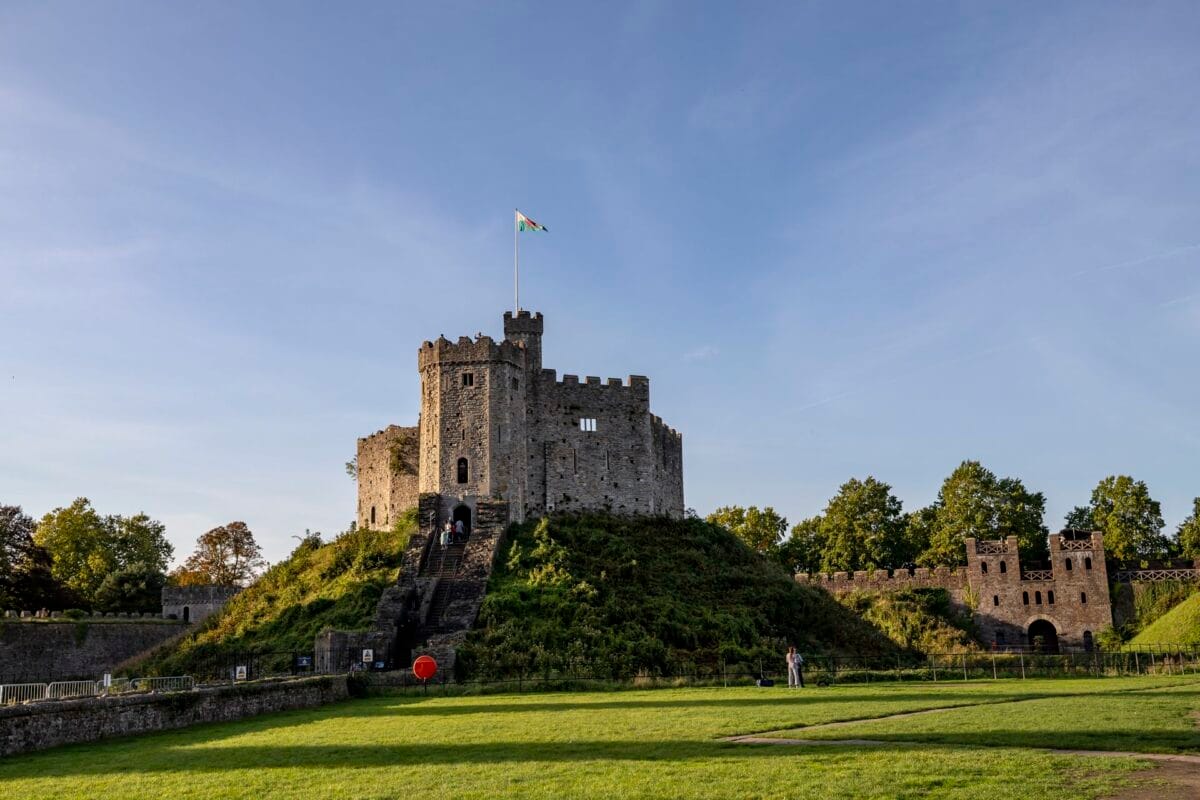
Cardiff Castle (CF10 3RB)
Overview: Cardiff Castle occupies the centre of the city on a site continuously used since a Roman fort was built here around AD 75. The medieval shell keep and Norman walls are the oldest surviving structures. The Victorian Gothic apartments — added in the 1860s and 1870s for the third Marquess of Bute — are among the most lavishly decorated interiors in Britain: Arab Room, Banqueting Hall, Library and Clock Tower, all decorated by architect William Burges. The contrast between the Roman and medieval exterior and the theatrical Victorian interior is genuinely unexpected.
Opening Times and Admission: Adult standard admission is £16, and children are £10.50. Opening hours are generally 9am to 6pm in the summer (March to October) and 9am to 5pm in winter, with last entry always an hour before closing. A standard ticket gives you free-roam access to the Norman Keep, the main Castle Apartments, the Firing Line Museum, and the Wartime Shelters. If you want to see additional, exclusive rooms (like the Nursery or the Roof Garden), you can upgrade to a 50-minute Guided House Tour for an extra £4.50. Allow 2 to 3 hours to see everything.
Getting There: Cardiff Castle is an 8-minute walk from Cardiff Central station. From the station, walk north up Westgate Street — the castle walls are visible ahead. A fantastic bonus for visitors is that entry to the castle grounds (known as the Public Square) is completely free without purchasing tickets. However, you will need a paid ticket to go inside any of the buildings or climb the keep.
Visitor Info: Book the guided apartment tour online in advance for July and August visits — walk-up availability on peak summer days is limited. The Animal Wall (a Victorian carved stone wall running along the south face of the castle grounds) is free to view from the pavement on Castle Street. It features 15 animals including a bear, a lynx, a pelican, and a hyena—many featuring distinctive glass eyes. It is a favourite with children and one of the most distinctive features of the Cardiff streetscape. The Castle Café Bar & Terrace is open daily in the public square and serves as a fantastic lunch stop with views of the Norman Keep.
National Museum Cardiff (CF10 3NP)
Overview: The finest free museum in Wales and one of the best in Britain. The national collections of art, natural history, and archaeology are all housed in one magnificent building in the Civic Centre — just a 10-minute walk from the castle. The art collection is exceptional: it boasts one of the largest Impressionist and Post-Impressionist collections outside of Paris, featuring works by Monet, Renoir, Cézanne, and Rodin alongside a comprehensive collection of Welsh art. The natural history galleries include a famous full-scale humpback whale skeleton and the brilliant Evolution of Wales geology hall, which covers 4.6 billion years of history (complete with animatronic dinosaurs).
Opening Times and Admission: Entry to the permanent galleries is completely free, and no booking is required. The museum is open Tuesday to Sunday from 10am to 5pm (closed on Mondays, except for most Bank Holidays). Occasional major temporary exhibitions may charge a separate admission fee. Allow 2 to 3 hours minimum — the building is vast and easy to underestimate.
Getting There: It is a 10 to 15-minute walk from Cardiff Central station. From the castle, walk northeast into the tree-lined avenues of Cathays Park — the museum is the large Portland stone building next to City Hall. There is a very small pay-and-display car park directly behind the museum, but spaces fill fast; it is generally easier to use the pay-and-display street parking around the Civic Centre or walk from the main city centre multi-stories.
Visitor Info: The National Museum is the absolute best wet-weather option in Cardiff — free, large, fully indoors, and genuinely excellent. The Impressionist gallery on the first floor is the highlight for most adult visitors, while the natural history galleries and dinosaur exhibits are perfect for families with younger children. The museum café on the ground floor is a great spot for lunch. Do not confuse this site with St Fagans National Museum of History! St Fagans is a separate open-air museum of historic Welsh buildings located 4 miles west of the city centre. It is also free, open daily from 10am to 5pm, and is highly recommended as a half-day visit in its own right.
Cardiff’s Victorian Shopping Arcades (CF10 1BB)
Overview: Cardiff has the finest collection of Victorian and Edwardian covered shopping arcades in Britain — a network of seven historic arcades built between 1858 and 1921 running through the city centre between St Mary Street and the Hayes. The Royal Arcade (1858, the city’s oldest surviving arcade), Castle Arcade (1887, with ornate wrought-iron balconies), Morgan Arcade, and Wyndham Arcade, together with the Cardiff Market, form a pedestrian network that is genuinely more interesting than the main shopping streets. Independent retailers, cafés, record shops, and vintage clothing boutiques fill the units alongside a handful of long-established local businesses.
Opening Times: The arcades are public thoroughfares — generally open daily from approximately 9am to 5:30pm on weekdays and 9am to 6pm on Saturdays. Individual shop hours will vary. The arcades connect the Hayes (east side) to St Mary Street (west side) and are incredibly useful as rain-sheltered walking routes between different parts of the city centre as well as for shopping.
Visitor Info: Start at Castle Arcade (entrance on Castle Street, opposite the castle) — it has some of the most impressive Victorian ironwork. Walk through to the Morgan Arcade (connected at the top) and then south to the Royal Arcade. The total walk-through takes about 20 minutes with stops. Wally’s Delicatessen in the Royal Arcade is a genuine Cardiff institution; the family business has been operating in the city since 1947, selling continental food, cheeses, and deli items. Adjacent to the arcades on St Mary Street is Cardiff Central Market (CF10 1AU). Opened in 1891, it is the best single-building food market in South Wales — a bustling Victorian covered market still operating daily with fresh produce, butchers, fishmongers, and a famous ice cream stall.
Find the Cheapest Cardiff City Centre Hotels on the Interactive Map 👇
Cardiff Bay
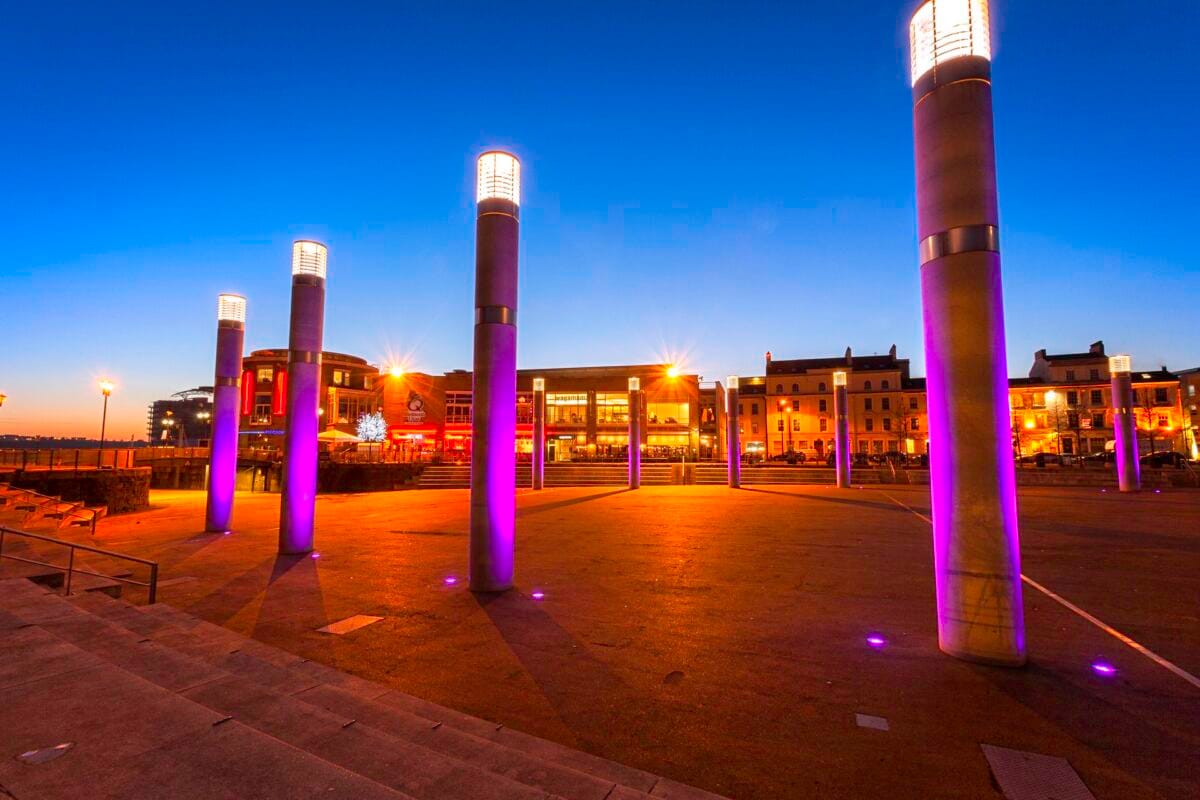
Cardiff Bay is the redeveloped former docklands — once the busiest coal export port in the world, now a mixed residential and cultural quarter 2 miles south of the city centre. The centrepiece is Roald Dahl Plass, an elliptical public space on the waterfront with the Wales Millennium Centre and Senedd (Welsh Parliament) on either side.
Licence: Crown Copyright
Wales Millennium Centre and Roald Dahl Plass (CF10 5AL)
Overview: The Wales Millennium Centre is Wales’s main arts venue — home to Welsh National Opera, the National Dance Company of Wales, and several other arts organisations. The building’s iconic bronze steel facade is inscribed with lines from the Welsh poet Gwyneth Lewis in both English and Welsh. The foyer is open to the public free of charge and worth entering even without a show ticket — the scale and materials are impressive. Roald Dahl Plass (named for the Cardiff-born author) is the water tower square in front — a free outdoor public space used for events, markets, and famously as the Torchwood TV filming location.
Opening Times and Admission: The WMC foyer is free and open daily (usually from 9am or 10am until late evening on performance days). Performance tickets vary by production, and the box office is located right inside the main doors. The Senedd (Welsh Parliament) directly adjacent is also free to visit, boasting incredible modern architecture and a public viewing gallery. The Senedd is open Monday to Friday (9:00am to 4:30pm) and on Saturdays and Bank Holidays (10:30am to 4:30pm). While there are no free boat tours, you can catch regular, paid boat trips and water taxis from the waterfront just beyond the Senedd.
Getting There: Cardiff Bay is 2 miles south of the city centre. The easiest rail route is to take the dedicated Bay Line train from Cardiff Queen Street station (services run every 12 minutes and the journey takes under 5 minutes). Alternatively, you can take the BayCar bus service from the city centre, which stops right outside the Millennium Centre, or walk via the Taff Trail (about 30 minutes). Taxis from Cardiff Central to the Bay take approximately 10 minutes depending on traffic.
Visitor Info: Cardiff Bay is at its best on a clear summer evening — the waterfront restaurants fill up, the Plass is lively, and the view across the freshwater bay to the Barrage is at its most attractive. On a wet winter afternoon, it can feel exposed and underpopulated. Just a short walk away is the Norwegian Church Arts Centre — a white painted wooden church from 1868 on the waterfront where Roald Dahl was christened in 1916. It is now a vibrant arts centre and café. It is free to visit and open daily from 10:30am to 6:00pm.
Techniquest and Cardiff Bay Barrage (CF10 4PA)
Overview: Techniquest is Wales’s premier science discovery centre — featuring over 100 hands-on exhibits covering physics, biology, and technology. While it is aimed primarily at children and teenagers, it is genuinely engaging for adults too. Digital planetarium shows run daily on a timetable. Just outside is the Cardiff Bay Barrage, a 1-kilometre tidal barrier completed in 1999 that sealed the bay to create a massive freshwater lake. The pedestrian walkway across the barrage takes about 15 minutes and connects to the seaside town of Penarth on the western shore. The views back towards the city from the barrage walkway offer the best wide-angle perspective of Cardiff Bay’s skyline.
Opening Times and Admission: Adult admission to Techniquest is around £14, children (aged 3–15) are £12, and under-3s enter for free. The centre is generally open from 10am to 5pm daily during school holidays, but operates on a reduced schedule during term time (usually closed on Mondays and Tuesdays). Allow at least 2 hours to explore. Be sure to book planetarium tickets online in advance as an add-on, as sessions sell out quickly. The barrage walkway is completely free and open to pedestrians and cyclists 24 hours a day.
Visitor Info: A highly recommended itinerary is to combine Techniquest with a walk along the barrage to Penarth — a lovely Victorian resort town on the other side boasting an elegant 1895 pier, a waterfront esplanade, and several excellent cafés. The full walk from Roald Dahl Plass, across the barrage, and up to Penarth town centre takes approximately 40 to 45 minutes. You can easily return by bus or train rather than retracing the route. If you prefer to get out on the water, boat trips depart frequently from the waterfront at Mermaid Quay. You don’t need to hunt for operators; just look out for Cardiff Boat Tours (running the heated Princess Katherine waterbus), Aquabus, or Bay Island Voyages (for high-speed RIB rides), which offer everything from relaxing 45-minute bay cruises to adventurous trips out into the Bristol Channel.
Cardiff Food, Markets and Drink
Cardiff’s food scene has changed significantly in the last decade. The city centre now has a genuinely independent food culture alongside the national chains — focused on the Central Market, the arcades, and the Pontcanna and Canton suburbs to the west of the river.
Licence: Crown Copyright
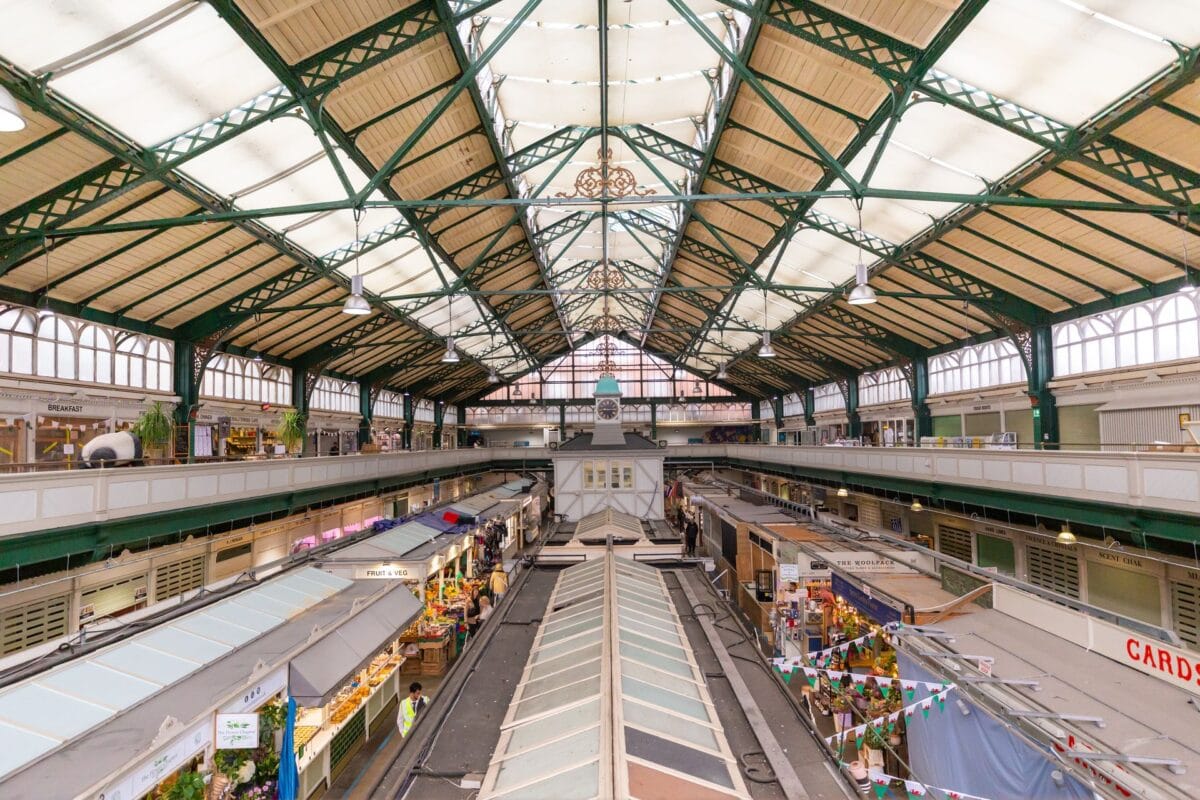
Cardiff Central Market (CF10 1AU)
Overview: Cardiff’s Victorian covered market on St Mary Street has been operating since May 1891 in a magnificent cast-iron and glass building. The market features dozens of independent stalls including butchers, fishmongers, fruit and vegetable traders, a cheese stall, a traditional sweet shop, and famously, the Welshcake stalls where you can watch traditional Welshcakes being cooked on a hot cast-iron griddle. It is the best single location for fresh Welsh produce in the city — Welsh salt marsh lamb, local cheeses, laverbread, and cockles are all available. The atmosphere is that of a bustling, working market rather than a polished tourist destination.
Opening Times: The market is open Monday to Saturday from 8:00 am to 5:30 pm (closed on Sundays). It is busiest on Saturday mornings, but the freshest produce generally arrives on Thursdays and Fridays.
Visitor Info: The main market entrance on St Mary Street is easy to walk past — look for the Victorian arcade entrance with the clock above. The food court area at the south end of the market (and scattered throughout the balcony level) has a fantastic cluster of traders selling hot street food, from wood-fired pizza to Keralan curries and artisan coffee. This is one of the cheapest, most authentic, and varied lunch options in the city centre. Just a short walk away in the Royal Arcade (CF10 1BB) is Wally’s Delicatessen. A true Cardiff institution, the Salamon family has been serving continental food in the city since 1947, making it a perfect second stop for a food-focused morning.
Pontcanna and Canton
Overview: Pontcanna and Canton are the leafy residential suburbs immediately west of the city centre — about 1.5 miles from Cardiff Castle via the River Taff path. These are Cardiff’s most food-focused neighbourhoods: Pontcanna Street, Romilly Crescent, and Canton’s main high street have the highest concentration of independent restaurants, cafés, wine bars, and delis outside the city centre. This is where Cardiff locals eat; because it is not primarily a tourist destination, the quality-to-price ratio is often much better than right in the city centre.
Getting There: It is a 20 to 25-minute walk from Cardiff Central station along the Taff Trail river path, or a quick 10-minute bus ride from the city centre. The walk via Llandaff Fields (a large open park) is a beautiful route in good weather. There are no large dedicated car parks — just street parking on the surrounding residential roads.
Visitor Info: For dining in 2026, Pontcanna is the city’s premier destination for high-end and bistro dining—look out for celebrated spots like Thomas by Tom Simmons, Heaneys, or the highly acclaimed Ember on Romilly Crescent. If you cross over into Canton, you will find fantastic, authentic, budget-friendly options, such as the legendary Italian spot Calabrisella. For our full rundown of the best independent dining across the city, see our guide to the best restaurants in Cardiff.
Day Trips from Cardiff
Cardiff’s position in South Wales puts an exceptional range of day trips within 30 to 45 minutes. Two castles, a Heritage Coast, a national park, and the Wye Valley are all accessible without a long drive.
Caerphilly Castle (CF83 1JD)
Overview: Caerphilly is the largest castle in Wales and the second-largest in Britain (behind only Windsor), spanning a massive 30 acres of water defences, islands, and towers. Built in 1268, it significantly predates Edward I’s famous North Wales fortresses. A major highlight is the leaning southeast tower—caused by an attack during the English Civil War—which leans even more dramatically than the Leaning Tower of Pisa.. For the full castle guide including visiting tips and what to see inside, see Castles in Wales.
Getting There: Taking the train from Cardiff Central is the best option; direct Transport for Wales services run very frequently (roughly every 20 minutes) and the journey takes just 20 minutes. The station is a short walk from the castle. If you are driving (via the A469 north, about 8 miles), note that the castle does not have its own dedicated car park. It is easiest to use the Crescent Road Car Park located just behind the castle, which is pay-and-display and much less congested than the town centre. Alternatively, there is free parking available at Caerphilly train station, about a 0.6-mile walk away.
Visitor Info: The train is significantly easier than driving — Caerphilly town centre parking is limited, and the one-way system can be confusing. Allow at least 1 to 2 hours to fully explore the sprawling castle grounds. If you are driving, it is highly recommended to combine this with Castell Coch (below) — both castles can easily be visited in a single full day. For the full castle guide including visiting tips and what to see inside, see Castles in Wales.
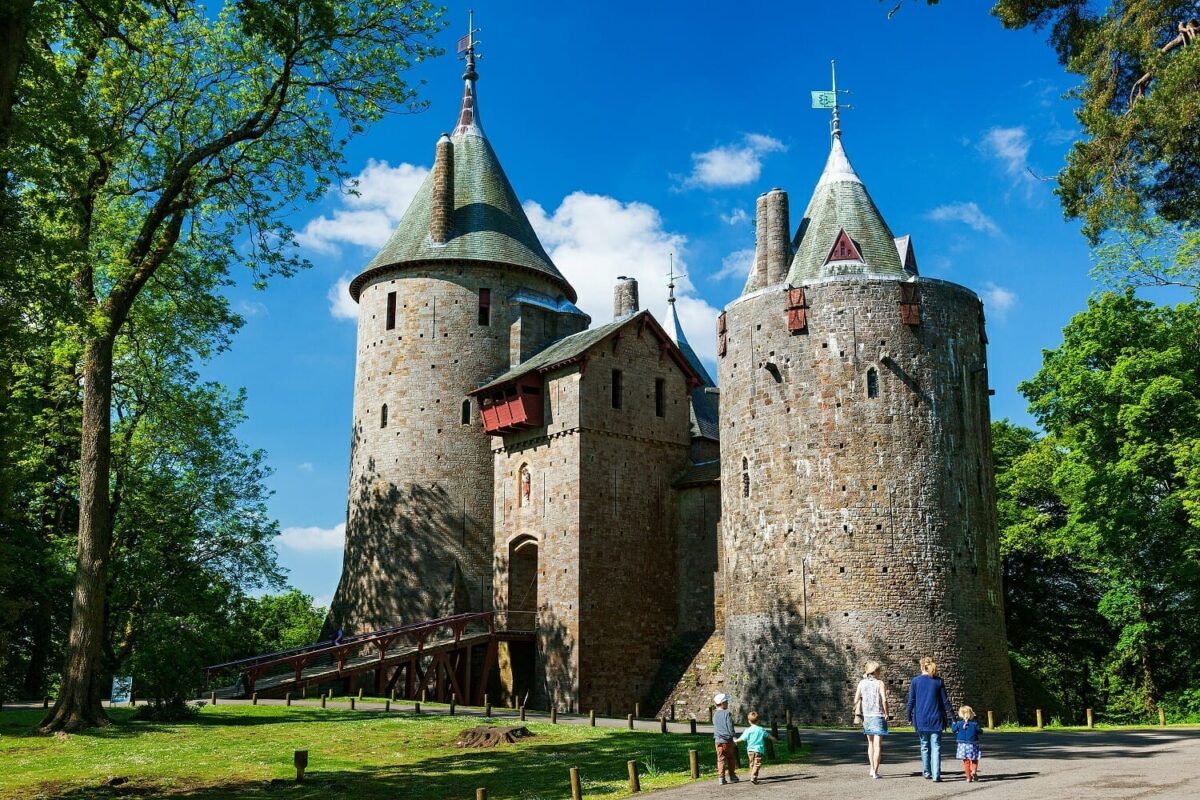
Castell Coch (CF15 7JS)
Overview: A Victorian Gothic fantasy castle 5 miles north of Cardiff — conical turrets rising from beech woodland above the Taff Gorge. Built in the 1870s for the Marquess of Bute on medieval foundations. The painted interior rooms (Arabian Room, Banqueting Hall, Lady Bute’s bedroom with a domed ceiling painted with stars and constellations) are as spectacular as anything in Cardiff Castle. This is one of the finest Victorian Gothic interiors in Britain and regularly surprises visitors who expect a conventional ruin. For the full guide see Castles in Wales.
Getting There: The castle is 5 miles north of Cardiff just off the A470. Bus services (such as the 132 or 63) run regularly from Cardiff city centre to nearby Tongwynlais, taking about 30 to 45 minutes. Alternatively, you can catch a train from Cardiff Central to Taffs Well (15–20 minutes), though this requires a 30-minute uphill walk to reach the castle. There is a small, free car park at the castle, but it fills very quickly on summer weekends. Standard Cadw admission for adults is typically £10.00 to £10.90 depending on the season, and the castle is generally open daily from 9:30 am to 5:00 pm.
Visitor Info: The Taff Trail (a traffic-free cycle and walking route) passes directly below Castell Coch — the castle is visible from the trail through the trees. Cycling from Cardiff city centre to Castell Coch and back along the Taff Trail takes approximately 2 hours return (10 miles total) — a popular half-day trip for cyclists. Since Cardiff is currently transitioning its on-street bike share to a brand-new e-bike fleet for 2026, the best place for visitors to guarantee a rental is Pedal Power in Pontcanna, which offers a massive fleet of standard push-bikes and e-bikes.
Vale of Glamorgan Heritage Coast
Overview: The Heritage Coast runs west from Barry (10 miles from Cardiff) to Ogmore-by-Sea — 14 miles of undeveloped limestone cliffs, stacks, and beaches. Nash Point (CF61 1ZH) is the most accessible section — featuring a working lighthouse, a café, and a wide clifftop walk with sweeping views across the Bristol Channel to Devon and Somerset on clear days. Southerndown (CF32 0RP) has the most dramatic beach — wide, flat limestone shelves that emerge at low tide, teeming with rock pools. This is an entirely different coastal landscape from the Gower or Pembrokeshire; the limestone geology creates striking terraced rock platforms rather than vast sandy bays.
Getting There: Nash Point is 20 miles southwest of Cardiff via the A48 and B4265. There is a pay-and-display car park right by the lighthouse (there is a small seasonal charge of around £2 to £3 for the day; it is highly recommended to bring coins, as the mobile signal for parking apps can be patchy on the cliffs). There is no direct public transport to Nash Point, so a car is essential. For those relying on public transport, Barry Island is the most accessible coastal day trip from Cardiff; direct Transport for Wales trains run frequently from Cardiff Central and take approximately 30 minutes.
Visitor Info: Barry Island is a traditional British seaside resort — complete with amusements, fish and chips, a large sandy beach, and a fairground. It is significantly busier and more commercial than Nash Point. Nash Point, by contrast, is much better for walkers, photographers, and anyone wanting a quiet clifftop experience. The stretch from Nash Point east to St Donat’s (about 1.5 miles each way) is arguably the most scenic section of the Heritage Coast walk — largely flat, well-marked, and peacefully empty on most days.
Getting to Cardiff and Getting Around
Cardiff is the best-connected city in Wales and one of the easiest to reach by train from England.
By Train
Overview: Cardiff Central is the main rail hub. Direct Great Western Railway services from London Paddington are incredibly fast, taking just under 2 hours. Direct services also run from Bristol Temple Meads (50 minutes), Birmingham New Street (2 hours), and Manchester Piccadilly (just over 3 hours). If travelling from Edinburgh, expect a journey of around 6 hours. Cardiff Central is perfectly located — just an 8-minute walk from the castle and 10 minutes from the National Museum..
Within Cardiff: The city centre is compact and highly walkable. For day trips, the local Transport for Wales network is excellent. Trains depart from Cardiff Central and Queen Street stations — Queen Street is the departure point for the quick 4-minute hop to Cardiff Bay, while Central runs the frequent 20-minute service to Caerphilly. For the wider city, Cardiff Bus is reliable and offers easy tap-on, tap-off contactless payments. Taxis from Cardiff Central to Cardiff Bay take approximately 10 minutes in off-peak traffic..
By Car
Overview: Cardiff is easily accessible off the M4 motorway — Junction 29 (east Cardiff), Junction 32 (city centre/north), and Junction 33 (west) are the main approaches. Driving into the city centre is straightforward, but parking is expensive and spaces fill quickly on weekdays. For a weekend city break with no extended day trips, arriving by train and walking is vastly more practical (and cheaper) than driving.
Parking: If you do drive, the best and largest city centre car park is the massive St David’s (Dewi Sant) multi-storey (CF10 2EQ), which is open 24 hours and drops you right into the shopping district. Expect to pay around £25 for a full 24-hour stay. There are also several NCP car parks scattered around the centre. Street parking in the centre is strictly residents-only or heavily time-limited short-stay. If driving and staying overnight, strongly consider booking a hotel with dedicated parking included. For day visits combining Cardiff with a Vale of Glamorgan or Wye Valley trip, a car is fantastic for the outward journey, while the city itself is best explored on foot.
Where to Stay in Cardiff
Cardiff has a wide range of accommodation — from budget hotels near the station to boutique hotels in converted buildings and serviced apartments down in Cardiff Bay. For a short city break, the city centre is the most practical base, as it puts almost everything within walking distance.
City Centre Hotels (CF10)
Overview: The highest concentration of hotels is within the CF10 postcode — immediately around Cardiff Central station and along the main shopping streets like St Mary Street and Westgate Street. This puts all the key attractions, including the castle and the arcades, within a 10 to 15-minute walk. Budget chains, mid-range branded hotels, and a handful of independent boutique options are all well represented. Room rates in Cardiff vary significantly depending on major events, so it is always best to compare rates early via your preferred booking platform.
Planning Tip: Rugby international weekends at the Principality Stadium (typically February and March for the Six Nations, and November for the Autumn Internationals) fill the city’s hotels months in advance and push room rates to two or three times their normal levels. The same applies to massive stadium concerts during the summer months. If your visit dates are flexible, avoid these weekends entirely unless you are attending the event. Check the Principality Stadium events calendar before booking. Conversely, midweek stays in Cardiff are significantly cheaper than weekends year-round.
Visitor Info: Cardiff Bay has a separate cluster of hotels (including the landmark 5-star voco St. David’s) and serviced apartments right on the waterfront. This is a fantastic, scenic option if you are visiting primarily for Cardiff Bay attractions or attending a show at the Wales Millennium Centre, though it does add a 10 to 15-minute transit time to reach the city centre. For couples, see our guide to the most romantic hotels in Cardiff. Holiday cottages and country house hotels are widely available in the neighbouring Vale of Glamorgan for visitors wanting a quieter, self-catering or rural base just 30 minutes outside the city. See Holiday Cottages near Cardiff.
Frequently Asked Questions: Visiting Cardiff
How many days do you need in Cardiff?
Two full days covers the city centre and Cardiff Bay comfortably. Day 1: Cardiff Castle, National Museum, arcades and Central Market. Day 2: Cardiff Bay (Wales Millennium Centre, Techniquest, barrage walk to Penarth). Add a third day if you want to include Caerphilly Castle and Castell Coch. A single day is enough for a first visit focused on the castle and museum if arriving by train.
Is Cardiff worth visiting?
Yes — Cardiff is one of the most accessible and underrated capital cities in Britain. The National Museum is free and genuinely excellent. Cardiff Castle is among the most unusual in Wales — the contrast between the Roman exterior and the Victorian Gothic interior surprises most visitors. The food scene in Pontcanna and Canton is better than its reputation suggests. The city is compact, the transport links are strong and it is significantly less crowded than Edinburgh, Bath or York on a summer weekend.
What is Cardiff famous for?
Cardiff is the capital and largest city of Wales, known for Cardiff Castle, the Wales Millennium Centre, the Principality Stadium (home of Welsh rugby), Cardiff Bay, the Victorian shopping arcades and its position as the administrative and cultural centre of the country. It became the official capital of Wales in 1955 — one of the last European capitals to receive that designation.
What is the best area to stay in Cardiff?
For a first visit, the CF10 city centre postcode puts you within walking distance of everything. Cardiff Central station is the most practical landmark to be close to — it connects you to Caerphilly, Cardiff Bay, Barry Island and the Valley towns. Cardiff Bay is a pleasant base if your priorities are waterfront views and the Millennium Centre, but it adds transit time to the castle and museum.
How do I get from Cardiff to Snowdonia?
The fastest route from Cardiff to Eryri (Snowdonia) is by car — taking the incredibly scenic A470 north through the Brecon Beacons and into Gwynedd takes approximately 3.5 to 4 hours to reach Betws-y-Coed or Llanberis. By train, the direct Transport for Wales service from Cardiff Central to Bangor takes just over 4 hours, from where you can catch local buses into the national park. See Eryri (Snowdonia) Destination Guide for planning detail.
More Cardiff and South Wales Guides on Wales.org
Castles in Wales: The Complete Guide
Eryri (Snowdonia) Destination Guide
Pembrokeshire Destination Guide
Planning a trip to Wales?
Find the perfect holiday cottage for your Welsh adventure.
 Share icon below and select Add to Home Screen to install the free app.