


Explore The Wales Way by Campervan
Wales in a Campervan 2026: Three Wales Ways Route Guide
Wales has three official long-distance driving routes — the North Wales Way, the Cambrian Way and the South Wales Way — collectively known as the Three Wales Ways.
Together they cover over 1,000 miles of road, connecting the north coast to the south coast via the mountains, valleys and coast of mid Wales.
This guide covers each route in full, with overnight stopping points, campsite recommendations, driving distances, things to do along each route, and practical advice for campervans and motorhomes in Wales in 2026.
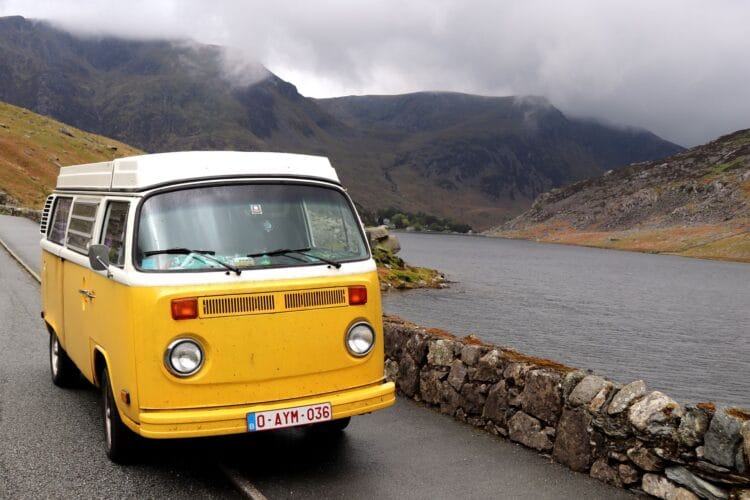
Licence: Crown Copyright
What are the Three Wales Ways? Routes, Distances and Overview
The Three Wales Ways are three official scenic driving routes created by Visit Wales to showcase different landscapes of the country.
They were officially launched in 2016 and are waymarked on road signs with distinct logos. Each route can be driven independently — or, if you have time, all three can be linked together into a single circuit of Wales.
North Wales Way: 75 miles. Runs east-west along the North Wales coast from Chester to Bangor, then down the Llŷn Peninsula to Aberdaron. Passes through Conwy, Llandudno, Caernarfon and Criccieth. Best for castles, coast and mountain views from the road.
Cambrian Way: 185 miles. Runs north-south through the heart of Wales — from Machynlleth or Aberystwyth in the west through the Cambrian Mountains to Hay-on-Wye and the Bannau Brycheiniog (Brecon Beacons) foothills in the south. The least-visited route — passes through some of the emptiest roads in England and Wales.
South Wales Way: 200 miles. Runs along the southern coast from Chepstow in the east to Fishguard in the west, passing through Cardiff, Swansea, Gower and Pembrokeshire. Best for coastal scenery, beaches and the contrast between industrial heritage and open coastline.
The routes are not motorways or A-roads — most of the driving is on B-roads and unclassified lanes. Allow significantly more time than a sat-nav will suggest, particularly on the Cambrian Way.
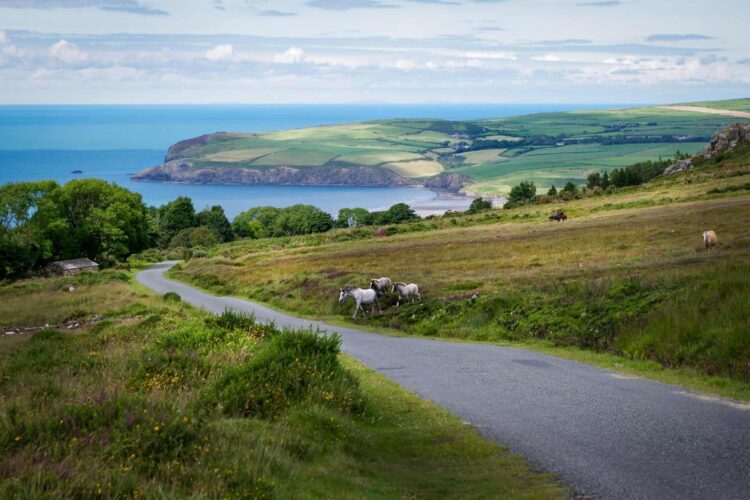
North Wales Way: Coast, Castles and the Llŷn Peninsula
Distance: 75 miles | Suggested time: 3–4 days minimum | Start: Chester | End: Aberdaron
The North Wales Way follows the coast westwards from Chester along the A55 expressway, then leaves the main road at Conwy to take the slower coastal and mountain roads through Llandudno, Beaumaris on Anglesey (via the Menai Strait), Caernarfon and along the Llŷn Peninsula.
Key stops:
Conwy (LL32 8DE): Edward I’s Conwy Castle, one of the best-preserved medieval castles in Europe — UNESCO World Heritage Site. The walled town is compact and walkable. Overnight: Conwy YHA or Tyn-y-Coed campsite approximately 1 mile south of the town walls. See our Conwy guide.
Llandudno (LL30 2LP): Victorian seaside town with two beaches, the Great Orme headland with its tramway and Bronze Age copper mines, and a well-preserved pier. Strong campervan parking options on the West Shore. See our Llandudno guide.
Caernarfon (LL55 2AY): Another UNESCO World Heritage Castle — larger than Conwy and with an excellent town centre. Good overnight facilities — see our Eryri (Snowdonia) guide for campsite options in the area.
Llŷn Peninsula: The far western peninsula that forms the southern arm of Cardigan Bay. Quiet roads, clifftop views, Criccieth Castle, Pwllheli harbour (LL53 5HB) and the end-of-the-road village of Aberdaron (LL53 8BE) where the pilgrims’ route to Bardsey Island begins. See our Llŷn Peninsula guide.
Overnight options (North Wales Way): Aberafon Caravan Park Conwy (LL32 8TS), Riverside Camping Betws-y-Coed (LL24 0AH, approximately £22/pitch), Mynydd Mawr campsite Aberdaron (LL53 8BY, approximately £15/pitch — basic, stunning clifftop views).
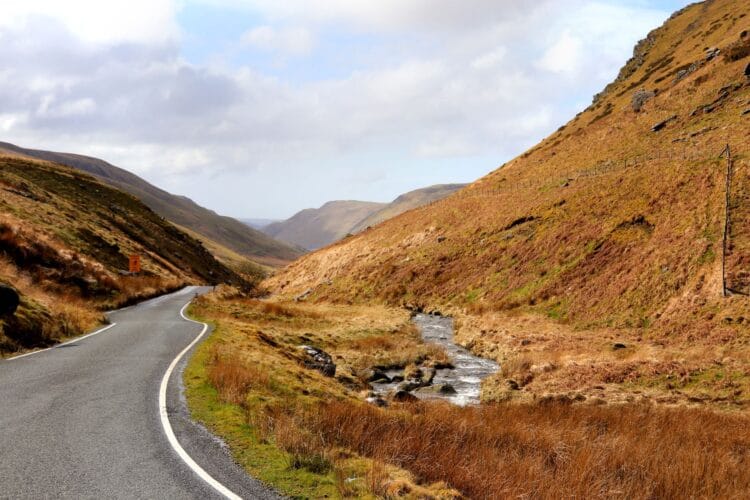
Cambrian Way: Wales’s Emptiest and Most Remote Driving Route
Distance: 185 miles | Suggested time: 4–5 days | Start: Machynlleth or Aberystwyth | End: Hay-on-Wye / Brecon
The Cambrian Way runs through some of the least-visited roads in England and Wales — the Cambrian Mountains of Mid Wales have a population density of around 25 people per square mile.
This is genuinely remote driving. Mobile signal is patchy from Machynlleth to Rhayader. Fuel stations are sparse — fill up whenever you see one. The roads are narrow, often single-track with passing places, and unsuitable for large motorhomes over 7.5 metres. A compact campervan or van conversion is ideal.
Key stops:
Machynlleth (SY20 8EB): The ancient capital of Wales — Owain Glyndŵr held his parliament here in 1404. Good small town with independent food shops and the MOMA Wales contemporary art gallery. Start of the Dyfi Biosphere Reserve. See our Ceredigion guide.
Elan Valley (LD6 5HP): A chain of Victorian reservoirs in the Cambrian Mountains above Rhayader — built 1893–1904 to supply Birmingham with water. The dam infrastructure is dramatic engineering. Red kites are common in this area. Dark sky site — some of the least light-polluted skies in Wales.
Rhayader (LD6 5AB): A small market town on the River Wye. Good base for exploring the Elan Valley. Red Kite feeding at Gigrin Farm, approximately 1 mile south of town, every afternoon at 3pm.
Hay-on-Wye (HR3 5AE): The book town on the English-Welsh border — 30+ independent bookshops in a town of 1,500 people. The Hay Festival of literature and arts runs in May/June each year. Strong food and accommodation scene for a small town.
Overnight options (Cambrian Way): Glanllyn Lakeside Caravan Park Bala (LL23 7ST), Disserth Caravan Park Rhayader (LD1 6NL, approximately £25/pitch with hook-up), Forest Fields campsite near Builth Wells (LD2 3YN, approximately £22/pitch).
South Wales Way: Coast Path, Cities and Pembrokeshire
Distance: 200 miles | Suggested time: 4–5 days | Start: Chepstow | End: Fishguard
The South Wales Way is the most varied of the three routes — it covers coastal industrial heritage in the east, the capital city, the Gower Peninsula, Pembrokeshire’s coastline and the ferry port of Fishguard connecting Wales to Ireland.
Key stops:
Chepstow (NP16 5EY): Gateway to Wales from England. Chepstow Castle sits on a cliff above the River Wye — the oldest surviving post-Roman stone castle in Britain, started in 1067. The Wye Valley Area of Outstanding Natural Beauty begins here. See our Wye Valley guide.
Caerdydd (Cardiff, CF10 1GH): Wales’s capital — Cardiff Castle, the National Museum, Cardiff Bay waterfront, the Principality Stadium. Allow at least one full day. Strong overnight campervan facilities at Cardiff Caravan and Motorhome Club site, approximately 2 miles from the city centre.
See our Cardiff guide.
Abertawe (Swansea) and Gower (SA1 1RR): Swansea Market for Welsh produce, then the Gower Peninsula for beach driving — Rhossili Bay at the western tip is one of the longest beaches in Wales.
See our Swansea Bay guide.
Pembrokeshire: The South Wales Way ends in Pembrokeshire — St Davids (SA62 6NT), Britain’s smallest city and the location of a magnificent Norman cathedral, then north to Fishguard.
See our Pembrokeshire guide for campsite recommendations.
Overnight options (South Wales Way): Cardiff Caravan and Motorhome Club (CF23 8RU, approximately £30/pitch with hook-up), Pitton Cross campsite Gower (SA3 1PH, approximately £28/pitch), Caerfai Bay campsite St Davids (SA62 6QT, approximately £25/pitch).
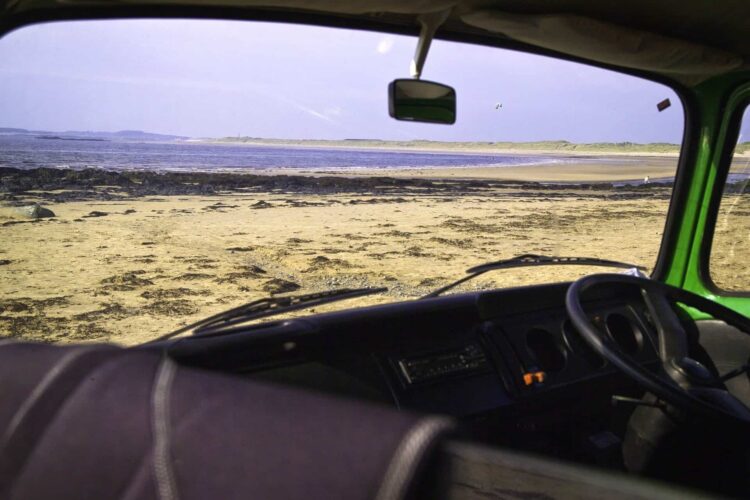
Best Campervan Sites in Wales 2026
Wales has hundreds of campsites and certified locations accepting campervans and motorhomes. These are the best options by type.
Best for coast: Caerfai Bay, St Davids (SA62 6QT) — clifftop site directly above a Blue Flag beach. Shore Camping Red Wharf Bay, Anglesey (LL75 8RQ) — pitches directly above the beach. Pitton Cross, Gower (SA3 1PH) — 20-minute walk to Mewslade Bay.
Best for mountains: Gwern Gof Isaf, Capel Curig (LL24 0EU) — at the foot of Tryfan in Eryri. Bryn Dinas, Nant Gwynant (LL55 4NW) — lakeside site in one of the most photographed valleys in Wales.
Best for urban access: Cardiff Caravan and Motorhome Club (CF23 8RU) — 2 miles from Cardiff city centre by bus. Pencelli Castle Caravan Park, Brecon (LD3 7LX) — on the Brecon and Monmouthshire Canal, 4 miles from Brecon town.
Best for dark skies: Forest Fields, Builth Wells (LD2 3YN) — on the edge of the Cambrian Mountains in a designated Dark Sky Discovery Site area. Elan Valley Campsite (LD6 5HN) — one of the least light-polluted sites in Wales.
All prices are approximate for 2026 peak season — verify directly with each site before booking. The Caravan and Motorhome Club and Camping and Caravanning Club both operate certified locations across Wales, many of which are working farms with 5 or fewer pitches.
Practical Campervan Tips for Driving in Wales
Road width: Many Welsh roads — particularly in Eryri and Mid Wales — are single-track with passing places. A campervan over 6.5 metres will struggle on many of the most scenic routes. A 2-berth or 4-berth panel van conversion is more practical than a large coachbuilt motorhome.
Fuel: Fuel stations are sparse in Mid Wales. Do not let the tank drop below half in the Cambrian Mountains — the next station may be 30 miles away.
Overnight parking: Wild camping in a motorhome or campervan is not a legal right in Wales and requires landowner permission. Do not assume a lay-by or forest road is a legal overnight stop. Always use a designated site or a Caravan and Motorhome Club certified location.
Weather: Wales is one of the wettest parts of the UK. April to September are the driest months. The western coasts (Pembrokeshire, Gower, Llŷn) receive the most sun. Carry waterproofs at all times of year.
Ferry connections: Fishguard (SA65 9HJ) and Holyhead (LL65 1DR) both have Stena Line ferry services to Ireland — Fishguard to Rosslare and Holyhead to Dublin. Holyhead is on Anglesey and makes a logical start or end point for a North Wales Way tour.
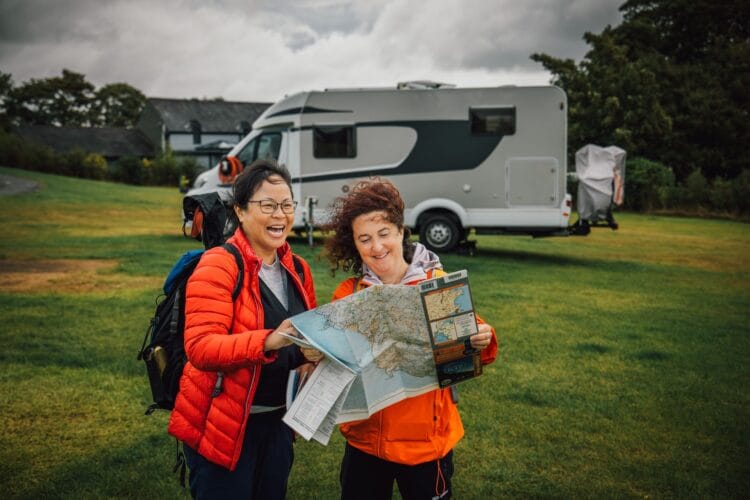
Campervan Hire in Wales 2026
Several companies offer campervan and motorhome hire from Welsh locations.
Wales Motorhome Hire (Cardiff): Based near Cardiff Airport (CF62 3BQ). Offers 2–6 berth motorhomes from approximately £120–£180 per night in peak season. Well-positioned for starting a South Wales Way or Cambrian Way tour — verify current pricing at their website.
Llandudno Motorhome Hire: North Wales-based hire company — useful for starting the North Wales Way without driving from England first.
Quirky Campers: A peer-to-peer platform listing privately owned van conversions across Wales — often more characterful than fleet hire companies. Available from approximately £80–£150 per night. Check quirkycampers.com for current listings in Wales.
Book campervan hire 3–6 months ahead for July and August in Wales — demand for smaller van conversions particularly exceeds supply in summer.
Frequently Asked Questions: Wales in a Campervan
How long does it take to drive the Three Wales Ways?
The three routes together cover approximately 460 miles of road. If driven continuously with no stops, that is roughly 12–15 hours of driving. In practice, with stops, sightseeing and overnight stays, allow a minimum of 10–14 days to cover all three routes properly. The Cambrian Way alone takes 4–5 days if you stop at the main points along the route.
Can you drive a large motorhome on Welsh roads?
Large coachbuilt motorhomes (over 7–7.5 metres) can drive the main A and B roads without difficulty, but will struggle on many of the most scenic routes in Eryri (Snowdonia) and the Cambrian Mountains, which are single-track with passing places. If you have a large vehicle, stick to the A55 for the North Wales Way and plan your stops around sites accessible from the main road.
Is wild camping allowed in a campervan in Wales?
No. Wild camping — including overnight parking in a campervan or motorhome on public land without permission — is not a legal right in Wales. It requires landowner permission. The Wild Camping (Wales) Bill, currently progressing through the Senedd, would create a right to camp on foot in open land (similar to Scotland’s Land Reform Act) but would not extend to motorised vehicles. Always use a designated campsite or a Caravan and Motorhome Club certified location.
What is the best time of year for a campervan holiday in Wales?
May, June and early September are the best months — long days, lower crowds than July and August, and most campsites open. July and August have the best weather but also the highest prices and fullest sites — book 3–6 months ahead for these months. April and October can be excellent in good weather and prices drop significantly, but expect more rain and some sites to be closed.
Do I need to book campsites in advance for Wales?
For July and August, yes — particularly for coastal sites in Pembrokeshire, Gower and Anglesey. These fill weeks or months ahead in peak season. The Cambrian Way sites are less pressured and can often be booked a week or two ahead in summer. Caravan and Motorhome Club certified locations (CLs) — small, farm-based sites with up to 5 pitches — are often available at shorter notice even in summer.

Nick, your trusted guide to Wales travel and exploration, shares a deep passion for this enchanting land. With years of exploration, Nick offers expert insights into the best of Wales. Join him on a journey through its captivating history, culture, and hidden gems, as he inspires you to create unforgettable Welsh travel experiences.
Planning a trip to Wales?
Find the perfect holiday cottage for your Welsh adventure.


 Share icon below and select Add to Home Screen to install the free app.