


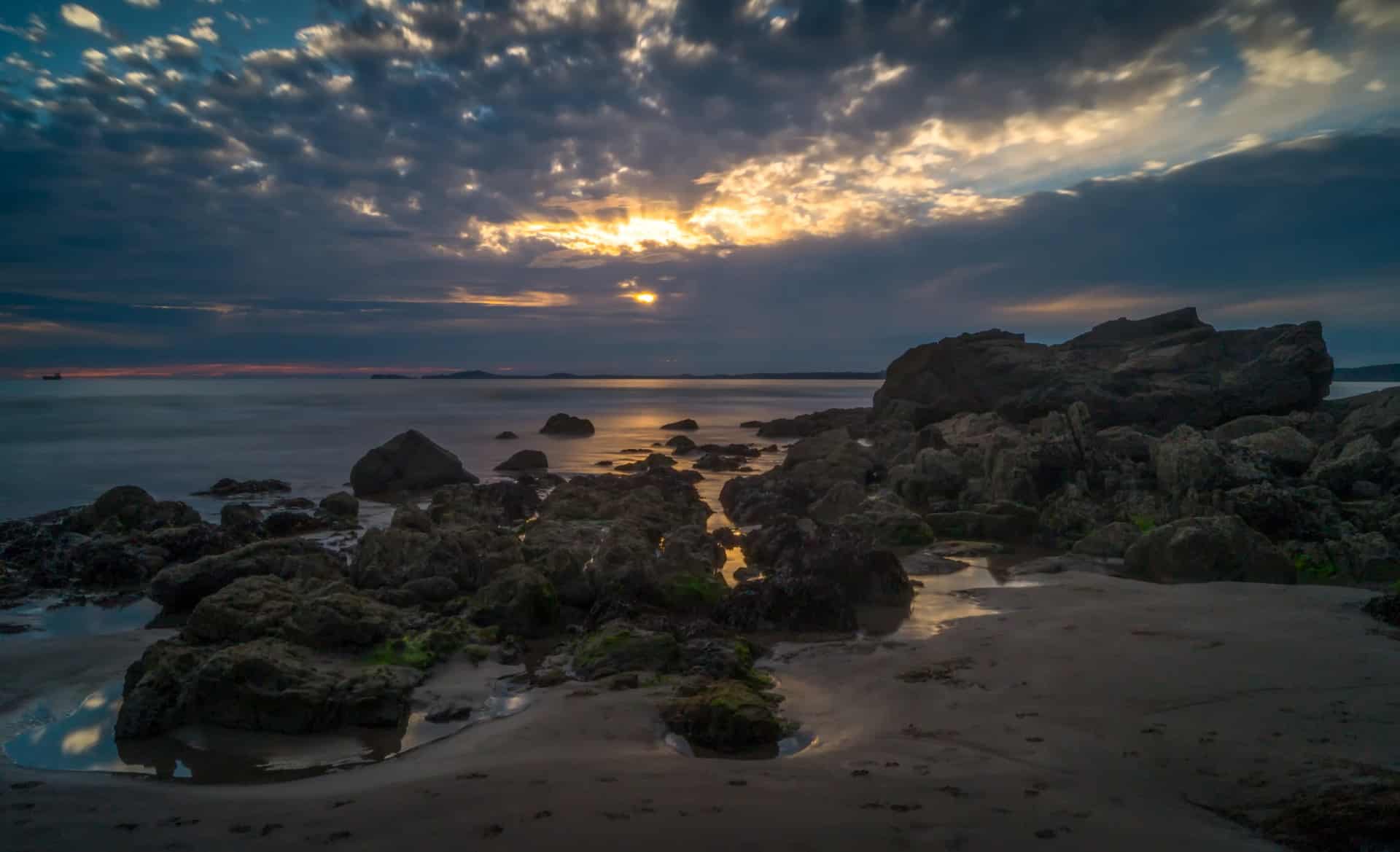
Pembrokeshire 2026: Beaches, Coast Path, Islands and the Best of West Wales
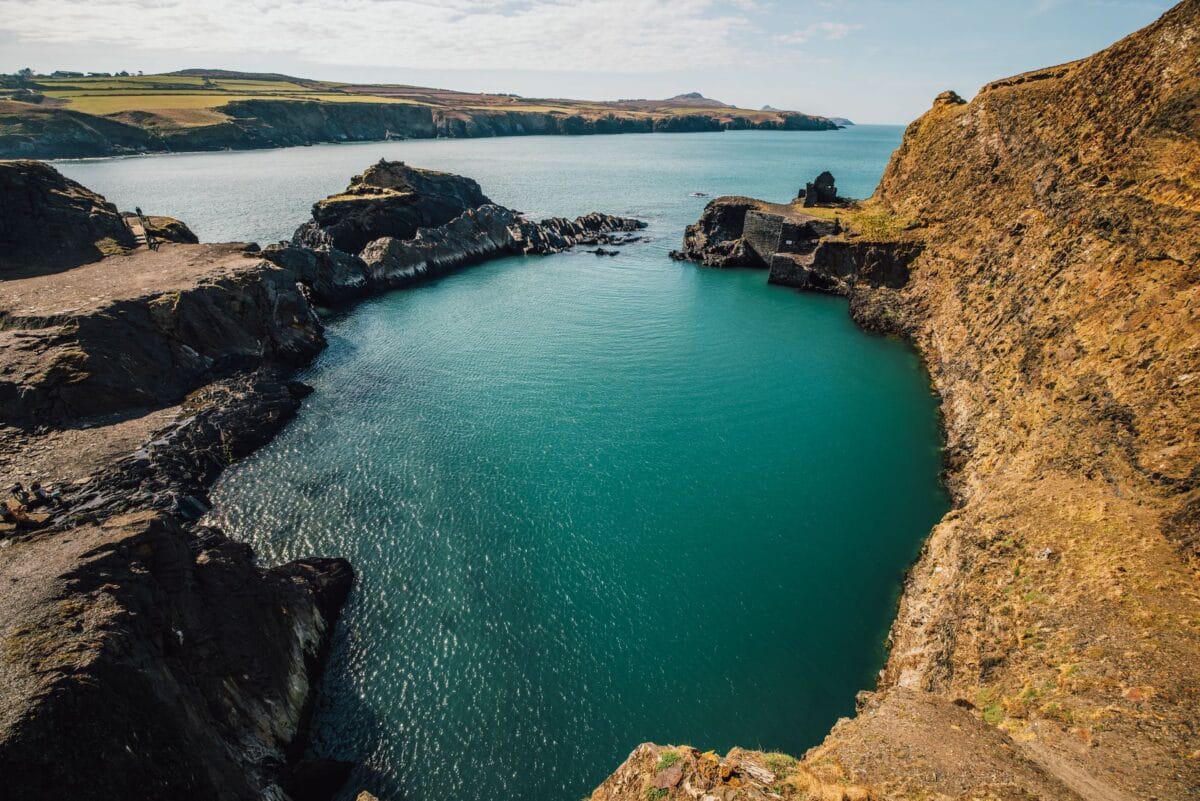
Pembrokeshire is completely unique — it is the only fully coastal National Park in Britain. This gorgeous region boasts over 50 magnificent beaches, some of the cleanest water in the country, and a beautifully crinkled coastline. Winding right along the cliff edges is the 186-mile Pembrokeshire Coast Path, widely regarded as one of the finest and most dramatic long-distance walking routes in the world. Because of its pristine environment, the county regularly secures the highest number of Blue Flag beach awards in Wales.
This guide covers the absolute best things to do in Pembrokeshire in 2026, from adrenaline-fueled Coasteering at Abereiddi’s Blue Lagoon to puffin-watching on the famous Skomer Island — complete with all the practical details you need on access, local operators, parking, and the best times to visit.
Featured research: Pembrokeshire’s Welsh-medium school intake has grown faster than any other county in Wales over the past seven years – up 4.1 percentage points since 2019, more than anywhere in Gwynedd or Anglesey. See the full county breakdown in our 2026 Welsh Language Education Report.
Featured research: Pembrokeshire has the second-highest concentration of second homes of any county in Wales, 4,232 in 2026/27, behind only Gwynedd. See the full county-by-county breakdown in our 2026 Second Homes Report. Holiday lets on the business rates list in Pembrokeshire fell from 2,640 to 1,640 between 2023 and 2026, the joint-largest fall of any council: see our holiday lets report.
Things to Do in Pembrokeshire
Because of its protected National Park designation, Pembrokeshire’s spectacular coastline has remained largely undeveloped and wonderfully wild. The result is an activity-rich shore where world-class surfing, sea kayaking, and open-water swimming sit alongside clifftop walking, wildlife boat trips, and quiet, hidden bays that can only be reached on foot. It’s even the official birthplace of coasteering — the adrenaline-fueled sport of scrambling, climbing, and cliff-jumping along the intertidal zone, which was invented right here on the St Davids peninsula.
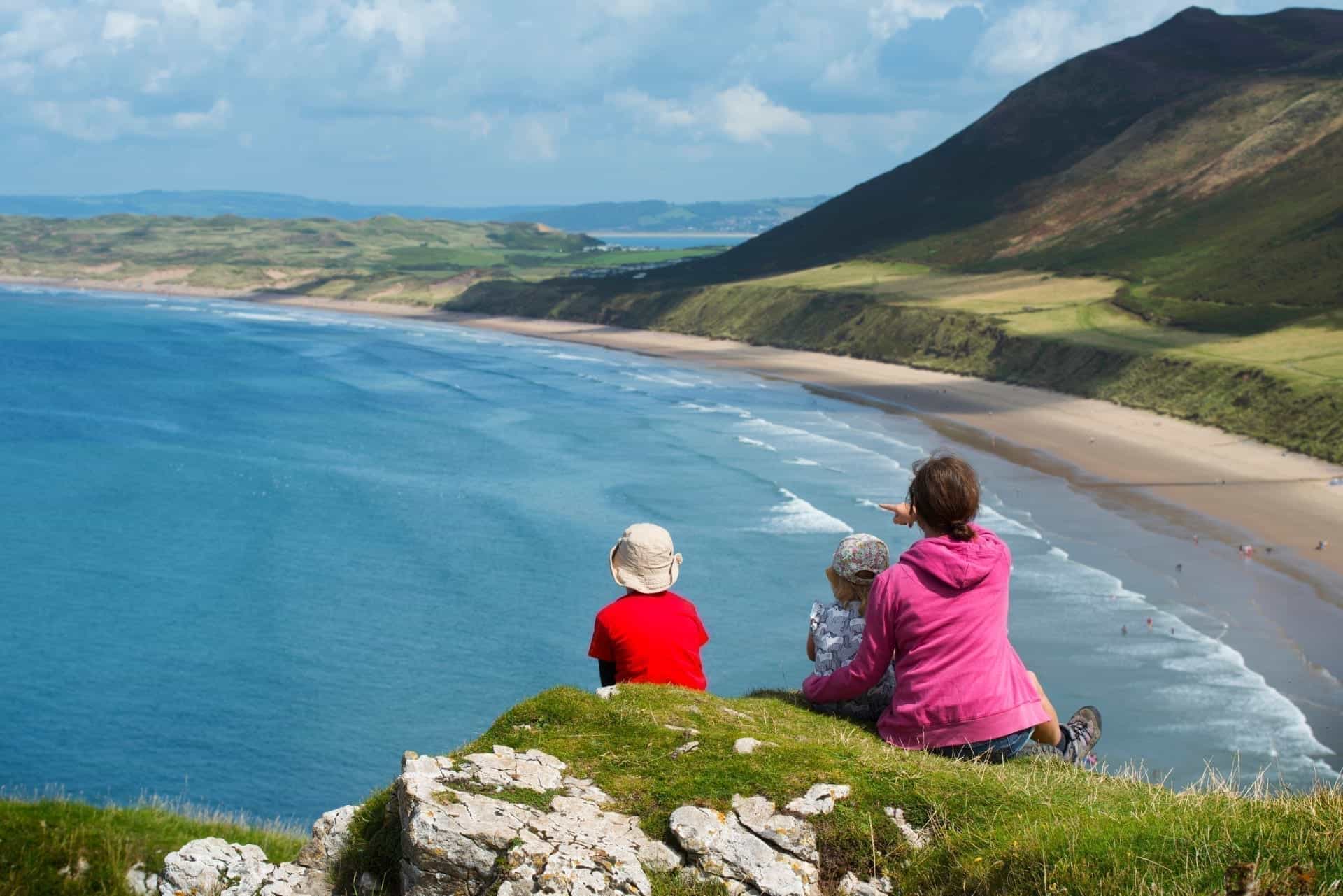
Coasteering, North Pembrokeshire (SA62 6DT)
Overview: Coasteering was invented on the Pembrokeshire coast in the 1980s, and the county remains the absolute best location in Britain for the activity. It involves scrambling, swimming, and cliff-jumping along sea cliffs at water level — and no prior experience is needed. The Blue Lagoon at Abereiddi (SA62 6DT) is the most photographed location: a flooded Victorian slate quarry with a narrow cut to the open sea, cliff jumps ranging from 2 to 11 metres, and exceptionally clear turquoise water. Sessions typically cover the lagoon plus the adjacent headlands and sea caves.
Prices and Booking: Half-day coasteering sessions in 2026 typically cost between £50 and £75 per person. Book well in advance for July and August — peak summer sessions fill up weeks ahead. Most operators are based around Tyddewi (St Davids, SA62) and Mathry. All operators provide winter-grade wetsuits, helmets, and buoyancy aids. The minimum age is typically 8 years old.
Operators: Established Pembrokeshire coasteering operators include TYF Adventure (based in St Davids), Preseli Venture (near Mathry), and Celtic Quest Coasteering (who meet you right at Abereiddi beach). All reputable companies should hold current AAIAC or AALA safety accreditations.
Visitor Info: The main car park for the Blue Lagoon (SA62 6DT) is located right at Abereiddi Beach, 6 miles northwest of Tyddewi on the B4583. It is a privately owned, uneven grass and stone parking area that charges around £4 for all-day parking (seasonal charges apply). The lagoon itself is just a 400-metre walk from the car park and can be viewed from the clifftop path for free — but independent swimming in the lagoon is strongly discouraged without a guide due to cold water and the unpredictable tidal surge through the cut. For a full guide to water activities across Wales, see Water Sports in Wales.
Safety: Only coasteer with an accredited professional operator. Do not attempt unsupervised coasteering (often called “tombstoning”) on Pembrokeshire sea cliffs — the tidal surge, submerged rock ledges, and cold water shock are genuine hazards. The Blue Lagoon’s narrow cut to the sea creates sudden, powerful water movements; it is spectacular and safe to observe from above, but highly unsafe to swim through independently.
Surfing Pembrokeshire (SA62 6PS)
Overview: Pembrokeshire’s Atlantic-facing beaches receive consistent swell from September through to April, with summer producing smaller but cleaner waves that are perfectly suited for beginners. Whitesands Bay (SA62 6PS), 2 miles northwest of Tyddewi (St Davids), is the most popular surf beach — wide, Blue Flag-awarded, and facing directly northwest into St Brides Bay. Newgale (SA62 6AS) offers 2 miles of sweeping beach on the same bay, which is often better for experienced surfers when the big westerly swells roll in. Down on the south coast, Freshwater West (SA71 5HS) is the most consistent break in the county and is usually significantly quieter than the north coast spots.
Lessons and Hire: Group surf lessons in 2026 typically cost between £35 and £40 per person. Surf schools operate right on the beach at Whitesands Bay and Newgale throughout the summer — group lessons usually run for 2 hours and include your surfboard and wetsuit hire. Excellent local operators include Whitesands Surf School, Ma Simes Surf Hut (Whitesands), and Newsurf (Newgale). While they do take walk-up bookings in off-peak periods, advance booking is highly recommended in July and August.
Visitor Info: The best surf months in Pembrokeshire are October to March, when Atlantic low-pressure systems push clean, consistent swell to the west-facing beaches. Summer surf is smaller but much warmer, though the beaches are naturally more crowded. Freshwater West has very few facilities at the beach itself — bring food and check the surf forecast before making the drive. The National Trust car park at Freshwater West fills very early in summer; note that while parking was historically free here, the National Trust has recently introduced parking charges to protect the landscape and manage visitor numbers, so be prepared to pay upon arrival. For the full surfing guide across Wales, see Water Sports in Wales.
Pembrokeshire Beaches
Pembrokeshire has over 50 beaches — from wide, lifeguarded Blue Flag bays to cliff-hemmed coves accessible only on foot via the Coast Path. The water quality is consistently among the highest in Britain.

Barafundle Bay (SA71 5LS)
Overview: The finest beach in Pembrokeshire! — A sheltered, south-facing bay with golden sand, clear water, and no road access. The only way in is on foot along the Coast Path from Stackpole Quay car park, approximately 800 metres each way across a clifftop path with two sets of steps through the dunes. There is no café, no car park at the beach, and no ice cream van. What it does have is outstanding natural scenery, clean water, and enough space to feel quiet even on a summer weekend — because the walk keeps casual visitors out.
Parking and Access: Park at the Stackpole Quay National Trust car park (SA71 5LS). Parking costs around £5 to £7 for the day, but it is entirely free if you are a National Trust member. The walk to the beach involves steep steps and a sandy path, meaning it is not suitable for wheelchairs or most pushchairs. There are no facilities at the beach itself. The car park area features the seasonal Boathouse Tea-room at Stackpole Quay, so be sure to use the toilets and fill up on snacks before making the walk.
Visitor Info: The car park fills by 10am on summer weekends — arrive before 9am or after 4pm. Bring everything you need: the beach has no bins, so carry your litter out. The Bosherston Lily Ponds (a 1-mile walk away) are part of the same National Trust estate and are completely free to access from dawn until dusk; they are a renowned wildlife habitat and well worth combining into your visit. For sea kayaking and coasteering around the Stackpole headland, see the water sports section above.

Whitesands Bay (SA62 6PS)
Overview: The most practical all-round beach in Pembrokeshire — a wide Blue Flag bay facing directly northwest into St Brides Bay, just 2 miles from Tyddewi (St Davids). It offers consistent surf, a lifeguarded swimming zone, and a car park right behind the dunes. The view across to Ramsey Island from the beach is one of the finest coastal views in Wales. At low tide, the sand extends for nearly a mile — meaning there is room for large numbers of visitors without feeling crowded.
Parking and Access: There is a large Pay & Display car park directly behind the beach. Expect to pay around £6 to £6.50 for a full day between March and October; parking is completely free during the winter months. There are public toilets and a café right on site. The beach is flat and accessible at mid-to-low tide, making it manageable for pushchairs across the firm sand. RNLI Lifeguards operate daily from late May to early September, with additional weekend and holiday patrols running from Easter all the way through to late October in 2026. Note that dogs are strictly banned from the entire beach between 1st May and 30th September.
Visitor Info: Walk north from the car park along the Coast Path towards Porthmelgan (about a 20-minute walk, with no facilities) for the wildest stretch of cliff on the St Davids peninsula. Porthmelgan is a beautifully quiet, secluded cove on most days and provides a complete contrast to the busy car park beach. Tyddewi (St Davids) is just 2 miles east — the smallest city in Britain features independent cafés, a magnificent 12th-century cathedral, and the atmospheric ruins of the Bishop’s Palace. For the complete guide to beaches in Wales, see Best Beaches in Wales.
Newport Sands (SA42 0TH)
Overview: A wide Blue Flag beach at the mouth of the Afon Nyfer estuary — calm and shallow at low tide, with a tidal stream crossing to the full extent of the sands. Newport town is 1 mile away and has an unusually good range of independent cafés, restaurants, and delis for a beach of this size. The beach faces north into Newport Bay, sheltered from the strongest Atlantic swells — it is calmer and better for younger children than the exposed south-facing beaches.
Parking and Access: There is a Pay & Display car park directly at the beach. For the 2026 season (applying March to October), parking costs £4 for up to two hours, £6 for up to four hours, or £8 for a full day. There are accessible toilets and a seasonal café right on site. The flat sandy access makes it easy for pushchairs at mid-tide. RNLI lifeguards patrol the beach daily during the peak summer season, running from mid-June through to early September between 10am and 6pm.
Visitor Info: Newport (Trefdraeth) is a better practical base for north Pembrokeshire than Tyddewi (St Davids) — it is slightly less busy, has more accommodation options, and offers a wider choice of eating out. The Coast Path passes directly behind the beach, giving immediate access to the cliffs in both directions. Carn Ingli hillfort, rising steeply behind the town, is a rewarding 90-minute to 2-hour direct return walk with panoramic views over Newport Bay — one of the least-visited good walks in Pembrokeshire. Dogs are fully welcome year-round at Newport Sands.
The Pembrokeshire Coast Path
The Pembrokeshire Coast Path runs 186 miles from St Dogmaels in the north to Amroth in the south — one of the 15 National Trails in England and Wales, and widely regarded as the finest coastal walking route in the UK. It forms part of the wider Wales Coast Path, which circles the entire country.
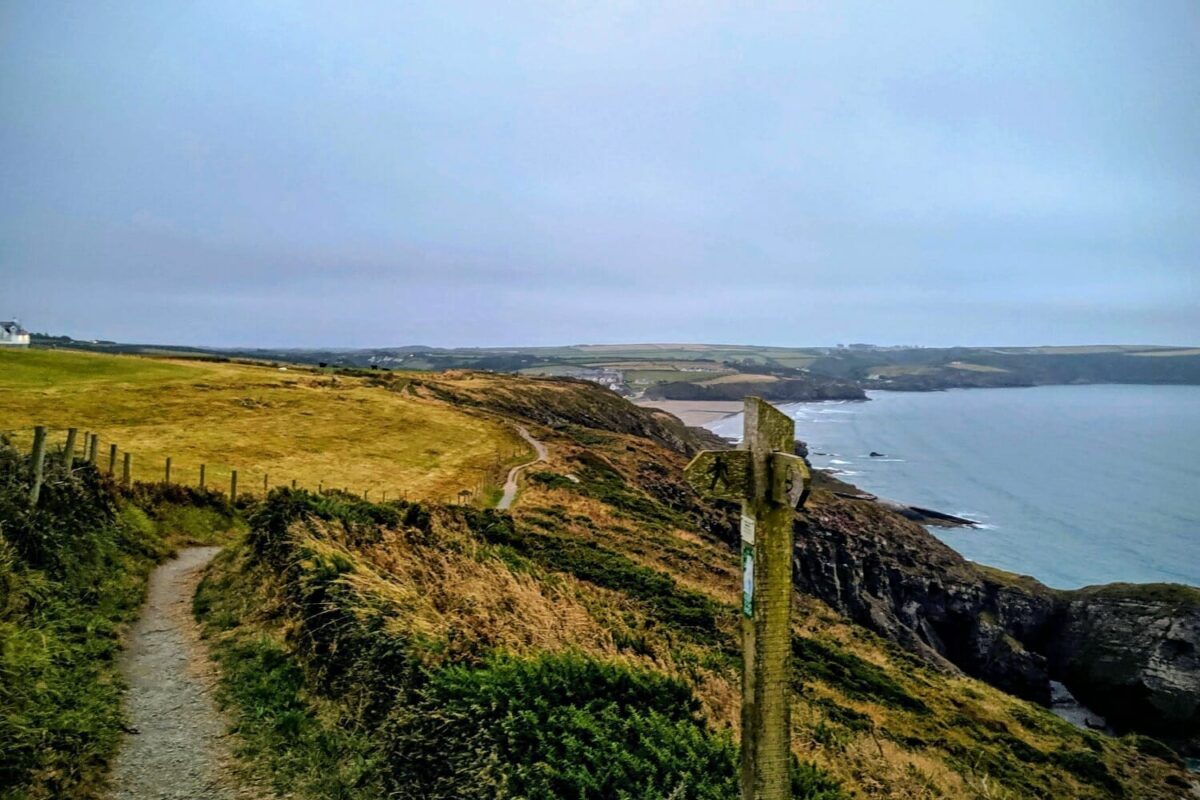
St Brides Bay — Best Day Sections
Overview: St Brides Bay forms the wide western indent of the Pembrokeshire coast. The 10-mile section of the Coast Path from Newgale south to Solva and onward to St Non’s Bay near Tyddewi is one of the most varied and accessible day walks on the entire 186-mile route. The path drops to sea level at Solva harbour (one of the most attractive harbours in West Wales) before climbing back onto the cliffs above St Non’s Bay. This section passes through five distinct coastal landscapes in a single day.
Distance and Grade: Newgale to Tyddewi via Solva: approximately 11 miles, 5–6 hours walking. Grade: moderate — significant cliff ascents and descents but no technical sections. Start at the Newgale car park (SA62 6AS); finish in Tyddewi (SA62 6NT).
Visitor Info: Solva harbour (at the halfway point) has great facilities for an ideal lunch stop. The Harbour Inn in Solva sits right on the waterfront and serves excellent local seafood and hearty meals daily from 11:30am. The Puffin Shuttle bus links Tyddewi to Newgale and most Coast Path access points in summer — use it to avoid retracing your steps on linear day walks.
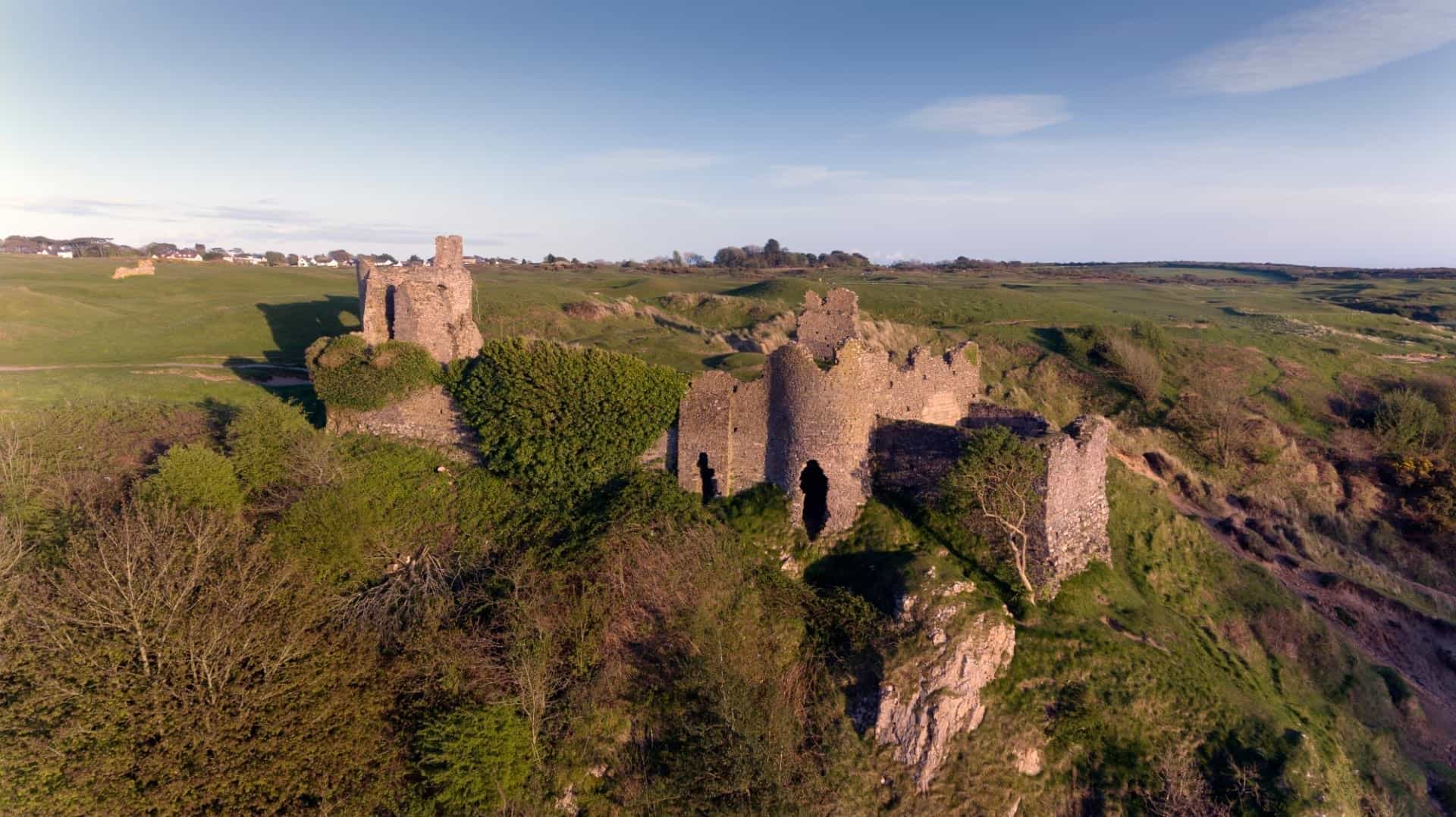
South Pembrokeshire Coast — Stackpole to Freshwater West
Overview: The south Pembrokeshire section of the Coast Path runs through a dramatically different landscape to the north — towering limestone cliffs, sea arches, blowholes, and enclosed bays. The 7-mile stretch from Stackpole Quay west to Freshwater West passes Barafundle Bay, Broad Haven South, St Govan’s Chapel, and Huntsman’s Leap (a narrow 35-metre cleft in the limestone cliff). St Govan’s Chapel (SA71 5DS), miraculously wedged into a crack in the cliff above the sea, dates from the 6th century and is one of the most remarkable small buildings in Wales.
Distance and Grade: Stackpole Quay to Freshwater West: approximately 7 miles, 4–5 hours. Grade: moderate — the cliff path here is relatively level compared to the steep ascents of north Pembrokeshire. Note: the Castlemartin artillery range frequently closes sections of this path, including the access road to St Govan’s, on live-firing days.
Visitor Info: St Govan’s Chapel is free to visit and open daily (range access permitting). The steps down to the chapel (approximately 74 — local legend says the number magically changes when counted going down versus coming back up) are cut straight into the cliff face. Inside the chapel is a single room with a natural spring. The chapel has no electricity and fits perhaps 8 people. It is well worth visiting on a weekday when the free parking area (SA71 5DS) is not full — the single-track approach lane fills quickly in peak summer. Before visiting, you must check the 2026 firing schedule at gov.uk or call the Guard Room on 01646 661450 to ensure the roads are open.
Pembrokeshire Islands and Wildlife
Pembrokeshire’s offshore islands hold some of the most important seabird colonies in Britain. Skomer Island, just 1 mile off the coast near Marloes, has the largest Manx shearwater colony in the world and one of the most accessible Atlantic puffin populations in the UK.

Skomer Island (SA62 3BJ)
Overview: Skomer is the absolute best place in Wales to see Atlantic puffins. In fact, following recent conservation successes, the island recorded an astonishing count of over 43,600 puffins during the 2025 breeding season! The birds come ashore in late April and leave in late July. The ultimate time to visit for puffins is May and June, when the birds are highly active around their burrows and the island is not yet overwhelmed with peak summer visitors. Grey seals, razorbills, guillemots, and Manx shearwaters also breed here in staggering numbers.
Booking and Access: Day trips to Skomer depart from Martin’s Haven (SA62 3BJ) by boat. For 2026, the landing fee is £23 for adults and £15 for children. To protect the habitat, day visitor numbers are strictly capped at 250 people per day, and tickets sell out weeks in advance. Bookings open early in the year via the Welsh Wildlife Trust website (welshwildlife.org). The crossing takes just 15 minutes, and you should allow 4–5 hours to explore the island. Overnight stays in the island’s farmhouse are available but highly competitive.
Visitor Info: Martin’s Haven is 14 miles from Tyddewi via the B4327. Parking is available at the National Trust Deer Park car park above the harbour, costing £7 for the day (free for NT members). Arrive at Lockley Lodge at least 1 hour before your stated departure time to check in. The crossing is weather-dependent and can be cancelled at short notice. Wear sturdy walking boots and bring warm layers regardless of the weather forecast, as Skomer’s coastal weather can change rapidly. Note that there are no food outlets or bins on the island, so you must bring a picnic and take all litter home.
Ramsey Island and Boat Trips (SA62 6TL)
Overview: Ramsey Island sits 1 mile off St Davids Head and is an RSPB nature reserve. The island holds breeding red kites, peregrines, choughs, and a substantial grey seal colony. Approximately 700 grey seals pup on the beaches of Ramsey between September and November, making it one of the best places in Britain to observe Atlantic grey seal pups. Boat trips operate from St Justinian’s (SA62 6TL), 2 miles west of Tyddewi, from spring through to autumn.
Booking and Access: Several highly rated operators run trips to Ramsey, including Thousand Islands Expeditions (who hold the sole rights to run official RSPB landing trips) and Voyages of Discovery. For 2026, a landing trip generally costs £32 for adults (discounted to £22 if you are an RSPB member) and £27 for children. Seal pup season (September–November) is the most popular period, so booking early is essential. The parking at St Justinian’s is notoriously limited; there is a very small free area and a farmer’s field that charges £4 (cash only) for the day.
Visitor Info: Ramsey Sound — the narrow channel between Ramsey Island and the mainland — is one of the fastest tidal races in Wales, running at up to 6 knots during spring tides. The boat trip through Ramsey Sound is a thrilling experience in itself. For dolphin and porpoise sightings, the Sound is one of the most reliable spots in West Wales — harbour porpoises are frequently seen here year-round, while bottlenose dolphins are more common in the warm summer months.
Pembrokeshire Towns: Tyddewi, Tenby and Newport
Pembrokeshire has four towns worth spending time in beyond the beach. Each has a distinct character — from the smallest city in Britain to a perfectly preserved medieval walled town.
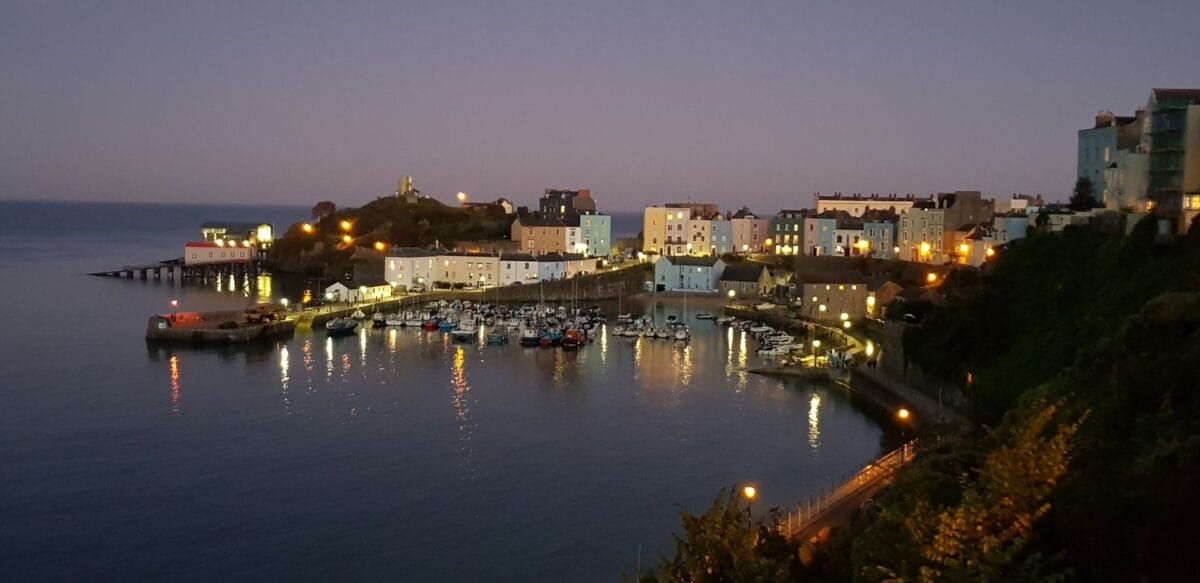
Tyddewi (St Davids) (SA62 6NT)
Overview: Britain’s smallest city by population — officially a city only because it has a cathedral. St Davids Cathedral (SA62 6RD) was founded in the 6th century by the patron saint of Wales and remains an active pilgrimage site. The magnificent ruins of the Bishop’s Palace stand directly adjacent to the cathedral; together they form one of the finest historic complexes in Britain. The city itself is essentially a village of roughly 1,800 people, featuring a lovely handful of independent cafés, restaurants, and outdoor gear shops.
Cathedral and Palace: The cathedral is free to enter (though donations of around £5 are highly encouraged to help with £2,700 daily upkeep costs), and is generally open to visitors from 10am to 4pm Monday to Saturday, and 1pm to 3pm on Sundays. The Bishop’s Palace is managed by Cadw; adult admission is currently £6.80, and it is open daily, with extended 9:30am to 6pm hours during the peak summer months. Allow 2 hours to comfortably explore both sites.
Visitor Info: Tyddewi is 16 miles from Haverfordwest via the A487. Parking in the main Oriel y Parc car park (SA62 6NH) costs £6 for a full day during the charging season (March to October). The city is exceptionally busy in July and August — midweek visits in June or September help you avoid the worst of the traffic on the narrow approach roads. The Oriel y Parc National Park Visitor Centre (free entry) has excellent displays on the Pembrokeshire Coast National Park geology and wildlife, making it the perfect first stop upon arrival.
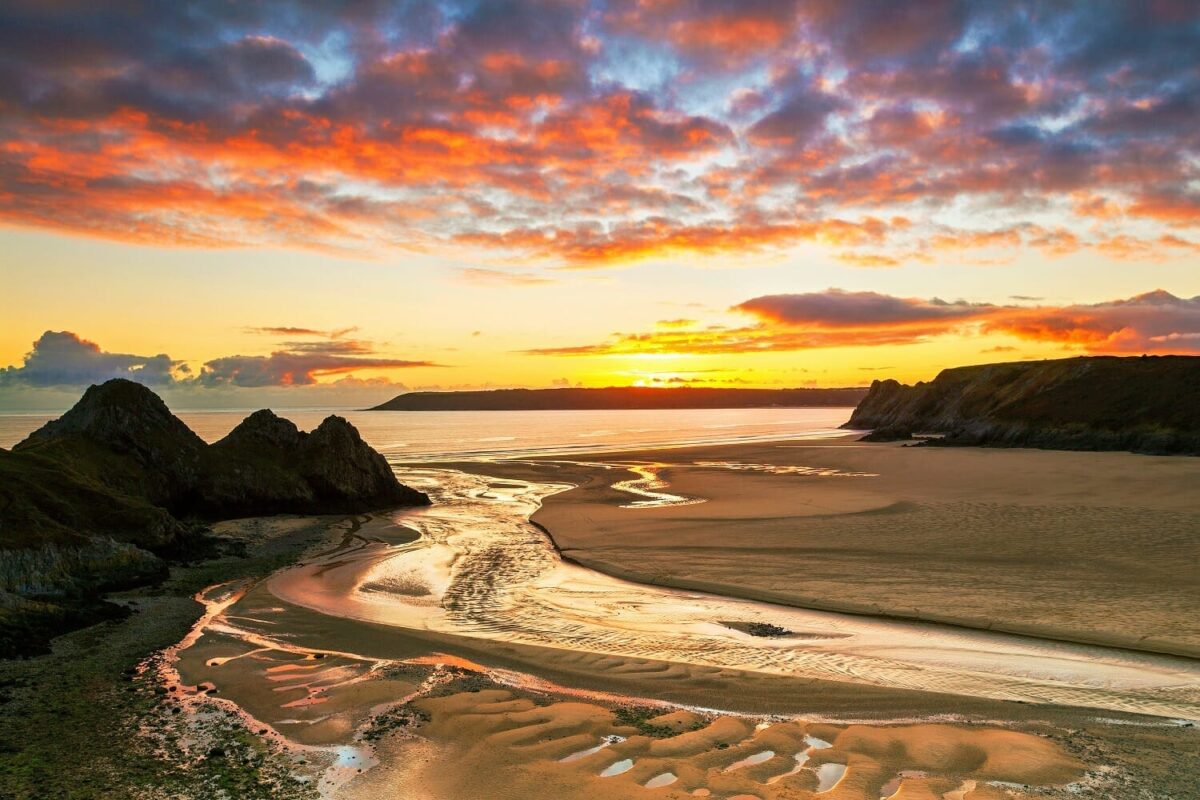
Tenby (Dinbych-y-Pysgod) (SA70 7AX)
Overview: The best-preserved medieval walled town in Wales — boasting 13th-century town walls, a Norman castle on the headland above the harbour, four beaches within easy walking distance, and a working fishing harbour that still runs daily boat trips. The town’s colourful harbour-front buildings are one of the most photographed streetscapes in the country. Tenby has the full range of facilities — independent shops, excellent restaurants, traditional pubs, and a wide range of accommodation — making it the most practical and vibrant base for exploring south Pembrokeshire.
Getting There: Tenby sits on the scenic Swansea–Pembroke Dock rail line. Direct Transport for Wales trains from Swansea take approximately 1 hour and 30 minutes. By road, Tenby is 10 miles south of Haverfordwest on the A478. Parking is notoriously limited in the town centre itself — your best bet is to use the main multi-storey Upper Park car park (SA70 7ET) and walk the short distance in.
Visitor Info: Arriving by train is significantly easier than driving in peak summer. The station is just a 10-minute walk from South Beach. Boat trips to Caldey Island (a working monastery famous for its chocolate shop and perfumery) depart from the harbour Monday to Saturday throughout the summer season. The town walls are easily walkable in 30 minutes and give elevated views over the harbour and South Beach. The Tenby Museum and Art Gallery on Castle Hill covers local maritime history and boasts a surprisingly strong collection of Welsh art.
Newport (Trefdraeth) (SA42 0RF)
Overview: Newport in north Pembrokeshire is a small, upscale market town at the foot of the Preseli Hills — and is entirely different in character from the large city of Newport in South Wales. It features a Norman castle (which is a private residence, though the striking exterior is visible), a fantastic range of independent restaurants and cafés, and direct access to the Coast Path via Newport Sands. Carn Ingli — the imposing hillfort rising behind the town — is one of the most spiritually significant Iron Age sites in Wales. The walk to the summit takes a 90-minute return trip and rewards you with panoramic views over Newport Bay and the Preseli Hills.
Visitor Info: Newport makes for a much quieter, less tourist-heavy base than Tyddewi for exploring north Pembrokeshire. The Preseli Hills — famously the source of the Stonehenge bluestones — rise directly behind the town. Carn Menyn, the exact rocky outcrop where the spotted dolerite bluestones were quarried approximately 5,000 years ago, is a breathtaking 3-mile walk from Newport via the Golden Road ridge track. The scenery on the Golden Road is among the finest and wildest in Pembrokeshire, yet it sees very few visitors compared to the coastal path.
Featured guide · A structured wellness break: A secluded 18th-century rectory on the Pembrokeshire coast hosts a Writing, Meditation and Digital Detox Retreat run by writer Holly Rigby, combining creative sessions with cold water swimming and genuine phone-free time. See our complete guide to Wellness Retreats in Wales for this and four other verified programmes.
Featured guide · See Welsh craft in action: Melin Tregwynt and Solva Woollen Mill are both genuinely working woollen mills right here in Pembrokeshire, free to visit and watch weaving in progress. See our complete guide to Welsh Wool Mills & Textile Heritage for these and three other verified mills across Wales.
Featured guide · Birthplace of the Tudors: Pembroke Castle, at the southern end of the county, is where Henry VII was born in 1457 — and its round Norman keep is one of the best preserved in Britain. See our complete guide to Pembroke Castle for 2026 tickets, opening times and everything to see on site.
Where to Stay in Pembrokeshire
Pembrokeshire has a wide range of accommodation across all price points — from rustic campsites directly behind the coastal car parks to luxury self-catering cottages in converted farmhouses, plus a charming handful of small independent hotels in the main towns.
Holiday Cottages, Pembrokeshire
Overview: Self-catering cottages are the dominant accommodation type across Pembrokeshire — in fact, the county has one of the highest concentrations of holiday lets in Wales. Converted stone farm buildings in the Preseli Hills, traditional fishermen’s cottages within walking distance of the Coast Path, and larger family properties near Tenby and Saundersfoot are all widely available. A cottage base gives far more flexibility than a hotel for active visits combining multiple beaches, early morning Coast Path walks, and wildlife boat trips.
Camping and Glamping, Pembrokeshire
Overview: Pembrokeshire boasts some of the absolute best coastal campsites in Wales. Sites located within 400 metres of the coast at Newgale, Broad Haven, Newport, and Freshwater East (alongside brilliant National Trust sites like Gupton Farm) give you direct beach access without needing to touch your car. Glamping options have also expanded massively in the region, ranging from off-grid bell tents and yurts in secluded farm fields to fully equipped luxury shepherd’s huts complete with wood-fired hot tubs. Our dedicated camping and glamping guide covers the full range of options by location and price point – camping and glamping guide.
Planning Tip: The most popular coastal campsites in Pembrokeshire book up for July and August (especially the late August bank holiday weekend) as early as February or March. If you want a specific site with a sea view on a specific weekend in peak season, you must book the moment their booking window opens. Most sites operate a seasonal window from Easter through to late October, so it is always best to check directly with your chosen site for their exact 2026 opening dates and pitch availability.
Frequently Asked Questions: Pembrokeshire
Is Pembrokeshire worth visiting?
Pembrokeshire is famous for its beaches — Barafundle Bay, Whitesands Bay, and Newport Sands are among the most consistently highly rated in Britain. The county is also known for the spectacular 186-mile Pembrokeshire Coast Path, Skomer Island’s massive puffin colony, being the birthplace of coasteering, and Tyddewi (St Davids) — Britain’s smallest city and the site of a 12th-century cathedral that has been a major pilgrimage destination for 1,400 years.
What is Pembrokeshire famous for?
Pembrokeshire is famous for its beaches — Barafundle Bay, Whitesands Bay and Newport Sands are among the most consistently rated in Britain. The county is also known for the Pembrokeshire Coast Path (186 miles), Skomer Island’s puffin colony, the invention of coasteering, and Tyddewi (St Davids) — Britain’s smallest city and the site of a 12th-century cathedral that has been a pilgrimage destination for 1,400 years.
When is the best time to visit Pembrokeshire?
May and June are the best months for combining good weather, accessible beaches, open facilities, and the peak puffin season on Skomer Island. September is excellent for sea temperatures (which are at their annual peak), reduced crowds, and reliable autumn swells on the surf beaches. July and August are the warmest but by far the busiest months — beaches and car parks fill early, approach roads become congested, and accommodation must be booked months in advance.
How long does it take to drive across Pembrokeshire?
Pembrokeshire is relatively compact — the county is approximately 35 miles north to south and 25 miles east to west. Driving from Haverfordwest to Tyddewi (St Davids) takes 30–35 minutes on the A487. Haverfordwest to Tenby takes approximately 35–40 minutes on the A40 and A478. However, the narrow approach roads to coastal car parks become very slow in July and August — always add 30–60 minutes to any beach journey at weekends in peak summer.
Where is Pembrokeshire?
Pembrokeshire is located at the extreme southwestern tip of Wales, making it the westernmost county on the Welsh mainland. The nearest large city is Swansea, approximately 60 miles to the east. By car from Cardiff, Pembrokeshire is approximately 100 miles west via the M4 and A48. By rail, Transport for Wales runs direct, regular trains from Cardiff Central right into the heart of the county, taking approximately 2 hours 45 minutes to Tenby, and 2 hours 30 minutes to Haverfordwest.
More Pembrokeshire and West Wales Guides on Wales.org

Pembrokeshire-born travel writer and founder of Wales.org. Born in Haverfordwest, now based in Hertfordshire — covering Welsh castles, national parks, festivals and family staycations across all 22 Welsh counties.