

Ultimate Guide to Conwy Castle
Conwy Castle Guide 2026: History, Tours, Tickets & Tips
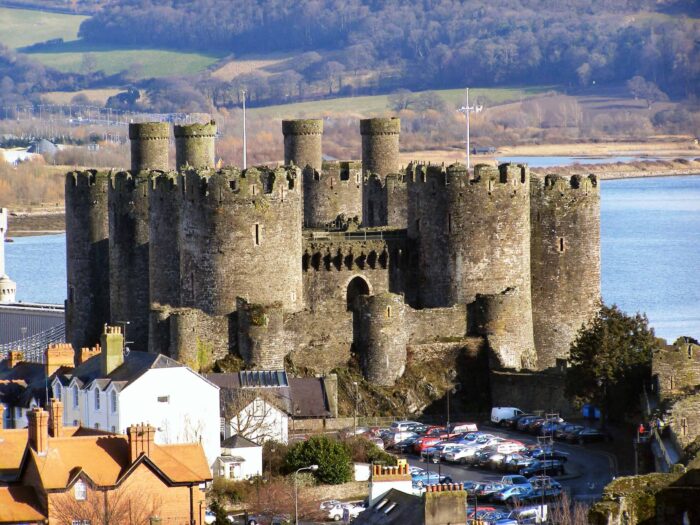
Conwy Castle (Castell Conwy) is one of the finest medieval fortresses in Europe and the most impressive of Edward I’s Iron Ring of castles in North Wales.
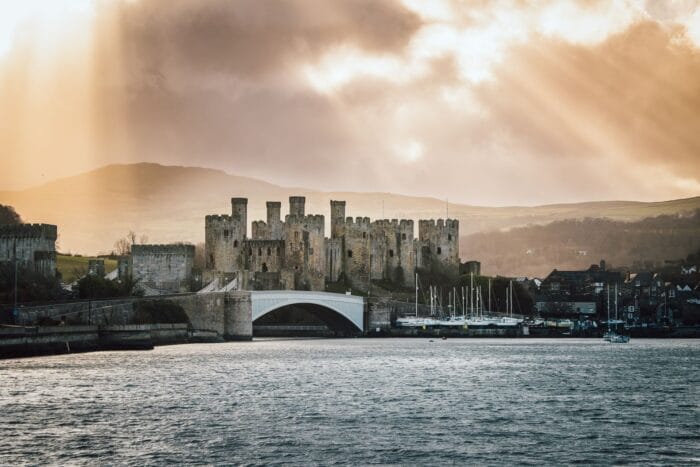
A UNESCO World Heritage Site rising directly from the tidal waters of the Conwy Estuary, with eight massive towers, intact curtain walls and views across the estuary to the mountains of Eryri (Snowdonia) behind.
Whether you are visiting for the history, the views or the sheer spectacle of one of the best-preserved 13th-century castles in the world, this complete guide covers everything you need to know about visiting Conwy Castle in 2026.
Conwy Castle History: Why Was It Built?
Conwy Castle was built between 1283 and 1289 by Edward I of England as part of his military campaign to conquer Wales and subjugate the Welsh princes.
It was constructed at remarkable speed — around 1,500 workers completed the main structure in just four years — under the direction of the Savoyard master castle-builder James of St George, who designed several of Edward’s Welsh fortresses.
The castle and its associated town walls (which survive almost intact and are among the finest medieval town walls in Europe) were built at the same time, with the walled town designed to be garrisoned by English settlers.
The castle was never taken by direct assault, though it was besieged during the Welsh uprising of Owain Glyndwr in the early 15th century.
It fell into gradual decline after the Tudor period, when the political need for a permanent military garrison in Conwy diminished.
By the 17th century the castle was largely ruinous; today Cadw (the Welsh Government’s historic environment service) manages and maintains it.
Conwy Castle Opening Times & Admission Prices 2026
Conwy Castle is managed by Cadw — the Welsh Government’s historic environment service.
The following pricing and opening information is for 2026; always verify on the Cadw website before visiting as times and prices are subject to change.
What to See Inside Conwy Castle
The Eight Towers
Conwy Castle’s most distinctive feature is its eight massive circular towers — four at each end of the elongated fortress — which survive to near-original height and can all be climbed via internal staircases.
The views from the tower tops are extraordinary: across the estuary to the mountains of Eryri (Snowdonia), down to the Victorian suspension bridge and Thomas Telford’s road bridge, and along the intact town walls that stretch away from each corner of the castle.
The Great Hall and Royal Apartments
The roofless but substantially intact Great Hall and the adjacent Royal Apartments occupy the inner ward — the more private eastern section of the castle separated from the outer ward by an internal wall.
The Royal Apartments were designed to accommodate a visiting king; Edward I and his queen, Eleanor of Castile, stayed here in 1283 shortly after the castle’s completion.
The interpretive panels throughout the castle explain what each space originally contained and how it was used.
The Town Walls
The medieval town walls of Conwy are included in the Cadw admission price and are among the finest in Europe — running for 1.3 kilometres around the old town with 21 towers and three original gatehouses.
Walking the full circuit of the walls (partially accessible at height) gives a completely different perspective on the castle and town.
Allow an extra 45–60 minutes to walk a substantial section of the walls after your castle visit.
Guided Tours of Conwy Castle 2026
Cadw offers regular guided tours of Conwy Castle throughout the year, led by qualified heritage interpreters who bring the castle’s history vividly to life — covering the construction story, the lives of the garrison, the Welsh resistance and the castle’s later decline.
Tours are included in the standard admission price and run at set times; check the Cadw website for the 2026 tour schedule.
Audio guides are also available in Welsh and English.
For a more in-depth experience, several independent history tour operators in North Wales offer specialist Conwy Castle tours combining the castle with the town walls, Conwy Quay and the medieval town streets.
These private guided tours typically last 2–3 hours and provide significantly more detail on the castle’s construction, the Edwardian conquest of Wales and the contemporary Welsh experience of the castle’s history.
What Else to Do in Conwy Town: Nearby Attractions
Plas Mawr Elizabethan Town House
One of the finest surviving Elizabethan town houses in Britain, located within the town walls a short walk from the castle. Managed by Cadw; combined tickets available.
The ornate plasterwork and authentic period interiors are outstanding.
Aberconwy House
A 14th-century merchant’s house on Castle Street, the oldest surviving house in Conwy and one of the oldest in Wales.
Managed by the National Trust; free to National Trust members.
The Smallest House in Great Britain
On the Conwy quayside — just 72 inches wide and 122 inches tall, the official record holder for smallest house in Britain.
Entry around £2.
A five-minute walk from the castle.
Conwy Quay and the Estuary
The fishing quay below the castle walls has working mussel boats (Conwy mussels are famous throughout Wales), a 15th-century merchant’s quay building and views directly up to the castle.
The suspension bridge (designed by Thomas Telford in 1826) and the tubular railway bridge beside it are both visible from the quay.
Conwy town centre
The walled town has independent cafes, restaurants, galleries and shops within the medieval street pattern.
The Quay Hotel and Spa on Deganwy Marina (a short drive) provides the best spa and hotel facilities near the castle.
See our guide to the best seaside towns in Wales for more on what to do in Conwy.

Getting to Conwy Castle: Parking, Train & Travel Tips
By car:
Conwy is directly on the A55 North Wales Expressway; take junction 17 for Conwy. Town centre parking is limited; the main pay-and-display car parks are on Llanrwst Road and the quayside (LL32 8LD).
Arrive early in summer — spaces fill by mid-morning at weekends.
The castle is a short walk from all town car parks.
By train:
Conwy station is on the main Conwy Valley and North Wales Coast lines, with regular services from Chester, Rhyl, Llandudno Junction and Bangor.
The castle is a 5-minute walk from the station through the town walls.
Train travel is strongly recommended for summer visits to avoid parking difficulties.
From Llandudno:
Conwy is 3 miles south of Llandudno — an easy bus or taxi ride.
Combining Conwy Castle with a stay in Llandudno makes an excellent North Wales day itinerary.
Where to Stay Near Conwy Castle
Conwy town has B&Bs and guesthouses within the town walls; the nearby Conwy Valley has excellent holiday cottages within 10–20 minutes.
Llandudno (3 miles) provides the widest hotel and accommodation choice, including the luxury Bodysgallen Hall spa hotel.
For a cottage holiday within easy reach of Conwy Castle and the wider North Wales attractions, browse options below.
Essential Visitor FAQs: Conwy Castle
1. Is Conwy Castle a UNESCO World Heritage Site?
Yes. Conwy Castle is part of the “Castles and Town Walls of King Edward in Gwynedd” UNESCO World Heritage Site. It is considered one of the finest examples of late 13th-century military architecture in Europe.
2. How much time should I allow for a visit?
Most visitors spend between 1.5 to 2 hours exploring the inner wards and towers. If you also plan to walk the complete circuit of the town walls, allow at least 3 hours for your total visit.
3. Can I bring my dog inside the castle?
Only trained assistance dogs are permitted inside the castle walls. However, the surrounding Conwy town is very dog-friendly, and there are many parks and estuary walks nearby for pet owners.
4. Where is the best place to park for the castle?
There is a pay-and-display car park (LL32 8AY) located immediately adjacent to the castle entrance. In peak season, this fills up by 11:00am; larger long-stay car parks are available on the outskirts of the town walls near the quay.
5. Is Conwy Castle wheelchair accessible?
The visitor centre and the lower level of the castle are largely accessible via flat, cobbled paths. However, the towers and battlements are only accessible via steep, narrow spiral staircases and are not suitable for wheelchairs or those with limited mobility.
EXPLORE MORE NORTH WALES CASTLE & HERITAGE GUIDES

Nick, your trusted guide to Wales travel and exploration, shares a deep passion for this enchanting land. With years of exploration, Nick offers expert insights into the best of Wales. Join him on a journey through its captivating history, culture, and hidden gems, as he inspires you to create unforgettable Welsh travel experiences.
Planning a trip to Wales?
Find the perfect holiday cottage for your Welsh adventure.