
Discover Neath 2027: History, Abbey & Afan Forest Park
By Wales.org | Nicholas Barrett, Founder & Editor | Updated October 2026
Neath, or Castell-nedd in Welsh, sits where the River Neath meets the top of Swansea Bay, with the industrial heritage of the South Wales valleys on one side and the coast on the other. It’s rarely anyone’s main Welsh holiday destination, but as a base, or a stop between Cardiff and Pembrokeshire, it punches well above its size: a ruined Cistercian abbey rated among the finest in medieval Wales, Britain’s fastest-growing mountain bike destination on its doorstep, and a country park once owned by one of Wales’s great industrial dynasties.
This guide covers what’s genuinely worth your time in and around Neath for 2027, with the practical detail, current access notes and honest caveats you need to actually plan a visit.
Neath: A Town Steeped in History
Neath’s history stretches back to Roman times: a Roman fort, Nidum, once stood on the edge of the modern town, part of the network guarding the route into South Wales. The settlement that grew up here flourished again centuries later during the Industrial Revolution, when coal and metal industries made Neath and its valleys a significant contributor to Wales’s industrial heritage. That layered history, Roman, medieval and industrial, is still visible across the town today.
Planning this trip? Ask Branwen, our free AI trip planner →
Neath Abbey
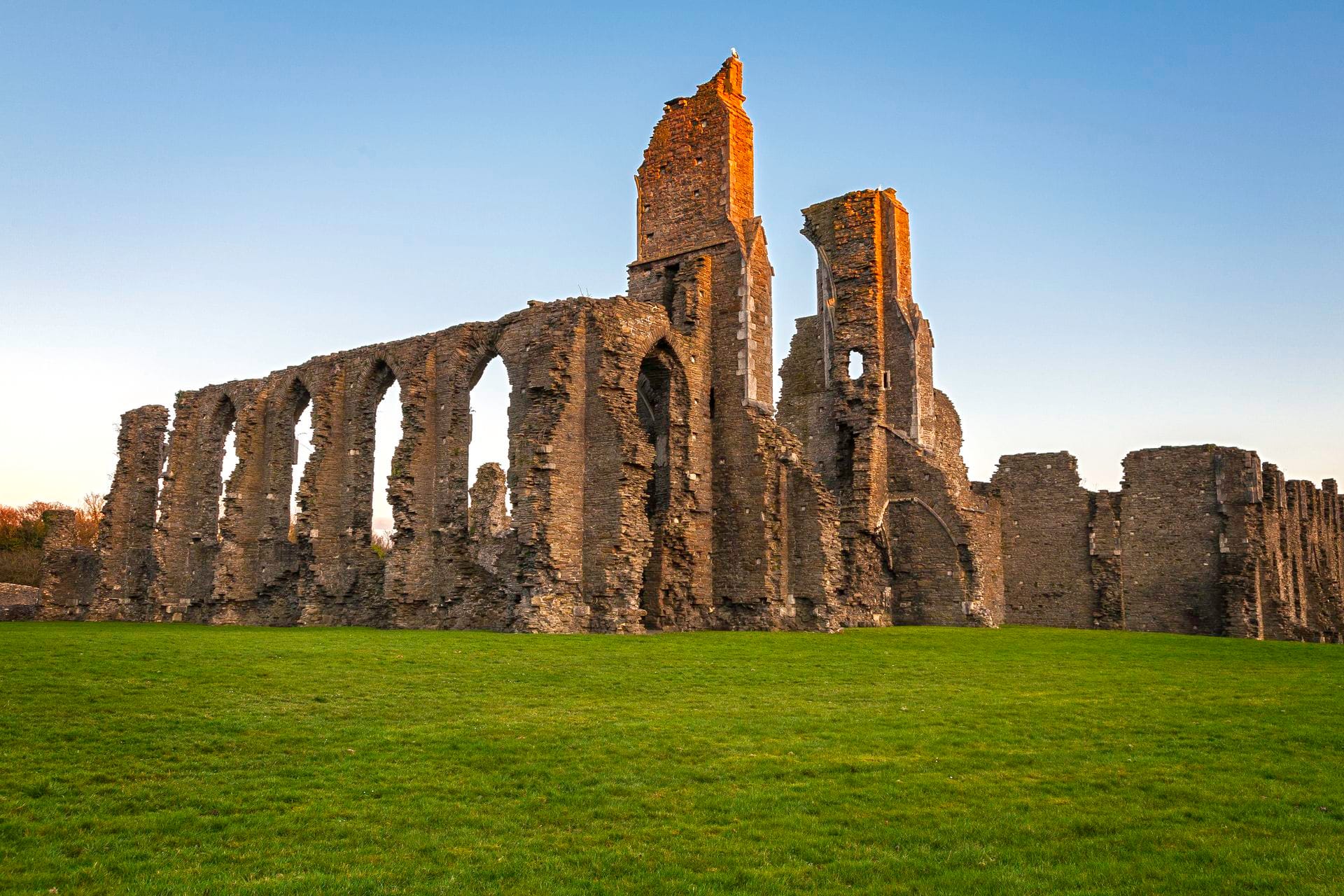
No visit to Neath is complete without the ruins of Neath Abbey, founded in 1130 by Richard de Granville as a Savigniac monastery, later absorbed into the Cistercian order in 1147. The Tudor antiquarian John Leland called it “the fairest abbey in all Wales” after visiting in the 1530s, and even in ruin, the scale of the surviving walls and window tracery makes that claim easy to believe. What you can still see today includes substantial sections of the church’s nave arcade, the twin west towers, and parts of the cloister and chapter house, giving a real sense of the abbey’s original scale as one of the largest Cistercian houses in Wales.
The site later had a second life as an ironworks during the Industrial Revolution, with furnaces and a mansion built directly among the monastic ruins, giving Neath Abbey an unusually layered history that few other Welsh abbeys share. It’s free to visit and managed by Cadw, whose site has current opening information.
Postcode: SA10 7DW. Open daily, 10am to 4pm (closed 24–26 December and 1 January). There’s a small free car park on site, around 4 spaces, though no dedicated disabled bays. Cadw rates the terrain “Level 1: Accessible”, and the site is generally manageable for wheelchair and pushchair users, though the ground is grass and uneven stone in places rather than fully level paving.
Neath Castle
Neath also has its own castle, originally built by the Norman lord Richard de Granville in the early 12th century and rebuilt in stone over the following two centuries. Be realistic about what you’ll find: what survives today is, honestly, a modest set of ruined walls and a gatehouse in the town centre, not a grand standing fortress, but it’s free to view from the street and worth a few minutes if you’re already in town for the abbey.
Gnoll Estate Country Park
Gnoll Estate Country Park sits right within the town and is a genuinely good free day out, built around the 18th-century landscaped grounds of the former Gnoll mansion, home of the Mackworth family who made their fortune in the local coal and copper industries. Highlights include two cascading waterfalls, ornamental lakes, woodland walks and an adventure playground, making it an easy, low-cost option for a family picnic or a couple of hours’ walking without needing to drive anywhere. A £12 million redevelopment of the park’s visitor facilities completed in March 2026, modernising the visitor centre and restoring several historic features.
Postcode: SA11 3BS. Entry is free; on-site parking carries a charge. Most of the main paths around the lake and cascades are tarmac or packed dirt and manageable for wheelchairs and pushchairs, though the trails further into the woodland get rougher. The park has a Changing Places toilet, accessible play equipment, and wheelchairs and mobility scooters available to borrow.
Neath Canal and Melincourt Waterfalls
For a longer, flatter walk, follow the towpath of the Neath Canal, opened in 1795 to carry coal and iron down from the valleys to the port at Neath, passing a historic aqueduct and lock gates as it runs north towards Resolven. Melincourt Waterfalls are a popular detour nearby, but not directly on the towpath itself: the falls are reached via a separate, waymarked woodland footpath off the B4434 Resolven to Tonna road, with its own small free car park opposite the path’s start. It’s a short walk, around a mile round trip, but the final stretch climbs steeply on a rocky path, so wear proper footwear; the falls themselves drop around 24 metres over a wooded cliff and are a lovely, uncrowded spot compared with some of the Bannau Brycheiniog waterfalls further north.
Postcode for the Melincourt car park: SA11 4AP.
Afan Forest Park
A short drive from Neath, Afan Forest Park is one of the UK’s best-known mountain biking destinations, with a network of waymarked trails for everyone from complete beginners to experienced riders, plus way-marked walking routes through what’s often described as one of Wales’s narrowest and most beautiful valleys. The park is also home to the South Wales Miners’ Museum, opened in 1976 as the first museum in Wales dedicated to the life of miners, with a recreated underground tunnel, a miner’s cottage and outdoor exhibits including a working forge, largely run by volunteers.
Postcode for the Visitor Centre: SA13 3HG. On-site parking carries a charge.
The Richard Burton Trail, Pontrhydyfen
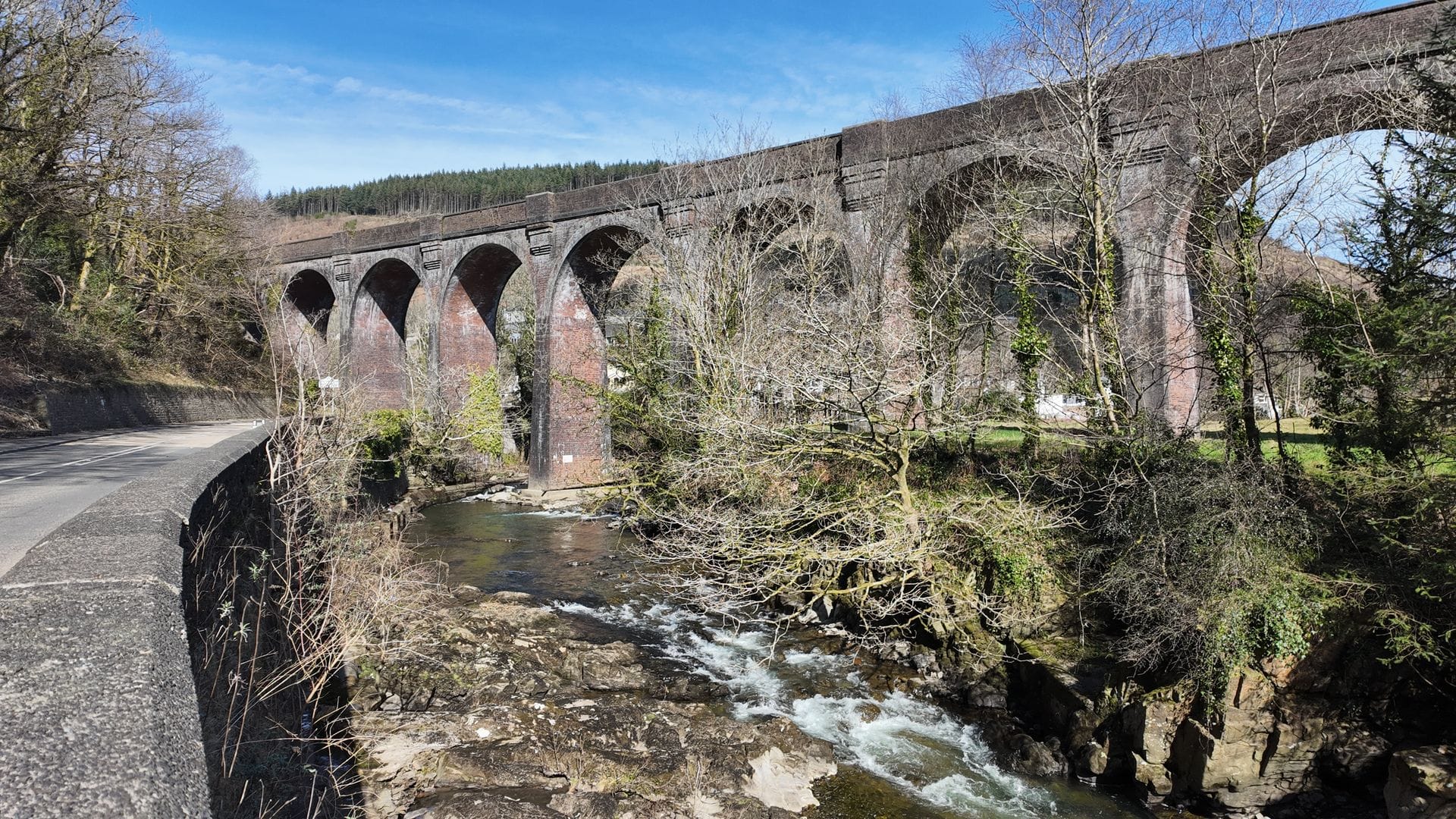
Deep in the Afan Valley, the village of Pontrhydyfen was the birthplace of Richard Burton, born Richard Walter Jenkins on 10 November 1925, the twelfth child of a local miner. Neath Port Talbot Council has waymarked two free, QR-coded walking routes exploring his life: the 3-mile Birthplace Trail loops around Pontrhydyfen itself, starting near the Rhyslyn car park in Afan Forest Park and passing Burton’s childhood home beside the River Afan, the imposing 1820s aqueduct and railway viaduct that tower over the village, Penhydd Street where many of his relatives lived, and a Portrait Bench featuring steel sculptures of Burton alongside fellow local lads comedian Rob Brydon and a former Afan Forest Park ranger.
A shorter, 1.5-mile Childhood Trail covers Taibach in Port Talbot, where Burton grew up from the age of two, ending at Talbot Memorial Park with a statue and a poem he wrote himself. Both trails were relaunched in 2025 to mark the centenary of Burton’s birth and remain in place as a lasting addition to the valley’s walking network.
Cefn Coed Colliery Museum
In the Dulais Valley around five miles north of Neath, near the village of Crynant, Cefn Coed Colliery Museum tells the story of what was once the deepest anthracite coal mine in the world, with shafts sunk over 730 metres in the 1920s. Conditions were notoriously dangerous: the colliery earned the grim nickname “the Slaughterhouse” among local miners, and the museum’s exhibits, including the largest collection of steam boilers in Britain and the largest working winding engine in Wales, tell that history directly.
Postcode: SA10 8SN. Entry is normally free.
Margam Country Park
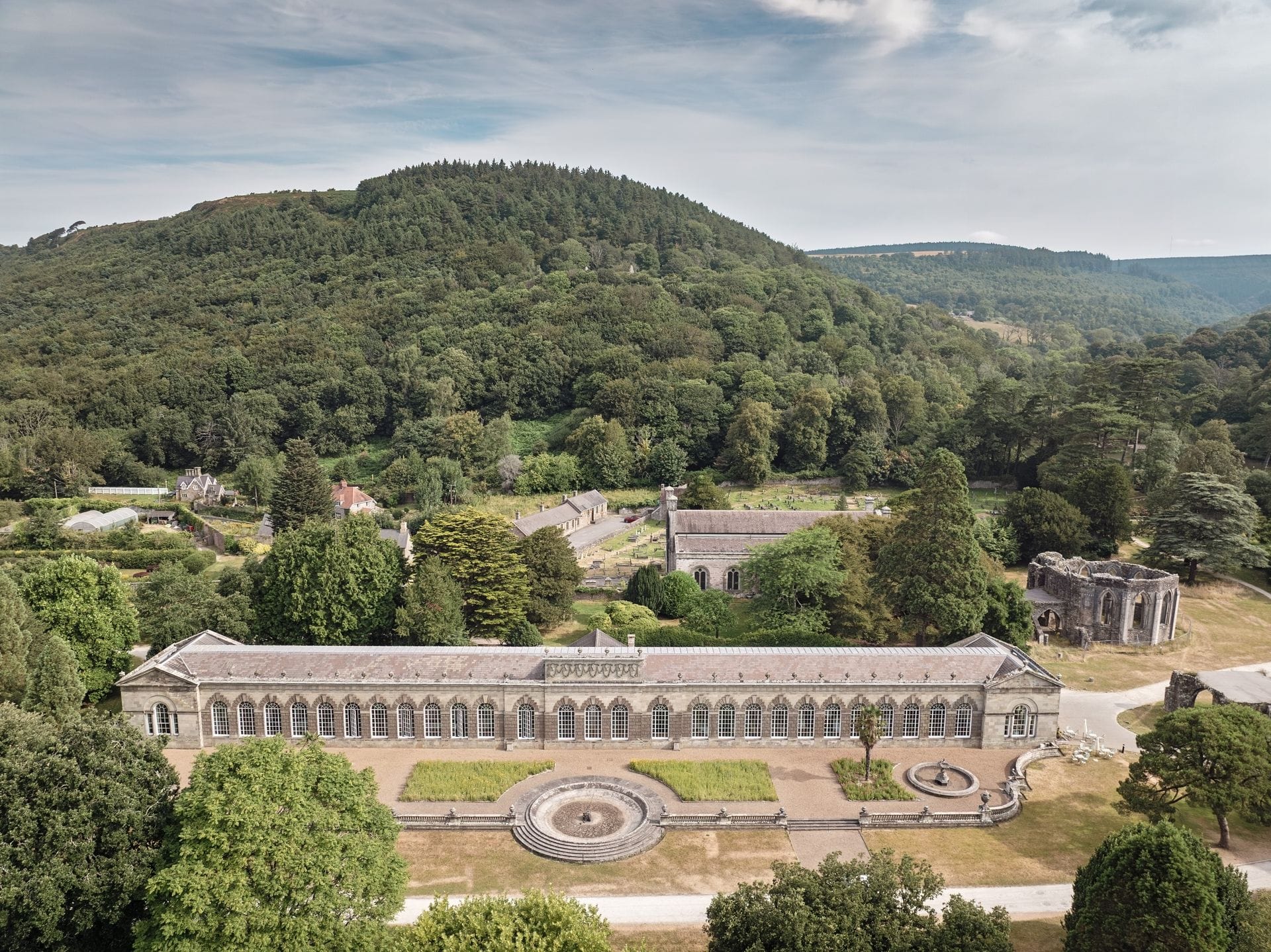
A little further west towards Port Talbot, Margam Country Park is built around the Victorian Gothic mansion of Margam Castle and the ruins of a medieval Cistercian abbey, set within 850 acres of parkland. One of the park’s genuine architectural highlights is the Margam Orangery, built in the 1780s to house the estate’s collection of exotic citrus trees; at over 100 metres long, it’s one of the largest orangeries in Britain, and its grand Georgian façade is visible in the image above, with the abbey’s ruined chapter house just behind it.
A herd of fallow deer roams the grounds, a feature of the estate for centuries, and the castle has long been a popular filming location, most notably for Doctor Who, which has used it repeatedly since the David Tennant era, including the Orangery for a memorable wedding scene, and for the Starz series Da Vinci’s Demons, whose production team used entire rooms within the castle as sets. Beyond the castle, orangery and deer park, there’s a farm trail and extensive woodland walks, making it an easy half-day or full-day visit depending on how much ground you want to cover.
Postcode: SA13 2TJ. On-site parking carries a charge.
Port Talbot and Aberavon Beach
Just along the coast from Neath, Port Talbot is known primarily for its steelworks, one of the largest in the UK and a defining part of Wales’s industrial identity, but it’s also the gateway to Aberavon Beach, a long stretch of sand backed by a modern promenade with cafes, a watersports centre and views across Swansea Bay. It’s a good combination for a day that mixes industrial heritage with coastal air, and Swansea itself is only around 15 minutes away by train for a bigger night out.
Neath With the Family
Neath is a solid choice for a family break, with several free or low-cost options close together. Gnoll Estate Country Park and Margam’s deer park are both easy wins for younger children, while older kids and teens will likely enjoy Afan Forest Park’s mountain bike trails or the beach at Aberavon. Neath Leisure Centre, in the town itself, has swimming pools including a splash pool for younger children, useful for a rainy-day backup.
Frequently Asked Questions: Visiting Neath
Is Neath worth visiting?
Yes, particularly as a base for the surrounding area rather than a destination in its own right. Neath Abbey is a genuinely significant medieval ruin, and the town sits within easy reach of Afan Forest Park, Margam Country Park and the Gower Peninsula, with good train links to Swansea and Cardiff.
Where was Richard Burton born?
Richard Burton was born Richard Walter Jenkins in Pontrhydyfen, a village in the Afan Valley near Neath, on 10 November 1925. A free, waymarked Birthplace Trail now loops around the village, passing his childhood home, the historic aqueduct and viaduct, and a Portrait Bench featuring his statue alongside fellow local Rob Brydon.
Is Cefn Coed Colliery Museum open?
As of this guide, Cefn Coed Colliery Museum is closed to the public for essential maintenance work. Check with Neath Port Talbot Museum Service for current reopening information before planning a visit.
What is there to do in Neath for free?
Neath Abbey, Neath Castle, Gnoll Estate Country Park and the Neath Canal towpath to Melincourt Waterfalls are all free to visit, making Neath a good option for a low-cost day out or short break.
How far is Neath from Swansea and Cardiff?
Neath is around 15 minutes from Swansea by train and roughly 45 minutes to an hour from Cardiff by car or train, making it a convenient, well-connected base in South Wales.
Is Neath accessible for wheelchair users and pushchairs?
Gnoll Estate Country Park is the most accessible option, with mostly tarmac and packed-dirt paths around the lake and cascades, a Changing Places toilet and mobility scooters available to borrow, though trails further into the woodland get rougher. Neath Abbey is rated “Level 1: Accessible” by Cadw, with grass and uneven stone in places rather than full paving. The final approach to Melincourt Waterfalls involves a steep, rocky path and isn’t suitable for wheelchairs or standard pushchairs.
More South Wales Guides on Wales.org

Pembrokeshire-born travel writer and founder of Wales.org. Born in Haverfordwest, now based in Hertfordshire — covering Welsh castles, national parks, festivals and family staycations across all 22 Welsh counties.