

Castles in Carmarthenshire
Discover the 11 best castles in Carmarthenshire — from the cliff-top drama of Carreg Cennen to the ghost of Princess Gwenllian at Kidwelly. Updated for 2026 with prices, opening times, postcodes and insider tips.
Wales has more castles per square mile than any other country in Europe — and Carmarthenshire holds some of the very finest. The county that calls itself the Garden of Wales also happens to be one of the country’s great castle landscapes, with fortresses perched on limestone crags, river-loop ruins haunted by warrior princesses, and free-to-visit hilltop strongholds where you can watch the tide roll across the Tywi Estuary.
This guide covers the eleven castles every visitor to Carmarthenshire should know about, with prices, postcodes and the practical information you need to plan a visit in 2026. Whether you’re staying in Carmarthenshire for a long weekend or basing yourself in the Tywi Valley for a full week, these castles deserve a place on your itinerary.
At a Glance: Castles in Carmarthenshire
- How many castles in Carmarthenshire? 11 significant castle sites, plus dozens of smaller earthwork remains.
- Most dramatic: Carreg Cennen — perched on a 90-metre limestone crag.
- Best preserved: Kidwelly Castle — the Norman fortress used as the opening shot in Monty Python and the Holy Grail.
- Free to visit: Llansteffan, Llandovery, Newcastle Emlyn, Carmarthen, Dryslwyn, St Clears.
- Best for families: Dinefwr Park (National Trust) — castle, Newton House, deer park and rare White Park Cattle.
- Best base: Llandeilo — the market town at the heart of the Tywi Valley, within 30 minutes of five major castles.
- When to visit: April to October for the best weather and longest opening hours; spring and autumn for fewer crowds.
The 11 Best Castles in Carmarthenshire
1. Carreg Cennen Castle — The Most Dramatic Castle in Wales
Location: Trapp, Llandeilo, SA19 6UA
Admission (2026): Adults £7.00, over-65s £6.50, concessions £5.00, family ticket £23.00
Opening hours: Daily from 9.30am (closes 4.30pm Nov–Mar; 5.00pm Apr–Oct); closed Christmas Day
Planning this trip? Ask Branwen, our free AI trip planner →
If you visit only one castle in Carmarthenshire, make it Carreg Cennen. Voted the most romantic ruin in Wales by readers of Countryfile magazine, it sits on a limestone crag rising nearly 300 feet (90 metres) above the River Cennen. The silhouette dominates the skyline for miles and the views across the Carmarthenshire countryside are simply unmatched.
The first masonry castle on the site was probably the work of the Lord Rhys, the powerful 12th-century Prince of Deheubarth. Most of what stands today, however, was built by John Giffard after Edward I granted him the fortress in 1283. Owain Glyndŵr’s forces captured the castle during his uprising in 1403, but it was the Yorkists who finally demolished it in 1462 during the Wars of the Roses.
The castle is privately owned and jointly managed with Cadw. The 10–15 minute walk up from the farmyard car park brings you to the outer ward, but the real adventure lies underneath. A steep set of steps in the south-east corner of the inner ward leads down past a postern gate into a damp, vaulted natural cave inside the limestone crag. Torches are essential and can be hired from the farm at the foot of the hill — bring sturdy footwear because the stone is often slippery.
Don’t skip the Carreg Cennen Tea Rooms in the converted cruck barn at the base. Entry to the tea rooms is free and the homemade cakes have a reputation that travels.
Insider tip: Pack a picnic and combine your visit with a hike on the western edge of the Bannau Brycheiniog (Brecon Beacons) National Park. Two waymarked circular walks start from the car park.
2. Kidwelly Castle — The Norman Fortress of Princess Gwenllian
Location: Castle Road, Kidwelly, SA17 5BQ
Admission (2026): From £7.50 adults online (Cadw); concessions and family tickets available
Opening hours: Daily from 9.30am (last admission 30 minutes before closing); check Cadw for current closing times
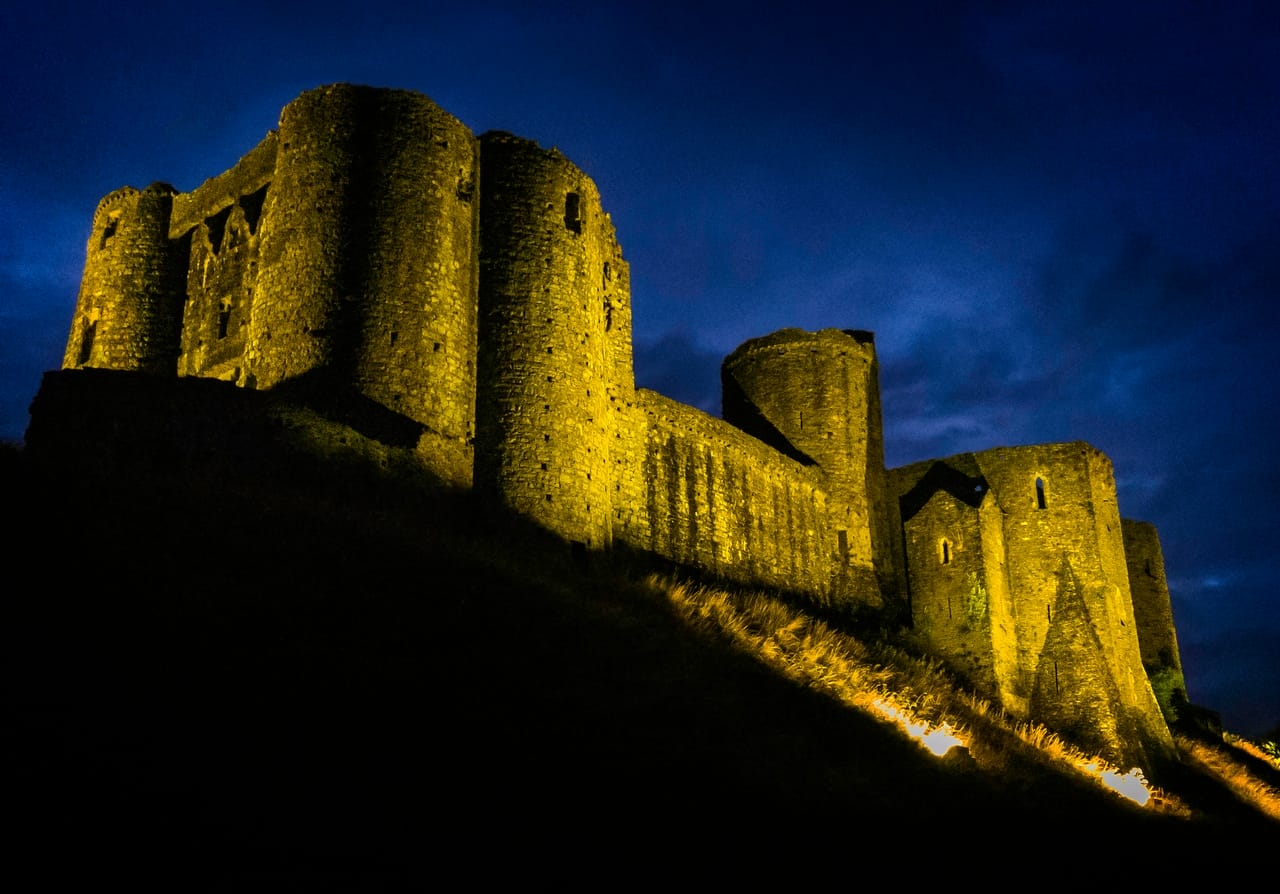
Rising above the River Gwendraeth, Kidwelly is one of the best-preserved medieval castles in Britain. It was a Norman ringwork in the early 12th century — wood and earth, easy to attack — but by the 1280s the Chaworth brothers had transformed it into the formidable concentric stone fortress that survives today. A castle within a castle, with one ring of defensive walls set inside another so the defenders could keep fighting even if the outer wall fell.
The castle’s most famous story belongs to Princess Gwenllian ferch Gruffydd. In 1136 — long before the stone fortress you see now — Gwenllian led the Welsh army into battle here, the only woman known to have done so in medieval Welsh history. She was captured, beheaded, and a spring is said to have welled up where she fell. The site is still called Maes Gwenllian, the Field of Gwenllian, and a memorial to her stands near the gatehouse. Visitors have reported sightings of her headless ghost roaming the surrounding countryside on misty mornings.
The great gatehouse was begun in the late 14th century but not completed until 1422 — Owain Glyndŵr’s rebellion delayed construction. Even so, his forces never managed to break through.
Pop culture moment: Kidwelly appears in the very first scene after the titles of Monty Python and the Holy Grail (1975). If you’ve seen the film, you’ll recognise it instantly.
Insider tip: Kidwelly is on the Cadw Explorer Pass — a 3-day or 7-day pass covering more than 130 historic sites. If you plan to visit three or more Cadw castles in a week, the pass is excellent value. Buy it at any staffed Cadw site or via the Cadw website.
3. Dinefwr Castle — Seat of the Lords of Deheubarth
Location: Dinefwr Park, Llandeilo, SA19 6RT
Admission (2026): Parkland and castle access free; charges apply for car parking and Newton House. Free for National Trust and Cadw members.
Opening hours: Parkland open daily; Newton House seasonal — check the National Trust website
Dinefwr is the most rewarding heritage day out in Carmarthenshire. The 12th-century castle ruin sits on a wooded ridge above the Tywi Valley and was the ancient seat of the Lords of Deheubarth — the Welsh kingdom that ruled south-west Wales for almost three centuries. This was the seat of Hywel Dda, who codified native Welsh law in the 10th century, and later the Lord Rhys, the most powerful Welsh prince of the 12th century.
What makes Dinefwr exceptional is the joint stewardship: the castle ruins are cared for by Cadw, the 800-acre estate is managed by the National Trust, and the grounds also include a National Nature Reserve. You get the medieval fortress, the 17th-century mansion (Newton House), an 18th-century Capability Brown landscape, an ancient deer park, and ancient woodland with oaks more than 700 years old — all on the same ticket.
The estate is famous for its rare White Park Cattle, an ancient breed believed to have grazed these meadows since the 9th century. Records show they have been here for more than a thousand years. The herd is one of the most genetically important populations of White Park anywhere in Britain.
Folklore weaves through every part of the estate. The White Park Cattle are linked in legend to the Lady of the Lake of Llyn y Fan Fach, and there’s a long-standing tradition that staring into the lake of reflections at Dinefwr might just bring you a windfall. Whether you believe a word of it or not, the place has atmosphere in spades.
Insider tip: Allow at least half a day. The walk from the car park to the castle takes around 30 minutes through ancient parkland. Dogs are welcome on leads.
4. Dryslwyn Castle — The Hilltop Stronghold of the Princes
Location: B4297, near Llandeilo, SA32 8JQ
Admission (2026): Free
Opening hours: Open access daylight hours
Once one of the most important seats in the medieval kingdom of Deheubarth, Dryslwyn Castle stands on a striking hilltop above the Tywi Valley between Llandeilo and Carmarthen. Today it is mostly a ruin, but it remains one of the most evocative castle sites in Wales and is a Grade I listed building.
The castle was built by the Welsh princes themselves rather than by Norman invaders — making Dryslwyn one of the few genuinely native Welsh stone castles in this part of Wales. As you climb the hill, you’ll see the layout of the medieval town that once dominated the valley around the castle. In 1287, Dryslwyn was the focus of one of the largest sieges in Welsh medieval history when the English crown deployed up to 11,000 troops to take it from Rhys ap Maredudd.
The castle is freely accessible and the climb to the summit takes about 15 minutes. The 360-degree views across the Tywi Valley alone justify the walk.
Insider tip: Pair Dryslwyn with Aberglasney Gardens, a 15th-century mansion with restored cloister gardens, just a few minutes’ drive away.
5. Laugharne Castle — Dylan Thomas’s Brown-as-Owls Ruin
Location: King Street, Laugharne, SA33 4SA
Admission (2026): Around £6.50 adults, £4.50 children (Cadw); check Cadw for current pricing
Opening hours: Generally April to October; check Cadw for seasonal hours
Laugharne Castle is the place where Dylan Thomas wrote Portrait of the Artist as a Young Dog, sitting in the gazebo above the Taf Estuary. He called it “brown as owls” in his poem Poem in October — a phrase visitors quote to themselves the moment they see it.
The castle was built by the de Brian family in the 13th century, probably on top of an earlier Norman ringwork. Two giant medieval stone towers still stand guard over the remains of a magnificent Tudor mansion, all set within ornamental gardens laid out in the 19th century. The Tudor transformation was the work of Sir John Perrot, an Elizabethan courtier rumoured to be Queen Elizabeth I’s half-brother. He was convicted of high treason and died in the Tower of London in 1592 while awaiting execution.
Author Richard Hughes also worked here — he wrote In Hazard in the same garden gazebo where Thomas later sat. The painter J.M.W. Turner sketched the ruins in the 1790s.
Insider tip: Combine the castle with a walk along the Taf to the Dylan Thomas Boathouse, where the poet lived from 1949 to 1953, and his writing shed on the cliff path. His grave is in the churchyard of nearby St Martin’s. Allow a full afternoon — Laugharne is one of the most atmospheric small towns in Wales.
6. Llansteffan Castle — Iron Age Promontory and Norman Stronghold
Location: Llansteffan, SA33 5JX
Admission (2026): Free
Opening hours: Open access daylight hours
Free to enter, Llansteffan Castle offers some of the finest views in West Wales. From the headland you look out across the broad sand flats of the Tywi Estuary, Carmarthen Bay, and on a clear day all the way down the coast.
The site has been defended for almost 3,000 years. The medieval stone walls — dating from the late 12th century — enclose an Iron Age promontory fort that was occupied as far back as the 6th century BC. The defensive double bank and ditch from the prehistoric fort can still be seen on the field to the west.
The Norman castle was first built by the de Camville family around 1100 as an earthwork ringwork. The massive twin-towered Great Gatehouse you see today was added in around 1280 and predates Edward I’s famous gatehouses in North Wales. The entire site was placed in state guardianship in 1959 and is now managed jointly by Cadw and the Plas Estate.
The path up from the public car park on the foreshore takes about 20 minutes — a gradual climb on a private lane, then a short steep section to the castle itself. Bring sensible shoes.
Insider tip: Visit in late afternoon for the best estuary light. The sandy beach below the castle is perfect for a post-castle picnic, and the Llansteffan tearooms in the village serve homemade lunches.
7. Newcastle Emlyn Castle — Where the Last Welsh Dragon Fell
Location: Castle Street, Newcastle Emlyn, SA38 9AB
Admission (2026): Free
Opening hours: Open access daylight hours
The time-worn ruins of Newcastle Emlyn Castle sit on a grassy spur inside a loop of the River Teifi. Founded around 1240 by the Welsh prince Maredudd ap Rhys, it is one of the very few stone castles in West Wales actually built by the Welsh themselves rather than by Anglo-Norman invaders.
The castle changed hands repeatedly across four centuries. Owain Glyndŵr captured it during his rebellion in 1403; Sir Rhys ap Thomas, the close ally of Henry VII at Bosworth, repaired it around 1500 and turned it into a residence. It was held for the Crown during the English Civil War and finally blown up with gunpowder by Parliamentary forces in 1645. It has been a ruin ever since, which explains its slightly dilapidated grandeur.
The signature feature today is the impressive twin-towered gatehouse, begun under Edward II and completed in 1349. Sir Rhys added the large Tudor windows that survive in its towers.
You enter the site through the famous Dragon Gates, a sculpture inspired by the local legend that the last dragon in Wales was killed at this castle. The story goes that a fierce winged wyvern landed on the castle walls one fair day. A brave soldier floated a red cloak in the river below; when the dragon swooped to attack it, he shot it with an arrow, and the great beast tumbled dead into the Teifi. The Dragon Gates and a Golden Dragon mosaic inside the castle keep the legend alive.
Insider tip: Combine your visit with a riverside walk along the Teifi. Newcastle Emlyn is the gateway to the Teifi Valley and within 15 minutes’ drive of Cenarth Falls and the National Coracle Centre.
8. Llandovery Castle — The Statue of the Welsh Hero
Location: Castle Street, Llandovery, SA20 0AN
Admission (2026): Free (small charge for car park)
Opening hours: Open access 24 hours
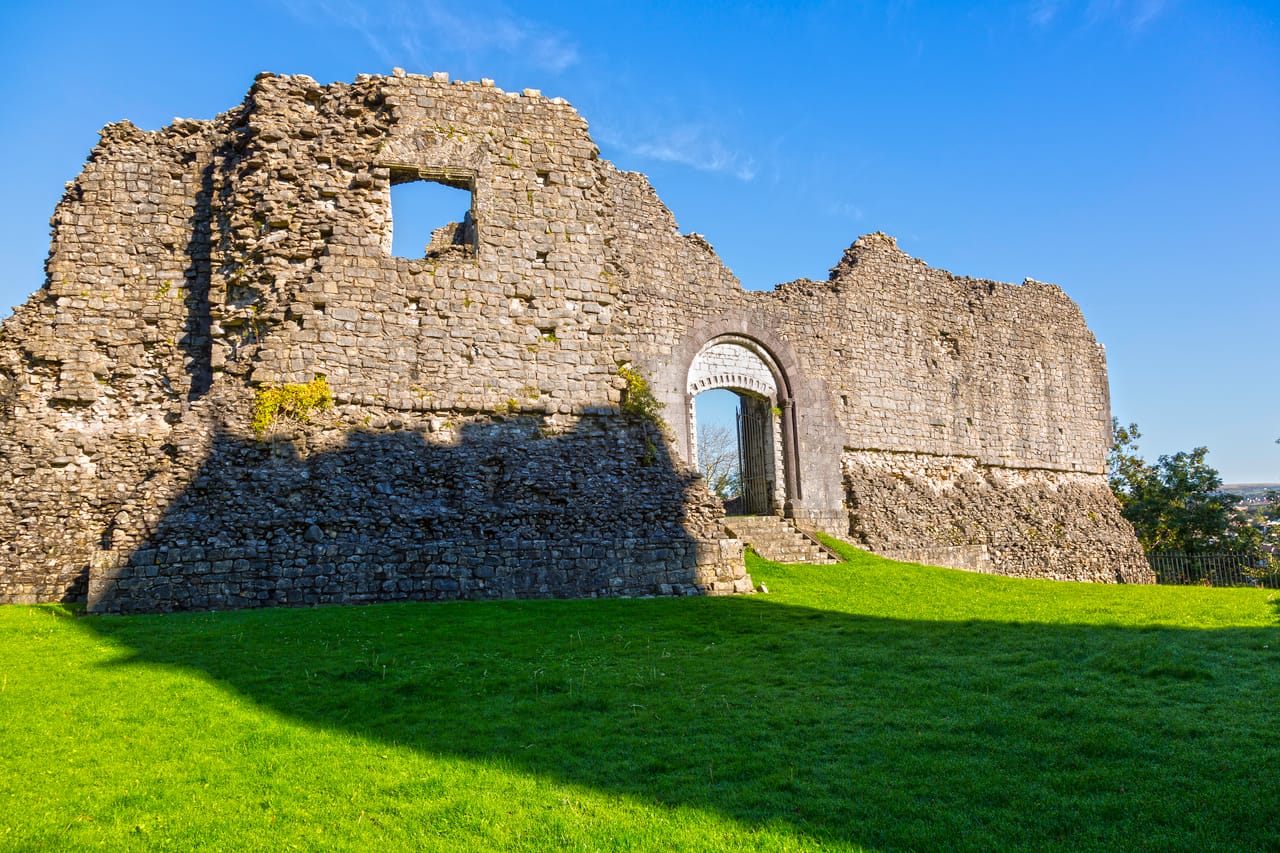
Llandovery Castle stands on a grassy motte in the centre of the historic market town, at the western edge of the Bannau Brycheiniog (Brecon Beacons) National Park. The original motte-and-bailey was raised by the Norman lord Richard Fitz Pons around 1116, controlling the strategic confluence of the Afon Brân and the Afon Gwydderig. It changed hands repeatedly between the Welsh and the Normans during the 12th and 13th centuries.
The remains today are limited — a fragment of the twin-towered gatehouse and walls — but the site has acquired a remarkable modern landmark. Beside the castle stands a 16-foot stainless steel statue of Llywelyn ap Gruffydd Fychan, unveiled in 2001 to mark 600 years since his execution. Llywelyn was a wealthy local landowner who, in 1401, deliberately led King Henry IV’s army on a wild goose chase through the Welsh mountains to give Owain Glyndŵr time to escape. When Henry realised he had been tricked, Llywelyn was drawn, hung, beheaded and quartered at Llandovery in front of his family. The hollow steel statue is one of the most striking monuments in Wales — locals affectionately call it “Darth Vader” or “the Coal Scuttle”.
The castle ruin itself is a short, slightly steep walk up from the pay-and-display car park (Castle Street). The view from the top, across the rooftops of Llandovery and out over the Towy Valley to the Black Mountain, is the real reward.
Insider tip: Pop into Llandovery Heritage Centre in the same square — it’s free, volunteer-run, and includes audio trails about Llywelyn ap Gruffydd Fychan and the legendary trickster Twm Siôn Cati.
9. Carmarthen Castle — The County Town Stronghold
Location: Nott Square, Carmarthen, SA31 1JT
Admission (2026): Free
Opening hours: Open access daylight hours; visitor centre seasonal
It would be remiss to publish a list of castles in Carmarthenshire that didn’t include the one at the heart of the county town itself. Carmarthen Castle dates from at least the early 12th century and overlooks the River Tywi from a strategic spur of land in the centre of Carmarthen.
The site has been continuously occupied for more than 900 years. After centuries as a Marcher lord stronghold, it served as the County Gaol for Carmarthenshire from the late 18th century right through to 1922 — the towering Victorian gaol building has since been demolished and the medieval gatehouse and surviving wall fragments are once more the dominant features. Interactive boards and audio presentations dotted around the site interpret the layers of history for visitors.
The castle visitor centre (in the former gaol governor’s office) is operated seasonally by Carmarthenshire County Council. Even when the centre is closed, the curtain wall, gatehouse and viewing platforms are freely accessible.
Local context: Carmarthen claims to be the oldest town in Wales and the legendary birthplace of the wizard Merlin. The Roman amphitheatre site, the indoor market and the medieval St Peter’s Church are all within a few minutes’ walk of the castle.
10. St Clears Castle — A Hidden Norman Earthwork
Location: Off the A40, St Clears, SA33 4AA
Admission (2026): Free
Opening hours: Open access daylight hours
Often missed by visitors driving past on the A40 between Carmarthen and Pembrokeshire, the small but historically important earthwork at St Clears is one of the best-preserved Norman motte-and-bailey castles in West Wales. The high motte and surrounding bailey ditch are still clearly visible in the field beside the parish church.
The castle was founded in the late 11th century as the Normans pushed west into Welsh territory. It was attacked and partially destroyed by the Welsh in 1153 and again in 1189 — when the Lord Rhys captured it from the Norman garrison. The fortress is also notable for being the centre of one of the famous gatherings during the Rebecca Riots of 1843, when local farmers protested against tollgate charges.
There are no walls or stonework to see today, but if you have any interest in early Norman military engineering the earthwork is striking. It is also one of the easiest castle stops in Carmarthenshire — a five-minute walk from the village centre, with parking at the church.
Insider tip: St Clears makes a good lunch stop on the way to Laugharne. The small town has independent cafés and Carmarthenshire Centre for Crafts on the high street.
11. Llangadog Castle — A Motte and Bailey by the Roadside
Location: Llangadog, near Llandovery, SA19 9AT
Admission (2026): Free (no formal access; visible from the road)
Opening hours: Anytime
Just north of the village of Llangadog stands Castell Meurig, a substantial Norman motte and bailey raised in the 12th century to control the upper Tywi Valley. The mound is around 40 feet high and visible from the A4069 road; in the right light it looks every inch the prehistoric beacon it must once have been.
Llangadog Castle was burned by Lord Rhys in 1203 and was never rebuilt as a stone castle, leaving the original earthwork intact and undisturbed. While there is no formal public access onto the motte itself (it sits in private farmland), the structure is clearly visible from the public road and footpath. For anyone driving the scenic A4069 between Llandovery and the Black Mountain, it’s worth slowing down to take a look — proof that some of Carmarthenshire’s most authentic medieval remains have never been gentrified by ticket booths and gift shops.
Insider tip: Llangadog village itself is a charming stop with the Red Lion pub and a strong Welsh-language community. Park here and walk out to the edge of the village for the best view of the motte.
Carmarthenshire Castles Comparison Table
| Castle | Postcode | Admission (2026) | Best For | Managed By |
|---|---|---|---|---|
| Carreg Cennen | SA19 6UA | £7.00 adult | Drama, scenery, the cave | Private / Cadw |
| Kidwelly | SA17 5BQ | From £7.50 adult | Best preserved; Monty Python fans | Cadw |
| Dinefwr | SA19 6RT | Castle free; NT charges for house/car park | Family day out, wildlife, history | National Trust + Cadw |
| Dryslwyn | SA32 8JQ | Free | Welsh history, valley views | Cadw |
| Laugharne | SA33 4SA | £6.50 adult | Dylan Thomas pilgrimage | Cadw |
| Llansteffan | SA33 5JX | Free | Estuary views, beach combo | Cadw |
| Newcastle Emlyn | SA38 9AB | Free | Dragon legend, riverside walk | Local council |
| Llandovery | SA20 0AN | Free | Llywelyn statue, market town | Local council |
| Carmarthen | SA31 1JT | Free | Town centre, history | Carmarthenshire CC |
| St Clears | SA33 4AA | Free | Earthwork enthusiasts | Open access |
| Llangadog | SA19 9AT | Free (view only) | Roadside curiosity | Private land |
Planning a Castle Tour of Carmarthenshire
You can pack the headline castles into a long weekend if you base yourself in Llandeilo, the Tywi Valley market town that sits within 30 minutes of Carreg Cennen, Dinefwr, Dryslwyn and Llandovery. Llandeilo also has the best independent food scene in the county — The Angel restaurant, the Heavenly chocolate shop and the Saturday farmers’ market are all on the high street.
For a full week with castles plus coastal scenery, Carmarthen makes a more central base. From Carmarthen you can drive to Kidwelly in 20 minutes, Laugharne in 30 and Llansteffan in 25.
The Cadw Explorer Pass is the most cost-effective option if you intend to visit several castles. The 3-day pass (valid over 7 days) and 7-day pass (valid over 14 days) both cover unlimited entry to more than 130 Cadw sites across Wales — including Kidwelly and Laugharne. National Trust members get free entry to Newton House and free parking at Dinefwr.
Best Castle for Each Type of Visitor
- Best for first-time visitors: Carreg Cennen — the dramatic location is unforgettable.
- Best for families: Dinefwr — castle, mansion, deer, cattle, woodland walks all on one estate.
- Best for couples: Laugharne — the Dylan Thomas connection plus the most photogenic estuary views in Wales.
- Best for free entry: Llansteffan — for the views; Llandovery — for the statue; Dryslwyn — for the climb.
- Best for legend-lovers: Newcastle Emlyn — the last dragon of Wales; Kidwelly — Princess Gwenllian’s ghost.
- Best for accessibility: Carmarthen Castle — town-centre location, level approaches.
Where to Stay When Visiting Carmarthenshire Castles
Carmarthenshire is the largest county in Wales and one of the most diverse for accommodation. Tywi Valley holiday cottages, particularly converted farmhouses around Llandeilo, Trapp and Llangadog, are the most sought-after for castle-hunters and book up months ahead for summer. Hot tub cottages and dog-friendly farm stays dominate the upper valley, while the southern coast around Pembrey and Burry Port offers family beach apartments. Glamping is excellent across the county’s western fringe and the dark skies of the rural interior are a genuine selling point.
Browse our handpicked options:
- Holiday cottages in Wales — over 2,000 personally-inspected properties from £299 a week.
- Castle stays in Wales — yes, you really can sleep inside a castle.
- West Wales destination guide — the full regional context for your Carmarthenshire trip.
Carmarthenshire Castles FAQs
How many castles are there in Carmarthenshire?
There are 11 significant castle sites in Carmarthenshire that are worth visiting, ranging from major preserved fortresses like Kidwelly and Carreg Cennen to important ruins like Dryslwyn and Newcastle Emlyn. There are also dozens of smaller earthwork mottes and bailey sites scattered across the county. Wales as a whole has more than 600 castle sites, more per square mile than any other country in Europe.
What is the most famous castle in Carmarthenshire?
Carreg Cennen is widely regarded as the most famous castle in Carmarthenshire and was voted the most romantic ruin in Wales by Countryfile magazine readers. Its location on a 90-metre limestone crag above the River Cennen makes it one of the most dramatic castle settings in Britain. Kidwelly Castle, however, is arguably more recognised internationally thanks to its appearance in the opening scene of Monty Python and the Holy Grail.
How much does it cost to visit Carreg Cennen Castle?
Adult admission to Carreg Cennen in 2026 is £7.00, with concessions at £5.00, over-65s at £6.50 and family tickets at £23.00. The tea rooms and craft shop at the foot of the hill are free to enter. Note that Carreg Cennen is privately owned and jointly managed with Cadw, so Cadw membership and Cadw Explorer Pass do not apply at this site.
Are there any free castles to visit in Carmarthenshire?
Yes — six of the eleven castles are free to enter: Llansteffan, Llandovery, Dryslwyn, Newcastle Emlyn, Carmarthen and St Clears. Llangadog Castle is visible only from the public road. Dinefwr Castle itself is also free, although the National Trust charges for car parking and Newton House admission.
Which castle in Carmarthenshire was used in Monty Python and the Holy Grail?
Kidwelly Castle was used in the opening scene of Monty Python and the Holy Grail (1975), filmed in the year of the film’s release. The castle’s well-preserved Norman walls and concentric defences made it the perfect medieval backdrop. The castle has since become a popular pilgrimage spot for Python fans.
What is the best castle in Carmarthenshire for families with children?
Dinefwr is the best castle in Carmarthenshire for families. The 800-acre National Trust estate includes the medieval castle, Newton House (with hands-on activities for children), the rare White Park Cattle, a fallow deer herd, ancient woodland walks, an Oak Yard play area and the Newton House café. There’s enough variety to keep children engaged for a full day.

Pembrokeshire-born travel writer and founder of Wales.org. Born in Haverfordwest, now based in Hertfordshire — covering Welsh castles, national parks, festivals and family staycations across all 22 Welsh counties.