

Caerphilly Castle: Exploring Wales’s Timeless Fortress
Caerphilly Castle 2026: History, Visiting Guide and Ticket Prices
By the Wales.org Travel Team | Updated April 2026
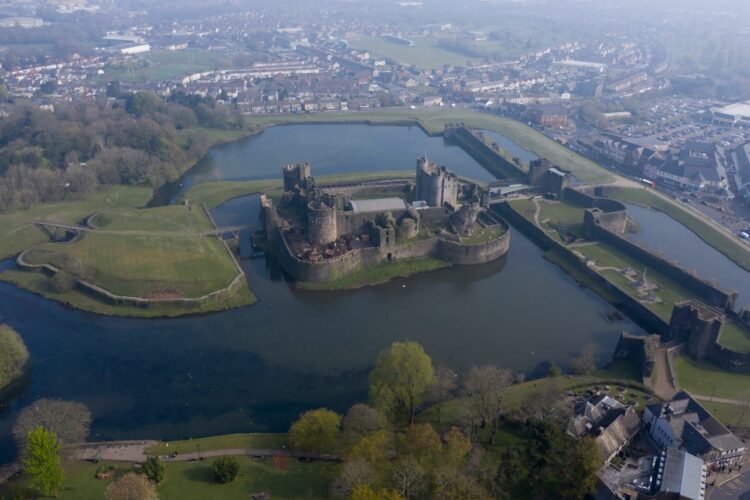
Caerphilly Castle is the largest castle in Wales and the second largest in Britain — surpassed only by Windsor. Its 30-acre site covers an area three times the size of the Principality Stadium. Built from 1268 by the Norman lord Gilbert de Clare as a response to the threat of Llywelyn ap Gruffudd, Prince of Wales, it was the first concentric castle in Britain — a revolutionary design featuring rings of walls within walls, surrounded by one of the most elaborate water defence systems in Europe. Today, its leaning tower tilts at 10 degrees from vertical — more than the Leaning Tower of Pisa.
At a Glance: Caerphilly Castle
- Status: Largest castle in Wales. Second largest in Britain (after Windsor). 30 acres.
- Built: From 1268 by Gilbert de Clare, Earl of Gloucester.
- Famous for: First concentric castle in Britain. Leaning tower (10° — more than Pisa). Water defences.
- Managed by: Cadw (Welsh Government historic environment service).
- Tickets: Adult ~£8.90, Family ~£25.70, Under 5 free, Cadw members free. Online 5% discount.
- Open: Daily year-round (hours vary by season). Last admission 30 min before closing.
- Getting there: 25 min by train from Cardiff (Caerphilly station). M4 J32, A470/A469 by car.
- Allow: 2–3 hours for a thorough visit.
Following a major conservation and refurbishment programme, the castle has reopened with restored interiors and state-of-the-art digital exhibits in the Great Hall. This guide covers the castle’s extraordinary history, what you will see when you visit, and all the practical details you need to plan your trip.
The History of Caerphilly Castle
Why Was Caerphilly Castle Built?

Caerphilly Castle exists because of one man: Llywelyn ap Gruffudd, the last native Prince of Wales. His growing power in the 1260s alarmed the Norman Marcher lords who controlled the Welsh borderlands. Gilbert de Clare, Earl of Gloucester and one of the most powerful barons in England, decided he needed a fortress that could withstand any assault. Construction began in 1268 — and Llywelyn twice tried to destroy it before it was finished.
Planning this trip? Ask Branwen, our free AI trip planner →
De Clare did not build a conventional castle. He built the first concentric castle in Britain — a design featuring an inner ring of high walls and towers surrounded by a lower outer ring, creating multiple layers of defence. Any attacker who breached the outer wall would find themselves trapped in a killing zone, under fire from the inner walls above. This design was revolutionary for its time and influenced castle-building across Britain, including Edward I’s famous castles in North Wales (Conwy, Caernarfon, Harlech, Beaumaris).
The Water Defences

What truly set Caerphilly apart was its water. De Clare created an elaborate system of artificial lakes and moats that surrounded the entire castle, covering the majority of the 30-acre site. These water defences were among the most extensive in Britain — they made conventional siege tactics virtually impossible, as attackers could not dig tunnels beneath walls surrounded by water, nor bring siege engines close enough to be effective. Cadw describes it as appearing “like some mythical castle floating in an enchanted lake.”
Hugh Despenser, Edward II, and Civil War
After the de Clare family, the castle passed through various hands. Hugh Despenser the Younger, a favourite (and likely lover) of King Edward II, held the castle in the early 14th century. His influence over the king sparked the rebellion that led to Despenser’s execution and Edward’s deposition — Caerphilly Castle was at the centre of these turbulent events. In the 15th century, the castle featured in Owain Glyndŵr’s uprising — the last great Welsh rebellion against English rule.
By the Tudor period, the castle had fallen into disuse. During the English Civil War (1640s), Parliamentary forces used gunpowder to slight (destroy) the castle’s defences — it was this deliberate destruction that caused the south-east tower to lean, creating the castle’s most recognisable feature today.
What to See at Caerphilly Castle
The Leaning Tower — More Wonky Than Pisa

The south-east tower leans approximately 10 degrees from vertical — significantly more than the Leaning Tower of Pisa (approximately 4 degrees). The lean was caused by Civil War gunpowder damage and has been increased over centuries by subsidence. The tower has been stabilised and is safe to view. It is probably the castle’s most photographed feature — and the one that most surprises visitors who expect castle ruins to be upright.
The Cadw Dragons: Dewi, Dwynwen and Family
For families visiting with young children, the massive, animatronic Cadw Dragons are a primary attraction. Caerphilly Castle is the traditional “lair” for Dewi, Dwynwen, and their dragon hatchlings. While these spectacular sculptures occasionally tour other historic sites across Wales during peak summer weeks, Caerphilly remains their primary residence. They are typically located within the inner ward or the dragon’s lair exhibition space. It is highly recommended to check the official Cadw portal prior to your visit to confirm they are currently in residence.
The Great Hall and Digital Exhibits
Following the recent major conservation programme, the Great Hall has been restored and fitted with state-of-the-art digital interpretation. Interactive displays and immersive projections bring the castle’s history to life — showing how the hall would have looked during medieval banquets, with music, food, and hundreds of guests. The inner castle ward has also been refurbished, with new interpretation panels throughout. The quality of the restoration has been praised by visitors and heritage organisations alike.
The Concentric Walls and Gatehouses

Walking through the gatehouses and along the wall-walks gives you a physical understanding of how the concentric design worked. The inner east gatehouse (with its twin towers) and the outer defences demonstrate the layered approach to medieval military architecture. Replica siege engines (trebuchets) are positioned in the grounds, showing the kind of weapons the castle was designed to resist.
The Moat and Wildlife
The vast moat that surrounds the castle is now home to wildlife — geese, swans, ducks, and fish. The moat is also used by Caerphilly & District Angling Association for coarse fishing (membership required — approximately 300 carp to 33lb+). The combination of medieval architecture and living water creates a setting unlike any other castle in Wales.
The Green Lady Ghost
Legend holds that the castle is haunted by the Green Lady — said to be the ghost of Alice de la Marche, a noblewoman caught in a tragic love triangle involving her husband (Gilbert de Clare) and a Welsh prince named Gruffudd the Fair. Her spirit is reputed to wander the castle walls, mourning her unrequited love. Whether you believe in ghosts or not, the story adds a layer of romance and mystery to the castle’s already rich history.
Annual Events and Castle Festivals
The 30-acre grounds serve as the premier outdoor venue for South Wales. If you are visiting during the following seasons, expect a transformed atmosphere.
Summer Food Festival
Evolving from the legendary “Big Cheese” festival, the Caerphilly Food Festival takes over the town and castle moat every summer. Expect local Welsh produce, street food vendors, and massive medieval reenactment camps.
Outdoor Cinema
During late summer evenings, the inner ward frequently hosts premium outdoor cinema events. Classic films and family favourites are projected directly against the towering medieval stone walls.
Winter Markets
In December, the castle grounds embrace the season with festive winter markets. Visitors can expect artisan crafts, mulled wine, and spectacular architectural lighting illuminating the leaning tower.
Filming at Caerphilly Castle

Caerphilly Castle’s medieval authenticity and dramatic scale have made it a popular filming location. It served as the exterior of Camelot in the BBC series Merlin and has featured in Doctor Who and other productions. For more Welsh filming locations, see our TV shows filmed in Wales guide.
Visiting Caerphilly Castle: Practical Information
Opening Times
| Period | Opening Times |
|---|---|
| 1 March – 30 June | Daily 9:30am–5pm |
| 1 July – 31 August | Daily 9:30am–6pm |
| 1 September – 31 October | Daily 9:30am–5pm |
| 1 November – 28 February | Daily 10am–4pm |
Last admission 30 minutes before closing. Closed Christmas Day. Check the Cadw website for any unexpected closures.
Ticket Prices
| Category | Price |
|---|---|
| Adult | ~£8.90 |
| Family (2 adults + 3 children) | ~£25.70 |
| Juniors (5–17) / NUS / Armed Forces | ~£5.30 |
| Seniors (65+) | ~£7.10 |
| Cadw Members | Free |
| Disabled person + companion | Free |
| Children under 5 | Free |
| Universal Credit recipients | £1 (book online) |
Online booking includes a 5% discount. Prices are approximate — check the Cadw website for current rates. If you plan to visit multiple Cadw sites, a Cadw Explorer Pass (3-day or 7-day) may offer better value. For more Welsh castles, see our castles in Wales guide.
Getting There
- Address: Caerphilly Castle, Castle Street, Caerphilly CF83 1JD
- By train: Caerphilly station is on the Cardiff–Bargoed/Rhymney line, approximately 25 minutes from Cardiff Central. The castle is 400 metres (a 5-minute walk) from the station.
- By car: M4 Junction 32, then A470 and A469 from Cardiff. A468 from Newport. Signposted. Pay-and-display car parks in the town centre.
- By bus: Regular services from Cardiff stop opposite the castle.
- By bike: National Cycle Network Route 4 passes within 200 metres.
Accessibility
The castle grounds are partially accessible for wheelchair users. The inner castle ward has some accessible areas, but the towers, wall-walks, and many passageways involve original stone steps that are steep and uneven. Contact Cadw before visiting if you have specific access requirements.
What Else to Do in Caerphilly
The town of Caerphilly is compact and walkable. The Caerphilly Cheese — one of the most famous Welsh foods — originates here, and you can buy it from local shops and markets. The Caerphilly Mountain (walk or drive) offers panoramic views across to Cardiff and the Bristol Channel. For accommodation, browse holiday cottages and hotels in South Wales. Combine with a trip to Cardiff (25 minutes) or the South Wales Valleys.
Frequently Asked Questions About Caerphilly Castle
Is Caerphilly Castle worth visiting?
Yes. Largest castle in Wales, second largest in Britain. 30 acres, concentric defences, water moats, leaning tower (10° — more than Pisa), newly refurbished digital exhibits. 25 minutes from Cardiff by train.
How much does it cost?
Adult ~£8.90, Family ~£25.70, Under 5 free, Cadw members free. £1 tickets for Universal Credit recipients. Online 5% discount. Check Cadw for current prices.
When is it open?
Daily year-round. March–June & Sept–Oct: 9:30am–5pm. July–Aug: 9:30am–6pm. Nov–Feb: 10am–4pm. Last admission 30 min before closing.
How do I get there?
Train: Caerphilly station (Cardiff–Bargoed line, 25 min from Cardiff). Car: M4 J32, A470/A469. Bus: services from Cardiff. Bike: NCN Route 4.
Why does the tower lean?
Civil War gunpowder damage (1640s) plus centuries of subsidence. Leans 10° — more than Pisa (4°). Stabilised and safe to view.
What TV shows were filmed here?
BBC Merlin (Camelot exterior), Doctor Who, and other productions. See our TV filming locations guide.
All information in this guide was verified in April 2026. Opening times and prices can change — check the Cadw website for current details. For more Welsh castles, explore our castles guide, Carmarthenshire castles, and free days out in South Wales. For castle conservation, visit Cadw.

Pembrokeshire-born travel writer and founder of Wales.org. Born in Haverfordwest, now based in Hertfordshire — covering Welsh castles, national parks, festivals and family staycations across all 22 Welsh counties.