


Eryri (Snowdonia) 2026: The Complete Guide to Wales’s Mountain National Park
Eryri National Park covers 823 square miles of northwest Wales — making it Wales’s largest and highest national park. It is home to Yr Wyddfa (Snowdon, 1,085m), the highest mountain in Wales and England, alongside a stunning landscape of glacial lakes, ancient oak woodland, and dramatic ridgelines that draws nearly four million visitors every year.
In recent years, the National Park Authority officially adopted the native Welsh names for the park (Eryri) and its highest peak (Yr Wyddfa), cementing the region’s deep cultural heritage.
This guide covers the absolute best things to do in Eryri in 2026 — from climbing Yr Wyddfa to kayaking the calm waters of Llyn Padarn — complete with practical, up-to-date details on hiking routes, parking, local operators, and what each experience actually involves.
Climbing and Walking in Eryri
Eryri has more named walking routes than any other national park in Wales. Yr Wyddfa (Snowdon) has six established ascent routes. The Glyderau and Carneddau ranges to the north offer serious ridge walking with far fewer people. The hiking in Wales guide covers routes across the park in detail.
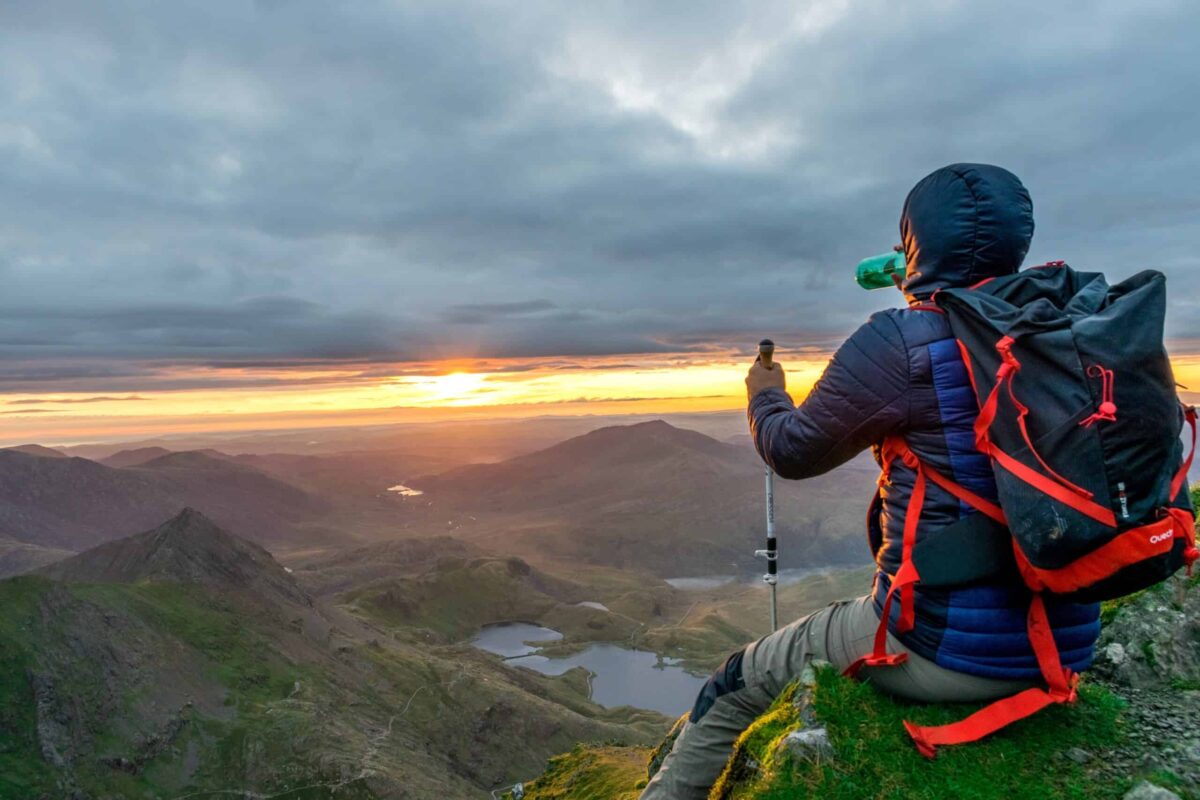
view from Mount Snowdon
Yr Wyddfa (Snowdon) — Pyg Track, Llanberis (LL55 4TY)
Overview: The Pyg Track is the best first-time route up Yr Wyddfa — it offers better views than the Llanberis Path, a more interesting ascent over the lip of Cwm Dyli, and is about 90 minutes shorter in total walking time. The route starts from the Pen-y-Pass car park (LL55 4TY) at 359m and climbs 726m to the summit in approximately 7 miles return. Total time: 4–5 hours return for a fit adult at a steady pace. The final section above Bwlch Glas is a clear path on rocky ground — no scrambling is required in summer conditions.
Parking and Timing: Pen-y-Pass car park (LL55 4TY) has only 66 spaces and operates strictly as a pre-book only car park from late March through November. For the 2026 season, parking must be booked via JustPark at least an hour in advance and costs £25 for up to 8 hours, or £35 for 8–12 hours. Because this fills up weeks in advance, using the Park & Ride at Nant Peris (£5 parking) or taking the Sherpa’r Wyddfa bus is highly recommended. The Sherpa bus connects Llanberis, Nant Peris, and Pen-y-Pass, with an all-day adult ‘1bws’ ticket costing just £7 for unlimited travel. At the summit, the Hafod Eryri café is scheduled to open daily from May 1, 2026, until late October, weather permitting.
Guided Walks: Guided ascents of Yr Wyddfa are widely available through excellent operators based in Llanberis, such as MountainXperience or via Snowdonia Active. A guided walk is highly recommended for first-time visitors unfamiliar with mountain navigation — weather conditions on Yr Wyddfa change rapidly, and the summit plateau requires confident use of a map and compass in poor visibility.
Visitor Info: The Llanberis Path (starting from Llanberis village, LL55 4EL) is the longest route at 9 miles return — it has the easiest gradient but is the most crowded and the least interesting scenically. The Miners’ Track (also starting from Pen-y-Pass) is the most gradual initial ascent — it follows the old copper mining railway track and passes three stunning lakes before climbing steeply to join the Pyg Track above Llyn Llydaw. For a full guide to all six routes including times and difficulty, see How Long Does It Take to Climb Snowdon?
Safety: Yr Wyddfa claims more mountain rescues than any other peak in Wales. Above 800m, the weather can change from clear to cloud and heavy rain within 20 minutes. Always carry a waterproof layer, warm mid-layer, map (OS Explorer OL17), compass, and a fully charged phone. Check the Mountain Weather Information Service (mwis.org.uk) before departing — do not rely on a general valley weather forecast. In winter conditions (October–April), crampons and an ice axe (along with the experience to use them) are strictly required above the zig-zags and the Bwlch Glas intersection.
Tryfan, Ogwen Valley (LL57 3LZ)
Overview: Tryfan (915m) is famous for being the only mountain in Wales and England that cannot be summited without using your hands. The north ridge approach from the A5 at Ogwen is a continuous Grade 1 scramble throughout, featuring sections of exposed ridge and a well-worn path through complex rocky terrain. The summit is marked by two standing stones called Adam and Eve — it is a mountaineering tradition to jump the 1.2-metre gap between them, though there is a sheer drop on both sides. Most experienced hillwalkers complete Tryfan in 4–5 hours return. It is arguably the finest mountain day in North Wales for those comfortable with scrambling.
Parking and Access: Parking in the Ogwen Valley is notoriously difficult. Layby parking on the A5 below the north ridge (LL57 3LZ) fills up very early on summer weekends. Be aware that the National Park Authority car park at the Ogwen Centre now operates as a card-only Pay & Display costing £6 for the day, and the National Trust no longer offers dedicated parking at Ogwen Cottage. If parking is full, you can park at the Bethesda Football Club for £7 and catch the Bws Ogwen shuttle directly to the trails.
Visitor Info: Cwm Idwal is a spectacular National Nature Reserve accessed from the Ogwen Centre — a 45-minute circular walk on a well-maintained path to a glacial lake surrounded by towering cliffs. The Idwal Slabs on the south wall of the cwm are one of the most important rock climbing locations in Wales and are clearly visible from the lakeside path. The Ogwen Valley is slightly less crowded than Llanberis but still extremely popular. You can combine Tryfan with the Glyderau ridge (Y Garn and Glyder Fach) for a massive full mountain day.
Safety: Tryfan is a serious mountain. Grade 1 scrambling throughout the north ridge means hands are needed at all times. It is not suitable for those who are uncomfortable with exposure, heights, or do not have prior scrambling experience. In wet conditions, the rock becomes incredibly slippery and the difficulty increases significantly. If the north ridge becomes too challenging, descend via the south ridge towards Bwlch Tryfan — it is much less technically demanding.
Eryri’s Towns and Villages
Eryri’s villages are built from grey slate and Welsh stone — compact, functional settlements that served the quarrying industry for 200 years. Llanberis, Betws-y-Coed and Harlech each offer a different experience as a base for the national park.
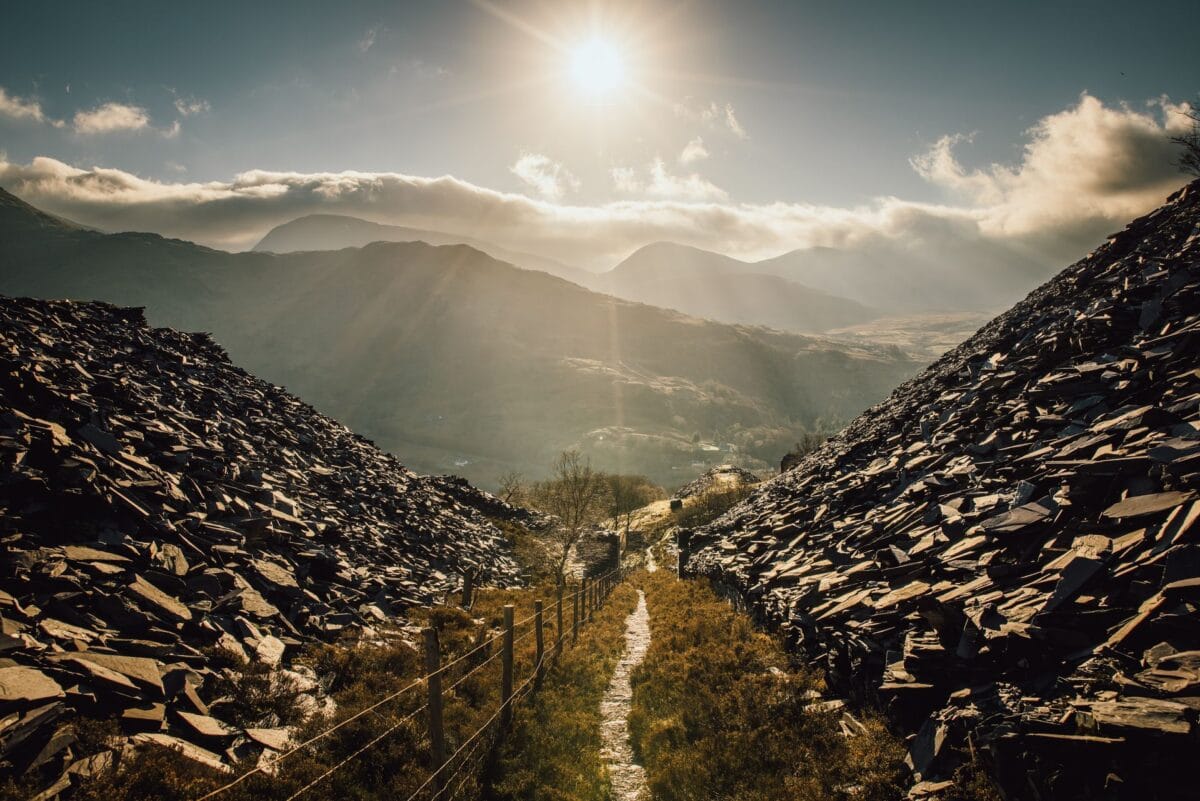
Dinorwic Quarry – Licence: Crown Copyright
Llanberis (LL55 4EL)
Overview: The main gateway village for Yr Wyddfa — almost every visitor to the mountain passes through Llanberis. The village sits between Llyn Padarn and Llyn Peris, below the enormous terraced face of the Dinorwic Slate Quarry. The Snowdon Mountain Railway departs from the village centre. Note for 2026 visitors: The National Slate Museum, housed in the former quarry workshops, is temporarily closed for a major redevelopment until late 2026, so be sure to check their website for reopening dates before your trip.
Snowdon Mountain Railway: The rack-and-pinion railway runs from Llanberis station (LL55 4EL) to within metres of the Yr Wyddfa summit — the highest railway in Britain. For the 2026 season, diesel services to the summit run from 1st May to 25th October (costing £38–£48 for an adult return), while the Heritage Steam service runs from 4th May to 16th October (£62 return). Book well in advance for summer weekends — the railway is one of the most popular attractions in Wales. Seats on summit trains are limited and sell out weeks ahead in July and August.
Visitor Info: Llanberis is busy throughout summer — High Street car parks fill quickly on weekends. Llyn Padarn Country Park (directly behind the village) has lakeside walking and a narrow-gauge railway within easy reach. Important 2026 update: The Electric Mountain visitor centre (LL55 4UR) and its underground Dinorwig power station tours are now permanently closed and the site is undergoing demolition, so do not add this to your itinerary!
Betws-y-Coed (LL24 0AJ)
Overview: The most popular village in Eryri — a Victorian tourist resort set at the confluence of the Conwy and Llugwy rivers, where three waterfalls are within easy walking distance of the car park. The Swallow Falls are the most visited waterfall in Wales — accessible in 10 minutes from the village. Entry is £2 via an automated turnstile that only accepts card payments. Pont-y-Pair bridge over the Llugwy dates from 1475 and is one of the most photographed bridges in North Wales. Betws-y-Coed serves as the main visitor hub for the eastern side of Eryri.
Parking and Access: The main Cae Llan pay-and-display car park (LL24 0AJ) is in the village centre behind the Conwy Valley Railway Museum. The village is on the A5 between Llangollen and Capel Curig. Transport for Wales runs direct trains on the Conwy Valley Line from Llandudno Junction to Betws-y-Coed. The journey is incredibly scenic and takes just 25 to 28 minutes.
Visitor Info: Betws-y-Coed is significantly less crowded in the week than at weekends. The village has a full range of cafés and outdoor equipment shops — it is the best place in Eryri to stock up on walking gear. The Gwydir Forest above the village has an extensive network of waymarked mountain bike and walking trails. The forestry tracks give easy access to viewpoints above the Conwy Valley without needing to climb a mountain, and entry into the forest is completely free.
Lakes, Waterfalls and Scenic Drives
Eryri’s glacial lakes and valley waterfalls are among the most visited non-mountain attractions in the national park — accessible to visitors who want exceptional scenery without a full mountain day.
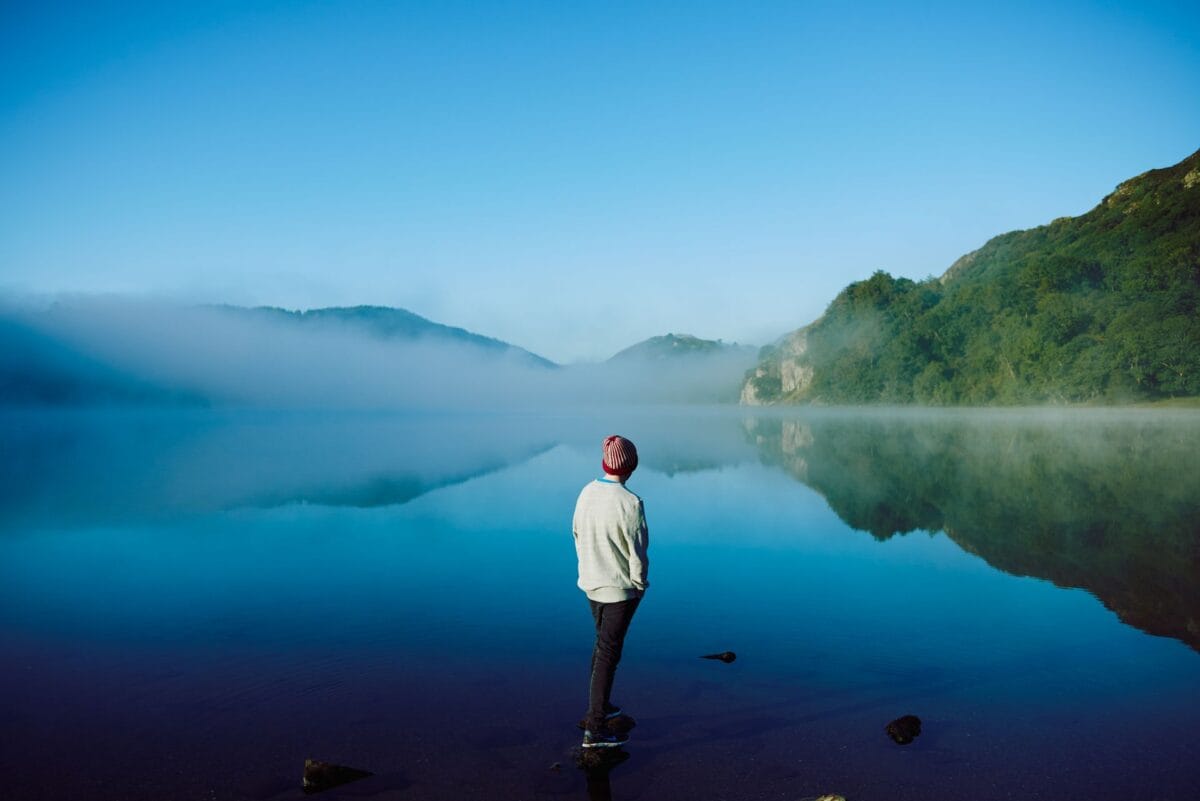
Llyn Gwynant – Licence: Crown Copyright
Llyn Gwynant and Nant Gwynant (LL55 4NW)
Overview: The A498 through Nant Gwynant is arguably the most scenic road in Eryri — running between Beddgelert and Pen-y-Pass along the floor of a glacial valley, flanked by Llyn Dinas and Llyn Gwynant with the Yr Wyddfa massif towering above. There is parking with direct lake access around Llyn Gwynant (popular for paddleboarding and summer swimming), though the water is famously clear and cold! If you want to combine the valley with a mountain walk, the Watkin Path up to Yr Wyddfa begins nearby at Pont Bethania. The valley is at its absolute best in autumn when the lakeside oaks turn gold.
Parking and Access: Parking options around the lake include the Llyn Gwynant campsite (£5 launch/visitor fee) and the National Park Authority car park at Pont Bethania (LL55 4NR), which costs £6 for a full day. These fill very quickly on summer weekends. The Wyddfa bus serves Nant Gwynant — meaning the valley is highly accessible without a car in summer via the Beddgelert–Pen-y-Pass service.
Visitor Info: Beddgelert village (LL55 4YD), 3 miles south at the junction of the Glaslyn and Colwyn rivers, is one of the most attractive villages in Eryri. The Gelert’s Grave walk (a 30-minute return trip from the village) follows the Glaslyn riverbank through flat, easy woodland. It is the best accessible walk in the national park for families with young children or those who want riverside scenery without the climbing. The village has several excellent cafés, and the nearby Sygun Copper Mine (Adults £11, Children £7.50) is well worth an hour for families looking for an underground adventure.
Pistyll Rhaeadr Waterfall (SY10 0BZ)
Overview: At 73 metres, Pistyll Rhaeadr is the highest single-drop waterfall in Wales and is officially classed as one of the Seven Wonders of Wales. Technically located just outside the Eryri National Park boundary in the Berwyn Mountains, it is the most spectacular waterfall drop in the country — falling in two stages through a natural arch into a plunge pool. The walk from the car park to the base of the falls takes just a few minutes on a flat, accessible path. A steeper, zig-zagging path climbs up the side of the valley to a viewpoint directly over the top of the falls.
Parking and Access: The main car park is located at the Tan-y-Pistyll farmhouse (SY10 0BZ), 6 miles from Llanrhaeadr ym Mochnant. The car park uses an automated camera system and charges £5 on weekdays and £10 on weekends (do not risk skipping the fee, as fines are issued). The approach road to the waterfall is a narrow single-track lane for the final 3 miles and is completely unsuitable for large vehicles or caravans. The farmhouse tearoom serves food and hot drinks, and operates public toilets that require a 50p coin.
Visitor Info: Do not blindly follow Google Maps for the final approach — you must take the physical road signs from Llanrhaeadr ym Mochnant village rather than the satellite route, which frequently leads drivers down an impassable farm track. The waterfall is at its most impressive after heavy rain — the flow is much reduced in dry summer weather. It is best visited in autumn or spring when water levels are high and the heavy summer crowds have thinned out.
Family Activities in Eryri
Eryri has a strong range of activities for families that go beyond mountain walking — zip wires, underground adventures, narrow-gauge railways and kayaking on flat water all operate within the national park.
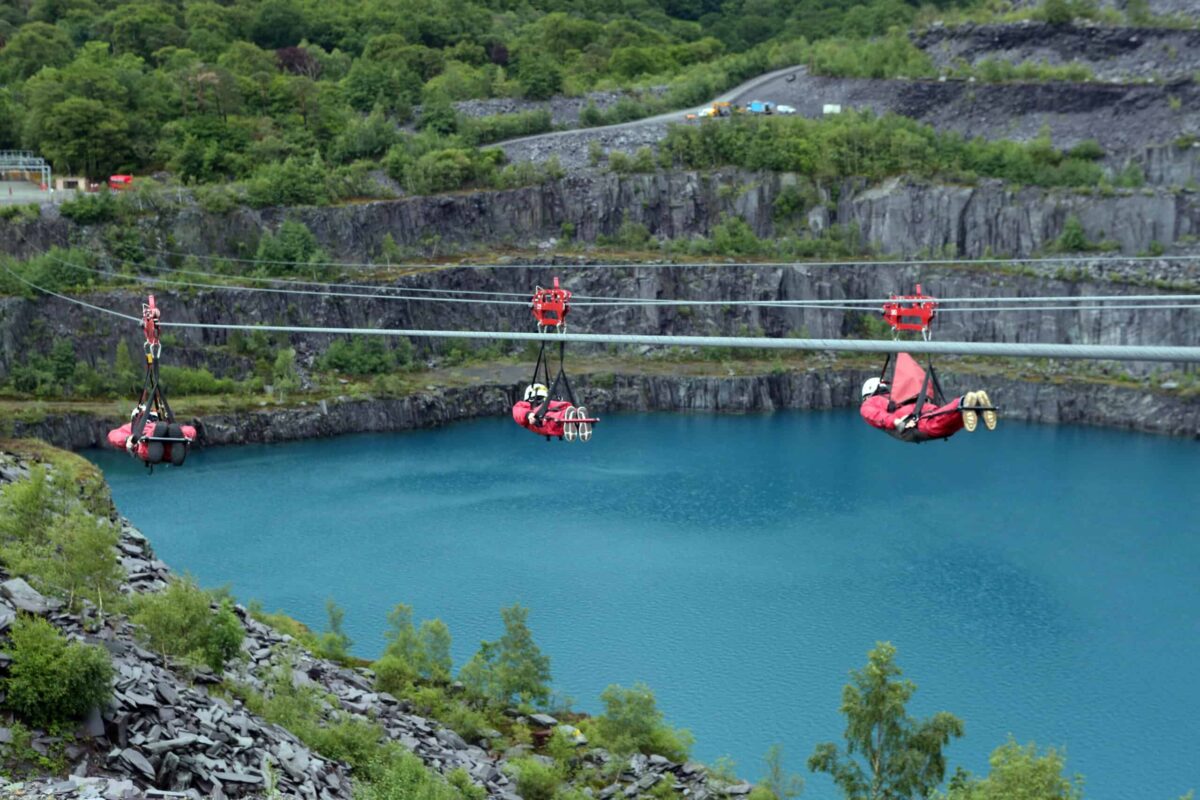
Zip World, Bethesda (LL57 4YG)
Overview: Zip World operates multiple experiences across North Wales. The flagship is Velocity 2 at the Penrhyn Quarry in Bethesda, the fastest zip line in the world, running over 1.5km from the quarry rim to the lake floor at speeds exceeding 100mph. Bounce Below (in the caverns at Blaenau Ffestiniog — LL41 3NB) is a network of trampoline nets suspended in a Victorian slate cavern — easily the most unusual family activity in Eryri. Zip World Tower and the Fforest Coaster at Betws-y-Coed are better suited to younger children and mixed-ability groups.
Booking and Prices: All Zip World experiences strictly require advance online booking — walk-up availability is virtually non-existent in summer. Velocity 2 has a minimum age of 10, a minimum rider weight of 30kg, and a maximum weight of 130kg. Bounce Below requires participants to be at least 7 years old and able to reach 1.8 metres high with their hand while standing flat; you must also wear trainers and clothing that covers your arms and legs. Allow at least half a day for any Zip World experience, including travel time.
Visitor Info: Velocity 2 at Penrhyn Quarry (LL57 4YG) is 4 miles from Bangor on the A5. There is free parking at the site. The quarry itself — which was the largest open-cast slate quarry in the world when active is an amazing industrial landscape visible from the zip line. For other adrenaline activities in Wales including mountain biking and Coasteering, see our guide to Adventure Sports in Wales.
Llyn Padarn Kayaking, Llanberis (LL55 4EL)
Overview: Llyn Padarn is the premier flat-water kayaking and paddleboarding lake in Eryri — 3km long, surrounded by the old Dinorwic quarry terraces, and boasting clear views to Yr Wyddfa at the southern end. Hire is available from the lakeside in Llanberis throughout the summer. No experience is needed for flat-water paddling on Padarn — it is protected from wind on three sides by the valley walls. The view from the middle of the lake looking south to the mountain is one of the finest views in Wales.
Hire and Booking: Snowdonia Watersports (LL55 4EL) is the primary established lakeside operator, sharing a building with the Lone Tree Cafe. For the 2026 season, hiring a single kayak or paddleboard costs £35 for two hours, which handily includes your paddle, buoyancy aid, and wetsuit. Sessions are typically available from 9am to 5pm in summer. No advance booking is strictly required for hire, though early arrival on summer weekends is highly recommended.
Visitor Info: Llyn Padarn Country Park (free entry) surrounds the lake and has a network of walking paths, including the lakeside circuit (3 miles, fully flat, and pushchair-friendly). Crucial 2026 Update: Due to ongoing National Grid cable replacement works, the Llanberis Lake Railway is operating a significantly reduced route until November 1st, 2026. Instead of the usual 5-mile journey, trains will run a short 15-minute return hop between Padarn Country Park and Llanberis station. To compensate, tickets during this period allow for unlimited travel for the day. For more on water sports across Eryri and North Wales, see Water Sports in Wales.
Getting to and Around Eryri
Eryri is in northwest Wales — approximately 4 hours from Cardiff by car, and 2.5 hours from Manchester. Getting around without a car is entirely possible but requires planning your days around the local bus timetables.
By Car and Parking
Overview: The main approach roads into Eryri are the A5 from Shrewsbury (via Betws-y-Coed) and the A55 North Wales Expressway to Bangor, then heading south on the A4086 or A4085. From Cardiff, taking the A470 north through the Brecon Beacons and into Mid Wales is the most scenic route — taking approximately 4 hours of driving time to reach Llanberis.
The Llanberis Pass (A4086) becomes severely congested on peak summer weekends — add at least 45 minutes to journey time estimates for Llanberis and Pen-y-Pass between 9am and 6pm in July and August. Crucial 2026 Update: The Pen-y-Pass car park is strictly pre-book only from late March until November, meaning you can no longer simply arrive early to get a space!
Visitor Info: The Eryri National Park Authority publishes a brilliant sustainable travel guide with car park information at eryri.llyw.cymru. Parking charges apply at most popular trailheads. Pay-by-phone parking is available at most locations, but signal is notoriously patchy — download the JustPark app (required for Pen-y-Pass) and the PayByPhone app (required for National Trust car parks) before arriving. Cash is no longer accepted at many mountain car parks.
By Train and Bus
Overview: Bangor is the nearest mainline station to Eryri. Avanti West Coast runs direct trains from London Euston that take just under 3 hours 20 minutes on the fastest services. From Bangor, local buses serve Llanberis (30 minutes), Betws-y-Coed (1 hour), and Caernarfon (20 minutes). The Conwy Valley Railway (Llandudno Junction to Blaenau Ffestiniog) is the best scenic rail route into the eastern side of the park — the line runs up the Conwy Valley through Betws-y-Coed and is one of the most attractive train journeys in Wales.
Sherpa’r Wyddfa Bus: The Sherpa’r Wyddfa bus network links all the main Yr Wyddfa trailheads in summer — Llanberis, Pen-y-Pass, Nant Gwynant, and Beddgelert are all connected. For walking Yr Wyddfa, buying an all-day unlimited ticket for £7 and taking the Sherpa bus to Pen-y-Pass avoids the parking problem entirely and is the highly recommended approach for summer weekend visits.
Licence: Crown Copyright
Where to Stay in Eryri
Llanberis is the most practical overnight base for Yr Wyddfa and the western park. Betws-y-Coed serves the eastern side. Both have a range of accommodation from budget hostels to mid-range hotels and self-catering cottages.
Holiday Cottages in Eryri
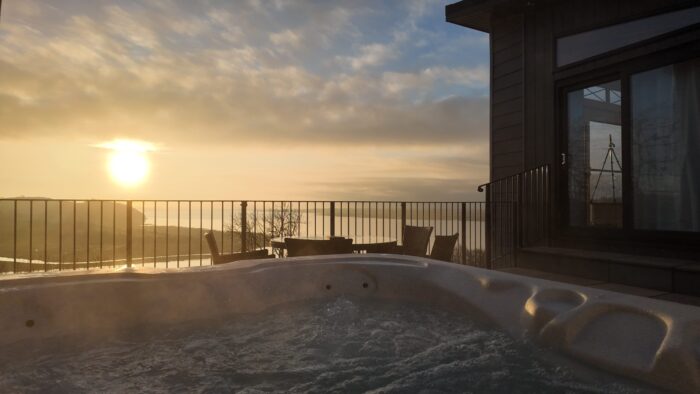
Overview: Self-catering cottages in Eryri range from traditional mountain farmhouses with direct hillside access to converted stone barns in the valley villages. A cottage base allows for early starts on the mountain, flexibility for weather-dependent days, and the ability to self-cater after a long day on the hills — which is particularly important when many village cafés close early in the evening. Properties in Nant Gwynant, Nant Peris, and the Ogwen Valley put walkers within 10 minutes of the main trailheads.
Visitor Info: Peak summer weeks (late July through mid-August) fill early and command the highest prices. The shoulder seasons — May, June, September, and October — offer better availability, lower prices, and (for mountain walkers) arguably much better conditions: less crowded paths, more stable weather patterns, and the best light for photography. For the full range of available properties in Eryri, see Holiday Cottages in Snowdonia.
Find Your Perfect Eryri Basecamp
Frequently Asked Questions: Eryri (Snowdonia)
What is the difference between Eryri and Snowdonia?
They are the exact same place! Eryri is the native Welsh name for the national park, and Yr Wyddfa is the Welsh name for the highest mountain (previously known in English as Snowdon). In November 2022, the National Park Authority officially voted to prioritise these Welsh names to protect and celebrate the region’s cultural heritage, and recently updated their official logo to drop the English name entirely. You will now see Eryri and Yr Wyddfa used exclusively on official signage, maps, and by local businesses.
Is Snowdon the highest mountain in Wales?
Yes. Yr Wyddfa stands at 1,085 metres, making it the highest mountain in both Wales and England. (It is not, however, the third highest in the British Isles as is sometimes claimed — Scotland is actually home to over 150 higher peaks, led by Ben Nevis at 1,345m). The summit of Yr Wyddfa is clearly defined, with the Hafod Eryri café and visitor centre marking the very top.
How long does it take to climb Snowdon?
The Pyg Track from Pen-y-Pass takes around 4–5 hours return for a fit adult walking at a steady pace. The Llanberis Path, which starts in Llanberis village, takes 5–7 hours return — it is a longer route but offers a gentler, more sustained gradient. Times vary considerably depending on your fitness, group size, the weather conditions, and how long you spend resting at the summit. For a full breakdown of all six routes including times and difficulty, see our guide on How Long Does It Take to Climb Snowdon?
What is Eryri National Park famous for?
Eryri is famous for Yr Wyddfa (the highest peak in Wales and England) and for the extraordinary concentration of glacial mountain scenery packed into its 823 square miles. The park is also renowned for its historic narrow-gauge railways (including the Snowdon Mountain Railway and Ffestiniog Railway), its UNESCO-listed slate quarrying heritage, the Italianate village of Portmeirion, and the world-record-breaking zip lines at Zip World.
When is the best time to visit Snowdonia?
May and June offer the best combination of long daylight hours, good walking conditions, and lower visitor numbers before the school holiday crowds arrive. September and October are also excellent for mountain walking, offering more stable autumn weather, great light, and dramatically quieter paths. July and August are the busiest months — the Llanberis Pass road becomes severely congested on weekends, and popular trailheads (like the pre-book-only Pen-y-Pass car park) sell out weeks in advance.
More Eryri and North Wales Guides on Wales.org
How Long to Climb Snowdon: All Six Routes
Hiking in Wales: National Park Trails Guide
Anglesey: Island Destination Guide
Planning a trip to Wales?
Find the perfect holiday cottage for your Welsh adventure.
 Share icon below and select Add to Home Screen to install the free app.