


Plan the Perfect Wales Itinerary
Wales Itinerary 2026: 3, 5 and 7 Day Plans for Every Trip
Wales fits a surprising amount into a small space.
Cardiff to the top of Yr Wyddfa (Snowdon) is 180 miles. Cardiff to Pembrokeshire’s best beaches is 100 miles. You can cover the highlights of two entirely different regions in a single long weekend.
The challenge is choosing what to cut. These itineraries do that work for you — built around what’s worth the detour, what connects well by road, and what leaves room for the best kind of travel: stopping somewhere unexpected because it looked interesting from the car.
3 Days in Wales: The Essential Highlights
Three days is enough to cover one region properly or to touch the highlights of two adjacent ones. This itinerary covers Cardiff, the Valleys, and the Gower — the most accessible combination from England, using no motorway beyond the M4.
Day 1 — Caerdydd (Cardiff): Start at Cardiff Castle (CF10 3RB) — the Roman fort beneath the Victorian fairytale apartments is worth the entry fee. National Museum Cardiff on Cathays Park (CF10 3NP) is free and holds the best Impressionist collection outside London. Evening in Cardiff Bay — the regenerated docklands now have the best restaurant concentration in Wales.
Day 2 — Valleys and Blaenavon: Drive north on the A470 to Caerphilly Castle (CF83 1JD) — 30 minutes from Cardiff and the largest castle in Wales. Continue to Blaenavon (NP4 9XP) for Big Pit National Coal Museum — free entry, 90 minutes underground with a former miner. The Blaenavon World Heritage Site covers 33 square kilometres of industrial landscape. Return via Abergavenny (NP7 5PE) for dinner — the best food town in South Wales.
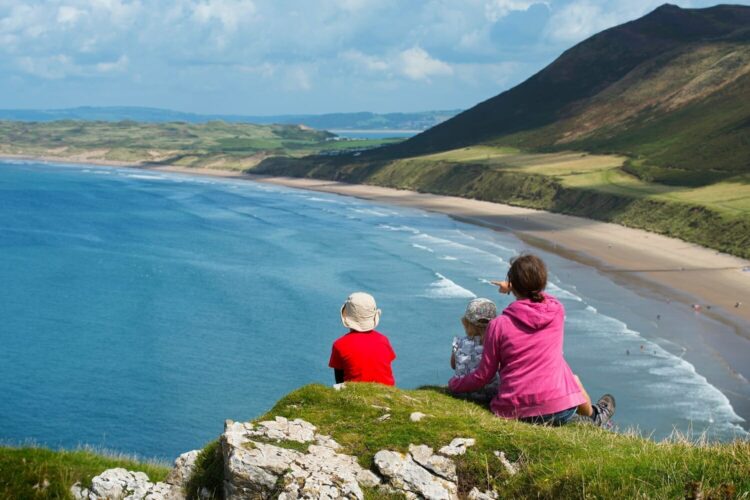
Day 3 — Gower Peninsula: Drive west on the M4 to Abertawe (Swansea), then south onto the Gower — Britain’s first Area of Outstanding Natural Beauty. Oxwich Bay (SA3 1LS) for a morning beach walk. Drive the ridge road to Rhossili (SA3 1PL) — the beach below is 3 miles of west-facing sand. The worm’s head causeway can be crossed 2.5 hours either side of low tide. Check tide times before walking.
5 Days in Wales: North and South Combined
Five days allows a proper north-to-south traverse — the best way to understand the full range of Wales in a single trip. This itinerary starts in Cardiff and ends in North Wales, finishing near the main rail and road connections back to England.
Day 1 — Cardiff: As above — castle, National Museum, Cardiff Bay evening. Stay in Cardiff.
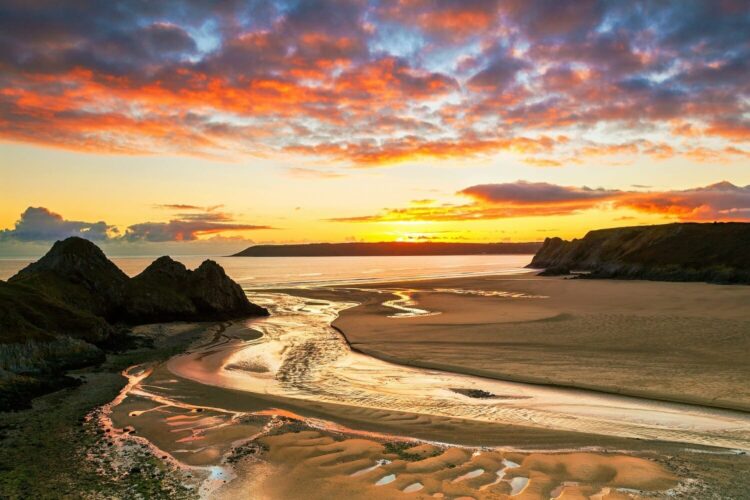
Day 2 — Pembrokeshire: Drive west on the M4 to Pembrokeshire. Tenby (SA70 7AJ) for the harbour and medieval walls (1 hour). Continue to Tyddewi (St Davids) (SA62 6RH) — the smallest city in Britain and the most visited in Pembrokeshire. The 12th-century cathedral is free to enter. Stay in or near St Davids — the number of good restaurants here is disproportionate to the size of the village.
Day 3 — Ceredigion: Drive north on the A487 coastal road — the most consistently scenic A-road in Wales. Stop at Newgale (SA62 6AS), Aberaeron (SA46 0BA) for a harbour lunch, and Aberystwyth (SY23 2AX) — UNESCO City of Literature 2026. Cliff railway to Constitution Hill for the view. Stay in Aberystwyth or Machynlleth.
Day 4 — Eryri (Snowdonia): Drive north via Dolgellau (LL40 1ES) and the Mawddach Estuary — one of the finest estuarine landscapes in Wales — to Eryri. The Llanberis Pass (A4086) in the afternoon light is worth timing. Optional: Snowdon Mountain Railway from Llanberis (LL55 4TY) to the summit of Yr Wyddfa (1,085m). Approximately £35 return — verify at snowdonrailway.co.uk. Book ahead in summer. Stay in Caernarfon or Llanberis.
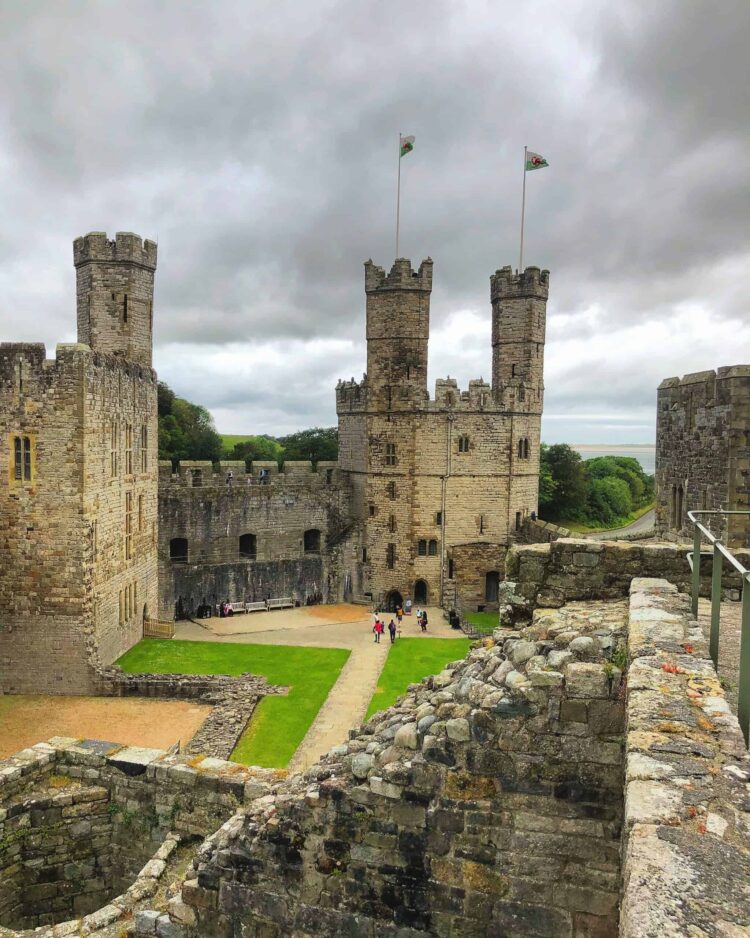
Day 5 — North Wales Castles: Caernarfon Castle (LL55 2AY) — the most imposing fortress in Wales. Cross the Menai Strait to Beaumaris (LL58 8AP) on Anglesey — the most technically perfect Edwardian castle. Continue to Conwy (LL32 8AY) — the most complete medieval walled town in Britain — before heading east on the A55 towards home.
7 Days in Wales: The Complete Circuit
Seven days allows for a proper lap of Wales — enough time to cover all four regions without rushing, and to fit in the things that make a trip memorable rather than just thorough.
Day 1 — Cardiff: Cardiff Castle, National Museum, Cardiff Bay. Stay Cardiff.
Day 2 — Brecon and the Valleys: Drive north to Bannau Brycheiniog (Brecon Beacons). Walk the Pen y Fan ridge from Pont ar Daf car park (LD3 8NL) — the most-walked mountain in Wales. 6 miles, 3 hours, suitable for most walkers in good weather. Continue to Blaenavon for Big Pit. Stay Abergavenny.
Day 3 — Pembrokeshire: Drive west via the M4. Pembroke Castle (SA71 4LA), Freshwater West beach (SA71 5HJ) — possibly the most dramatic beach in Wales — and St Davids. Stay St Davids or Fishguard.
Day 4 — Ceredigion Coast: Ceibwr Bay (SA43 3BT) for sea cliffs and seals. Cardigan (SA43 1JW) for the castle and the best local food market in west Wales. Aberaeron for lunch on the harbour. Aberystwyth for the afternoon. Stay Aberystwyth.
Day 5 — Mid Wales: Rhayader and the Elan Valley reservoirs (LD6 5AE) — a 10-mile reservoir valley with mountain roads, no traffic, and red kites overhead. Gigrin Farm feeding at 3pm. Continue to Hay-on-Wye (HR3 5AE) for the evening and the bookshops. Stay Hay or Brecon.
Day 6 — Eryri and the Llŷn: Drive north via Dolgellau and Porthmadog. Ffestiniog Railway from Porthmadog (LL49 9NF) — 13.5 miles through the mountains. Llŷn Peninsula in the afternoon — Aberdaron (LL53 8BE) and Hell’s Mouth (Porth Neigwl). Stay Llŷn or Caernarfon.
Day 7 — North Wales Castles: Caernarfon, Beaumaris, Conwy. Full Iron Ring day — Cadw Explorer Pass covers all three. Drive home east on the A55.
Wales Itinerary for Families: What to Prioritise
The same routes work for families but with different stops prioritised. Big Pit is excellent for children 7 and over (minimum 1 metre height for the underground tour). Folly Farm near Tenby (SA68 0XA) has a zoo, farm animals, and a vintage fairground — allow a full day. Zip World has four North Wales sites ranging from the world’s fastest zip line (Penrhyn Quarry, LL57 4YG) to underground trampolining at Llechwedd Slate Caverns (LL41 3NB).
Families typically get more from slowing down: fewer sites, more time at each. Three days in North Wales at Caernarfon and Beaumaris castles, with a day walking in Eryri and an afternoon at the Slate Museum (LL55 4TY), is better than rushing through five regions.
Book holiday cottages across Wales for all itinerary lengths here
Frequently Asked Questions: Wales Itinerary Planning
How many days do you need to see Wales?
Three days is enough to cover one region well — South Wales or North Wales but not both. Five days allows a north-to-south traverse covering Cardiff, Pembrokeshire, and North Wales with one night in each area. Seven days is the minimum for a proper lap of all four regions without rushing. Ten days is ideal for a comprehensive visit.
What is the best time of year to visit Wales?
May, June, and September offer the best combination of weather and manageable crowds. July and August are warmest but the main tourist routes — North Wales coast, Pembrokeshire, Gower — are significantly busier. October and November can be excellent for landscape photography and walking, particularly in the Beacons and Eryri. Winter is viable for Cardiff and the Valleys but mountain roads in Eryri and Bannau Brycheiniog can close in severe conditions.
Where should I base myself in Wales?
Cardiff is the best single base for South and West Wales — it has the widest range of accommodation, good road connections west and north, and enough to fill two full days before you leave the city. For North Wales, Caernarfon or Conwy are the most central bases. For a mid-Wales itinerary, Aberystwyth or Brecon work well. If you prefer moving each night, the five-day north-to-south itinerary above spaces the stops evenly.
Can you visit Wales without a car?
Cardiff and its surroundings are fully accessible by train. Pembrokeshire has reasonable rail connections to Tenby and Fishguard. North Wales has the A55 corridor rail service connecting Chester, Rhyl, Colwyn Bay, Llandudno, Bangor, and Holyhead. The gaps are Mid Wales, the Llŷn Peninsula, and rural Eryri — these require a car or organised tour. TrawsCymru long-distance bus routes cover some gaps but journey times are long.
Read next:
Road Trip Wales — routes and distances

Nick, your trusted guide to Wales travel and exploration, shares a deep passion for this enchanting land. With years of exploration, Nick offers expert insights into the best of Wales. Join him on a journey through its captivating history, culture, and hidden gems, as he inspires you to create unforgettable Welsh travel experiences.
Planning a trip to Wales?
Find the perfect holiday cottage for your Welsh adventure.


