

Welsh Wedding Venues: Legal Guide, Costs & Categories
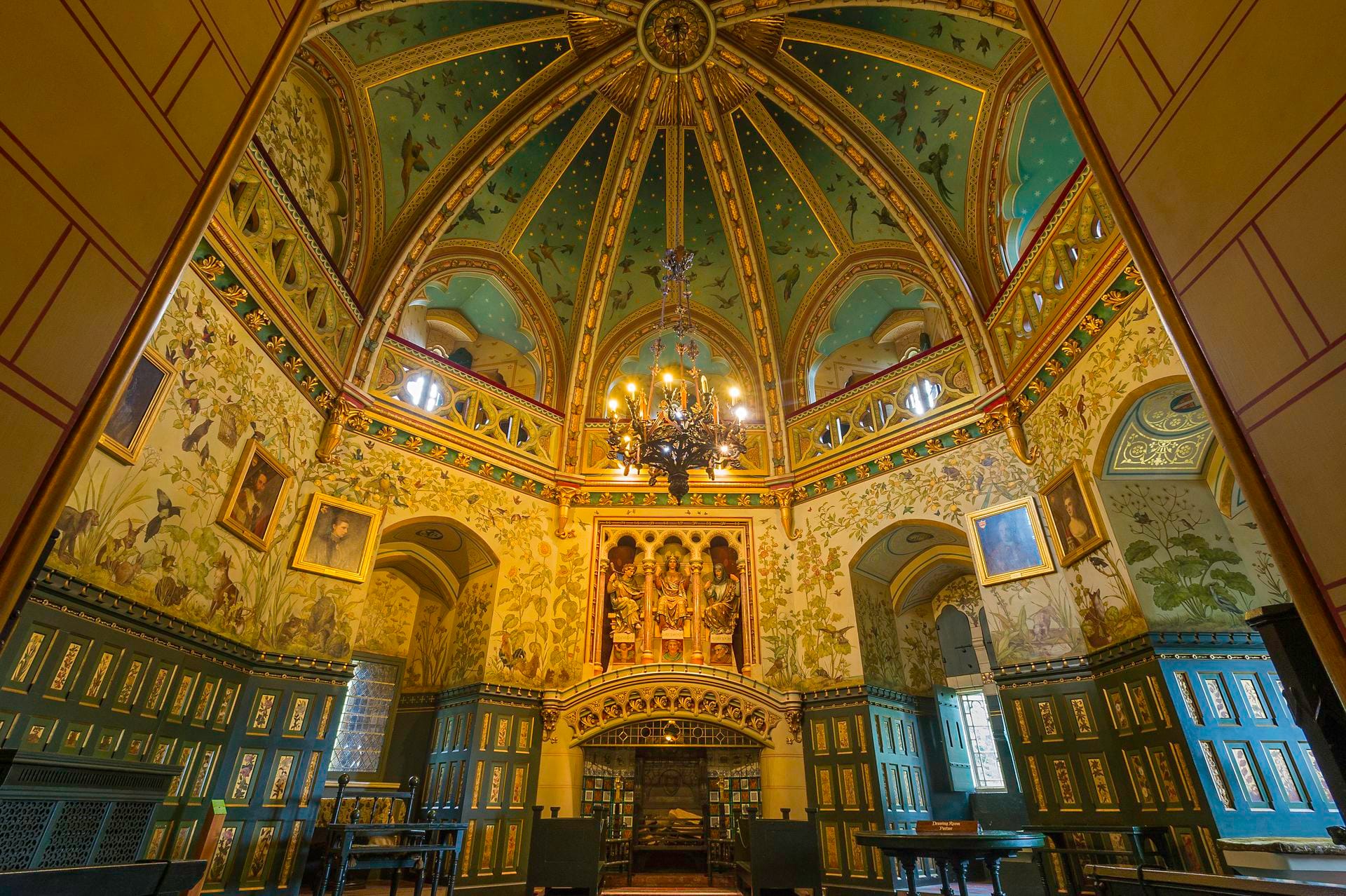
The Drawing Room at Castell Coch offers an incredibly opulent, fairytale setting for intimate castle wedding ceremonies in South Wales. © Crown copyright Cymru Wales 2026
Wales has one of the strongest wedding venue markets in the UK. More than 400 castles, hundreds of country houses, coastal estates, converted barns and licensed hotels operate as approved premises for civil ceremonies. Pembrokeshire alone lists more than 50 licensed wedding venues. The country’s landscape — mountain valleys, coastal clifftops, Welsh borders parkland, ancient woodland — gives couples a wider choice of setting per square mile than almost anywhere else in Britain. This guide covers the legal framework (notice periods, approved premises, costs), the seven main venue categories with what each format actually delivers, where the strongest inventory sits by region, and the practical questions first-time wedding bookers most often overlook. It reads as both a planning guide for couples getting married in Wales and a resource for anyone considering a Welsh venue for a destination wedding.
For related planning resources see our guides to castle stays in Wales, large group cottages for wedding parties, adult-only Welsh accommodation, and romantic breaks in Wales for honeymoon inspiration.
Planning this trip? Ask Branwen, our free AI trip planner →
At a Glance: Getting Married in Wales
- Seven main venue categories: castles, country houses, coastal estates, converted barns, boutique hotels, Welsh chapels, register offices
- Legal framework: Marriage Act 1994 (civil ceremonies), Marriage Same Sex Couples Act 2013, Marriage & Civil Partnership (Minimum Age) Act 2022 (age 18+)
- Minimum notice period: 28 days (extends to 70 days for some immigration statuses)
- Notice validity: 12 months from date given
- Statutory fees 2026: £46.50 per person notice, £56 register office ceremony, £12.50 certificate
- Venue costs: £4,000-£8,000 (intimate), £14,000-£30,000 (typical), £35,000-£65,000+ (premium castle or country house)
- Peak booking: premium venues booked 18-24 months ahead for summer Saturdays
- Best value windows: midweek any time, winter (excl. Dec), Friday or Sunday dates
The Legal Framework: What Makes a Welsh Wedding Legal
Understanding the legal framework matters because it shapes which venues you can and cannot legally marry at. Get this right first and every subsequent choice becomes easier.
Approved premises — how the licensing works
To legally host a civil ceremony in Wales, a venue must be one of the following:
- The local register office — every Welsh local authority operates one. Statutory £56 ceremony fee for the basic ceremony room; local authorities charge higher fees for larger or upgraded ceremony rooms. Two witnesses required, ceremony rooms typically fit 20-40 guests.
- An approved premises — a venue licensed by the local authority under the Marriage Act 1994. Categories include castles, country houses, hotels, converted barns, gardens and other private venues. Each local authority (Pembrokeshire, Gwynedd, Anglesey, etc.) maintains its own list of approved premises.
- A registered religious building — including Church in Wales, Roman Catholic, Nonconformist chapels, and other faith buildings registered for solemnisation of marriages.
Church in Wales weddings do not usually require a separate registrar attendance, though there are exceptions. All other religious venues typically need a registrar to attend for the marriage to be legally recorded.
Notice of marriage — the 28-day minimum
Both parties must give notice at the register office in the local authority area where they live (must have lived there at least 7 days). Notice is a formal appointment and requires ID documentation. Key facts:
- Minimum 28 clear days between notice and ceremony date
- Extends to 70 days for some immigration statuses (foreign national spouses)
- Notice remains valid for 12 months — ceremony must take place within
- Venue and date must be known at notice — changes require a new notice appointment
- £46.50 statutory fee per person for giving notice (increased to £63 per person if either party is subject to immigration control)
Celebrant-led ceremonies and Welsh weddings
Celebrant-led wedding ceremonies at unlicensed venues (a beach, a mountaintop, a private garden without approved premises status) are permitted and popular but are not legally binding under current Welsh law. Couples typically pair a celebrant-led ceremony with a separate legal civil ceremony at a register office or licensed venue — often on a different day. The celebrant-led ceremony carries the emotional weight and the personal setting; the legal ceremony carries the formal registration.
Same-sex marriage in Wales: legal since the Marriage (Same Sex Couples) Act 2013. Ceremonies at approved premises and register offices work identically for opposite-sex and same-sex couples. Statutory fees are identical. A small number of religious venues in Wales conduct same-sex ceremonies; most Church in Wales buildings currently do not, though the Church in Wales has moved towards blessings for same-sex civil marriages since 2021.
Outdoor ceremonies at approved premises
Since 2022, legally binding outdoor civil ceremonies have been possible in England and Wales, provided the outdoor space forms part of the approved premises’ licensed area. Not every venue has extended its licence to outdoor space — always confirm specifically that the outdoor location you want is on the current licence, not just the indoor rooms. Rain contingency arrangements are separately worth confirming at booking.
The Seven Main Welsh Wedding Venue Categories
1. Welsh Castle Venues
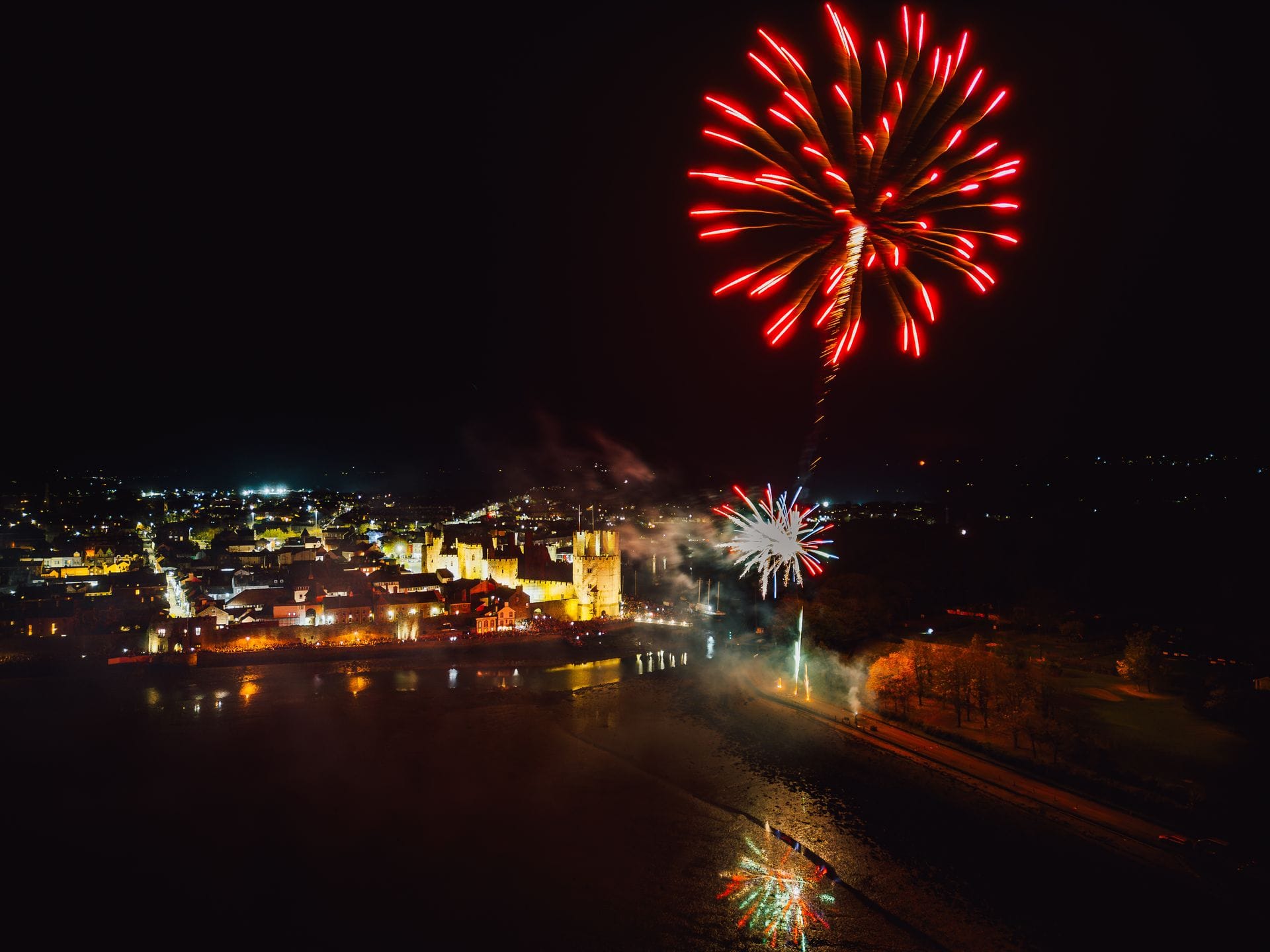
Wales has more castles per square mile than any country in the world — over 400 in total — and a substantial minority hold approved premises status for civil ceremonies. Castle weddings deliver dramatic exterior photography, imposing ceremony spaces, and the strongest single-day theatre in the Welsh venue market. Expect capacity for 60-150 guests, ceremony rooms with high vaulted ceilings, historic exterior settings for group photography, and often on-site accommodation for wedding party guests. See our related guide to castle stays in Wales. Typical venue-only cost bands: £8,000-£25,000 for the ceremony and reception space.
2. Country House Venues
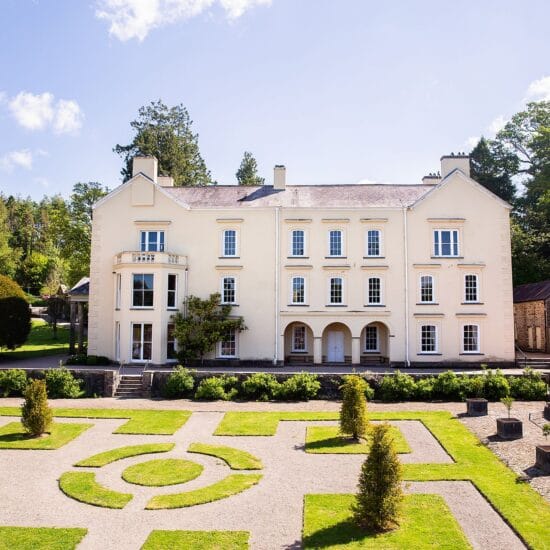
Restored Georgian and Victorian country houses across Wales operate as some of the country’s most popular wedding venues. Expect landscaped grounds, formal ceremony rooms, dedicated reception spaces, and on-site accommodation for wedding parties of 20-40. Strong concentrations in the Wye Valley, Bannau Brycheiniog, Mid Wales and the Vale of Glamorgan. Typical venue-only costs £5,000-£18,000 depending on capacity and season.
3. Coastal and Sea-View Venues
Wales’s 870-mile Coast Path stitches together some of the strongest sea-view wedding venues in Britain. Clifftop country houses, coastal hotels and beach-side estates in Pembrokeshire, Gower, Anglesey and the Llŷn Peninsula deliver Atlantic and Irish Sea backdrops. Expect strong summer demand, weather contingency spaces, and capacity typically 40-120 guests. For related coastal accommodation see our sea-view cottages guide. Typical venue-only costs £6,000-£20,000.
4. Converted Barn and Rural Estate Venues
Converted stone and oak-frame barns are the fastest-growing wedding venue category in Wales. Expect rustic exposed-beam ceremony spaces, dedicated reception halls, extensive outdoor grounds for drinks receptions, and often full-week exclusive-use booking (Fri arrival, Mon departure) rather than day hire. Strongest concentrations in Mid Wales, Powys, Pembrokeshire and the Wye Valley. Typical venue-only costs £5,000-£15,000. See our large group cottages guide for wedding party accommodation adjacent to these venues.
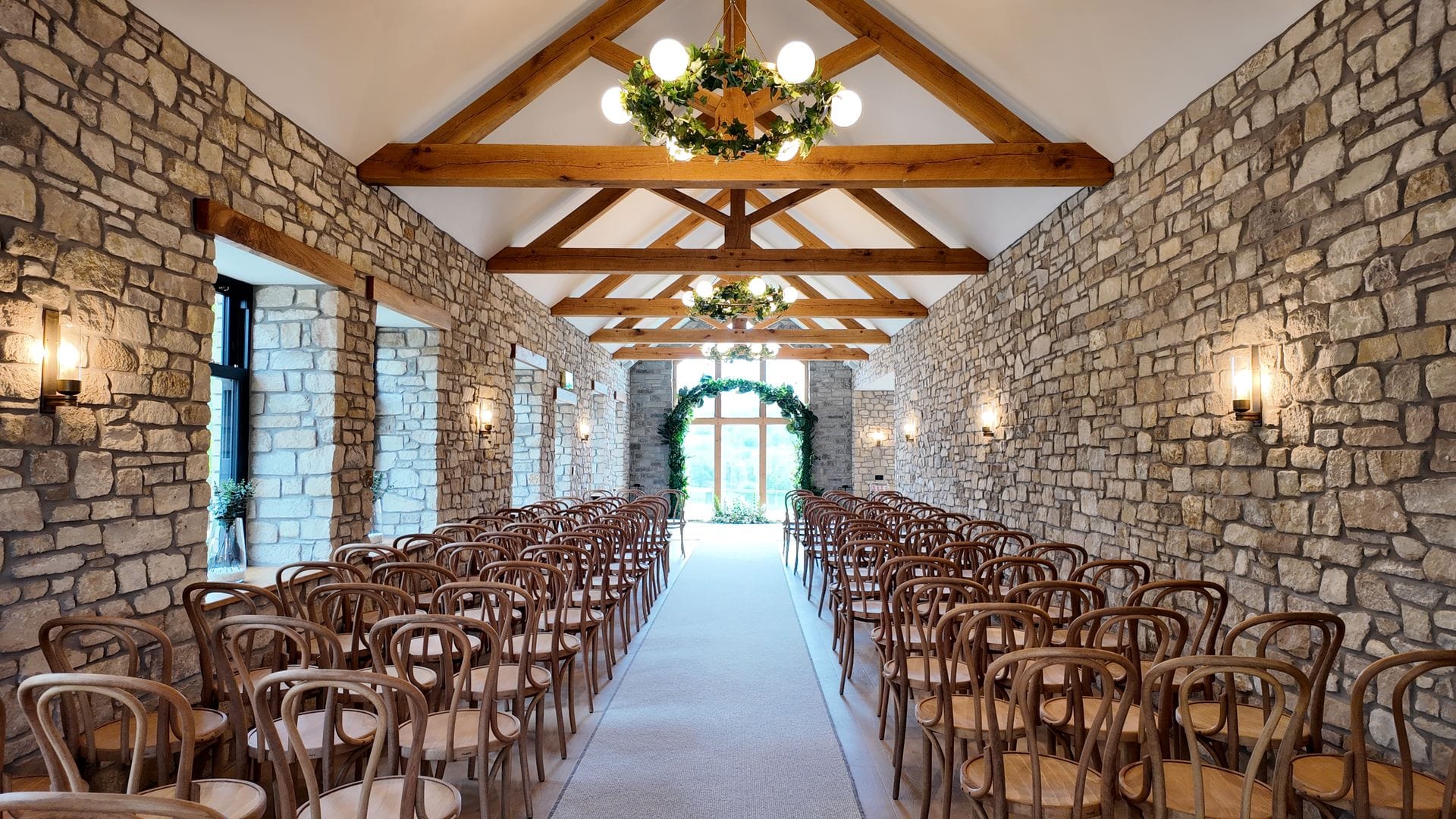
With its exposed stone walls and vaulted wooden beams, Ty Glyn in Ciliau Aeron offers a stunning, atmospheric backdrop for a Welsh wedding ceremony. © Crown copyright Cymru Wales 2026
5. Boutique Hotel and Historic Inn Venues
Small licensed hotels and historic inns across Wales operate as intimate wedding venues, typically for 30-80 guests. Suits couples wanting professional hospitality on the day, in-house catering, and accommodation for immediate wedding party under one roof. Strongest concentrations in Cardiff, Swansea, Llandudno, Betws-y-Coed, Tenby and Aberystwyth. Typical venue-only costs £2,500-£10,000. See our related best hotels in Wales guide and luxury spa hotels guide.
6. Welsh Chapel and Faith Venues
Traditional Welsh Nonconformist chapels — Methodist, Baptist, Presbyterian and Congregational — form a distinctive category of Welsh wedding venue. Not all remain active as places of worship, but many still conduct wedding ceremonies (either as religious ceremonies where the chapel retains registration, or as reception venues attached to a separate civil ceremony). Church in Wales buildings operate as the country’s largest historic wedding venue network, with the traditional advantages of familiar ceremony format, professional clergy, and reduced administrative burden (no separate registrar required in most cases). Typical costs vary widely: Church in Wales fees are set nationally; independent chapel venues charge £1,000-£4,000 for ceremony hire.
7. Register Office and Elopement Venues
Every Welsh local authority operates a register office with dedicated ceremony rooms. These are the most affordable ceremony option (£57 statutory fee) and suit intimate weddings, elopement-style ceremonies, and couples who want to keep the legal ceremony separate from a larger reception. Ceremony rooms typically hold 15-40 guests. Cardiff, Swansea, Newport, Aberystwyth and Llandudno register offices tend to have the most attractive dedicated rooms; smaller local authorities operate simpler ceremony rooms in council office buildings. Register offices book faster than approved premises — often 6-12 weeks for weekday dates.
The two-ceremony strategy: a growing number of couples pair a small register office legal ceremony (mid-week, immediate family only) with a larger celebrant-led ceremony and reception at a landscape venue on a separate date. This decouples the legal formalities from the celebration, allows greater freedom in venue choice, and often reduces total cost significantly.
Where the Strongest Wedding Venue Inventory Sits by Region
South Wales and Monmouthshire
South Wales holds the largest concentration of premium approved premises, driven by proximity to Bristol, Cardiff and the M4 corridor. Expect Vale of Glamorgan castle venues, Wye Valley country houses, Monmouthshire converted barn estates, and Cardiff historic-hotel venues. See our Wye Valley and Vale of Usk guide and Cardiff visitor guide.
Pembrokeshire and West Wales
Pembrokeshire — with more than 50 licensed venues — holds Wales’s strongest coastal and clifftop wedding venue inventory. Expect National Park protection giving stunning natural settings, established professional wedding suppliers, and strong destination-wedding traffic. See our Pembrokeshire destination guide.
Bannau Brycheiniog and Mid Wales
Bannau Brycheiniog (Brecon Beacons), Powys and the Wye Valley hold the strongest inventory of premium country house and rural estate wedding venues. Expect substantial private grounds, converted farmhouse and Georgian mansion venues, and full-week exclusive-use options. See our Bannau Brycheiniog guide.
North Wales, Eryri and Anglesey
North Wales holds Wales’s strongest dramatic-landscape wedding venue inventory. Expect Eryri (Snowdonia) mountain-backdrop venues, Anglesey coastal country houses, Conwy Valley castle venues, and Llandudno historic-hotel venues. See our North Wales destination guide.
Cardiff, Swansea and Cardigan Bay Cities
Wales’s cities operate the strongest hotel-based wedding venue market and the most flexible register office options. Cardiff Bay, Swansea Marina and Aberystwyth seafront deliver urban weddings with strong transport links and extensive supplier networks. Typical costs slightly below the rural premium venue tier for equivalent capacity.
Wedding Party Accommodation
Most Welsh wedding venues include accommodation for the immediate wedding party (20-40 guests). For extended guest lists, adjacent cottages and hotels within a short drive extend the total capacity. Browse the interactive map below for wedding-adjacent accommodation across every Welsh region. For dedicated large-party accommodation see our large group cottages guide.
What Welsh Weddings Actually Cost in 2026
Wedding cost varies enormously by scale and venue category. These bands cover total wedding cost including venue, catering, photography, dress, rings, flowers, transport and legal fees — not just venue hire.
| Wedding scale | Guests | Total budget | Venue hire (% of total) |
|---|---|---|---|
| Elopement / intimate | 2–20 | £1,500–£6,000 | 10–30% |
| Small wedding | 20–50 | £6,000–£14,000 | 15–25% |
| Mid-market wedding | 60–90 | £14,000–£30,000 | 20–35% |
| Full-scale wedding | 90–150 | £25,000–£50,000 | 25–40% |
| Premium castle / country house | 80–150 | £35,000–£65,000+ | 30–45% |
What’s included at approved premises can vary hugely. A £5,000 venue hire quote might cover ceremony room only; a £12,000 quote at a comparable venue might include ceremony space, dedicated reception hall, exclusive use, in-house catering coordination, on-site accommodation for 20+ guests, and a wedding coordinator. Always request the itemised inclusions before comparing quotes.
The Statutory Legal Fees You Cannot Avoid
| Fee item | 2026 amount | Notes |
|---|---|---|
| Notice of marriage (per person) | £46.50 | £93 total for both parties; increases to £63 per person if either party is subject to immigration control |
| Register office ceremony fee (basic) | £56 | Statutory; for the basic ceremony room. Larger/upgraded rooms charged separately by the local authority |
| Approved premises ceremony fee | £100–£1,000+ | Set by local authority; separate from venue hire |
| Marriage certificate | £12.50 | Additional copies same rate |
| Foreign divorce document check | £55–£83 | £55 if approved locally; £83 if referred to the General Register Office |
| Church in Wales ceremony fees | ~£500 (2026 typical) | Set by Church in Wales; varies by parish |
Booking Timing: When to Reserve What
| Date type | Book venue by | Best for |
|---|---|---|
| Peak summer Saturday (May-Sep) | 18-24 months ahead | Premium castle, country house |
| Spring or autumn Saturday | 12-18 months ahead | Mid-market venues |
| Any Sunday | 9-12 months ahead | Slight discount to Saturday |
| Friday or midweek | 6-9 months ahead | Strong value discount 20-40% |
| Winter Saturday (excl Dec) | 6-9 months ahead | Value + intimate atmosphere |
| Register office (weekday) | 6-12 weeks ahead | Legal ceremony, elopement |
| Christmas / New Year | 18+ months ahead | Peak premium; limited availability |
Book notice separately from venue. Confirmed venue and confirmed date must exist before you give notice — but the 28-day minimum notice runs independently of venue booking. Most couples book the venue first (typically 12-24 months out) and give notice 3-9 months before the ceremony. Notice remains valid for 12 months.
Practical Questions First-Time Wedding Bookers Overlook
Approved premises licence — the exact scope
Confirm exactly which spaces are on the current licence. Some venues are licensed only for their indoor ceremony room; others have extended the licence to outdoor spaces (gardens, terraces, follies). A stunning outdoor ceremony backdrop that isn’t on the licence is not a legal wedding location — you would need to move indoors for the legal part.
Exclusive use vs shared venue
Some venues operate exclusive-use bookings (your wedding party has sole occupancy of the venue and grounds); others may host multiple weddings in a single day or share the property with hotel guests or other events. Exclusive-use commands a significant premium but eliminates the most common source of wedding-day friction.
Catering, corkage and supplier restrictions
Many Welsh wedding venues require you to use their in-house catering (sometimes with a set menu list, sometimes bespoke). Others operate an approved-caterers list. A few permit external caterers with a corkage or kitchen-use fee. Check specifically: (1) is external catering permitted, (2) is external DJ/band permitted, (3) is external florist permitted, (4) is external photographer permitted. Some venues bundle these into a package that saves money if you want an all-inclusive service; others tie you to suppliers whose prices are inflated.
Access, parking and rain contingency
Rural Welsh venues can have single-track approach lanes with limited passing places — a real practical problem for a wedding with 100+ guests arriving in a short time window. Confirm parking capacity, access route width, coach access if using group transport, and rain contingency space specifically (an outdoor ceremony backup indoors, drinks-reception cover, undercover photography spot).
Overnight accommodation on site
Most premium wedding venues include on-site accommodation for 20-40 guests as part of the package. Additional guests need to book adjacent accommodation. For weddings of 80+, plan the wider accommodation footprint at the time of venue booking — not later. See our large group cottages guide for adjacent-venue options.
Weather planning by season
Welsh weather is famously variable but far more manageable than reputation suggests. May, June and September are statistically the driest months. July and August have the longest daylight and warmest temperatures but also the most bookings-clashing risk. Winter weddings (November-February excluding Christmas) benefit from dramatic lighting, atmospheric interiors, and typically 30-40% lower venue rates. Always plan indoor and outdoor options for every weather scenario.
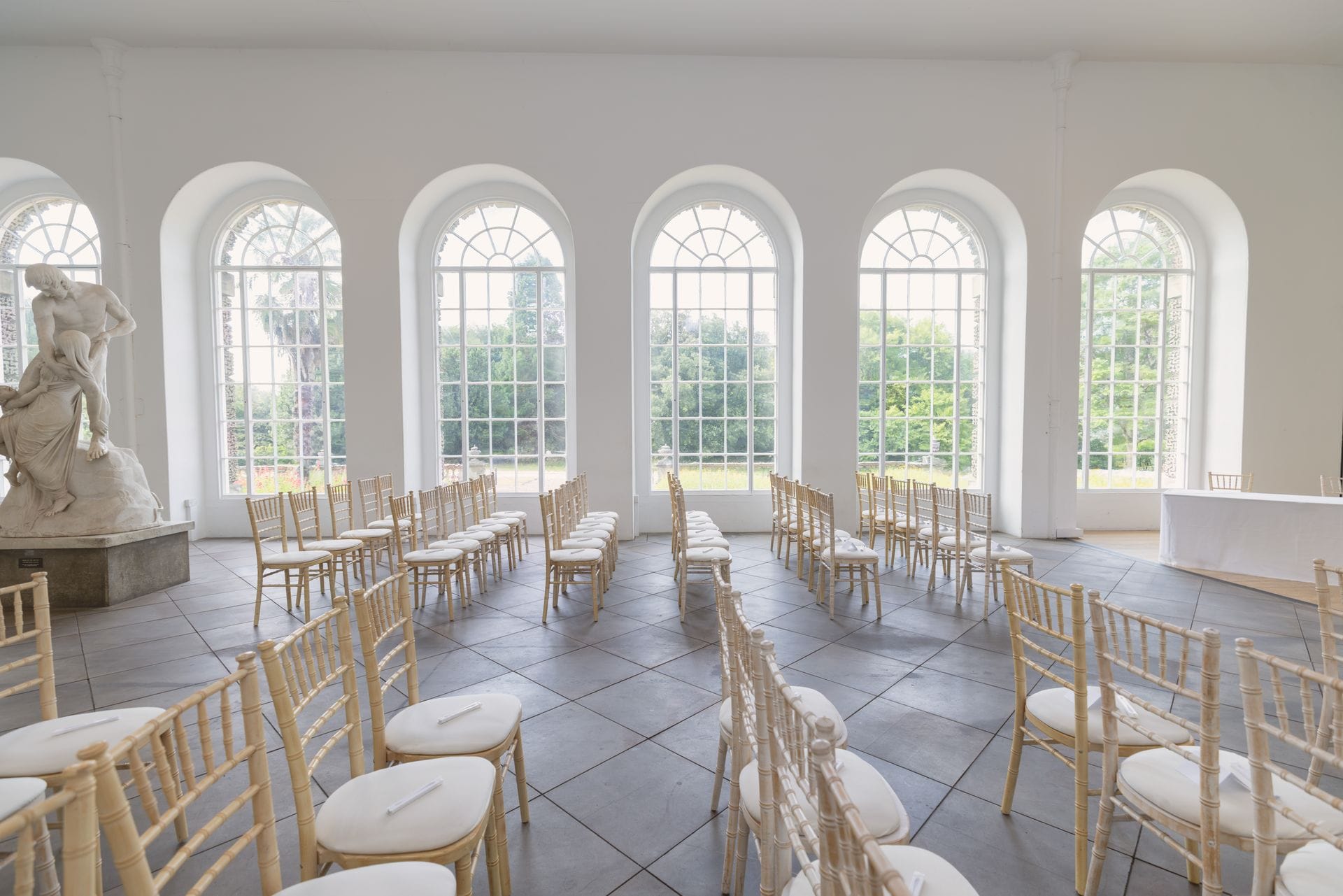
A bright and elegant civil ceremony setup inside the historic Orangery at Margam Park. © Crown copyright Cymru Wales 2026
How to Verify a Welsh Wedding Venue’s Credentials
Because approved premises status and licence scope both change over time, four verification steps are worth building into your booking process:
- Confirm current approved premises status with the local authority. Each Welsh council (Cardiff, Pembrokeshire, Gwynedd, etc.) maintains a live list of approved premises. Ask the venue to confirm they are on the current list — or check directly with the licensing team at the local council.
- Confirm which specific spaces are on the licence. Approved premises licences specify exact rooms, terraces, gardens or areas. Confirm the ceremony location you want is on the licence.
- Confirm the venue’s insurance and cancellation cover. Ask specifically about what happens if the venue is unable to host on the day (fire, flood, etc.) and what refund or alternative-date terms apply.
- Check recent reviews from the last 12 months. Wedding venue quality changes with ownership, management and refurbishment. Recent reviews (Google, Hitched, Bridebook, Trustpilot) are much more accurate than an editorial listing that may be several years old.
Pairing the Wedding with the Wider Trip
Welsh weddings — particularly destination weddings and elopements — often work best paired with a wider Welsh trip. Common productive pairings:
- Wedding + Pembrokeshire Coast Path honeymoon — see our Wales Coast Path guide
- Wedding + Eryri (Snowdonia) mini-moon — see our Eryri guide
- Wedding + Cardiff city celebration weekend — see our 48 hours in Cardiff itinerary
- Wedding + Welsh Islands elopement — see our Welsh Islands guide
- Wedding + winter fireside honeymoon — see our Wales in winter guide
- Wedding + coastal honeymoon cottage — see our sea-view cottages guide
- Wedding + adult-only retreat — see our adult-only guide
Frequently Asked Questions: Wedding Venues in Wales
What makes a wedding venue in Wales legal for a ceremony?
To legally host a civil wedding ceremony in Wales, a venue must be either a register office, an approved premises licensed under the Marriage Act 1994, or a registered religious building. Approved premises status is granted by the local authority and covers castles, country houses, hotels, converted barns and other venues that meet the licensing criteria. Church in Wales weddings do not require a separate registrar in most circumstances. Celebrant-led ceremonies at unlicensed venues are not legally binding in Wales; couples using a celebrant typically pair it with a separate civil ceremony at a register office or licensed venue. Always confirm a venue’s current approved premises status before booking on the strength of a ceremony claim.
How much does a wedding cost in Wales in 2026?
A typical Welsh wedding in 2026 costs £14,000-£30,000 for a mid-market ceremony and reception for 60-90 guests, with venue hire typically accounting for 20-35% of that total. Small intimate weddings (under 30 guests) start around £4,000-£8,000 all-in. Premium castle or country-house weddings for 80-120 guests commonly reach £35,000-£65,000. Statutory legal fees are separate and set nationally: £46.50 per person for notice of marriage (£63 if either party is subject to immigration control), £56 for a statutory register-office ceremony, £12.50 for the marriage certificate, and £100-£1,000+ per ceremony as an approved-premises fee set by the local authority. Same-sex ceremonies and civil partnerships have identical statutory fees.
How long does it take to get married in Wales?
The minimum legal timeline in Wales is 29 days: at least 28 clear days between giving notice of marriage at your local register office and the ceremony date, plus the notice appointment itself. If immigration status matters apply, this extends to a minimum of 70 days. Notice is valid for 12 months, so most couples give notice 3-9 months ahead of the wedding date. From a venue-booking perspective, popular Welsh castle and country-house wedding venues typically book 12-24 months ahead for summer weekend dates; small register-office or midweek ceremonies can often be arranged within 6-8 weeks.
What are the best wedding venues in Wales?
The best wedding venue in Wales depends on your priorities. For historic character and grandeur, Welsh castle venues in North Wales and Pembrokeshire deliver the strongest single-day theatre. For sea views and coastal ceremonies, clifftop and coastal country houses along the Pembrokeshire and Anglesey coasts are unmatched. For rural retreat and privacy, converted barn venues and Mid Wales country estates offer sole-occupancy weddings for 40-120 guests. For urban weddings, Cardiff, Swansea and Newport have historic hotel and register-office options with strong transport links. Each region has multiple approved premises — Pembrokeshire alone lists more than 50 licensed venues.
When should you book a Welsh wedding venue?
Book premium Welsh wedding venues 18-24 months ahead for peak summer Saturdays (May-September), and 12-18 months ahead for spring, autumn or Sunday dates in the same window. Winter weddings (November-February, excluding Christmas week) can typically be booked 6-12 months ahead. The strongest value windows are midweek dates any time of year, off-peak months (January, February, November) and Fridays or Sundays instead of Saturdays. Popular castle and country-house venues have limited summer weekend inventory — often only 20-30 Saturdays per venue per year — which is why premium dates fill 24+ months out.
Can you have an outdoor wedding ceremony in Wales?
Legally binding outdoor civil ceremonies became possible in England and Wales from 2022, provided the outdoor space forms part of an approved premises’ licensed area. Not every approved premises has extended its licence to include outdoor space — always confirm specifically that the outdoor location you want is on the current licence, not just the indoor rooms. Church in Wales ceremonies generally take place inside the building. Celebrant-led outdoor ceremonies (unlicensed venues, natural settings) are permitted but are not legally binding and need a separate civil ceremony for legal marriage status.
What is the difference between an approved premises and a register office wedding?
A register office wedding takes place at the local authority’s dedicated ceremony room — small, functional, statutory fee £56 for the basic ceremony, with two witnesses required. An approved premises wedding takes place at a licensed venue (castle, country house, hotel, barn) with venue fees separate and typically £500-£3,500+ for the ceremony room itself, plus reception hire. Both are equally valid legal marriages. Register office ceremonies suit intimate legal ceremonies and elopement-style weddings; approved premises suit celebration weddings where the venue itself is part of the day.
Related Welsh Wedding and Celebration Guides

Pembrokeshire-born travel writer and founder of Wales.org. Born in Haverfordwest, now based in Hertfordshire — covering Welsh castles, national parks, festivals and family staycations across all 22 Welsh counties.