
Winter in Wales: Storms, Snow, Six Nations & Traditions
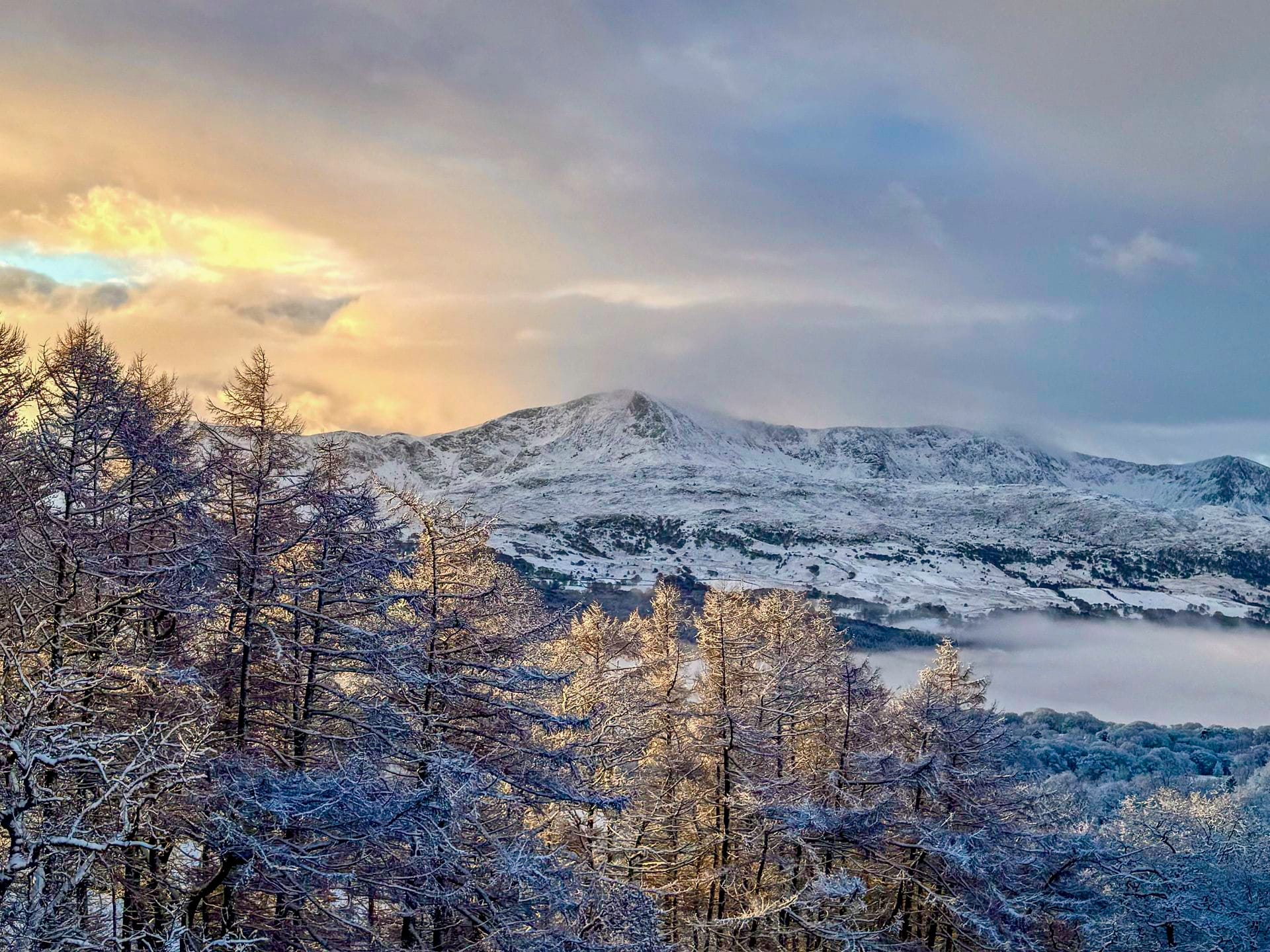
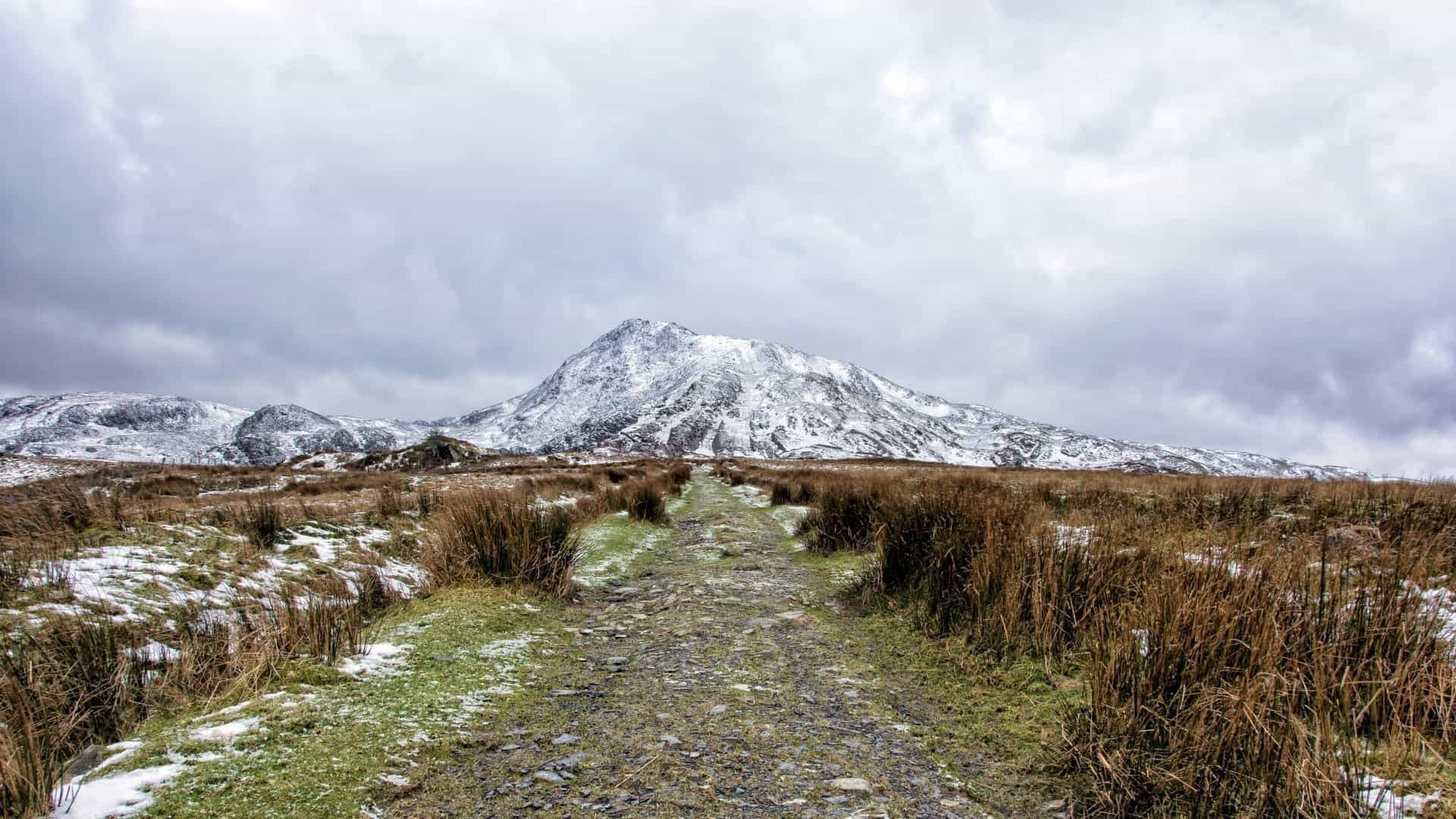
The wintery approach to Moel Siabod in Eryri (Snowdonia) National Park, where snow regularly dusts the higher peaks.
Wales in winter is the season most visitors overlook and the one seasoned Welsh travellers quietly prefer. Between mid-January and February the Atlantic storms drive the biggest surf of the year against Pembrokeshire and the Llŷn Peninsula, the summit of Yr Wyddfa (Snowdon) turns properly white, the three internationally-designated dark sky areas reach their peak stargazing months with 15+ hours of true darkness, and accommodation across the whole country drops 30 to 50% below summer rates outside Christmas week. This is also the season of Wales’s most distinctive folk traditions: the Mari Lwyd horse-skull processions through South Wales towns from Christmas Day to Twelfth Night, the Nos Galan road races in Mountain Ash on New Year’s Eve, and the Hen Galan Old New Year celebrations in the Gwaun Valley on 13 January — customs that survive nowhere else in the world.
This guide covers the whole Welsh winter — December through the end of February, with brief coverage of St David’s Day (1 March) as the transition to spring. Christmas markets are covered in depth in our dedicated Wales Christmas Markets 2026 guide, so this post focuses on winter walking, wildlife, weather, storms, stargazing, Welsh traditions, the Six Nations, and where to stay for the shortest driving distances to the biggest winter highlights. All facts have been verified against Visit Wales, the Met Office, Cadw, the Six Nations organising bodies, and individual attraction operators as of July 2026.
Planning this trip? Ask Branwen, our free AI trip planner →
At a Glance: Wales in Winter
- Peak storm-watching: January to February on Pembrokeshire and Llŷn coasts
- Peak snow: Mid-January to early March on Eryri and Bannau Brycheiniog summits
- Best dark skies: Longest true darkness of the year — 15+ hours in December and January
- Six Nations 2027: Runs 6 February to 20 March 2027, with Wales playing home fixtures at the Principality Stadium in Cardiff
- Welsh customs: Mari Lwyd (Dec-Jan), Nos Galan races (31 Dec), Hen Galan (13 Jan)
- Weather: 2-8°C lowlands, wet, changeable, occasional snow at altitude
- Daylight: Just 8 hours in mid-December, back to 11 hours by end of February
- Best value: January and early February are the cheapest weeks of the whole year to visit Wales
Welsh Winter Weather: What to Expect
Wales in winter is mild by British standards but wet, windy and highly variable. The Welsh climate is milder than the rest of northern Britain because the Gulf Stream keeps coastal temperatures above freezing most of the winter — but the same Atlantic influence brings prolonged rain, high winds, and the biggest storms of the year. Here is the pattern based on Met Office 30-year averages.
| Month | Coastal daytime high | Nighttime low | Rain days |
|---|---|---|---|
| December | 7–9°C | 2–4°C | 16–18 |
| January | 6–8°C | 1–3°C | 17–19 |
| February | 6–9°C | 1–3°C | 13–15 |
Mountain temperatures run 5-10°C colder than coastal levels. Winter summits of Yr Wyddfa, Cadair Idris and Pen y Fan regularly sit below freezing with wind chill dropping the felt temperature to -10°C or lower. The prevailing south-westerly winds drive persistent rain onto Pembrokeshire, Eryri and Bannau Brycheiniog, while the east coast around Wrexham and the border country stays drier and slightly milder.
Does It Snow in Wales?
Reliable snow in Wales is limited to the higher mountains. Above 750 metres the summits of Yr Wyddfa, Cadair Idris and the Bannau Brycheiniog ranges typically see 30 to 60 days of snow cover each year, with the deepest snow between mid-January and early March. Lower valleys and coastal areas may see occasional snow settling — usually just a few days a year — but it rarely lasts more than 24 to 48 hours because of the mild Atlantic influence. Cardiff averages just 5 to 10 days of snow per year, most of which does not settle.
For photography, cross-country skiing or winter mountain walking, the most reliable snow is on the summits and upper ridges of Eryri from mid-January to early March. Even in these areas, snow cover varies dramatically year to year — some winters bring weeks of continuous cover, others just occasional dustings between storms.
Winter mountain safety: Yr Wyddfa (Snowdon) is a genuine winter mountain. Every year there are avoidable rescues and fatalities on winter Snowdon walks. Do not attempt Yr Wyddfa in winter conditions without appropriate winter kit (crampons, ice axe, ability to use both), a checked weather forecast from the Mountain Weather Information Service, and mountain experience. In doubt, take the Snowdon Mountain Railway to Clogwyn or Hafod Eryri (winter service typically Mar-Oct only — check ahead) or walk the lower valleys of Nant Gwynant and the Ogwen Valley instead.
Winter Storm-Watching on the Welsh Coast
The Welsh Atlantic coast is one of the best storm-watching destinations in Britain and January and February are the peak months. Named Atlantic storms typically arrive at 4-8 day intervals through this period, driving significant swell against the Pembrokeshire, Llŷn and Anglesey coasts. Cornwall gets the media attention but Wales’s exposed western headlands see equivalent or larger seas at a fraction of the visitor numbers.
Best storm-watching spots (safe distance from cliff edges essential):
- Strumble Head, Pembrokeshire: the historic lighthouse, easily walkable from the car park, giving a clear view of the Bishops and Clerks Rocks in high seas.
- St Ann’s Head, Pembrokeshire: the mouth of the Milford Haven waterway where Atlantic swell meets the deep-water channel.
- Rhossili Bay, Gower: Worm’s Head at the western tip of Gower is exposed to full Atlantic force.
- Aberystwyth promenade: the Victorian sea wall gives a safe front-row view when the seas are running. This is the storm-watching spot for anyone without mountain kit.
- South Stack Lighthouse, Anglesey: the north-west corner of Wales, spectacular during named storms.
- Porthdinllaen, Llŷn Peninsula: a sheltered viewpoint looking north across the sea.
Storm safety essentials: Never stand near a cliff edge in high winds — gusts on Welsh clifftops regularly exceed 60mph in storm conditions. Always check the Met Office forecast and any severe weather warnings before travelling. Coastal roads can close during severe storms. If in trouble on the coast, dial 999 and ask for the Coastguard (not the police).
Winter Wildlife in Wales
Red Kite Feeding at Gigrin Farm
Gigrin Farm Red Kite Feeding Station at Rhayader in Mid Wales is one of the strongest wildlife spectacles in Britain — hundreds of red kites descend on a hillside feeding station daily. Winter is the peak feeding time, with the largest numbers usually from November to February when natural food is scarcer. The winter feeding is at 2pm daily. Booking not usually required for daily viewing but check the Gigrin Farm website before travel. Photographic hides available.
Grey Seals
Grey seal pups born in autumn are still visible on Pembrokeshire and Anglesey beaches through December. By January most have moulted from white pup-fur to adult grey and taken to the water. Adult seals remain visible year-round from clifftop paths, particularly at Ramsey Island, Marloes Peninsula and the north Anglesey coast. See our Welsh Islands guide for the full breakdown.
Starling Murmurations
Starling murmurations peak in November and December but continue into February at Aberystwyth Pier and RSPB Newport Wetlands. The birds return to roost about 30 minutes before sunset — in December that means arriving at 3:30pm at the latest for a 3:55pm sunset. Calm, clear evenings give the best displays.
Winter Migrant Birds
Wales’s coastal wetlands host substantial numbers of migrant wintering birds from Northern Europe and the Arctic. RSPB Ynys-hir near Machynlleth (the BBC Springwatch site) is a strong location, along with the Dee Estuary in the north-east and Kenfig Nature Reserve near Bridgend. Best months are December through February when numbers peak.
Winter Walking in Wales
Wales in winter is walkable but with clear altitude and location caveats. The three tiers of winter walking:
Tier 1: Coastal and Lowland (Safe Year-Round for Confident Walkers)
- The Wales Coast Path — 870 miles of clifftop path, most sections walkable in winter with a waterproof jacket and reasonable fitness. See our full Wales Coast Path guide. Best winter sections: the North Wales Coast, the South Wales section around Vale of Glamorgan, and Anglesey (some tidal crossings become impassable in high seas, so check tide times).
- Waterfall Country in Bannau Brycheiniog — the Four Waterfalls Walk is best in winter and early spring when the falls run full after autumn rain. Icy conditions on the wooden walkways require extreme care in January and February.
- The Elan Valley — waymarked walks around the Victorian reservoirs stay walkable through winter with good grip. The dams are at their most photogenic when running full.
- Bute Park, Cardiff — central Cardiff’s 130-acre park, walkable in any weather and holds low winter colour into January.
Tier 2: Hill and Ridge Walking (Requires Winter Skills)
- Pen y Fan in Bannau Brycheiniog (886m) — Wales’s most-climbed mountain, but requires proper winter kit above 500m from December to March. Multiple rescues each winter from unprepared walkers.
- Cadair Idris (893m) — the Minffordd Path or Pony Path. Winter kit essential above the treeline.
- The Carneddau in Eryri — extended high ground exposed to winter winds. For experienced hill walkers only in winter.
Tier 3: Winter Mountaineering (Alpine Kit and Skills Required)
- Yr Wyddfa (Snowdon) — a genuine winter mountain in January and February. Crampons, ice axe and mountain experience essential. Consider a guide for a first winter attempt.
- Tryfan, Glyder Fawr, Glyder Fach — technical winter climbs in Eryri. Not for casual visitors.
The safest winter walking bet for visitors without mountain experience: the Wales Coast Path around Pembrokeshire on a bright cold day, followed by Waterfall Country in Bannau Brycheiniog, followed by the Elan Valley reservoir walks. All three deliver strong scenery, are walkable in ordinary winter kit with good grip, and never require anything beyond a checked weather forecast.
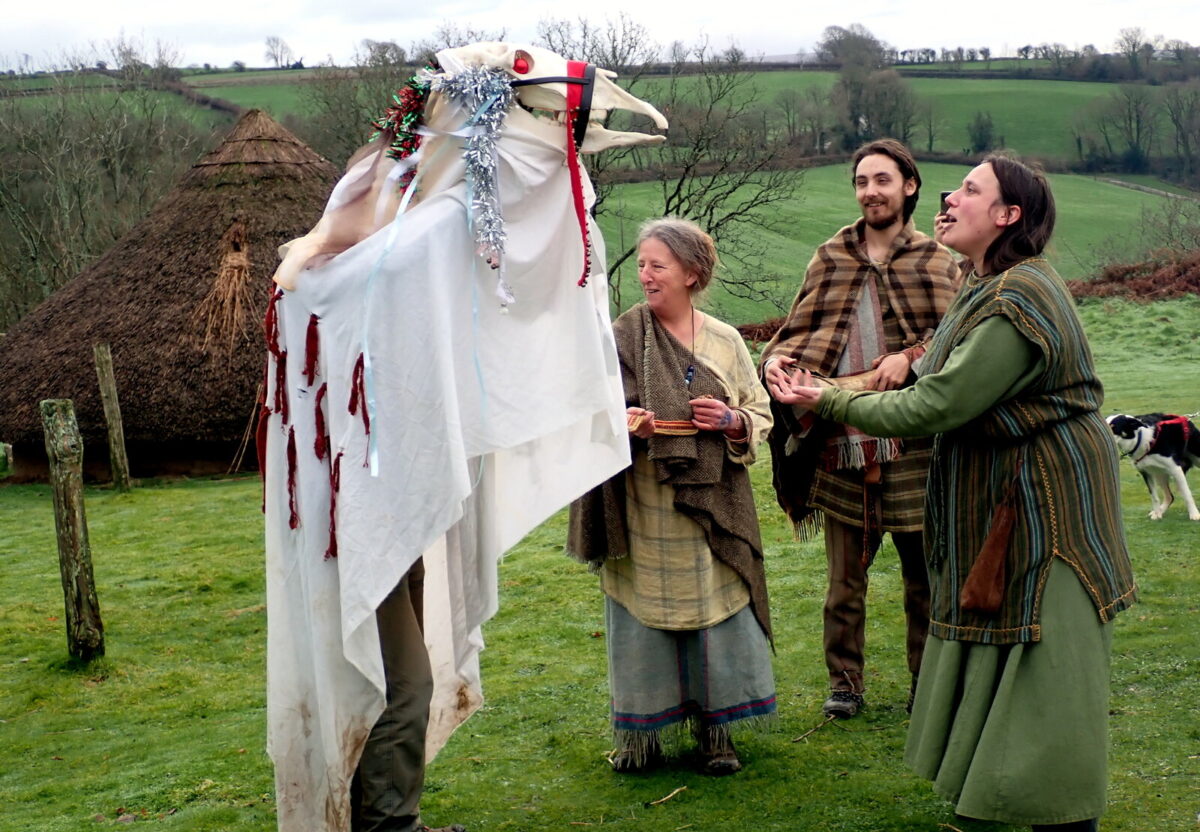
Keeping the ancient winter custom alive: the Mari Lwyd confronts a household during the traditional pwnco exchange. © Copyright Natasha Ceridwen de Chroustchoff
Distinctive Welsh Winter Customs
Wales has several winter folk traditions that survive nowhere else in the world. Encountering them is one of the strongest reasons to visit Wales specifically over the December-January window rather than any other European destination.
The Mari Lwyd (Christmas Day to Twelfth Night)
The Mari Lwyd — literally “Grey Mare” — is one of the strangest and most distinctive Welsh customs. A horse’s skull (traditionally real, now often wooden) is decorated with ribbons, glass or mirror eyes, and mounted on a long pole covered with a white sheet. Carriers parade the Mari through South Wales villages between Christmas Day and Twelfth Night (5-6 January), knocking on doors and challenging the household to a rhyming duel called pwnco in exchange for food, drink and entry.
Believed to be a pre-Christian survival, the tradition declined through the 20th century but has been revived since the 1970s. Best places to see it in 2026-27:
- Llangynwyd, near Bridgend (Pen-y-bont ar Ogwr) — the most consistent surviving Mari Lwyd tradition, running annually.
- Llanwrtyd Wells — hosts a torch-lit Mari Lwyd procession on New Year’s Eve.
- Chepstow — the largest revived Mari Lwyd event, held annually in mid-January and combining Welsh and English wassailing traditions on the border.
- Aberystwyth — the Mari Lwyd is paraded through the town to mark the Hen Galan (see below).
Nos Galan Road Races (31 December, Mountain Ash)
The Nos Galan Road Races in Aberpennar (Mountain Ash) in the Cynon Valley are one of the biggest annual events on the Welsh winter calendar. Around 2,000 runners descend on the town on New Year’s Eve to compete in 5km races honouring Guto Nyth Brân (1700-1737), an 18th-century runner and local legend from nearby Llwyncelyn.
Founded in 1958 by local runner Bernard Baldwin, the races begin with a church service at Llanwynno where a wreath is laid on Brân’s grave and a torch is lit — Welsh Olympic hurdler Colin Jackson and Welsh rugby captain Sam Warburton have been at this ceremony in recent years. The torch is then carried through the valley to Mountain Ash where the races take place. Adult and children’s races run through the afternoon, ending at 9:30pm to keep the event family-friendly.
Calennig (New Year’s Day)
Calennig — literally “New Year gift” — is a South Wales children’s tradition where boys and girls go door-to-door singing traditional Welsh folk songs in exchange for small gifts of money, sweets or food. Children traditionally carry a decorated apple (called a perllan) impaled on three sticks and studded with cloves, evergreen leaves and nuts. The apple is seen as a symbol of health and renewal for the year ahead.
The tradition has declined but survives in the Gwaun Valley and pockets across South Wales and Monmouthshire.
Hen Galan / Old New Year (13 January, Gwaun Valley)
Hen Galan — the Welsh “Old New Year” — is celebrated on 13 January in the Gwaun Valley (Cwm Gwaun) in north Pembrokeshire, near Fishguard. When the UK switched from the Julian to Gregorian calendar in 1752, most of Britain accepted the loss of 11 days from the year. The people of the Gwaun Valley never did. They continue to celebrate New Year on the old Julian date every year — the only community in the world still to do so continuously.
On 13 January, Gwaun Valley residents and visitors start early. Children travel from house to house singing Welsh New Year verses in exchange for calennig gifts. Adults gather in village pubs for music, folk dancing (twmpath), and lengthy meals that spill through the day. The valley pubs — Dyffryn Arms at Pontfaen (known locally as “Bessie’s”), the Farmers Arms at Trellwyn — are the centre of the day’s activity. This is the single most concentrated Welsh cultural experience available anywhere in a two-week window.
Blwyddyn Newydd Dda! (BLOOI-thin NAY-with THA) — Happy New Year in Welsh. Use it in the Gwaun Valley on 13 January and you’ll be received warmly. For more Welsh phrases see our Welsh phrases visitor’s guide.
Everything Above, in One Printable Guide
The customs, the walks, the dark skies — it’s all in one free PDF too, along with the full Christmas market calendar and the dates for every festive sea swim in the country.
Winter Dark Skies
Winter is the strongest season of the year for Welsh stargazing. From mid-December to mid-January it is properly dark from around 4:30pm to 8:00am — over 15 hours of astronomical darkness each night. Wales’s three internationally-designated dark sky areas reach their peak observing quality in winter:
- Bannau Brycheiniog (Brecon Beacons) — the whole national park is a Dark Sky Reserve. Best sites: Sugar Loaf near Abergavenny, Llanthony Priory, Usk Reservoir.
- Eryri (Snowdonia) — the second Welsh Dark Sky Reserve. Best sites: the shores of Llyn y Dywarchen, the Ogwen Valley, and Bwlch y Groes.
- Elan Valley Estate — an International Dark Sky Park (a different designation from the Reserves, but equally protected). Best sites: the Craig Goch and Pen y Garreg reservoir shores.
For a full observing guide including specific sites, best times for meteor showers, and equipment recommendations, see our dedicated Wales stargazing guide. The best winter meteor shower is the Geminids in mid-December (usually 13-14 December), and the Quadrantids in early January.
The Six Nations 2027 in Cardiff
The 2027 Six Nations Championship runs from the weekend of 6-7 February through Super Saturday on 20 March 2027 — a seven-week window with two designated rest weekends built into the schedule. Wales plays either two or three home fixtures at the Principality Stadium in Cardiff, but the exact dates and kick-off times for each match are typically confirmed by the Six Nations and the Welsh Rugby Union in the spring of the previous year (around March 2026 for the 2027 tournament). Check the official Six Nations website and the Principality Stadium events page for confirmed 2027 fixtures before booking travel.
What is certain: Cardiff accommodation triples in price on international match weekends and books out weeks in advance. As soon as official 2027 fixtures are confirmed, reserve hotels for the Wales home weekends. Non-attendees should avoid Cardiff, Newport and the broader South Wales region entirely on match Saturdays unless the trip is specifically built around the rugby atmosphere.
For a full Cardiff weekend itinerary that includes the rugby-weekend variant, see our 48 hours in Cardiff guide. For general travel planning, our Wales by Train complete guide covers the extended weekend TfW service on Six Nations match days.
The Six Nations effect ripples across Wales: Even if you are staying in Aberystwyth or Betws-y-Coed, expect trains from Cardiff Central and Newport to be at 4-5x normal passenger volumes on match Saturdays. Plan any onward journeys either the day before the match or the following Sunday afternoon.
Christmas Break Hotels in Wales 2026 – verified packages and prices
For the full guide to Welsh country house Christmas packages, Christmas Day lunch bookings and the booking timeline that gets you into the best rooms, see our complete guide to Christmas break hotels in Wales – verified 2026 pricing for Bodysgallen Hall, Palé Hall, Lake Vyrnwy and other top festive properties.
New Year’s Eve Hotels in Wales 2026-2027 – packages, gala dinners, Nos Galan
For verified 2026-2027 New Year’s Eve hotel packages across Wales, standalone gala dinner tickets and full Nos Galan (Mountain Ash 5km race) coverage, see our complete guide to New Year’s Eve Hotels in Wales – Portmeirion, Lake Country House, Palé Hall and every serious NYE hotel booking in the country.
Escape Rooms & Indoor Adventures in Wales – full operator guide
For every verified 2026 escape room, axe throwing venue and indoor adventure attraction across Cardiff, Swansea and North Wales – with prices, age policies and stag/hen combo formats – see our complete guide to Escape Rooms & Indoor Adventures in Wales.
Where to Stay for a Welsh Winter Trip
Because Welsh winter combines coastal storm-watching, mountain walking, wildlife and dark-sky opportunities, the best base towns are those with access to two or more within a short drive.
| Base town | Best for | Nearest station |
|---|---|---|
| Betws-y-Coed | Eryri winter walks, Fairy Glen, dark skies | Betws-y-Coed (Conwy Valley Line) |
| St Davids or Solva | Storm-watching, seals, coast path | Haverfordwest (+ bus) |
| Rhayader | Red kites, Elan Valley, dark skies | Llandrindod Wells (Heart of Wales Line) |
| Abergavenny | Bannau Brycheiniog walks, Waterfall Country, dark skies | Abergavenny |
| Aberystwyth | Starling murmurations, Cambrian coast, Ynys-hir | Aberystwyth |
| Fishguard / Newport (Pembrokeshire) | Coast walks, seals, Hen Galan on 13 January | Fishguard Harbour |
| Cardiff | City break, Six Nations, museums, wet-weather backup | Cardiff Central |
Find Winter Accommodation in Wales
Browse the interactive map below to see real-time hotel and cottage prices across Wales for your winter dates. Outside Christmas week, New Year, and Six Nations weekends in Cardiff, January and early February are the cheapest weeks of the entire year to visit Wales — cottages that cost £900 in summer are regularly £400-£500.
Winter Castles and Attractions
Most major Welsh attractions stay open through winter with reduced hours. Cadw-managed castles including Cardiff Castle, Caerphilly Castle, Conwy Castle, Beaumaris Castle and Harlech Castle open daily through winter, typically 10:00 to 16:00 with earlier closing than summer months. See our full UNESCO Welsh castles guide for the four World Heritage sites specifically.
Free-entry museums stay open year-round: National Museum Cardiff, National Slate Museum at Llanberis, Big Pit National Coal Museum, and the huge open-air St Fagans National Museum of History west of Cardiff.
Heritage steam railways run reduced winter timetables with a highlight of Santa Trains from late November through mid-December — the Ffestiniog Railway, the Welsh Highland Railway, Talyllyn, Vale of Rheidol and others all run themed festive services. See our Welsh steam railways guide for full detail.
Closed in winter: Bardsey Island (Ynys Enlli) closes to visitors from the end of October through late March — see our Welsh Islands guide for the exact seasonal windows for Skomer, Ramsey, Caldey and Bardsey.
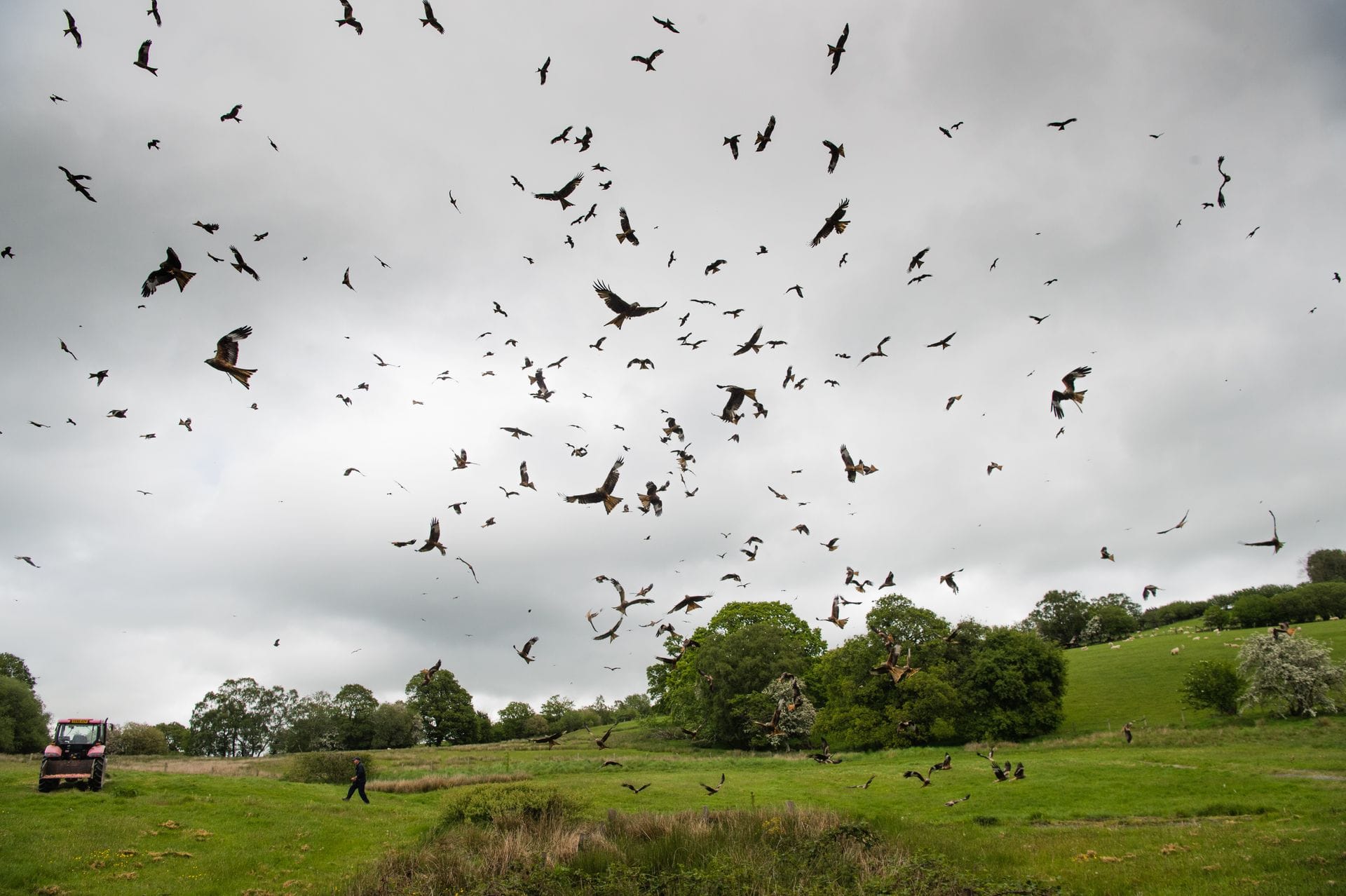
The Red Kite Centre in Gigrin, Rhayader, Powys, Mid Wales.
St David’s Day: The End of Winter
St David’s Day — Dydd Gŵyl Dewi — falls on 1 March, marking Wales’s patron saint (Saint David, or Dewi Sant, who died on this date in AD 589). It is the transition between winter and spring in the Welsh cultural calendar. Traditions include wearing a daffodil or leek on the lapel, children in Welsh national costume (girls in stovepipe hats and shawls, boys in flat caps and neckerchiefs), and civic parades in Cardiff and the small cathedral city of St Davids.
The St David’s Day National Parade in Cardiff typically starts at City Hall around noon on 1 March. St Davids (the city) holds a smaller but equally atmospheric procession the same day.
What to Pack for Wales in Winter
- Fully waterproof jacket — not just water-resistant. Rain is likely most days.
- Layered clothing: thermal or fleece base, insulating mid-layer, waterproof outer shell. Temperatures range 2-8°C in lowlands and drop below freezing at altitude.
- Waterproof walking boots with good grip — wet leaves and slick stone are the biggest hazard, more than snow.
- Warm hat, gloves, scarf, thick socks.
- Head torch — full dark by 4:15pm in mid-December.
- Portable phone charger — cold drains batteries fast.
- Waterproof rucksack cover.
- Binoculars if you plan to watch coastal wildlife or dark-sky observing.
- UK plug adapter — Type G, 230V. See our Wales for Americans guide for full US-visitor detail.
Frequently Asked Questions: Wales in Winter
Is winter a good time to visit Wales?
Winter is one of the most rewarding and best-value times to visit Wales. Accommodation is 30 to 50% cheaper than summer outside Christmas and New Year week, attractions are quieter, castles look their most atmospheric in winter mist, and Wales offers some of the strongest storm-watching in Britain from January to February. The three internationally-designated dark sky areas — Bannau Brycheiniog, Eryri and the Elan Valley — reach their peak stargazing quality with 15+ hours of true darkness. The main trade-offs are variable weather, some reduced attraction opening times, and shorter daylight hours (dark by 4:15pm in December). Six Nations rugby weekends in Cardiff (February and March) push accommodation prices sharply higher.
Does it snow in Wales?
Yes, but reliable snow in Wales is limited to the higher mountains. Yr Wyddfa (Snowdon), Cadair Idris and the Bannau Brycheiniog summits typically see snow from December to early April, with 30 to 60 days of snow cover annually above 750 metres. Lower valleys and coastal areas may see occasional snow settling but it is rarely deep or long-lasting due to Wales’s mild Atlantic climate. Snow days at Cardiff level average just 5 to 10 days per year. The most reliable snow for winter walking or photography is on the summits of Eryri (Snowdonia) between mid-January and early March. Always check winter mountain conditions with the Met Office and Mountain Weather Information Service before setting out.
When is the best time for winter storm-watching in Wales?
January and February are the peak months for Atlantic storm-watching on the Welsh coast, when named storms sweep in off the North Atlantic. Pembrokeshire and the Llŷn Peninsula are the most exposed and dramatic locations. Safe viewing spots include Strumble Head, St Ann’s Head, Rhossili Bay and the Aberystwyth promenade. Always stay well back from cliff edges in high winds. Check the Met Office severe weather warnings before travelling — coastal roads can close during severe storms. If in trouble on the coast, dial 999 and ask for the Coastguard.
What Welsh winter customs should visitors know about?
Wales has several distinctive winter customs surviving from pre-Christian times. The Mari Lwyd is a horse-skull effigy carried on a pole, paraded through South Wales towns between Christmas and Twelfth Night by singers challenging households to a rhyming duel called pwnco in exchange for food and drink. Calennig is a New Year’s Day children’s tradition where a decorated apple studded with cloves and evergreen is exchanged for good-luck gifts. Hen Galan (Old New Year) is celebrated on 13 January, kept alive most notably in Cwm Gwaun (Gwaun Valley) near Fishguard. The Nos Galan Road Races take place in Aberpennar (Mountain Ash) on New Year’s Eve, honouring the 18th-century runner Guto Nyth Brân.
When is the Six Nations 2027 in Cardiff?
The 2027 Six Nations runs from the weekend of 6-7 February through Super Saturday on 20 March 2027 — a seven-week window with two designated rest weekends built into the schedule. Wales plays two or three home fixtures at the Principality Stadium in Cardiff, but the exact fixture dates and kick-off times are typically confirmed by the Six Nations and the Welsh Rugby Union around March 2026. Cardiff accommodation triples in price on international match weekends and books out weeks in advance — reserve hotels as soon as fixtures are confirmed. Non-attendees should avoid Cardiff and the broader South Wales region entirely on match Saturdays unless the trip is specifically built around the rugby atmosphere.
Are Welsh attractions open in winter?
Most major Welsh attractions stay open through winter but with reduced hours. Cadw-managed castles including Cardiff Castle, Caerphilly Castle and Conwy Castle open daily through winter (typically 10:00-16:00 with earlier closing than summer). Major museums including National Museum Cardiff, St Fagans and the National Slate Museum stay open year-round with free entry. The Ffestiniog Railway and other heritage steam railways typically run reduced winter timetables with special Santa Trains from late November through mid-December. Bardsey Island is closed to visitors from the end of October through late March. Always check individual attraction websites for current winter hours before travelling.
What should I pack for winter in Wales?
Essential winter packing for Wales: a fully waterproof jacket (not just water-resistant), thermal or fleece base layers, an insulating mid-layer, waterproof walking boots with good grip, warm hat, gloves and scarf, thick socks, and a head torch for early evenings (full dark by 4:15pm in mid-December). Bring a portable phone charger — cold drains batteries fast. Rain jacket for the city, proper mountain layers for any walking above 400 metres. UK plug adapters are Type G, 230V. Temperatures range from 2°C to 8°C in lowlands and can drop below freezing on the summits. Waterproof rucksack cover is worth the £5.
More Welsh Travel Guides

Pembrokeshire-born travel writer and founder of Wales.org. Born in Haverfordwest, now based in Hertfordshire — covering Welsh castles, national parks, festivals and family staycations across all 22 Welsh counties.