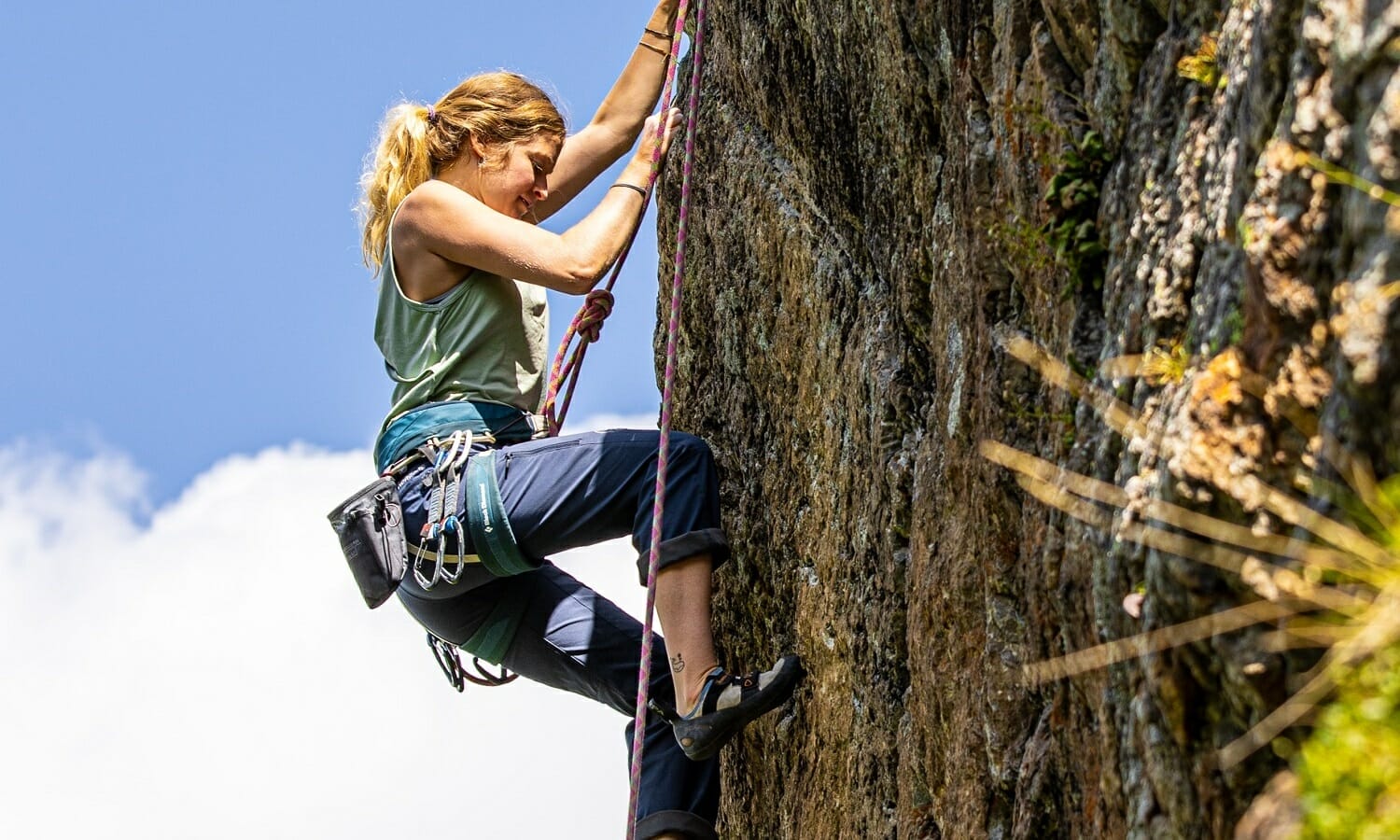

Rock Climbing in Wales: 25 Best Spots for 2027
25 Rock Climbing Spots in Wales: From Trad Classics to Sea Cliffs
By Wales.org | Nicholas Barrett, Founder & Editor | Updated November 2026
From the craggy peaks of Eryri to the towering sea cliffs of Anglesey, Wales is an action-packed playground for rock climbers. Diverse landscapes and a passionate local climbing community mean there are routes for every skill level, from first-timers to seasoned pros. This guide covers 25 of the best, from world-famous trad venues to quiet sport crags, with real route names, grades and practical access detail, updated for 2027.
1. Tryfan, Eryri
Set in the heart of Eryri National Park, Tryfan is a bucket-list peak for climbers. With its distinct pointed silhouette studded with rocky crags, it’s one of the most recognisable mountains in Wales, and the one Welsh summit with no walking route to the top that avoids using your hands somewhere along the way.
The classic North Ridge starts from A5 lay-bys on the shore of Llyn Ogwen (postcode LL57 3LZ for the general area) and climbs around 620 metres to the summit, where two stone pillars known as Adam and Eve stand either side of a traditional (if bold) leap between them. It’s a Grade 1 scramble on the easiest line, but there’s no single marked path: expect to pick your own way between rock steps, and allow 3 to 5 hours for the full ascent. Milestone Buttress, on the mountain’s lower eastern flank, offers a gentler introduction with shorter, better-protected routes and equally stunning views across the Ogwen Valley. Afterwards, head to the Cwellyn Arms in Rhyd Ddu for a hearty meal and a pint of Welsh ale.
Planning this trip? Ask Branwen, our free AI trip planner →
2. Gogarth, Anglesey
Head to the Isle of Anglesey to discover Gogarth, one of the most important sea cliffs in the world and on the British climbing circuit since the 1960s. The main approach is via the South Stack car park and café; most routes require either an exposed scramble or an abseil down to the base, so this is a venue best reserved for experienced, well-equipped climbers rather than a first outing. Grades on the main cliffs cluster around HVS to E1, with the famous Wen Zawn holding routes up to E7 and beyond.
The standout route is A Dream of White Horses (HVS 4c), first climbed in 1968 by Ed Drummond and Dave Pearce, a rising traverse across Wen Slab that offers exhilarating exposure and views over the Irish Sea. Gear here is quartzite rather than granite, so take extra care: pegs left in place by previous parties are often old and not to be trusted, and tide tables should be checked carefully, since several zawns flood quickly and the wash from the Holyhead-Dublin ferry can catch out anyone traversing the base. When it’s time to refuel, head to the White Eagle in Rhoscolyn, a cosy local favourite.
Pro tip: pick up a copy of Drummond’s book, A Dream of White Horses: Recollections of a Life on the Rocks, to immerse yourself in the climb’s history before you go.
3. Pen-y-Pass, Eryri
Pen-y-Pass is the gateway to some of the most iconic rock climbing in Eryri. Clogwyn Du’r Arddu, or “Cloggy” as it’s known locally, is a sight to behold: British climber Leo Houlding has called the rhyolite cliff simply “the best crag in the world”. It sits high on the slopes of Yr Wyddfa itself, reached by a walk-in of around an hour past Llyn Du’r Arddu, and holds over 200 routes spanning Victorian-era easy classics right through to some of Britain’s hardest trad test-pieces.
Great Wall (E3) and the fearsome Indian Face (E9), one of the most notorious routes in the country, both sit here alongside gentler lines, so there’s something for strong intermediate climbers as well as experts. This is a genuine mountain crag rather than a roadside stop, so conditions change quickly: pack waterproofs, warm layers and a map even on a clear morning. Afterwards, the historic Pen-y-Gwryd Hotel is an excellent choice for a meal, famous for its mountaineering heritage and used by the 1953 Everest team as a training base.
4. Dinas Cromlech, Llanberis Pass
No list of Welsh climbing is complete without Dinas Cromlech, the distinctive “open book” corner that dominates the Llanberis Pass and is home to some of the most famous trad routes in Britain. Cenotaph Corner (E1 5c), first climbed by Joe Brown with Doug Belshaw in 1952, is probably the most coveted E1 in the country, flanked by Left Wall (E2 5c, Ron Moseley, 1956) and the far harder Right Wall (E5 6a). Cemetery Gates (E1 5b), first climbed by Joe Brown and Don Whillans in 1951, is another three-star classic on the same crag, and Lord of the Flies (E6 6a) is the direct, harder sibling of Right Wall.
Beginners aren’t left out: Flying Buttress (Very Difficult) is a long, gentle, 87-metre introduction to the same iconic rock, with six pitches and three stars in its own right. The crag sits roadside on the A4086 between Pen-y-Pass and Llanberis, making it one of the easiest approaches in this guide, though it does get busy on sunny bank holidays and weekends.
5. South Stack, Anglesey
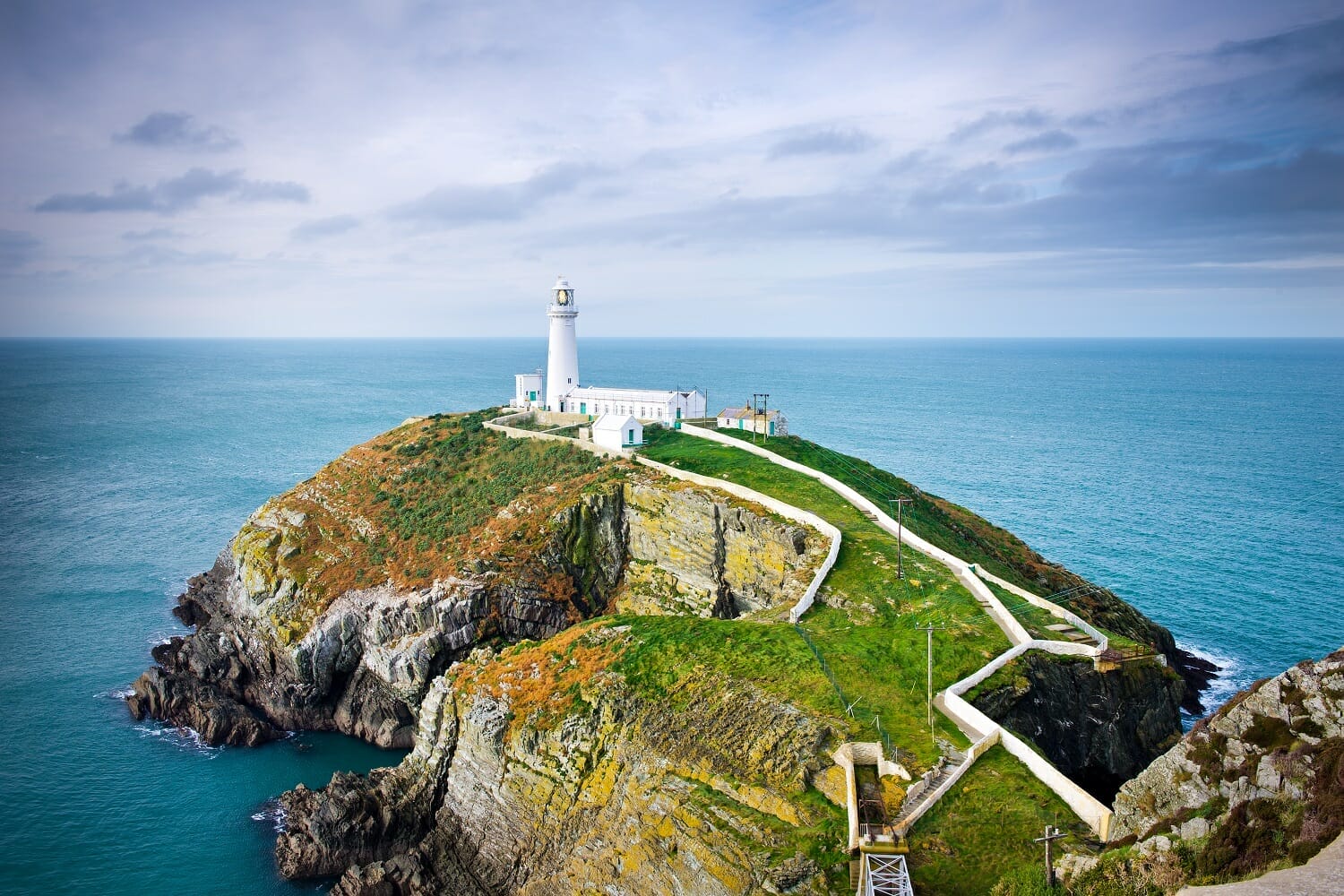
If you’re craving adventure, look no further than South Stack on Holy Island, Anglesey, accessed via the South Stack lighthouse car park and café on the B4545 out of Holyhead. Castell Helen, the main South Stack buttress, holds a set of relatively solid, well-protected classics in the VS to HVS range, a good starting point for climbers moving onto sea cliffs for the first time, while Mousetrap (E2 5a), tucked into its own zawn nearby, is one of the finest and most exciting multi-pitch E2s on this stretch of coast for those ready for more. As with Gogarth nearby, this stretch of coast is an RSPB reserve, so some routes close seasonally to protect nesting birds; check current restrictions before you climb.
For a full-body day out, combine your climbing session with a hike up Holyhead Mountain (220m, the highest point on Anglesey), rewarding you with sweeping views of the surrounding coastline and, on a clear day, the Wicklow Mountains across the Irish Sea.
6. Pembroke Coast, Pembrokeshire
Pembrokeshire’s coastline is a haven for rock climbers and boasts some of the best routes in the UK, with well over 1,000 recorded climbs between St David’s and Penally. Sea-cliff climbs like the Range West Face and Stennis Ford will push you to your limits: Stennis Ford in particular holds its best lines at E4 and above, though plenty of easier routes make it worthwhile for less experienced parties too. Mother Carey’s Kitchen, between the two, is a popular, accessible favourite with good climbing at most states of the tide.
When you’re not on the rock, stretch your legs on the Pembrokeshire Coast Path, which winds through some of the most picturesque coastal landscapes in Britain. Pembroke Castle, built in the 13th century, is also worth a visit.
7. St Govan’s Head, Pembrokeshire
A short drive from Range West, St Govan’s Head is one of Pembrokeshire’s most popular and complete climbing venues, with well over 150 routes across the grades on excellent limestone, split across the main southwest-facing headland and the quieter St Govan’s East sector nearby. The headland takes its name from the tiny medieval chapel wedged into the cliff below the car park; the steps down to it make a good warm-up walk before or after a session on the rock.
8. Llandudno, Conwy
You’ll find more than Victorian charm in the seaside resort of Llandudno. The limestone cliffs of the Great Orme, reached via the toll road of Marine Drive, provide world-class climbing across hundreds of routes, with Kinkyboots and Over the Rainbow among the better-known lines for confident intermediate climbers. As you ascend, you’ll unlock a bird’s-eye view of the town’s 19th-century promenade and Llandudno Bay below.
9. Glyderau Range, Eryri
Find routes for all skill levels in the Glyderau Range. The range’s signature outing is Bristly Ridge (Grade 2), a spectacular, airy scramble linking Tryfan with Glyder Fach via Bwlch Tryfan, passing close to the jagged rock tors of Castell y Gwynt (“Castle of the Winds”) near the summit. For more traditional roped climbing, the East Face of Glyder Fach offers longer routes with a genuine mountain feel. While you’re in the area, hike around Llyn Idwal, a glacial lake framed by dramatic cliffs, or take a tour of Penrhyn Quarry for a glimpse into the region’s industrial past.
10. Llŷn Peninsula, Gwynedd
Climbing the sea stacks and cliffs of the Llŷn Peninsula provides a sense of adventure that’s hard to match. Take your pick of hundreds of well-marked routes, including classics like Path to Rome and Vulture on Cilan Head, one of the peninsula’s most popular and accessible crags. South-facing aspects and a mild coastal climate mean many routes can be tackled year-round, making this a good back-pocket option when the mountains are in cloud. Afterwards, Porth Oer (Whistling Sands) is a great spot for a relaxing beach day.
11. Slate Quarries, Gwynedd
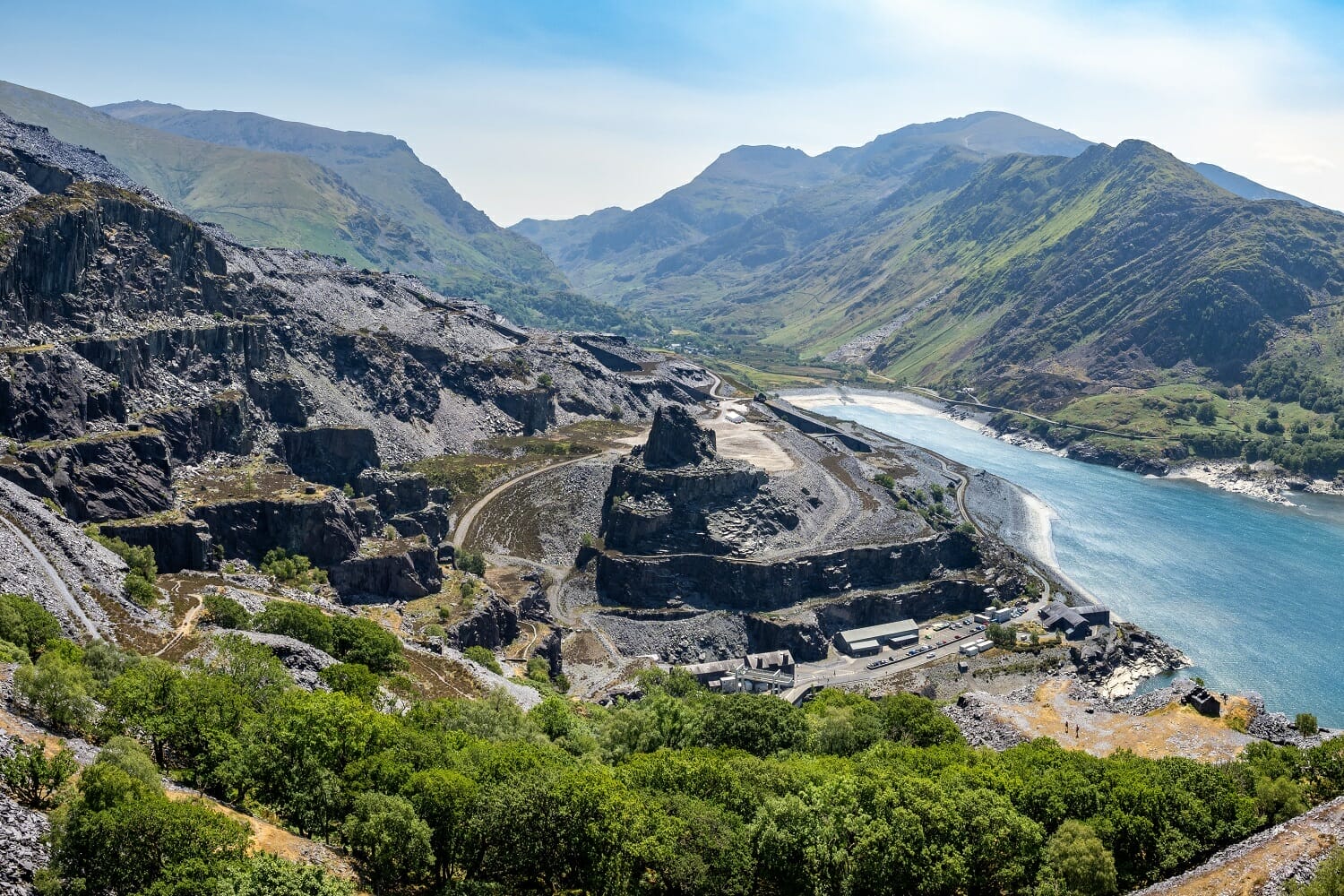
Gwynedd combines beautiful landscapes with a proud industrial heritage, and its historic slate quarries, led by the vast former Dinorwig Quarry above Llanberis, offer unique climbing on man-made terraces and faces unlike anything else in this guide. Expect a very different style of movement from the mountain crags nearby: compact, often technical slate, with bolted sport routes alongside bolder, more adventurous lines on the taller faces. When you’re not climbing, visit the National Slate Museum, set within the former quarry workshops, to learn more about the industry that shaped the landscape.
12. Bannau Brycheiniog (Brecon Beacons), Powys
The limestone outcrops of Bannau Brycheiniog seem purpose-built for climbers. Routes like Gilwern North and Taff’s Well West offer plenty of variety across the grades, without much elevation gain needed to reach spectacular views over the surrounding hills, making these good options for an after-work session or a shorter day. If your arms need a rest, hike up Pen y Fan, one of the highest peaks in southern Britain. Brecon town is a great base, with plenty of guesthouses, B&Bs and cosy pubs.
13. Cwm Silyn, Gwynedd
If you’re up for a challenge, Cwm Silyn offers exhilarating mountain crag climbing well off the beaten track, with a walk-in long enough to filter out all but committed parties. Routes like Pinnacle Rib and Cave Gully Wall are guaranteed to get your pulse racing on long, sustained pitches. For a change of scene, hike up Yr Aran (747m) for panoramic views, or slow the pace right down in Beddgelert Forest’s sun-dappled woodland nearby.
14. Carneddau Range, Eryri
Push yourself on the Carnedd Llewelyn East Face, another Eryri climbing mecca, on the largest and wildest range of high ground in Wales. The range towers over the north side of the Ogwen Valley and is relatively easy to access by Eryri standards, with some routes reachable fairly directly from the main road and others closer to the historic slate-quarrying village of Bethesda.
15. Llangollen, Denbighshire
Find some of the best limestone climbing in Wales in and around Llangollen, a gateway to the Clwydian Range and the glacier-carved Eglwyseg escarpment above the town, where outcrops including Trevor Rocks and the wider Creigiau Eglwyseg hold routes across most grades on generally solid rock. Back in town, you’ll find great pubs and restaurants to refuel after a day in the valley.
16. Cwm Idwal, Eryri
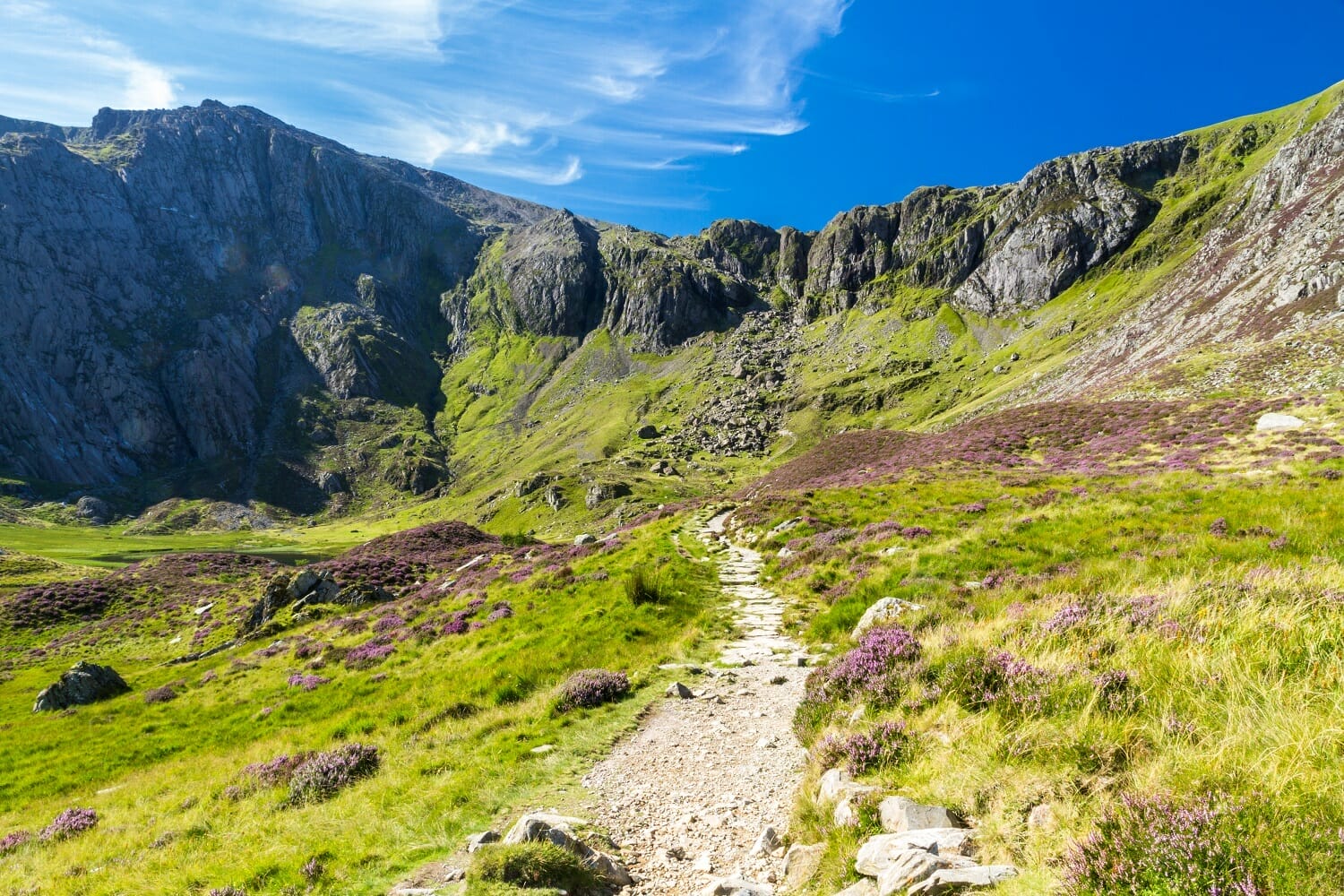
Another Eryri favourite, Cwm Idwal was Wales’s first National Nature Reserve and offers routes for every level on the Idwal Slabs and surrounding buttresses. Climbs like Hope suit beginners taking their first steps onto rock, while Spiral Stairs will challenge more experienced climbers looking for something longer. The walk in from the Ogwen Cottage car park is short and well maintained, making this one of the more approachable mountain venues in the range. The Tyn-y-Coed Inn in the riverside village of Capel Curig is a terrific place to refuel afterwards.
17. Clwydian Range and Dee Valley, North Wales
The Clwydian Range and Dee Valley Area of Outstanding Natural Beauty is a haven for climbers looking for vertical thrills in North Wales without the crowds of Eryri, combining challenging routes with incredible views over the Vale of Clwyd. Some approaches involve scrambling through loose scree, so take care underfoot, and keep your eyes peeled for coral and seashell fossils hidden in the limestone as you explore, a reminder this rock formed under a shallow tropical sea.
18. Craig y Forwyn, Vale of Clwyd
Known locally, only half-jokingly, as “Craig y Forearm”, Craig y Forwyn near Llanddulas is a nationally significant trad climbing venue with well over 160 routes spread across several sectors of sheltered, sunny limestone, from entry-level Severes up to desperate E7s like Departees for the very strong. The rock dries unusually quickly after rain, making it one of the most reliable crags in North Wales when the forecast looks shaky elsewhere, and it’s a useful year-round option thanks to its sheltered aspect.
19. Wye Valley, Monmouthshire
Discover landscapes that made William Wordsworth swoon in the Wye Valley, an Area of Outstanding Natural Beauty that’s captivated a new demographic in recent years: climbers. Wintour’s Leap, high above the River Wye near Chepstow, holds a huge range of routes from Severe up to E4 and beyond on an imposing limestone escarpment. Find everything from beginner-friendly climbs to challenging routes around Symonds Yat, where some north-west-facing sectors carry a seasonal nesting-bird restriction, typically 1 March to 30 June, so check current guidance before you go. The limestone face of Shorn Cliff will push your fingers to the limit, while Wintour’s Leap promises thrilling exposure. Visit in autumn to see the surrounding beech, ash and oak forests explode in colour.
20. Craig Dorys, Cilan Head (near Abersoch)
On the Cilan Headland near Abersoch, some 20 miles around the coast from Criccieth, Craig Dorys has a fearsome reputation among Welsh climbers for serious, adventurous routes on crumbly, loose shale and grit, with cheeky names like Grandad’s Challenge, Safe as Milk and Error of Judgement masking genuinely committing climbing. This is not a casual outing: it’s a venue for experienced trad climbers comfortable with unpredictable rock and run-out protection, rather than a first taste of sea-cliff climbing. As you ascend, you’ll be treated to fantastic vistas over Cardigan Bay; visit in summer and nearby Abersoch Beach is a great spot for a post-climb dip.
21. Rhossili Bay, Gower
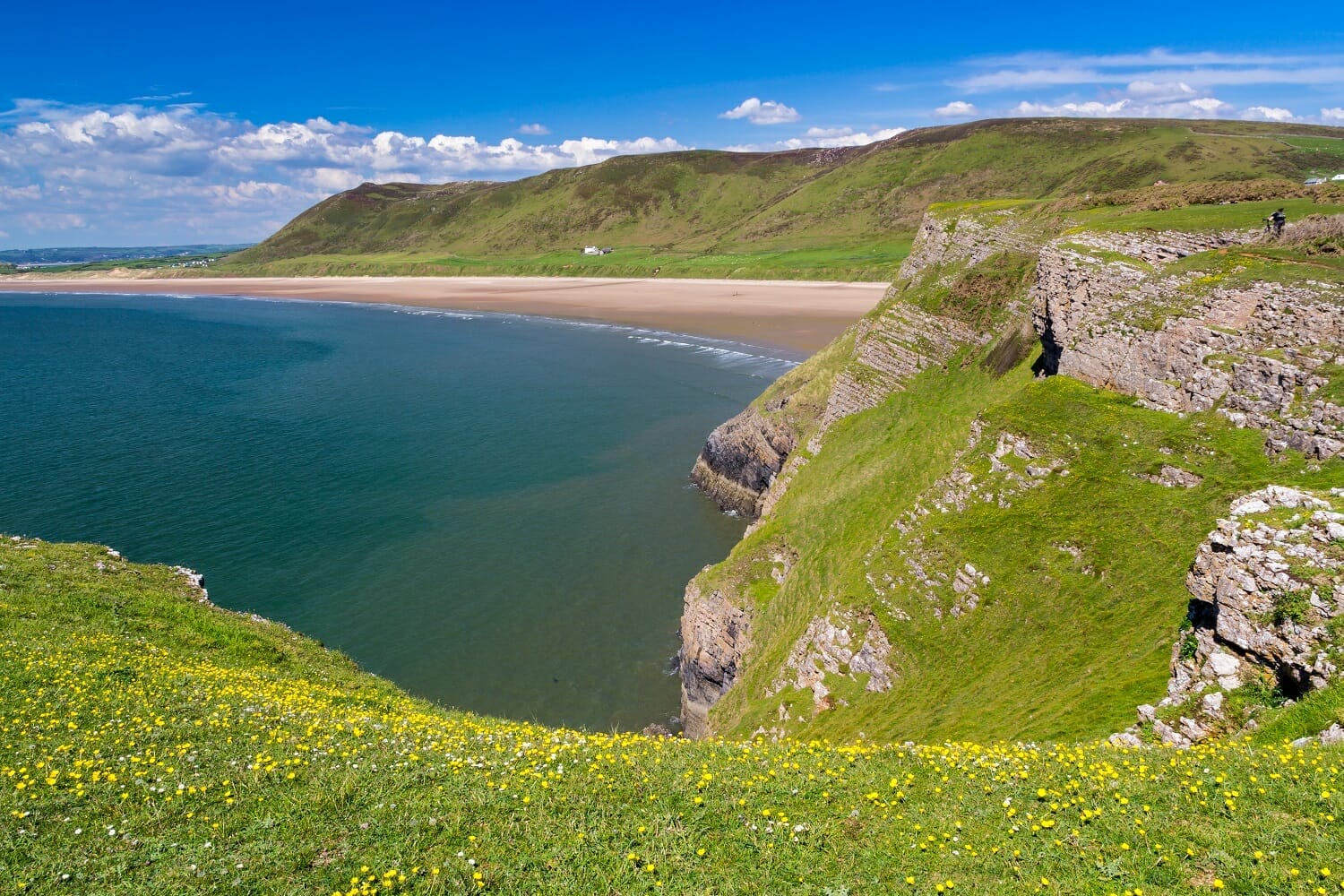
Set on the Gower Peninsula, Rhossili Bay is a world-class sea-cliff climbing destination, with routes combining challenging moves and some of the finest coastal views in Wales. When you’re not on the rock, explore Worm’s Head, a tidal island connected to the mainland by a causeway only crossable for around 2.5 hours either side of low tide; check tide times carefully before you set off, since they affect access to climbing here too, not just the walk out to the island.
22. Taff’s Well Quarry, Cardiff
Cardiff isn’t just a hub for art, culture and entertainment, it’s a gateway to some of the best climbing in Wales. Taff’s Well, just north of the city and only minutes from the M4, is a well-equipped limestone quarry with over 120 mostly bolted sport routes, a great spot for beginners to hone their skills and experienced climbers to test their limits. The adjoining Taff’s Well West sector adds a further 60-odd routes on a separate face of the same quarry, giving plenty of variety without needing to drive anywhere else.
23. Ogmore-by-Sea, Vale of Glamorgan
For genuine coastal climbing close to Cardiff, head west to Ogmore-by-Sea on the Vale of Glamorgan coast, home to well over 200 routes across the grades on good limestone, plus a separate, well-regarded bouldering area along the same stretch of shore. It’s a varied, adventurous venue popular with Cardiff-based clubs looking for sea cliffs without the drive to Pembrokeshire or Gower, though as with any coastal crag, check tide times before you head down.
24. The Gap, Rhondda Cynon Taf
Less than an hour’s drive from Cardiff above Abercynon, The Gap (also known locally as the Giant’s Bite) is a part-natural, part-quarried sandstone crag widely regarded as one of the best of its kind in South Wales, with well over 125 routes mostly concentrated at 6a and above. It’s an inland venue, so there’s no tide to plan around, just a straightforward hillside approach, making it a popular after-work or half-day option for Cardiff-based climbers.
25. Lower Pen Trwyn, North Wales
Lower Pen Trwyn, on the sea-level tier of the Great Orme near Llandudno, is often crowned one of the top sport climbing destinations in Wales, with around 60 bolted routes spanning easy 5s up to desperate test-pieces near French grade 9a, including well-known lines like Statement of Youth and The Big Bang. Climbing here is only possible around low tide; the sea looks a safe distance away when you arrive, but the water returns quickly once the tide turns, so build in a wide safety margin and never linger at the base as the tide starts to rise.
Reach New Heights Rock Climbing in Wales
Whether you’re a veteran climber seeking a new challenge or a beginner looking to scale your first crag, Wales is packed with climbing destinations for every age, skill and fitness level. From quartzite sea cliffs on Anglesey to volcanic mountain peaks in Eryri, each location in this guide promises exceptional views. No matter your style, getting vertical is a brilliant way to discover the natural beauty of Wales from an exciting new perspective. For a gentler introduction, our guide to bouldering in Wales covers 19 venues that need no ropes at all.
Frequently Asked Questions: Rock Climbing in Wales
Where is the best place to start rock climbing in Wales?
South Stack and Cwm Idwal both have well-regarded beginner routes alongside harder options, so you can progress at your own pace. For your first taste of trad climbing specifically, Flying Buttress at Dinas Cromlech is a classic, gentle introduction to a world-famous crag.
What is the most famous climbing route in Wales?
Cenotaph Corner (E1 5c) at Dinas Cromlech in the Llanberis Pass is widely regarded as the most sought-after E1 in Britain. First climbed by Joe Brown in 1952, it remains a bucket-list route for trad climbers today.
Do I need to check tides before rock climbing in Wales?
Yes, at several of the venues in this guide. Gogarth, South Stack, Rhossili Bay and Lower Pen Trwyn are all tidal, meaning some or all routes are only accessible, or only safe, around low tide. Always check a tide table for the specific venue before setting off.
Is Pen-y-Pass parking still pre-bookable in 2027?
Pen-y-Pass, a popular start point for routes on Clogwyn Du’r Arddu and elsewhere in this guide, has used a pre-booking parking system through JustPark during the busier months in recent years. Check current dates on the Eryri National Park website before you travel, or use the Sherpa’r Wyddfa bus from Llanberis.
Are there seasonal climbing restrictions in Wales?
Yes, at several coastal and cliff venues, to protect nesting sea birds. St Govan’s Head in Pembrokeshire and sectors of Symonds Yat in the Wye Valley both carry seasonal restrictions on some routes, typically running from March into the summer. Always check current access guidance for the specific crag and route before you climb.