


Best Destinations in Wales: Where to Go and What to See in 2026
Wales has four distinct regions — North, South, West and Mid — each with its own character, landscapes and attractions. From the mountains of Eryri (Snowdonia) and the beaches of Pembrokeshire to the cultural buzz of Cardiff and the solitude of the Cambrian Mountains, this guide covers all destinations in Wales that are worth visiting in 2026 and helps you choose the right region for your trip.
Trending Destinations in Wales for 2026
Wrexham
The town made famous by Ryan Reynolds and Rob McElhenney’s takeover of Wrexham AFC is now a genuine tourist destination. The new Wrexham Football Museum opens in June 2026, alongside the expanded Wrexham Museum and TyPawb Arts Centre. Football fans, history lovers and curious visitors are all making the trip to see what the buzz is about.
Aberystwyth
This seaside university town on Cardigan Bay has been awarded UNESCO Creative Cities status as a City of Literature, joining a global network of literary destinations. Combined with the National Library of Wales and a thriving independent arts scene, it is one of the most culturally rich small towns in Britain.
Elan Valley
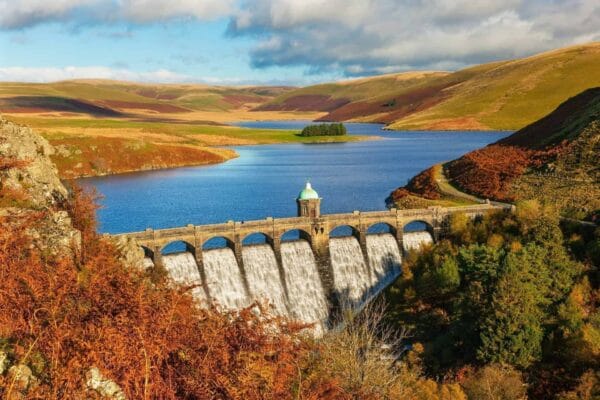
Already home to one of the world’s best dark sky reserves, the Elan Valley in Powys now has a dedicated planetarium and upgraded visitor centre. The dramatic Victorian reservoirs, surrounded by red kite habitat and open moorland, make this one of the most underrated destinations in the whole of Wales.
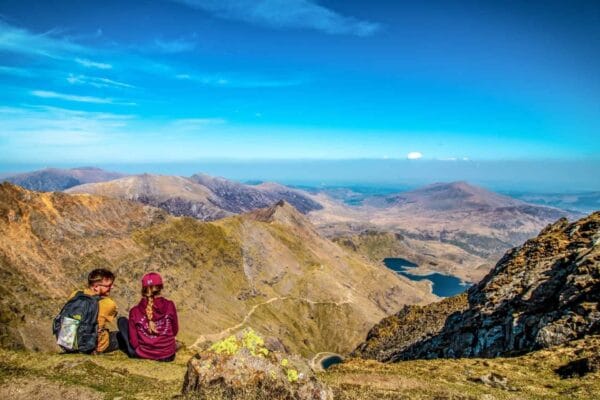
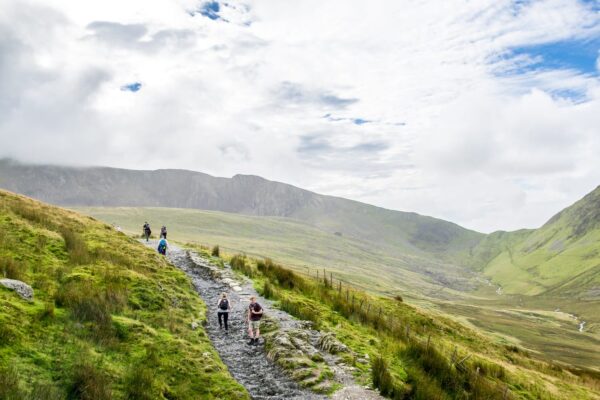
North Wales is where you come for mountains, castles and adrenaline. Eryri (Snowdonia) National Park dominates the region with its 823 square miles of peaks, lakes and valleys. Yr Wyddfa (Snowdon) is the highest mountain in England and Wales, and the trails to its summit range from the gentle Llanberis Path to the knife-edge scramble of Crib Goch. Our guides to the best hikes in North Wales and Snowdonia walks cover routes for every ability.
The medieval walled town of Conwy is one of the best-preserved in Europe, with its UNESCO-listed castle and harbour-front restaurants. The Isle of Anglesey offers quiet beaches, ancient burial chambers and the village with the longest place name in Europe. And Zip World — with the fastest zip line in the world, underground trampolines and forest coasters — has turned the old slate quarries of Blaenau Ffestiniog into one of the UK’s top adventure destinations.
The Llyn Peninsula is North Wales’ quieter side — think hidden coves, Welsh-speaking villages and some of the best sunsets in the country. Llandudno is the region’s classic Victorian seaside resort, and North East Wales — including Wrexham, Llangollen and the Dee Valley — is increasingly popular thanks to the Wrexham AFC effect.
Best for: Mountain hiking, castles, adventure sports, scenic driving
Key destinations: Eryri (Snowdonia), Conwy, Anglesey, Llandudno, Llyn Peninsula, Portmeirion
Cardiff is the vibrant capital of Wales, with a castle in the city centre, world-class museums (National Museum Cardiff and St Fagans are both free), a thriving food and nightlife scene, and the Principality Stadium — home of Welsh rugby and one of the most atmospheric sports venues in the world. Cardiff Bay has been transformed into a waterfront district with restaurants, the Wales Millennium Centre and the Senedd.
Beyond the capital, Bannau Brycheiniog (Brecon Beacons) National Park offers some of the best walking, gorge adventures and hiking in Britain. Pen y Fan is the highest peak in southern Britain and a rewarding half-day walk. The Wye Valley along the Welsh-English border is one of the most scenic corners of the country, with Tintern Abbey and the book town of Hay-on-Wye as its highlights.
The South Wales Valleys have their own distinctive character — former mining communities now reinventing themselves with heritage attractions like the Big Pit National Coal Museum and the Royal Mint Experience. Caerphilly Castle, the largest castle in Wales, has reopened in 2026 with immersive digital exhibits in the Great Hall.
Best for: City breaks, culture, rugby, food, heritage, gorge walking
Key destinations: Cardiff, Bannau Brycheiniog (Brecon Beacons), Wye Valley, Caerphilly, The Valleys
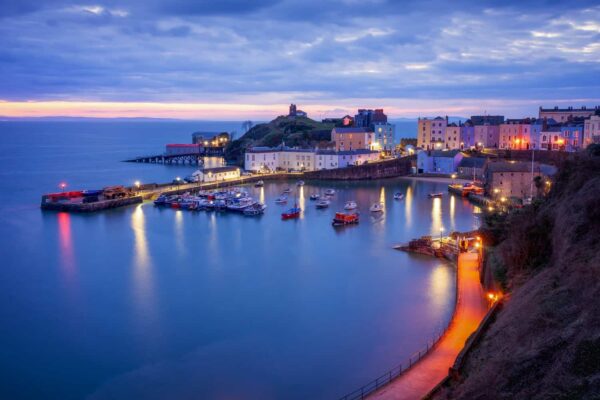
Pembrokeshire has some of the most beautiful coastline in Europe. The 186-mile Pembrokeshire Coast Path runs the entire length of the only coastal National Park in Britain, passing Blue Flag beaches, hidden coves, sea cliffs and fishing villages. Barafundle Bay and Marloes Sands regularly appear on lists of the world’s best beaches, and the cathedral city of St Davids — the smallest city in Britain — is a must-visit.
Coasteering was invented in Pembrokeshire and remains one of the most thrilling ways to experience the coast, with operators running trips from around £35 per person. Skomer Island, just off the Pembrokeshire coast, is home to one of the UK’s largest puffin colonies (best viewed May to July) and an important breeding ground for Manx shearwaters.
Carmarthenshire and the Tywi Valley are Wales at its most rural and unspoilt. The National Botanic Garden of Wales is here, along with Carreg Cennen — one of the most dramatically positioned castles in Europe, perched on a limestone cliff above the Cennen Valley. Swansea Bay offers the Gower Peninsula (Britain’s first Area of Outstanding Natural Beauty), the vibrant Mumbles seafront and easy access to Rhossili Bay.
Best for: Beaches, coastal walking, wildlife, surfing, relaxation
Key destinations: Pembrokeshire, St Davids, Swansea & Gower, Carmarthenshire, Tenby
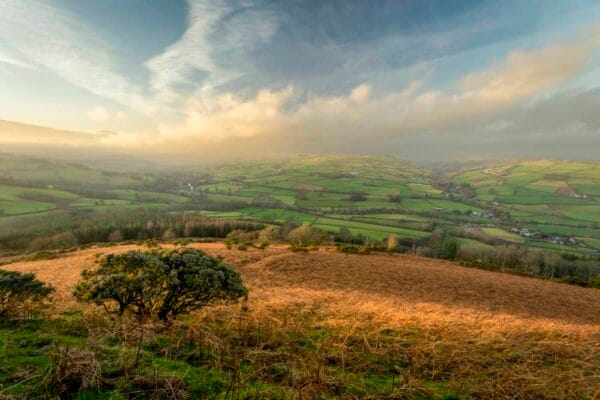
Mid Wales is the least-visited region and also the most rewarding for those who like solitude. The Cambrian Mountains — sometimes called the “green desert of Wales” — stretch across the heart of the country with barely a road or village in sight. The Elan Valley reservoirs, built in the Victorian era to supply water to Birmingham, are surrounded by red kite habitat and some of the darkest skies in Britain.
Ceredigion and Cardigan Bay run along the western coast of Mid Wales, with Aberystwyth as the cultural hub. The town’s newly awarded UNESCO City of Literature status, combined with the National Library of Wales and a lively independent arts scene, makes it a destination in its own right. Dolphins are regularly spotted in Cardigan Bay, and New Quay is one of the best places in Britain to see bottlenose dolphins from the shore.
Powys covers a huge area from the Brecon Beacons in the south to the Berwyn Mountains in the north. Market towns like Llanidloes, Machynlleth and Knighton sit along ancient drovers’ roads, and the area is increasingly popular with cyclists tackling routes like the Lôn Las Cymru. If you want to experience Wales without the crowds, Mid Wales is the answer.
Best for: Solitude, stargazing, cycling, wildlife, off-the-beaten-track
Key destinations: Elan Valley, Aberystwyth, Cardigan Bay, Powys, Cambrian Mountains
How to Choose Your Welsh Destination
Best for families:
Pembrokeshire (beaches + wildlife), North Wales (Zip World + castles), Cardiff (free museums + Principality Stadium). See our family activities guide for detailed ideas.
Best for couples:
Gower Peninsula (Rhossili Bay sunsets), Portmeirion (Italianate village), Brecon Beacons (dark sky stargazing). See our romantic breaks guide.
Best for adventure:
Eryri/Snowdonia (mountain hiking + scrambling), Pembrokeshire (coasteering + surfing), Brecon Beacons (gorge walking). See our adventure sports guide.
Best for culture:
Cardiff (museums + food + rugby), Aberystwyth (UNESCO + literature), Hay-on-Wye (book town + festivals). See our city breaks guide.
Best for peace and quiet:
Mid Wales (Cambrian Mountains + Elan Valley), Llyn Peninsula, rural Carmarthenshire.
Want to see more than one region? Our Wales road trip itinerary covers three routes with day-by-day stops, and our itinerary planning guide has practical tips on transport, passes and timing.
Places to Stay Across Wales
Wales offers accommodation for every style and budget. Holiday cottages are the most popular choice, offering privacy, space and value — many come with hot tubs, log burners and dog-friendly policies. Hotels range from boutique townhouses in Cardiff to luxury spa retreats with mountain views. For something different, try a castle hotel, a working farm stay, or a glamping pod overlooking the Brecon Beacons.
Explore all options in our complete places to stay guide, or search for accommodation across Wales using the map below.
Filter by region, dates, guests and features.Find your perfect Welsh cottage
Frequently Asked Questions
What is the most visited place in Wales?
Eryri (Snowdonia) National Park is the most visited destination in Wales and one of the most popular in the UK. Yr Wyddfa (Snowdon) alone attracts over 600,000 walkers a year. Cardiff, Pembrokeshire and the Gower Peninsula are also among the most visited areas.
Where should I go in Wales for the first time?
For a first visit, Pembrokeshire and North Wales offer the most variety. Pembrokeshire combines world-class beaches, wildlife and coastal walking in one compact area. North Wales gives you mountains, castles and adventure activities within easy reach of each other. Cardiff is the best option if you prefer a city break with culture, food and sport.
Which is better, North or South Wales?
It depends on what you are looking for. North Wales is better for mountain hiking, castles and adventure sports. South Wales is better for city culture, food, rugby and heritage attractions. Pembrokeshire in West Wales and the Brecon Beacons (which sit between North and South) offer the best of both worlds. Many visitors come back multiple times to experience different regions.
What is the prettiest village in Wales?
Portmeirion in North Wales is often cited as the most visually stunning village, with its Italianate architecture and lush gardens designed by Sir Clough Williams-Ellis. Other contenders include Beddgelert in Snowdonia, Solva on the Pembrokeshire coast, Crickhowell in the Brecon Beacons, and Laugharne — the Dylan Thomas town on the Taf estuary. Our guide to the most beautiful places in Wales covers all of them.
How many days do you need in Wales?
A long weekend of 3–4 days is enough to explore one region well — such as Pembrokeshire, Snowdonia or Cardiff and the Brecon Beacons. For a comprehensive trip covering North, South and West Wales, plan for 7–10 days. Our road trip itinerary covers three routes with suggested stops and overnight accommodation for every stage.
Planning a trip to Wales?
Find the perfect holiday cottage for your Welsh adventure.
 Share icon below and select Add to Home Screen to install the free app.