

Visit the National Botanic Garden of Wales
The National Botanic Garden of Wales is the most visited garden in Wales and one of the most important botanical institutions in Britain. Spread across 568 acres of the Carmarthenshire countryside overlooking the Tywi Valley, it is home to the world’s largest single-span glasshouse (designed by Norman Foster), over 8,000 plant varieties from 240 families, a National Nature Reserve, the British Bird of Prey Centre, a tropical Butterfly House, and a Dark Sky Discovery Site. Wales became the first country in the world to DNA barcode all its native flowering plants — and that work was done here.
At a Glance: National Botanic Garden of Wales
- Location: Llanarthne, Carmarthenshire SA32 8HG. Between Carmarthen and Llandeilo.
- Open: Daily year-round. Apr–Oct 10am–6pm. Nov–Mar 10am–4pm. Last entry 1 hour before closing. Closed Christmas Eve and Christmas Day only.
- Tickets: Adult £16.85, Child (3–16) £8.65, Under 2 free. 7-day re-entry included.
- Membership: From £45/year. Free entry + partner gardens across the UK.
- Highlights: Great Glasshouse (Norman Foster, world’s largest single-span), British Bird of Prey Centre, Butterfly House, Waun Las Nature Reserve, Dark Sky Discovery Site.
- Dogs: Doggy Days every Monday, Friday, and first weekend of each month. No dogs other days (except assistance dogs).
- Accessibility: Core garden 100% wheelchair accessible. Mobility scooters available. Free carer place.
- Allow: 3–4 hours minimum. A full day to see everything.
- No Bins Garden: Take your litter home.
The garden opened on 24 May 2000, the first new national botanical garden created in the UK in almost 200 years. It was officially opened by the then Prince of Wales (now King Charles III). Twenty-six years later, it remains a place where conservation science, horticultural beauty, and 2,000 years of landscape history come together on a single estate. This is not a manicured park with a café attached. This is a working botanical institution that happens to be extraordinarily beautiful.
This guide covers everything you need to plan your visit: what to see, ticket prices, opening times, accessibility, and the history and science that make this garden unlike anywhere else in Wales.
Planning this trip? Ask Branwen, our free AI trip planner →
The Great Glasshouse: Norman Foster’s Masterpiece
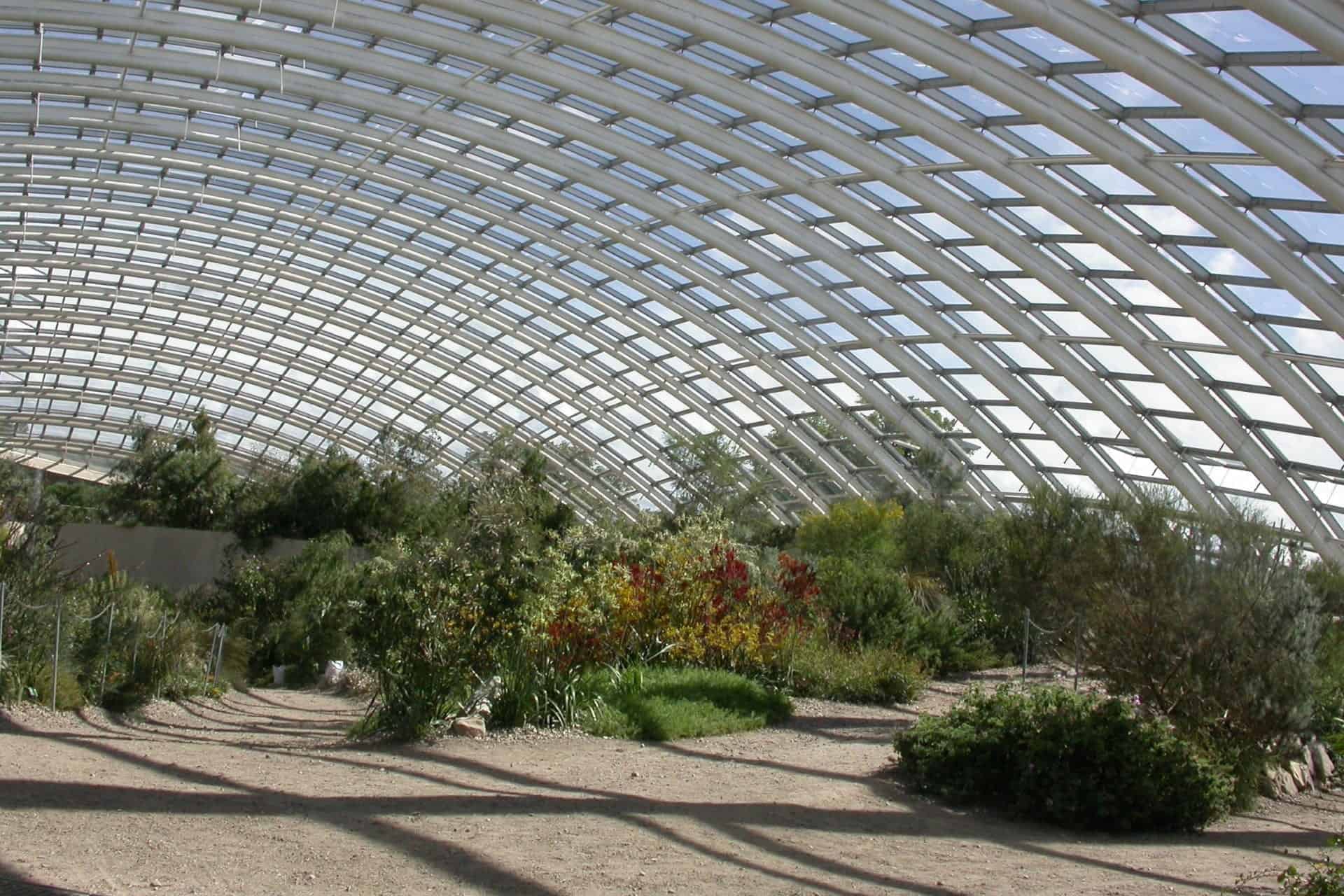
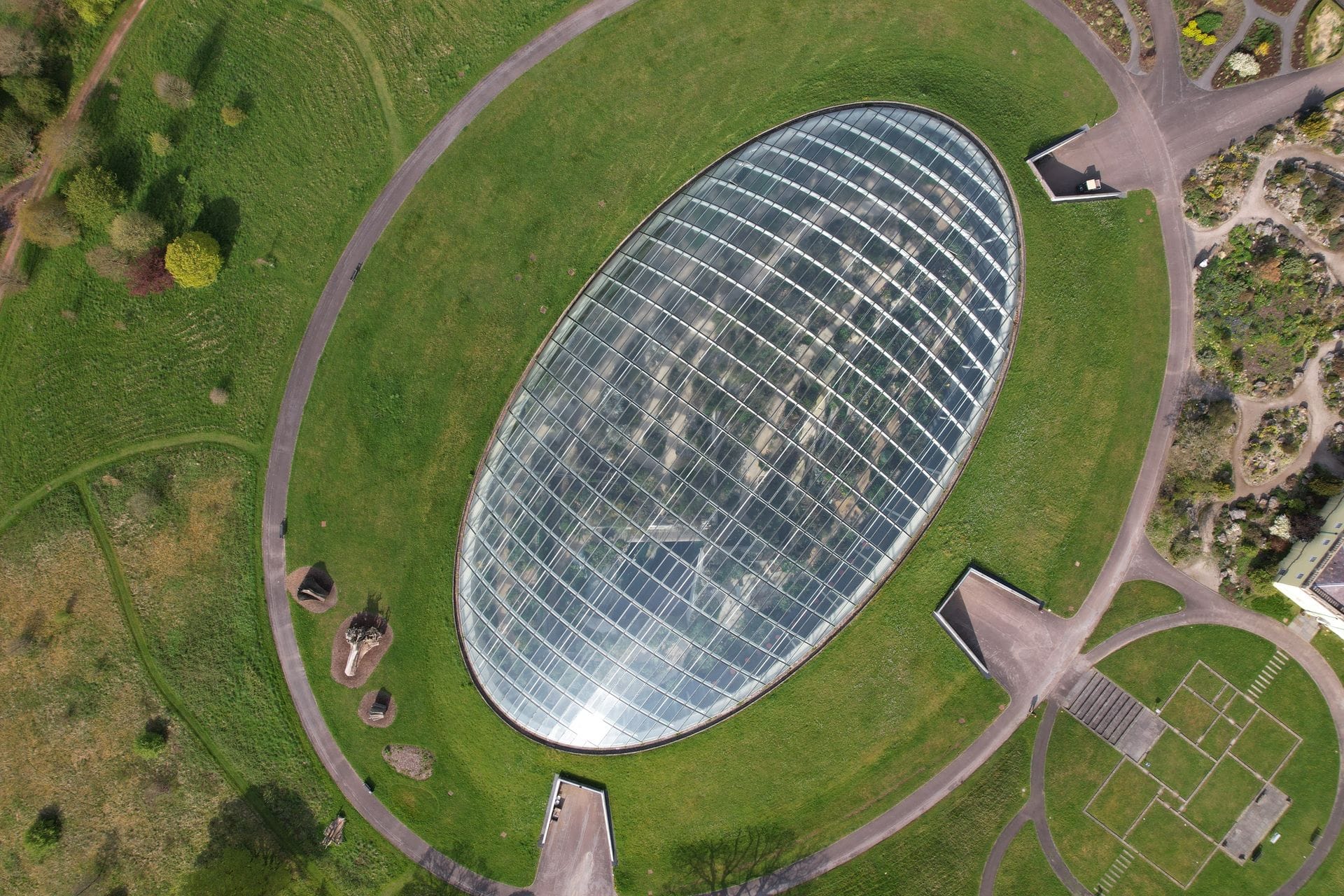
The Great Glasshouse is the centrepiece of the garden and the reason many people visit for the first time. Designed by Foster and Partners, it is the world’s largest single-span glasshouse — a toroidal dome measuring 99 by 55 metres, resting on 24 steel arches and containing 785 panes of glass. The roof rises 15 metres at its apex. It won the Gold Medal for Architecture at the National Eisteddfod in 2000.
From the outside, the glasshouse swells from the ground like a raindrop, echoing the undulations of the surrounding Carmarthenshire hills. Inside, 3,500 square metres of landscaped terrain — designed by American landscape architect Kathryn Gustafson — house some of the most endangered plants on the planet from six Mediterranean climate regions: California, western Australia, Chile, the Canary Islands, South Africa, and the Mediterranean Basin.
© Crown copyright Cymru Wales
The interior landscape includes a six-metre-deep ravine, rock terraces, sandstone cliffs, scree slopes, streams, and waterfalls. At first glance, it is not obvious that the plants come from six different continents — they share qualities like small, leathery evergreen leaves and dense shrubby forms, having adapted in similar ways to hot, dry summers and cool, moist winters. This shared adaptation is one of the most fascinating things about the collection: you are looking at convergent evolution in action.
The Great Glasshouse holds what is considered the best collection of Mediterranean-climate plants in the northern hemisphere. Many of the species inside are seriously endangered in their native habitats by agriculture, development, and climate change. The glasshouse is not just beautiful — it is an ark.
The building also featured as a filming location for the Doctor Who episode The Waters of Mars (2009). For more Welsh filming locations, see our TV shows filmed in Wales guide.
The British Bird of Prey Centre
The British Bird of Prey Centre, housed within the garden grounds since 2018, is home to all of Britain’s native raptor species. Three daily flying displays and an afternoon conservation talk bring you face to face with golden eagles, red kites, peregrine falcons, barn owls, and more. The displays are informative and genuinely thrilling — watching a peregrine stoop at speed or a golden eagle land on a handler’s arm is unforgettable.
For a more immersive experience, you can book one of their award-winning Hawk Walk experience days and fly the birds yourself. This is one of the few places in Britain where you can get this close to native raptors in a conservation setting. For more on Welsh raptors, see our birds of prey in Wales guide.
The Butterfly House
Inside the historic Double Walled Garden, the Tropical House is a humid glasshouse where over 500 species of exotic butterflies thrive. You can get remarkably close to species like the huge Amazonian Blue Morpho (with its iridescent blue wings spanning up to 15cm) and the Greta Oto glasswing (with almost entirely transparent wings — one of nature’s most extraordinary adaptations). Butterflies land on visitors regularly — wear bright colours and stand still.
A butterfly feeding area allows you to observe the insects up close. This is one of the most popular sections of the garden for families, and younger children are consistently captivated. The humid warmth inside the tropical house is a welcome contrast on cooler Welsh days.
Waun Las National Nature Reserve
Adjacent to the formal garden, Waun Las is a 150-hectare National Nature Reserve managed as an organic farm with wildflower meadows. The reserve was created to preserve and reintroduce species native to this part of Wales. Orchid-rich meadows, hedgerows teeming with birdlife, and ancient woodland provide a walking experience that contrasts with the cultivated gardens — this is the landscape as it was before intensive agriculture changed the Welsh countryside.
The reserve is commercially viable as well as biodiverse, demonstrating that conservation farming and agricultural productivity are not mutually exclusive. Walking trails cross the reserve and connect to the wider garden. For more Welsh wildlife experiences, explore our guides.
© Crown copyright Cymru Wales
The Double Walled Garden and Japanese Garden
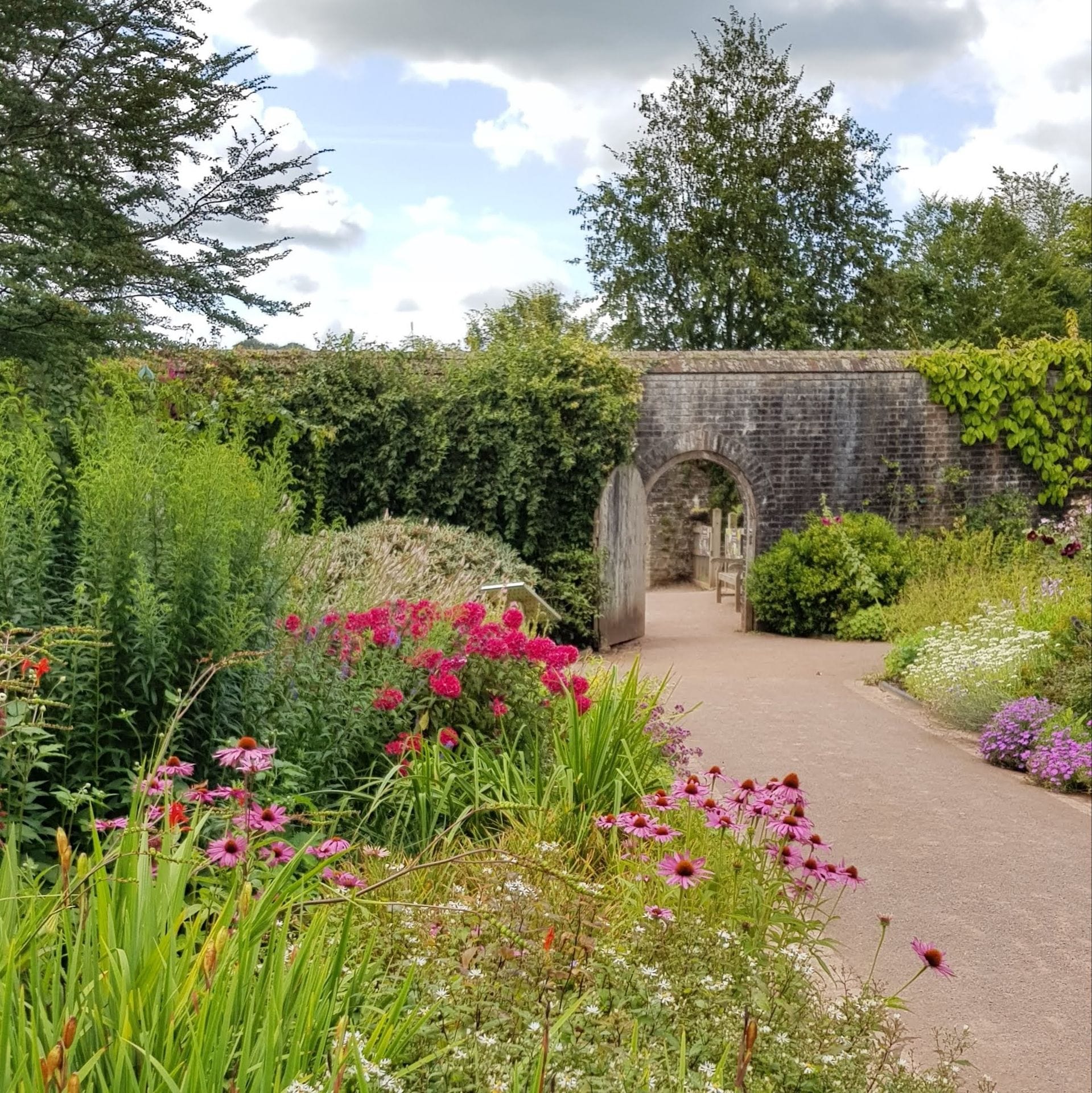
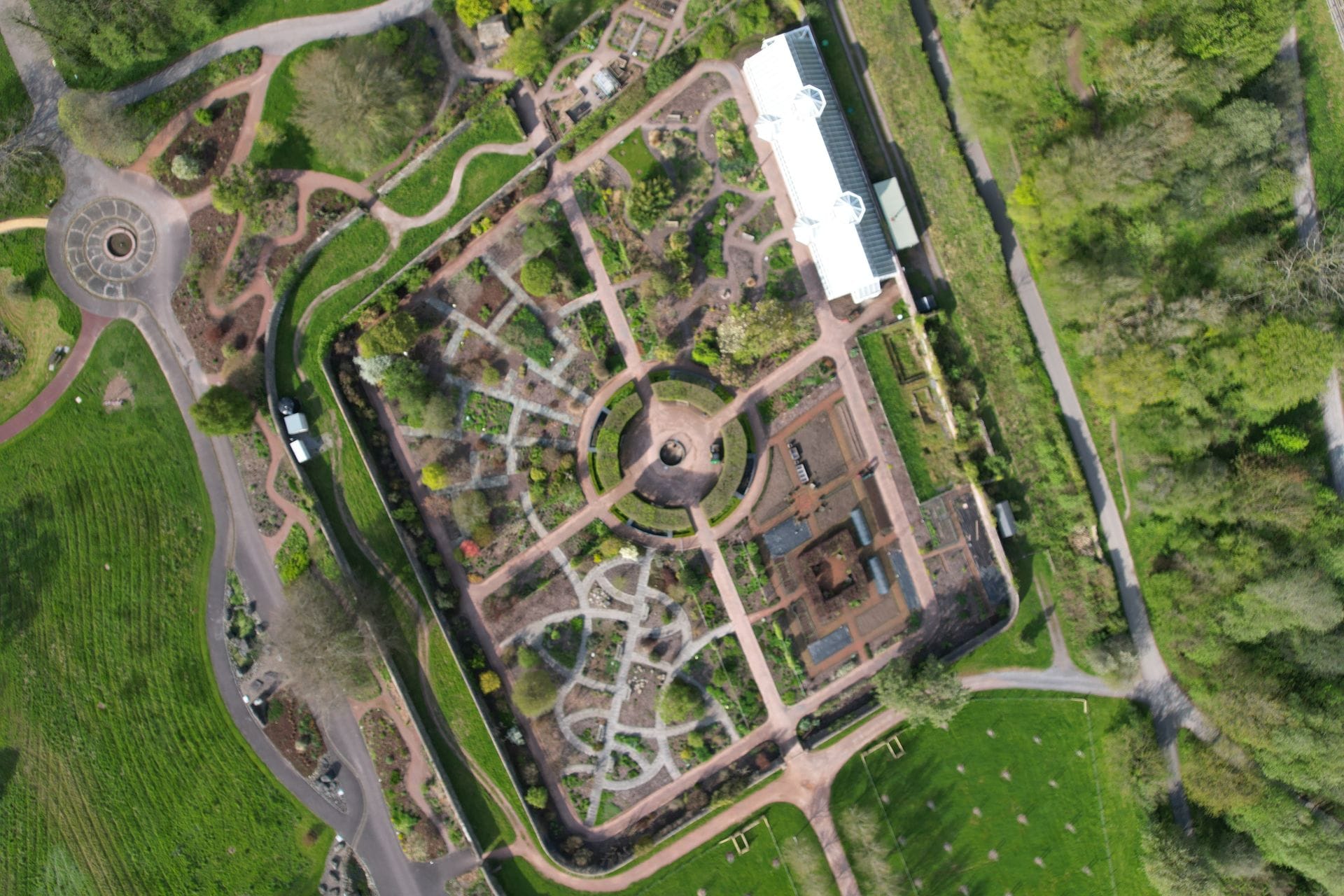
The Double Walled Garden is a rare example of a dual-skinned configuration — an insulating outer and inner wall that creates a microclimate for tender plants. Rebuilt from ruins, it houses a modern interpretation of a kitchen garden in one quarter and ornamental beds displaying the classification and evolution of all flowering plant families in the other three. Over 17,000 herbaceous plants run along the walls.
Adjacent to the Double Walled Garden, the Japanese Garden (Sui Ou Tei) reflects the national flowers of Japan and Wales — the cherry tree and the daffodil. This garden won Best in Show at the Chelsea Flower Show in 2001, was disassembled, transported to Carmarthenshire piece by piece, and reassembled on site. It includes a traditional teahouse surrounded by cherry trees.
The Regency Landscape and Paxton’s Water Park
The garden sits on an estate with a history stretching back over 2,000 years. In 1789, Sir William Paxton bought the estate for £40,000 and created an extraordinary Regency water park with interconnecting lakes, ponds, streams, dams, cascades, and a waterfall. Spring water was stored in elevated reservoirs that fed into a lead cistern on the mansion’s roof — allowing the house to enjoy piped running water and water closets, which were the height of luxury in the late 18th century.
Much of this original waterscape has been restored by the garden. The Regency parkland is registered at Grade II* on the Cadw/ICOMOS Register of Parks and Gardens of Special Historic Interest in Wales. Paxton’s Tower — a Neo-Gothic folly erected in 1809 in honour of Lord Nelson — is visible from the garden on a hilltop near Llanarthne and is now owned by the National Trust.
Dark Sky Discovery Site
The National Botanic Garden of Wales is a designated Dark Sky Discovery Site — part of a nationwide network of accessible places with outstanding views of the night sky. Local groups have nominated it as one of the best stargazing locations in Carmarthenshire. The garden’s rural location, far from urban light pollution, means that on clear nights you can see the Milky Way, major constellations, and (in season) meteor showers with the naked eye. Check the garden’s events page for organised stargazing evenings.
Science and Conservation: Why This Garden Matters
The National Botanic Garden of Wales is not just a visitor attraction — it is a working scientific institution. In a landmark achievement, Wales became the first country in the world to DNA barcode all its native flowering plants and conifers. This painstaking work was carried out by the garden’s own scientists and has since been replicated by countries around the globe. The DNA barcoding project allows rapid identification of plant species from tiny samples — critical for conservation monitoring, forensic botany, and understanding how ecosystems respond to climate change.
The garden also conducts ongoing research into pollinator conservation, including a study tracking the foraging behaviour of honeybees. With approximately half a million bees housed in the garden’s Bee Garden, scientists are building a detailed picture of which plants bees prefer and how far they travel to find food. Visitors can watch the bees from behind safety viewing screens and learn about the research. The decline of pollinators is one of the most serious ecological challenges in Britain — the work being done here contributes directly to understanding and reversing that decline.
For the latest on the garden’s research, visit the science section of the garden’s website.
Visiting With Children
The garden is well set up for families. A children’s play area provides outdoor fun between garden sections. The Gruffalo Trail — based on the beloved children’s book — winds through the woodland and keeps younger children engaged with character carvings and storytelling stops. Welly Wednesday (a £2 booking fee per child, normal garden admission applies) offers an hour of guided outdoor activities for pre-schoolers — exploring, storytelling, and nature crafts. Sessions run regularly; check the events page for dates.
The Butterfly House, Bird of Prey flying displays, and the Bee Garden are all particularly popular with children. Allow extra time at each — children tend to want to stay longer than adults at all three.
Practical Information
Admission Prices
| Category | Price |
|---|---|
| Adult | £16.85 |
| Child (3–16) | £8.65 |
| Under 2 | Free |
| Group rate (10+ adults) | £12.50 (tour leader free) |
| Disabled visitor | Standard rate + 1 free carer |
| Unpaid carers (with ID) | Free (even without the person they care for) |
| Annual membership | From £45 |
Every ticket includes unlimited re-entry for 7 days from your visit date. Pre-booking is available online but not required. Members receive free entry, access to coffee mornings, an annual garden party, and free admission to partner gardens across the UK (including the Royal Botanic Garden Edinburgh, the University of Oxford Botanic Garden, and the Living Rainforest in Berkshire).
Opening Times
| Period | Hours |
|---|---|
| April – October | Daily 10am–6pm |
| November – March | Daily 10am–4pm |
| Closed | Christmas Eve and Christmas Day only |
Last entry is one hour before closing. Open every other day of the year, including bank holidays. Check the garden website for weather-related closures.
Getting There
Address: National Botanic Garden of Wales, Middleton Hall, Llanarthne, Carmarthenshire SA32 8HG.
By car: From Carmarthen, take the A40 east for 8 miles, turn left onto the B4310 at the brown signs. From the east (end of the M4), take the A48 for 8 miles and follow brown signs to the B4310. Free parking. Coach parking available.
By public transport: Nearest railway stations are Llandeilo (7 miles) and Carmarthen (8 miles). Local bus services connect to the garden — check Traveline Cymru for routes. From Cardiff, approximately 1 hour 45 minutes by car via the M4 and A48.
Dogs
Dogs are not permitted daily because the garden is a conservation site. Doggy Days run every Monday, every Friday, and the first weekend of each month — dogs welcome on leads throughout the garden. Assistance dogs welcome at all times.
Accessibility
The core garden area is 100% wheelchair accessible. The wider landscape has restricted access due to uneven terrain. Mobility scooters and wheelchairs are available to hire on a first-come, first-served basis — contact the garden in advance (01558 667149). Since September 2025, unpaid carers can visit free by showing a Carer ID card, even without the person they care for.
Facilities
Main café open daily (hot and cold food, cakes). Med Café inside the Great Glasshouse. Gift shop. Plant shop. Toilets on site. Picnic areas. No Bins Garden — take all your litter home with you.

What to Do Nearby
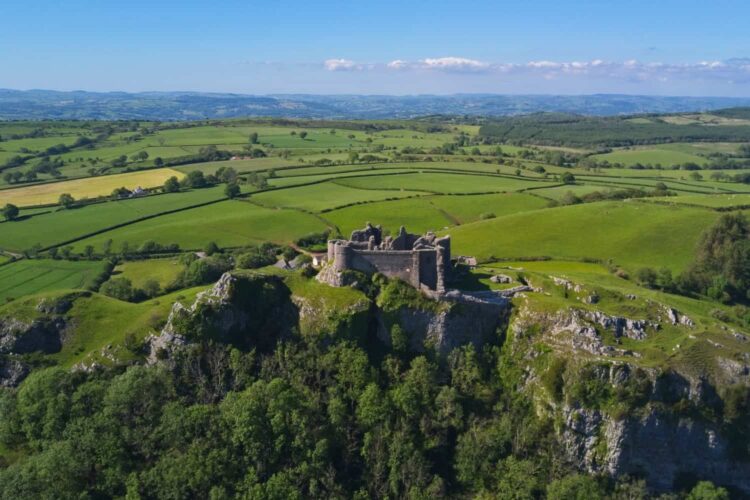
The garden sits between the market towns of Carmarthen (8 miles west) and Llandeilo (7 miles east), both worth visiting. Llandeilo has excellent independent shops, cafés, and pubs. Dinefwr Castle and the National Trust’s Dinefwr Park (White Park Cattle, medieval deer park) are 7 miles away. Carreg Cennen Castle — one of the most dramatic castle ruins in Wales, perched on a 90-metre limestone crag — is 12 miles east. For accommodation, browse holiday cottages in Carmarthenshire, campsites, and hotels.
For more things to do in the area, see our Llanelli guide, nature and landscapes, and free days out in South Wales.
Events and Seasonal Highlights
The garden runs a packed programme of events throughout the year, from seasonal festivals to educational workshops. Many are included with standard admission; some require separate booking.
Spring (March–May)
The garden comes alive in spring. Wildflower meadows in the Waun Las Nature Reserve begin to bloom, with early orchids appearing from April. The Double Walled Garden fills with colour as herbaceous borders awaken. The Butterfly House is at its most active as warmer temperatures encourage hatching. Welly Wednesdays resume for pre-schoolers. Easter activities and half-term programmes run during school holidays.
Summer (June–August)
Peak visiting season. The wildflower meadows reach their height in June and July — the orchid displays are spectacular and attract botanists from across Britain. Bird of Prey flying displays run three times daily. The Bee Garden is at maximum activity as honeybees forage across the estate. The garden hosts its annual food festival, antiques fair, and outdoor cinema evenings. Long summer days mean you can arrive at opening and still have time to explore the Regency parkland, nature reserve, and formal gardens before the 6pm close.
Autumn (September–November)
Autumn colour transforms the Regency parkland — the mature trees along the restored waterscape are particularly beautiful in October. Fungi walks and foraging events run through the season. The garden’s conservation work is visible as seed harvesting and habitat management take centre stage. Visitor numbers decrease from the summer peak, making autumn an excellent time to explore at a leisurely pace without crowds.
Winter (November–March)
The garden remains open through winter (10am–4pm). The Great Glasshouse provides a warm, green refuge on cold days — the Mediterranean plants inside are evergreen and the interior temperature is maintained year-round. The annual Luminate winter light trail (usually November–December) transforms the garden after dark with illuminated installations, projections, and sound — it is one of the most popular winter events in West Wales and sells out quickly. Breakfast with Santa runs in December. Winter is also the best season for stargazing at the Dark Sky Discovery Site — longer nights and clearer skies.
© Crown copyright Cymru Wales
The Estate’s History: 2,000 Years of Landscape
The land beneath the National Botanic Garden has been farmed for over 2,000 years. In the 7th century AD, this area formed part of the Welsh kingdom of Seisyllwg, possibly created from the pre-Roman kingdom of the Demetae tribe. After the Norman invasion, the territory was reduced to an outpost of the Princes of Deheubarth — the same dynasty whose castle at Dinefwr still stands 7 miles to the east.
By the early 17th century, the powerful Middleton family had built a mansion on the estate. In 1789, Sir William Paxton — a wealthy merchant who had made his fortune in India — bought the property for £40,000 (approximately £6 million in today’s money) and employed the architect S.P. Cockerell to design a grand new mansion, Middleton Hall. Paxton transformed the grounds into an elaborate water park that was considered one of the finest Regency landscapes in Wales.
Middleton Hall itself was destroyed by fire in 1931 and never rebuilt. The estate passed through various owners and fell into decline. It was the vision of the painter William Wilkins, working with a group of committed botanists and conservationists, that led to the creation of the National Botanic Garden on the site in the late 1990s. The Great Glasshouse was constructed virtually on the footprint of Cockerell’s demolished mansion — the old and the new layered on top of each other, separated by two centuries.
The extraordinary view from the east side of the Great Glasshouse — extending across the restored parkland to Paxton’s Tower in the distance — is the same view that Middleton Hall’s residents would have enjoyed 200 years ago. Landscape historians have noted that this vista helps modern visitors understand what the great landscape architects of the late 18th century meant by the word “picturesque.” It is one of the most historically significant designed views in Wales.
Frequently Asked Questions
How much does it cost to visit?
Adult £16.85, Child (3–16) £8.65, Under 2 free. Groups £12.50. Every ticket includes 7-day re-entry. Annual membership from £45 — includes partner gardens across the UK. Disabled visitors: standard rate + 1 free carer. Unpaid carers with ID: free.
What are the opening times?
Apr–Oct: daily 10am–6pm. Nov–Mar: daily 10am–4pm. Last entry 1 hour before closing. Closed Christmas Eve and Christmas Day only. Check the garden website for weather closures.
Are dogs allowed?
Doggy Days: every Monday, Friday, and first weekend of each month. No dogs other days (except assistance dogs). The garden is a conservation site.
What is the Great Glasshouse?
The world’s largest single-span glasshouse, designed by Foster and Partners. 99m x 55m, 785 glass panes, 24 arches. Houses endangered plants from six Mediterranean climate regions. Landscape by Kathryn Gustafson. Six-metre ravine, waterfalls, rock terraces.
How do I get there?
Llanarthne, Carmarthenshire SA32 8HG. From Carmarthen: A40 east, B4310 (brown signs). From the M4: A48 west, B4310. Nearest stations: Llandeilo (7mi), Carmarthen (8mi). Check Traveline Cymru for buses. Free parking.
Is it wheelchair accessible?
Core garden: 100% accessible. Wider landscape: restricted. Mobility scooters available (book ahead, 01558 667149). Free carer place with proof. Unpaid carers free with Carer ID since September 2025.

Pembrokeshire-born travel writer and founder of Wales.org. Born in Haverfordwest, now based in Hertfordshire — covering Welsh castles, national parks, festivals and family staycations across all 22 Welsh counties.