


The Best Coasteering Spots in Wales
Coasteering in Wales 2026: The Best Locations, Operators and What to Expect
Coasteering was invented in Wales — specifically on the Pembrokeshire coast in the 1980s.
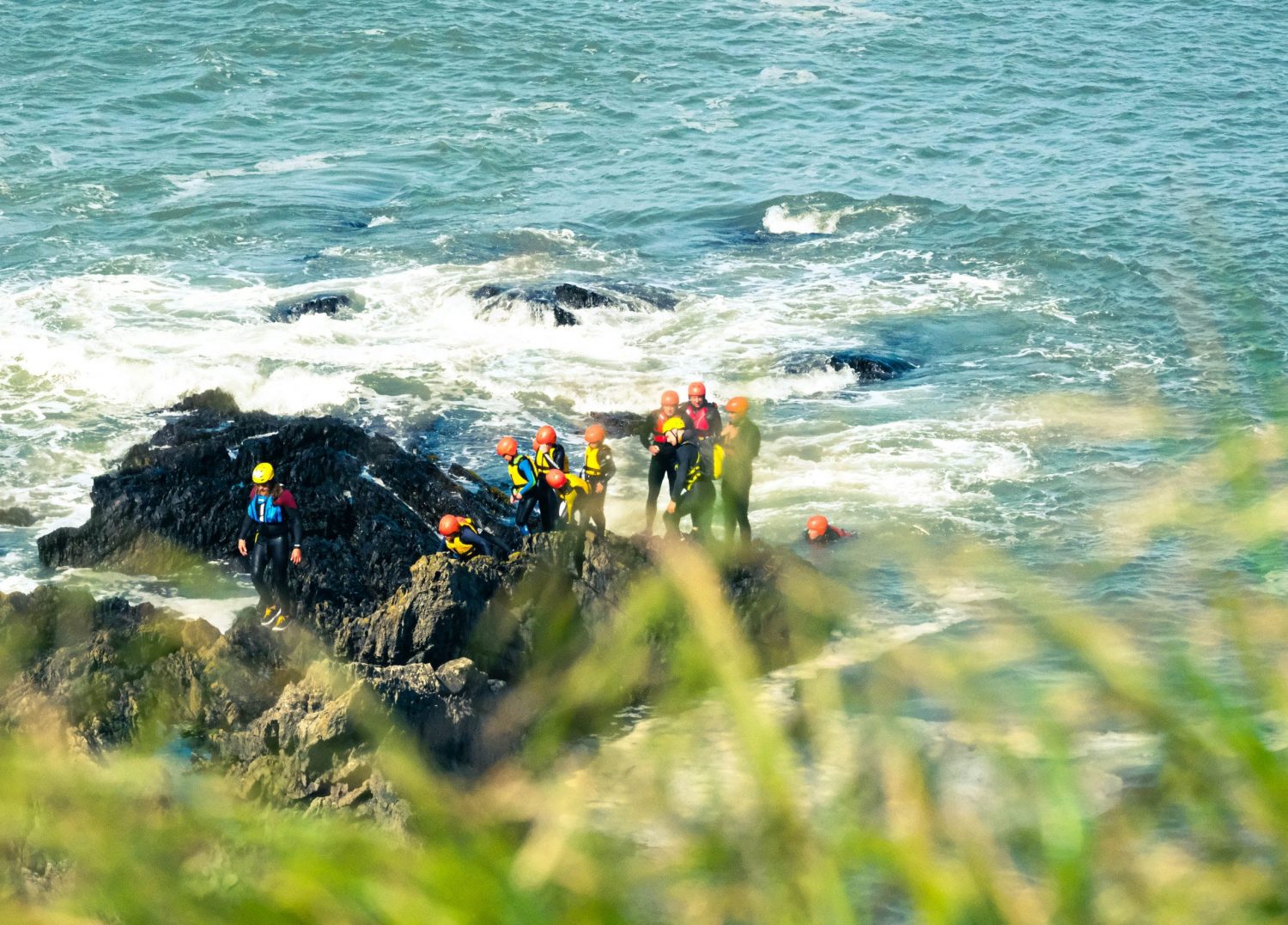
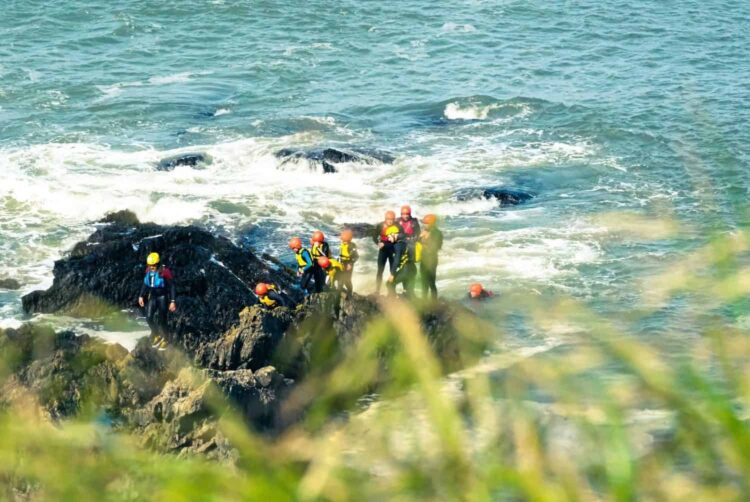
It involves scrambling across sea cliffs, jumping into the Atlantic from rock platforms, swimming through caves and sea channels, and navigating tidal pools — all in a wetsuit, helmet, and buoyancy aid.
Wales has more professional coasteering operators than any other part of the UK. This guide covers the best locations, what it costs, what to expect, and how to book in 2026.
What is Coasteering? Everything You Need to Know
Coasteering is a guided water-based activity that follows the intertidal zone — the rocks between the high and low tide marks.
A session typically lasts 2–3 hours. It includes: scrambling along rock ledges, jumping from sea cliffs into deep water, swimming through sea caves, traversing tide-washed channels, and navigating sea arches.
You need no previous experience. All equipment — wetsuit, helmet, buoyancy aid — is provided by the operator. You need to be a competent swimmer.
The minimum age is typically 8 years old for family sessions, 12 years for standard sessions. Weight and fitness restrictions vary by operator and location.
Prices typically run £35–£55 per person for a 2–3 hour session. Verify with operators at time of booking.

Coasteering in Pembrokeshire: Where It All Began
The Pembrokeshire coast is the heartland of coasteering in Wales. The red sandstone cliffs, sea arches, caves, and clear Atlantic water make it the most celebrated coasteering environment in the world.
The most popular stretches are around St Davids Head, Abereiddy Bay (including the famous Blue Lagoon), Stackpole Head, and the Marloes Peninsula. Each section offers different terrain and challenge levels.
TYF Adventure, St Davids — SA62 6QS
The oldest coasteering company in the world, founded in 1986. TYF pioneered the sport on the Pembrokeshire coast and their guides know the tidal windows and conditions better than anyone.
Sessions depart from St Davids. Approximately £45 adults, £39 juniors (12–17). Family sessions available April to October. Book at tyf.com.
Celtic Quest Coasteering, Pembrokeshire
Runs both standard and extreme sessions on different sections of the Pembrokeshire coast. The Blue Lagoon session at Abereiddy (SA62 5BE) — a flooded former slate quarry connected to the sea — is their most popular. Clear blue-green water, 10-metre jumps, and an enclosed environment that feels entirely private.
Approximately £45 adults. Sessions available March to October.
Preseli Venture, Newport Pembrokeshire — SA65 9LH
Based in the north of the Pembrokeshire Coast National Park near the Preseli Hills. Access to quieter sections of coast with fewer operators. Coasteering packages available as part of multi-activity residential breaks.
Coasteering in Gower: Rocky Headlands and Sea Caves
The Gower Peninsula was Britain’s first Area of Outstanding Natural Beauty — and its geology makes it excellent coasteering territory.
The limestone cliffs of the south Gower coast — from Pwlldu to Oxwich — have sea caves, natural arches, and deep water platforms ideal for jumping. The tidal range on Gower is among the highest in the world, which means conditions change dramatically across the day.
Operators working the Gower include Gower Adventures and PJ’s Surf Shop in Llangennith (SA3 1HU). Sessions typically depart from Port Eynon or Rhossili. Prices approximately £40–£50 per person.
Full guide to the Gower at wales.org/swansea-bay/.
Coasteering in Anglesey and North Wales
North Wales has less coasteering infrastructure than the south but the Anglesey coastline offers excellent terrain — particularly the sea cliffs and caves around South Stack and the Lleyn Peninsula.
Adventure Wales, Anglesey
Operates on the Anglesey AONB coastline, focusing on sea cliff traverses and cave swimming around the Holyhead Mountain area. Sessions depart from Holyhead (LL65 1YD). Smaller groups than Pembrokeshire operators — maximum eight per guide.
Surf Lines Wales, Caernarfon
Runs coasteering sessions on the southern Llŷn Peninsula — access to some of the quietest sea cliffs in Wales. Full guide to the Llŷn Peninsula at wales.org/llyn-peninsula/.
Coasteering Safety: What Professional Operators Provide
All reputable coasteering operators in Wales are members of the Adventure Activities Licensing Authority (AALA) or hold equivalent accreditation.
Each participant receives: a 5mm wetsuit, neoprene boots, a buoyancy aid (not a life jacket — it keeps you afloat but does not turn you face-up if unconscious), a helmet, and a safety briefing before entry.
Guides are qualified in Swift Water Rescue and carry a first aid kit and rescue throw bag. Group sizes are typically limited to 8–10 per guide.
Never coasteer without a qualified guide. Tidal conditions, hidden rocks, and cold water shock make unsupervised coasteering extremely dangerous. Water temperatures in Pembrokeshire rarely exceed 18°C even in August — hypothermia is possible without a wetsuit.
What to Wear and Bring to a Coasteering Session
Operators provide the technical kit. You need to bring a few things.
Wear a swimsuit or board shorts underneath the wetsuit — nothing with zips, buttons, or metal fastenings that could dig in. Bring a towel and a complete change of warm, dry clothing. You will be wet and cold when you finish.
Wear old trainers or water shoes that can get wet and stay on your feet. Flip flops are not acceptable. Most operators can supply wetsuit boots if your shoes are not suitable.
Leave your phone in the car or in the operator’s dry bag. Cameras get dropped and lost in the sea every season.
Eat a light meal 1–2 hours before your session. Do not arrive on an empty stomach or immediately after a large meal.

Frequently Asked Questions: Coasteering in Wales
Where was coasteering invented?
Coasteering was developed on the Pembrokeshire coast of Wales in the mid-1980s by adventure sports instructors working with TYF Adventure (founded 1986). The term itself was first used in this context by Andy Middleton of TYF. Wales is still the global centre of the activity.
How fit do you need to be for coasteering?
Reasonably fit. You need to be able to swim at least 200 metres in open water and climb up and down rocky terrain. Standard sessions are graded — most operators offer beginner-friendly routes where the highest jump is 3–4 metres and the swims are short. You do not need to be an athlete.
What is the best time of year for coasteering in Wales?
June to September offers the warmest water temperatures (14–18°C) and the longest days. Most operators run sessions April to October. Year-round operators exist in Pembrokeshire — winter sessions are quieter and the light can be spectacular, but 4mm wetsuits and hoods are needed.
Can children do coasteering in Wales?
Yes. Most operators run family coasteering sessions with a minimum age of 8 years. Family sessions use lower cliff sections — jumps of 1–3 metres — and calmer swim sections. Children must be competent swimmers. Parents or guardians must accompany children under 16.
Explore more Wales adventure guides:
Llŷn Peninsula Guide

Nick, your trusted guide to Wales travel and exploration, shares a deep passion for this enchanting land. With years of exploration, Nick offers expert insights into the best of Wales. Join him on a journey through its captivating history, culture, and hidden gems, as he inspires you to create unforgettable Welsh travel experiences.
Planning a trip to Wales?
Find the perfect holiday cottage for your Welsh adventure.


