

Aberystwyth: The Complete 2026 Visitor Guide
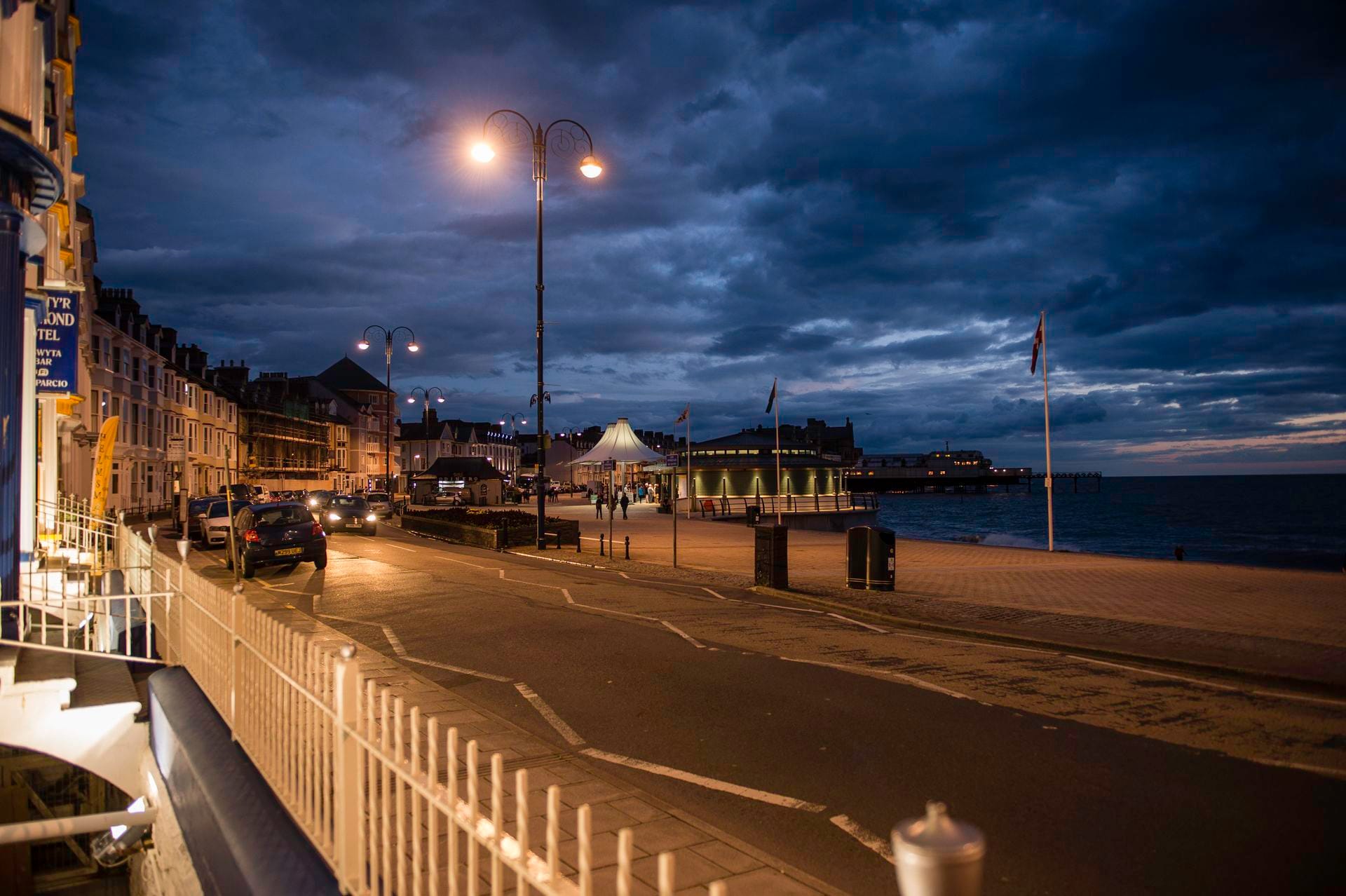
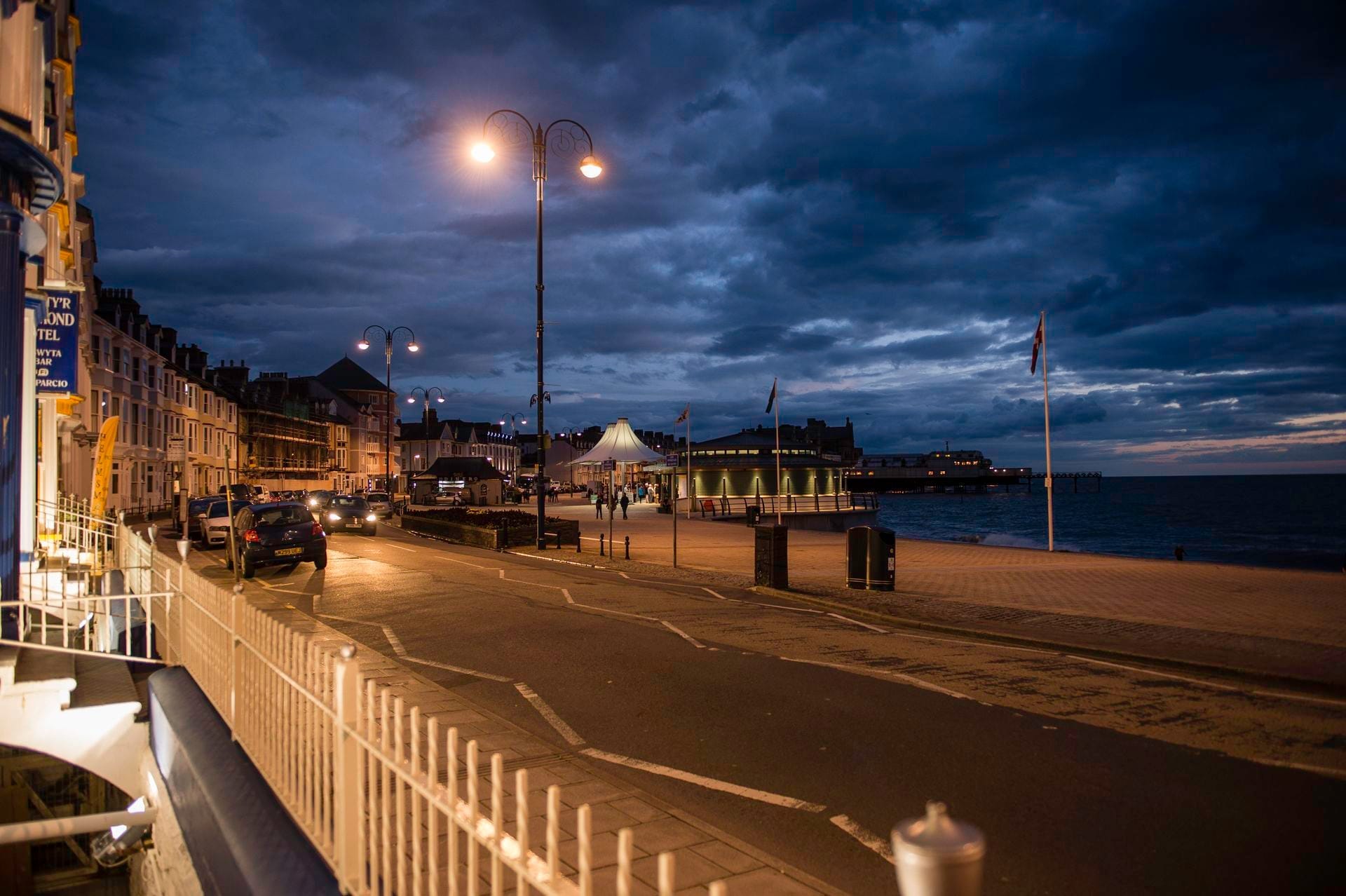
Aberystwyth’s Victorian seafront at dusk — one of the most photogenic skylines on the Welsh coast.
Aberystwyth — a-be-RUST-with in pronunciation, meaning “mouth of the Ystwyth” in Welsh — sits at the midpoint of the Welsh coast where Cardigan Bay curves westward into the Irish Sea. It’s the largest town in mid-Wales, the cultural capital of Ceredigion, and home to Wales’s first university. For visitors, it’s a town that genuinely earns its reputation as one of the most rewarding stops on a Welsh coastal trip: a Victorian seafront promenade, two heritage railways, a Norman castle ruin on the headland, the National Library of Wales, and a food and drink scene that has quietly become one of the best in mid-Wales.
This guide covers everything you need to plan a visit: the best things to do, where to stay, how to get there, what to combine it with, and the practical details — opening times, pricing guidance, the best times of year, and how to pronounce the place names you’ll encounter along the way.
Planning this trip? Ask Branwen, our free AI trip planner →
At a Glance: Aberystwyth
- Where it is: Mid-Wales coast, Ceredigion, on Cardigan Bay
- How to get there: Direct trains on the scenic Cambrian Line from Birmingham; ~5 hours from London via Birmingham; ~4 hours by road from London
- How long to stay: 2–3 nights for the town plus a Devil’s Bridge day trip; 4 nights to explore wider Ceredigion
- Best time to visit: May to early October, with late spring and early autumn ideal
- Top attractions: Cliff Railway and Camera Obscura, Vale of Rheidol Railway, National Library of Wales, Aberystwyth Castle ruins, Old College
- Best day trips: Devil’s Bridge waterfalls, the Elan Valley, New Quay and Aberaeron, the Cambrian Mountains
- Beaches: North Beach (dog restrictions in summer) and South Beach (year-round dogs welcome)
The Top Things to Do in Aberystwyth
1. Ride the Cliff Railway to Constitution Hill
Open since 1896, the Aberystwyth Cliff Railway is the longest electric funicular railway in Britain — 778 feet long, climbing 430 feet up the side of Constitution Hill at the northern end of the promenade. Two balanced carriages connected by a cable, rising slowly over the Victorian holidaymaker’s classic view of Cardigan Bay.
The journey itself takes only a few minutes but the railway sets the tone for the entire visit — slow, deliberate, Victorian. At the summit you reach the Aberystwyth Camera Obscura, the largest of its kind in the world, which projects a live moving image of the surrounding 1,000 square miles of land and sea onto a circular table inside a darkened drum. On a clear day from the viewing platform, you can see 26 Welsh mountain peaks.
The railway operates seven days a week from mid-March through early November, and five days a week (Wednesday to Sunday) from November through March. The Camera Obscura itself is closed from November through March. Adult return tickets are around £3.50 and family tickets around £11 — pricing is updated annually on the official Cliff Railway website.
Insider tip: Avoid the lunchtime queues by visiting first thing in the morning (10am opening) when the railway runs trains every few minutes and the summit views are usually crisper before the afternoon haze develops. The walk down via the zigzag footpath is free and takes about 20 minutes — a good way to combine the ride up with a circular return.
2. The Vale of Rheidol Railway to Devil’s Bridge
If you only do one thing in Aberystwyth, this is it. The Vale of Rheidol Railway opened in 1902 — the same heritage railway era as the Ffestiniog and Welsh Highland Railways — and runs steam-hauled passenger trains 11¾ miles inland from Aberystwyth station to Devil’s Bridge. The journey is 24 miles return, takes around an hour each way, and climbs more than 600 feet through the Rheidol Valley into the Cambrian Mountains.
This is the last steam railway operated by British Rail (until privatisation in 1989), and one of the few narrow-gauge lines in the world to have continuously operated under steam since the Victorian era. At Devil’s Bridge you have an hour (or longer with the right ticket) to explore the famous Devil’s Bridge waterfalls — three stacked stone bridges built one above the other across the Mynach Falls — before catching the return train.
Tickets are bookable in advance via the official Vale of Rheidol Railway website. First-class carriages with panoramic rear-facing windows are available at a premium and book up quickly in peak season.
Devil’s Bridge waterfalls note: The waterfalls are a separate attraction with their own admission fee — your railway ticket does not include access. Wear proper walking shoes; the bridge viewpoints and Jacob’s Ladder descent are steep and frequently wet.
3. Walk the Victorian Promenade and Visit the Old College
Aberystwyth’s mile-long seafront promenade is one of the most complete Victorian seafronts in Wales. At its southern end stands the Old College — a striking Gothic Revival building completed in 1864 as the Castle Hotel and converted to become Aberystwyth University in 1872, the first university in Wales. Following a major National Lottery-funded refurbishment, Old College has reopened to the public with new galleries, a café, learning spaces and exhibitions on the building’s remarkable history.
The traditional Aberystwyth ritual is to walk the full length of the promenade and “kick the bar” at the northern end — a small metal railing where generations of students have marked the end of their walk. The pastel terraces of Marine Terrace, Victoria Terrace and the Royal Pier punctuate the route. The Royal Pier itself opened in 1865 — the first pleasure pier in Wales — and was extensively damaged by Atlantic storms before being rebuilt; today it houses bars, restaurants and amusements.

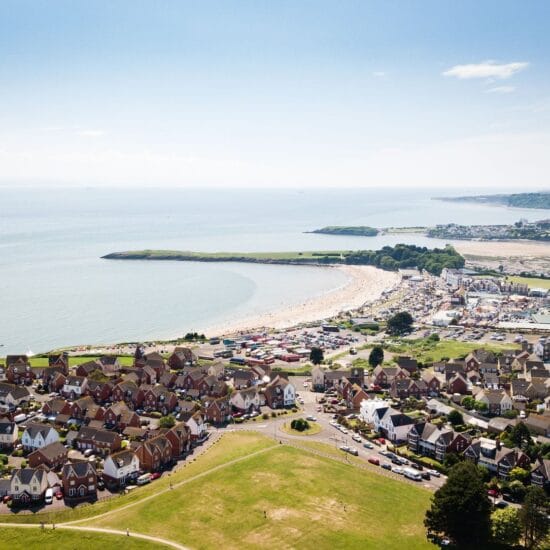
The classic Aberystwyth view from above the town — the Royal Pier, harbour and seafront curving south along Cardigan Bay.
4. Explore the Castle Ruins on the Headland
At the southern tip of the headland between North and South Beaches, the ruins of Aberystwyth Castle stand on a low rocky promontory above Cardigan Bay. Built in 1277 by King Edward I during his conquest of Wales — making it a sibling fortification to the more famous Edward I castles of North Wales — Aberystwyth Castle is now an atmospheric ruin maintained by Cadw, free to enter and open at all hours.
The castle layout is unusual: a concentric diamond plan that’s clearer from above than from ground level. A bronze sculpture of the Aberystwyth Bardic Crown stands at the summit, commemorating Wales’s first National Eisteddfod (held here in 1865). Sunset from the castle walls, looking south down the curve of Cardigan Bay, is one of the great free experiences of the Welsh coast.
5. The National Library of Wales
One of only six legal deposit libraries in the United Kingdom — meaning it has the right to receive a copy of every book published in the UK and Ireland — the National Library of Wales sits on the hillside above the town with commanding views over Cardigan Bay. Entry to the public exhibitions and reading rooms is free, and the library hosts world-class exhibitions of Welsh manuscripts, photography, maps and art.
For visitors, the most rewarding sections are the rotating public exhibitions in the main building, the Hengwrt Chaucer manuscript collection (one of the most important medieval Welsh literary archives in existence), and the panoramic café terrace, which has one of the best sunset views in Aberystwyth.
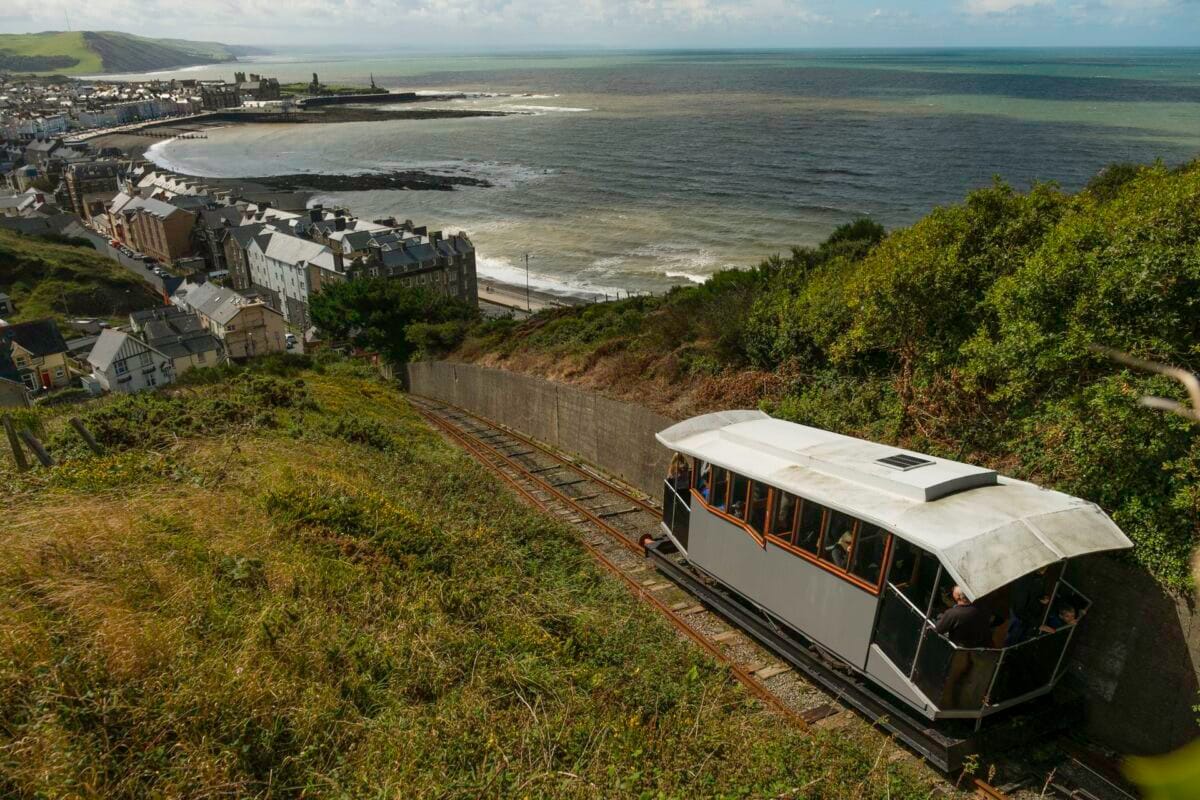
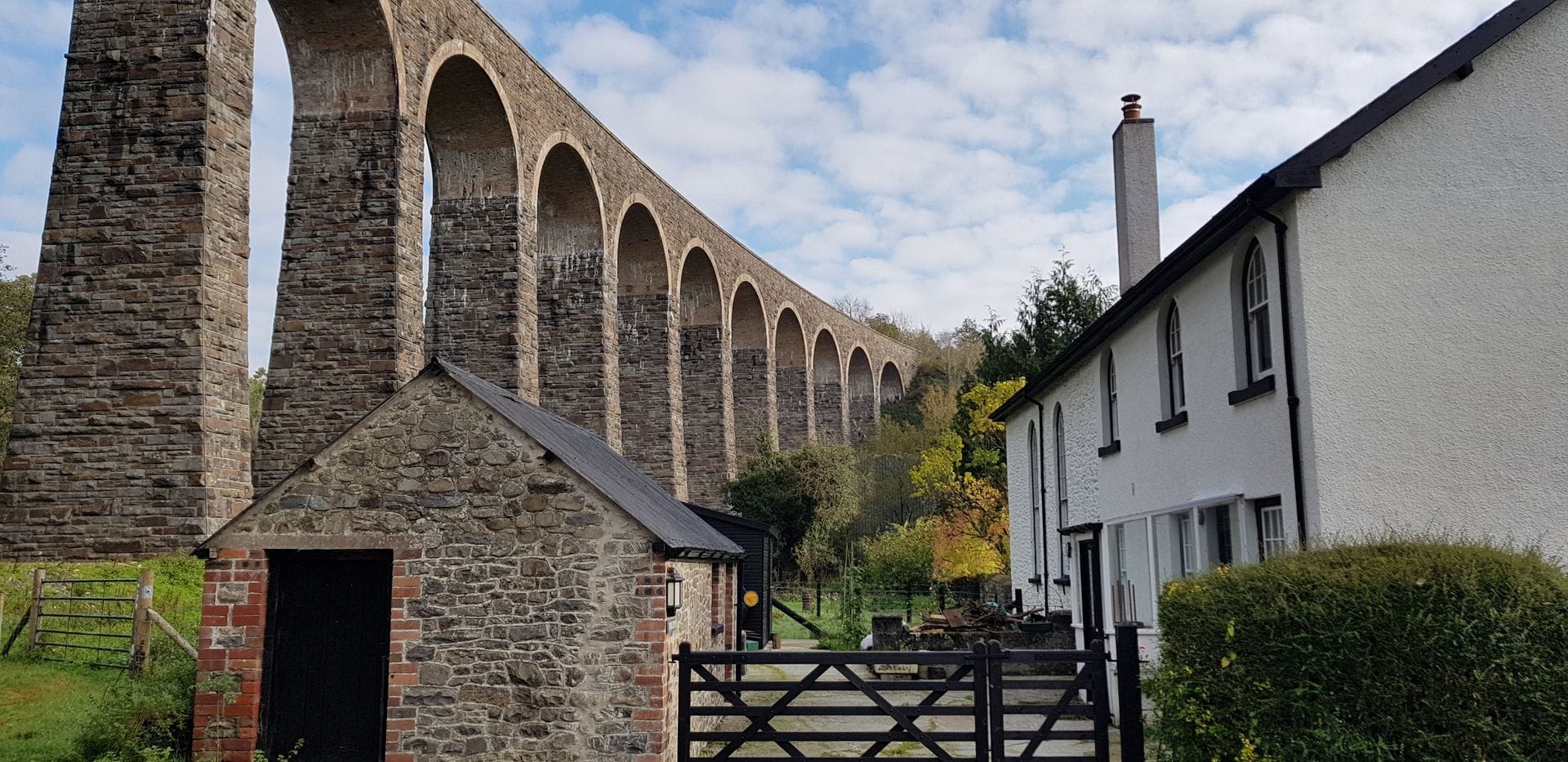
The Vale of Rheidol Railway — operating steam-hauled passenger services from Aberystwyth since 1902.
6. Climb Pen Dinas
The most rewarding free walk in Aberystwyth. Pen Dinas is a 152-metre Iron Age hillfort just south of the town, topped by the Wellington Monument — a curiously English memorial to the Duke of Wellington built in 1852. The walk to the summit takes about 30 minutes from the harbour car park; the path is moderately steep but well-maintained.
From the top you get a complete 360° view of Aberystwyth, the harbour, both beaches, the castle ruins, the curve of Cardigan Bay, and inland to the Cambrian Mountains. It’s the photographer’s choice for Aberystwyth sunrises and sunsets, and a serious contender for the best free viewpoint in mid-Wales.
Where to Stay in Aberystwyth
Aberystwyth has a wider range of accommodation than many mid-Wales towns its size, helped by the year-round demand from university visitors and parents during term-time. The classic choice is a seafront hotel along Marine Terrace — book a sea-view room for the full Victorian-promenade experience. Mid-budget options cluster around the town centre, with self-catering apartments and cottages widely available in the surrounding villages of Borth, Llanrhystud and Llanon for visitors wanting a quieter base.
Find Hotels and Cottages in Aberystwyth
Browse the interactive map below to see real-time hotel and cottage prices in Aberystwyth, the surrounding Ceredigion coast, and inland towards Devil’s Bridge and the Cambrian Mountains.
Booking tip: Aberystwyth fills up around university term dates — particularly the September Welcome Week, December graduation, and June graduation. If your dates are flexible, mid-week stays in May, June or September give the best balance of price, weather and availability. Sea-view rooms on Marine Terrace book up first.
Food and Drink in Aberystwyth
Aberystwyth’s food scene has quietly improved over the last decade. The town now supports a strong cluster of independent restaurants, cafés and bars, particularly along Pier Street and around the harbour. Notable picks include:
- Ultracomida — a Spanish deli-restaurant on Pier Street, widely regarded as one of the best restaurants in mid-Wales.
- Gwesty Cymru — seafront hotel and award-winning restaurant specialising in Welsh produce. Strong wine list, panoramic sea views.
- Medina — a Mediterranean and Middle Eastern café-restaurant with a loyal local following.
- The Glengower Hotel — Aberystwyth’s most reliable seafront pub, with a sun terrace overlooking the bay and excellent locally-sourced food.
- The Cwtch Bar — independent cocktail bar with a Welsh-language menu and a strong line in local craft spirits.
For lunch, the cafés along Great Darkgate Street and Pier Street offer good independent options. For an upmarket evening meal in the wider region, the Michelin-recognised restaurants of mid-Wales are within driving distance — Ynyshir at Eglwys Fach (40 minutes north) holds two Michelin stars and is one of the highest-rated restaurants in Britain.
The Best Day Trips from Aberystwyth
Devil’s Bridge and Mynach Falls
The classic Aberystwyth day trip, reached either by the Vale of Rheidol Railway (the scenic option) or by road via the A4120 (a 30-minute drive). Devil’s Bridge village is named after its famous three-tier stone bridge: a 12th-century original at the bottom, an 18th-century bridge built directly over it, and a 20th-century road bridge above. Below the bridges, the Mynach river cascades 90 metres in a series of waterfalls; a circular path called the Three Bridges Walk descends into the gorge via Jacob’s Ladder.

Tan-y-Bwlch beach with Pen Dinas hillfort behind — a quieter alternative to Aberystwyth’s main beaches.
The Elan Valley
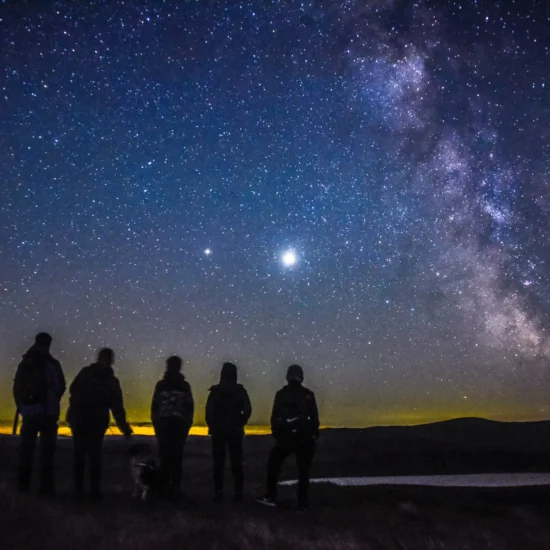
Around 45 minutes east of Aberystwyth, the Elan Valley is one of the most remote and beautiful landscapes in mid-Wales. A chain of late-Victorian reservoirs and dams set among the Cambrian Mountains, it became Wales’s only International Dark Sky Park in 2015 and is the largest privately-owned Dark Sky Park in the world.
New Quay and Aberaeron
Drive 30 minutes south down the Ceredigion coast for two of the most photogenic small towns on the Welsh coast. New Quay is a working fishing harbour with a strong Dylan Thomas association — he wrote much of Under Milk Wood here — and is one of the best places in Britain for dolphin watching. The resident bottlenose dolphin population is regularly seen from the harbour wall in summer.
Aberaeron, fifteen minutes further south, is famous for its Georgian harbourside terraces painted in bold blocks of colour — pink, blue, mustard, sage — making it one of the most-photographed small towns in Wales.
The Cambrian Mountains
Inland from Aberystwyth, the Cambrian Mountains contain some of the wildest and least-visited landscape in southern Britain. Bwlch Nant yr Arian forest visitor centre (run by Natural Resources Wales) hosts daily red kite feedings — at 2pm in winter, 3pm in summer — when dozens of red kites swoop down from the surrounding hills for handfuls of meat. It’s one of the most spectacular wildlife experiences in Wales and is free to watch.
How to Get to Aberystwyth
By train
Aberystwyth is the western terminus of the Cambrian Line, one of the most scenic train journeys in Britain. Direct trains run from Birmingham New Street (about 3 hours) via Shrewsbury and Machynlleth. From London Euston, change at Birmingham — the total journey is approximately 5 hours. From Cardiff, change at Shrewsbury — the journey takes around 4 hours.
The Cambrian Coast Line connects Aberystwyth and Machynlleth to the coastal villages of north Ceredigion and Gwynedd, including Borth, Aberdovey, Barmouth and Pwllheli — one of the great undiscovered scenic railway routes of Wales.
By car
Aberystwyth is approximately 4 hours from London via the M40 and A44, 2 hours from Cardiff via the A470, and just under 2 hours from Birmingham. The A44 east from Aberystwyth crosses the Cambrian Mountains via Ponterwyd and Llangurig — slow but scenic.
By bus
TrawsCymru express buses connect Aberystwyth to Carmarthen (T1), Wrexham (T3), Bangor (T2) and Cardiff (T1C) on a regular timetable. The T2 route via Machynlleth and Eryri is particularly scenic.
Frequently Asked Questions: Aberystwyth
Is Aberystwyth worth visiting?
Yes — Aberystwyth is one of the most rewarding towns on the Welsh coast. It combines a beautiful Victorian seafront, two historic railways (the Cliff Railway up Constitution Hill and the Vale of Rheidol Railway inland to Devil’s Bridge), the National Library of Wales, Aberystwyth Castle ruins, and an excellent independent food and drink scene. It’s also the natural gateway to the Cambrian Coast and mid-Wales. A weekend gives you enough time to cover the main sights; three to four days allows day trips to Devil’s Bridge, the Elan Valley and the Cambrian Mountains.
How do you pronounce Aberystwyth?
Aberystwyth is pronounced a-be-RUST-with — the “wyth” at the end rhymes roughly with “with”, not “wit”. The stress falls on the third syllable. The name means “mouth of the Ystwyth” in Welsh; the town sits where the Afon Ystwyth river meets Cardigan Bay.
What is Aberystwyth famous for?
Aberystwyth is famous as Wales’s traditional university town — Aberystwyth University, founded in 1872, was the first university in Wales. It is also known for the National Library of Wales, the Victorian seafront promenade, the Aberystwyth Cliff Railway (Britain’s longest electric funicular), and the Vale of Rheidol Railway. Culturally, Aberystwyth is regarded as the unofficial capital of mid-Wales and a stronghold of the Welsh language.
How long do you need in Aberystwyth?
A full day covers the main town attractions: Constitution Hill, the promenade, the castle ruins, Old College and the harbour. A weekend (two nights) allows time to add the Vale of Rheidol Railway day trip to Devil’s Bridge. Three to four nights opens up wider day trips to the Elan Valley, the Cambrian Mountains, and the Ceredigion coastline north towards Borth and south to New Quay and Aberaeron.
How do you get to Aberystwyth from London?
Aberystwyth is reached from London by train via Birmingham New Street and Shrewsbury on the Cambrian Line — the journey takes roughly 5 hours with one change. The Cambrian Line is one of the most scenic rail journeys in Britain, running along the Welsh coast from Machynlleth to Aberystwyth. By road, Aberystwyth is around 4 hours from London via the M40 and A44. There is no nearby airport for direct flights; the closest is Cardiff or Birmingham.
What is the best time of year to visit Aberystwyth?
Late spring (May to June) and early autumn (September) give the best balance of mild weather, long daylight hours, and uncrowded attractions. July and August are warmest but busiest. The Vale of Rheidol Railway and Cliff Railway both operate from late March through October. The Camera Obscura at the top of Constitution Hill is closed from November through March. Aberystwyth winters are mild but very wet, and many attractions reduce hours significantly outside the main season.
Is Aberystwyth dog-friendly?
Yes — Aberystwyth is a notably dog-friendly town. Constitution Hill, the Cliff Railway, and most of the seafront welcome dogs year-round. The Vale of Rheidol Railway also accepts dogs on board. Aberystwyth’s North Beach allows dogs from October through April, with restrictions during peak summer; South Beach allows dogs all year. Most independent cafés and several hotels accept well-behaved dogs.
More Mid-Wales Guides

Pembrokeshire-born travel writer and founder of Wales.org. Born in Haverfordwest, now based in Hertfordshire — covering Welsh castles, national parks, festivals and family staycations across all 22 Welsh counties.