


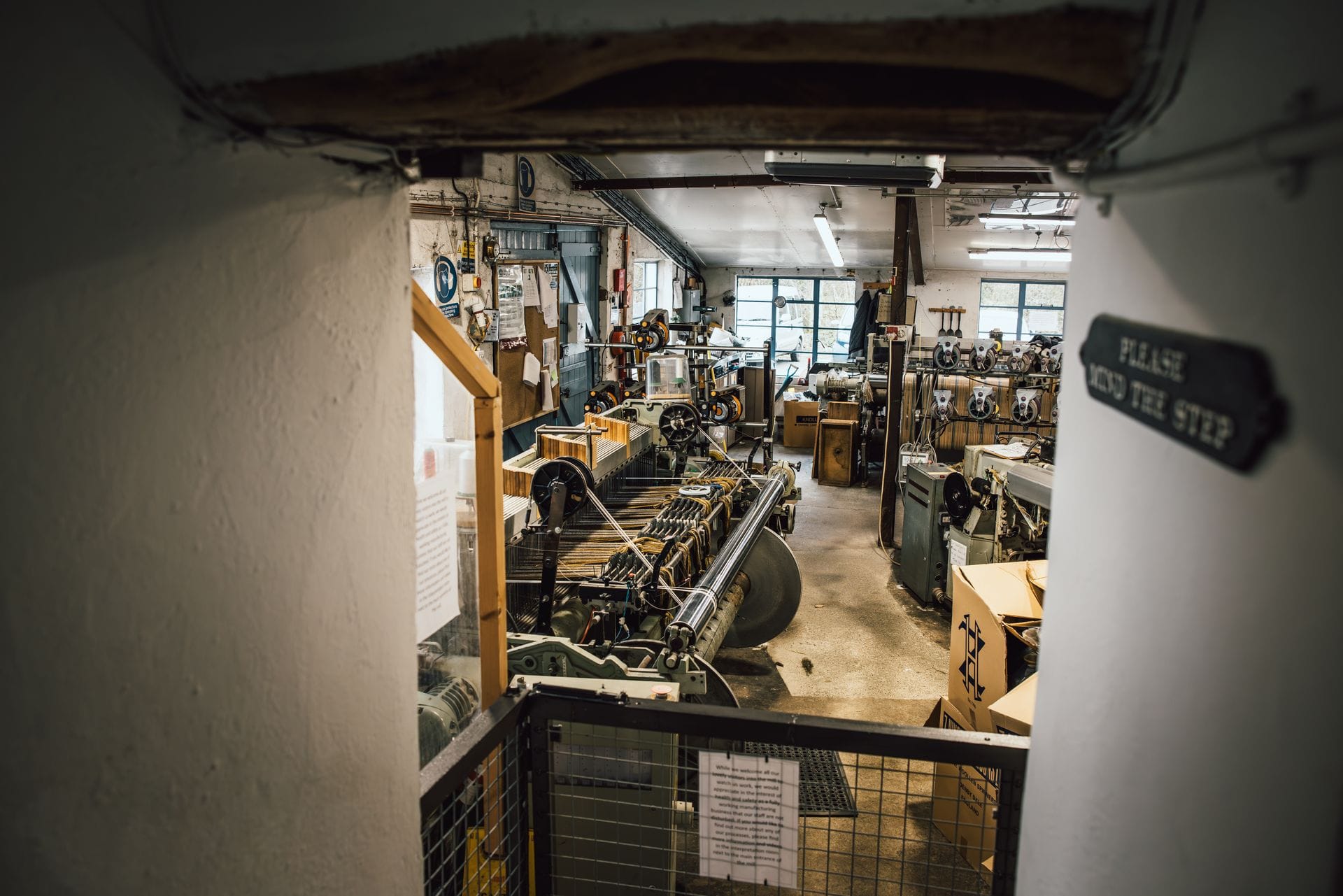
The Working Wool Mills of Wales: A Complete Visitor Guide
Wool was once Wales’s most important export – at its peak, one in three working people in some Teifi Valley villages was employed in the woollen trade. © Crown copyright Cymru Wales 2026
Wool shaped Wales for centuries before coal ever did – Cistercian monks at Tintern and Margam abbeys built the fibre’s reputation across medieval Europe, and by the 19th century the Teifi Valley had earned the nickname “the Huddersfield of Wales” for its concentration of mills. Most of that industry is gone, but a handful of genuinely working mills survive, several run by the same families for well over a century. This guide covers five verified places to see Welsh wool actually being processed, woven and sold in 2026 – not museum reconstructions, but real working businesses you can visit.
At a Glance: Welsh Wool Mills
- Five verified sites across North, Mid, West and South Wales
- Free entry at every mill in this guide – all make their money on the shop, not admission
- Oldest continuously family-run: Trefriw Woollen Mills, Conwy Valley, since 1859
- Royal connection: Solva Woollen Mill made carpets and rugs for King Charles III’s former Welsh home, Llwynywermod, while he still held the lease as the then-Prince of Wales
- Best for a national overview: The National Wool Museum, Dre-fach Felindre, holds the National Textile Collection
North Wales
Trefriw Woollen Mills, Conwy Valley
Trefriw Woollen Mills is one of the longest continuously family-run businesses of its kind in Wales – the site dates to the 1820s, and Thomas Williams took over in 1859; his descendants still run it today. The mill generates its own electricity via a Pelton wheel turbine on the fast-flowing Afon Crafnant, powering looms that weave traditional Welsh bedspreads, tapestry cloth and tweeds. Weaving demonstrations run mid-February to mid-December, Monday to Friday, and the turbine and machinery can be viewed free of charge during shop hours year-round. A weaver’s garden grows the plants traditionally used for dyeing wool.
Planning this trip? Ask Branwen, our free AI trip planner →
- Location: Main Road, Trefriw, Conwy, LL27 0NQ
- Price: Free entry and viewing
- Hours: Shop open all year Mon-Sat; weaving demonstrations mid-Feb to mid-Dec, Mon-Fri
- Book: t-w-m.co.uk
West Wales
Melin Tregwynt, Pembrokeshire
Melin Tregwynt sits in a remote wooded valley on the Pembrokeshire coast, with a mill on the site since the 17th century, when local farmers brought their fleeces to be spun. The Griffiths family owned it for three generations from 1912, and in 2022 it became an Employee-Owned Trust, now employing more than 45 people. Its contemporary take on traditional Welsh tapestry patterns has made it one of the best-known Welsh textile brands internationally, stocked in luxury hotels and design-led stores worldwide. Visitors can watch the mill working on weekdays, free of charge, before browsing the shop and café.
- Location: Tregwynt Mill, Castlemorris, Haverfordwest, Pembrokeshire, SA62 5UX
- Price: Free entry and viewing
- Hours: Mill working Mon-Fri 10am-4.30pm (excl. bank holidays); shop/café open 7 days
- Book: melintregwynt.co.uk
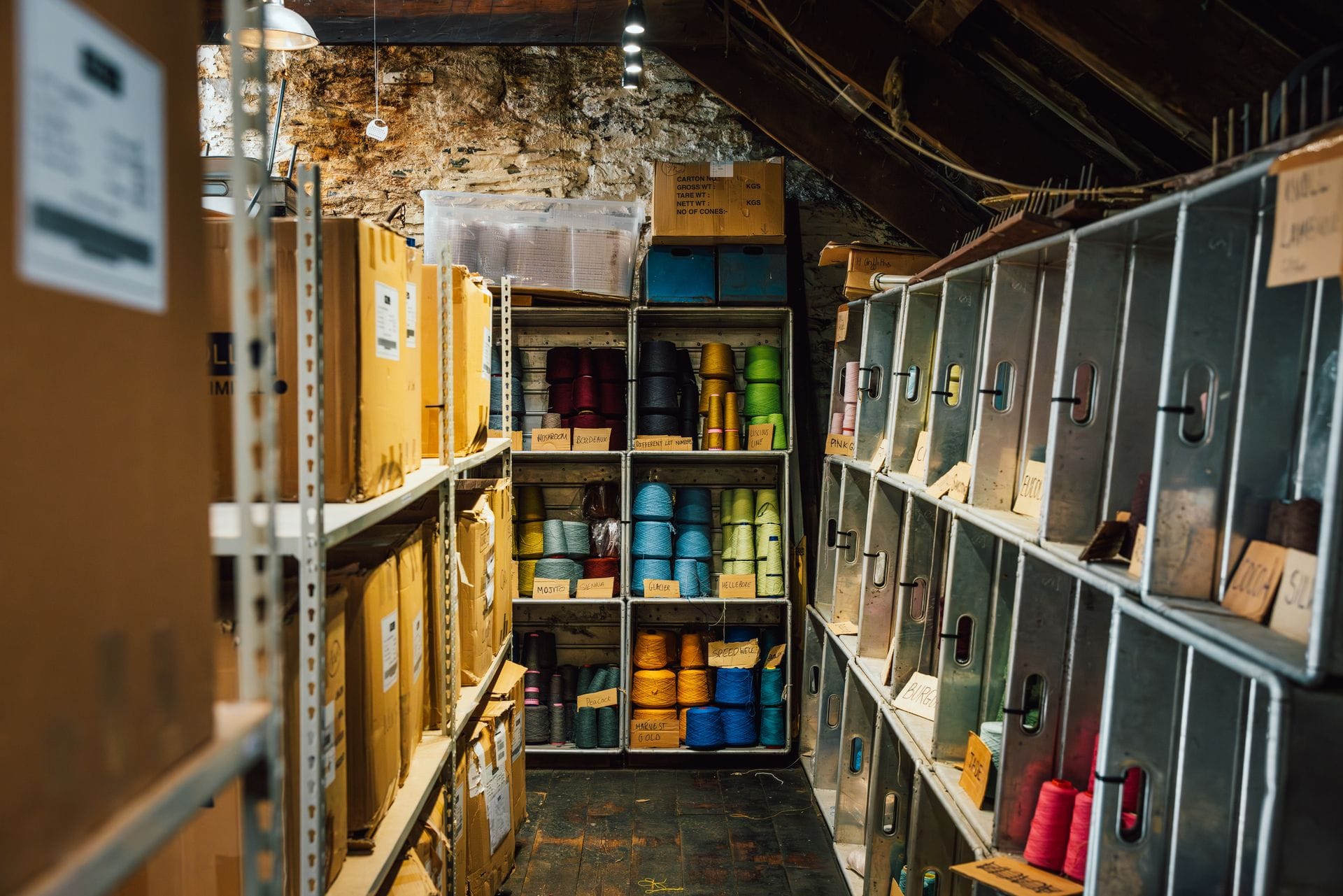
Every colour used in a Welsh tapestry blanket starts as a labelled cone of yarn in the mill’s own store, mixed and matched long before it reaches the loom. © Crown copyright Cymru Wales 2026
Solva Woollen Mill, Middle Mill
Solva Woollen Mill has operated at Middle Mill, a mile inland from Solva, since 1907, when Tom Griffiths relocated his St Davids mill to a new purpose-built building powered by a 10-foot overshot waterwheel. It’s the oldest working woollen mill in Pembrokeshire and now the only mill in Wales specialising in flat-weave carpets, rugs and stair runners, still made on traditional Dobcross looms. The current owners, Tom and Anna Grime, have supplied rugs and runners to stately homes and museums, and in 2008 received a commission from the then-Prince of Wales for his Carmarthenshire home, Llwynywermod. Visitors can walk through the weaving sheds and talk to the weavers directly, then finish with tea and cake in the tearoom, housed in the old dye shed.
- Location: Middle Mill, Solva, Haverfordwest, Pembrokeshire, SA62 6XD
- Price: Free entry and viewing
- Hours: Mon-Fri 9.30am-5.30pm; extended Saturday and Sunday hours July-September
- Book: solvawoollenmill.co.uk
National Wool Museum, Dre-fach Felindre
Housed in the former Cambrian Mills in the Teifi Valley, the National Wool Museum tells the story of an industry that once earned this area the nickname “the Huddersfield of Wales.” Run by Amgueddfa Cymru (National Museum Wales), it holds the National Textile Collection and follows the entire process from fleece to fabric through the sympathetically restored, listed mill buildings. A raised walkway in the Weaving Shed gives a close view of textiles being produced by a genuinely working mill inside the museum, and the shop sells cloth made on site. Entry is completely free.
- Location: Dre-fach Felindre, near Newcastle Emlyn, Carmarthenshire, SA44 5UP
- Price: Free entry
- Hours: Feb-Oct Tue-Sat 10am-5pm; Nov-Feb Tue-Sat 10am-4pm
- Book: museum.wales/wool
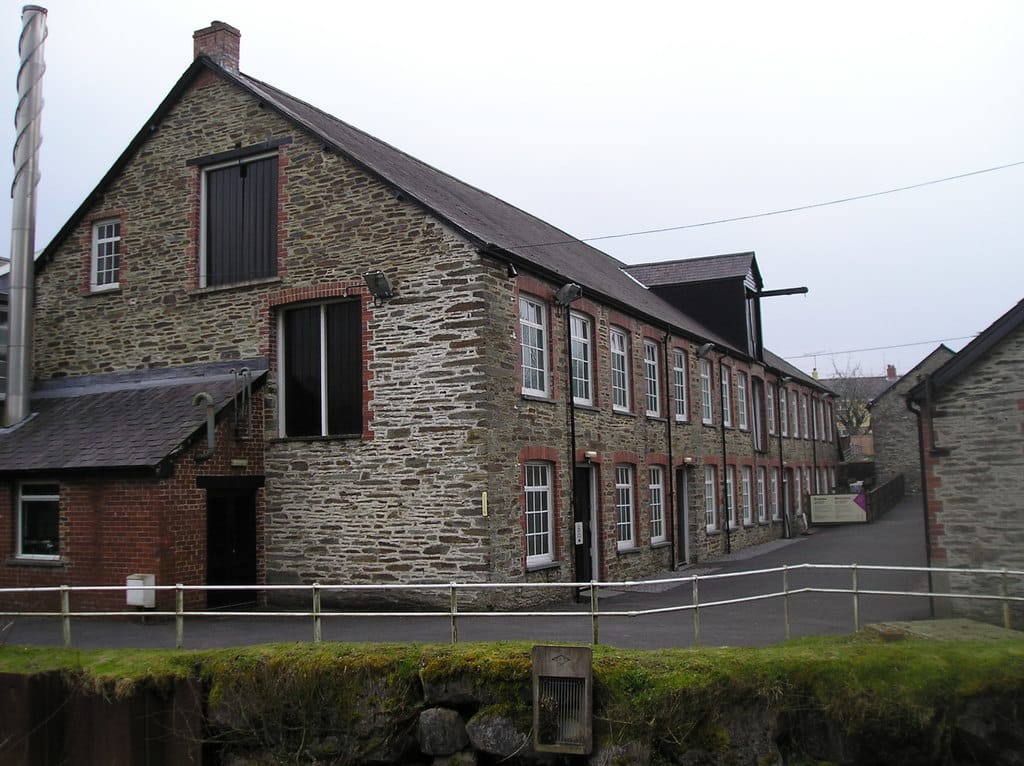
The National Wool Museum is housed in the former Cambrian Mills, once at the heart of the Teifi Valley’s woollen industry. © Copyright Chris Andrews
Combine two Pembrokeshire mills in one day. Melin Tregwynt and Solva Woollen Mill are both within easy reach of St Davids, making it possible to see two genuinely different weaving traditions – contemporary tapestry design and traditional flat-weave carpets – on the same trip.
South Wales
Esgair Moel Woollen Mill, St Fagans National Museum of History
Rather than a mill in its original location, Esgair Moel is a complete 1760s woollen mill relocated stone by stone from Powys to St Fagans National Museum of History near Cardiff, one of Europe’s leading open-air museums. A resident weaver demonstrates the full process on site – washing, dyeing, combing, spinning and weaving – and the results are sold in the museum shop. It’s the most accessible option in this guide for anyone based in or visiting Cardiff, and pairs naturally with St Fagans’ wider collection of relocated historic Welsh buildings.
- Location: St Fagans National Museum of History, Cardiff, CF5 6XB
- Price: Free entry (part of St Fagans, which has no admission charge)
- Book: museum.wales/stfagans
| Mill | Region | Known for | Price |
|---|---|---|---|
| Trefriw Woollen Mills | Conwy Valley, North Wales | Hydro-powered, family-run since 1859 | Free |
| Melin Tregwynt | Pembrokeshire, West Wales | Contemporary Welsh tapestry design | Free |
| Solva Woollen Mill | Pembrokeshire, West Wales | Flat-weave rugs, royal commissions | Free |
| National Wool Museum | Carmarthenshire, Teifi Valley | National Textile Collection | Free |
| Esgair Moel, St Fagans | Cardiff, South Wales | Relocated 1760s mill, live demos | Free |
What to Expect Visiting a Welsh Wool Mill
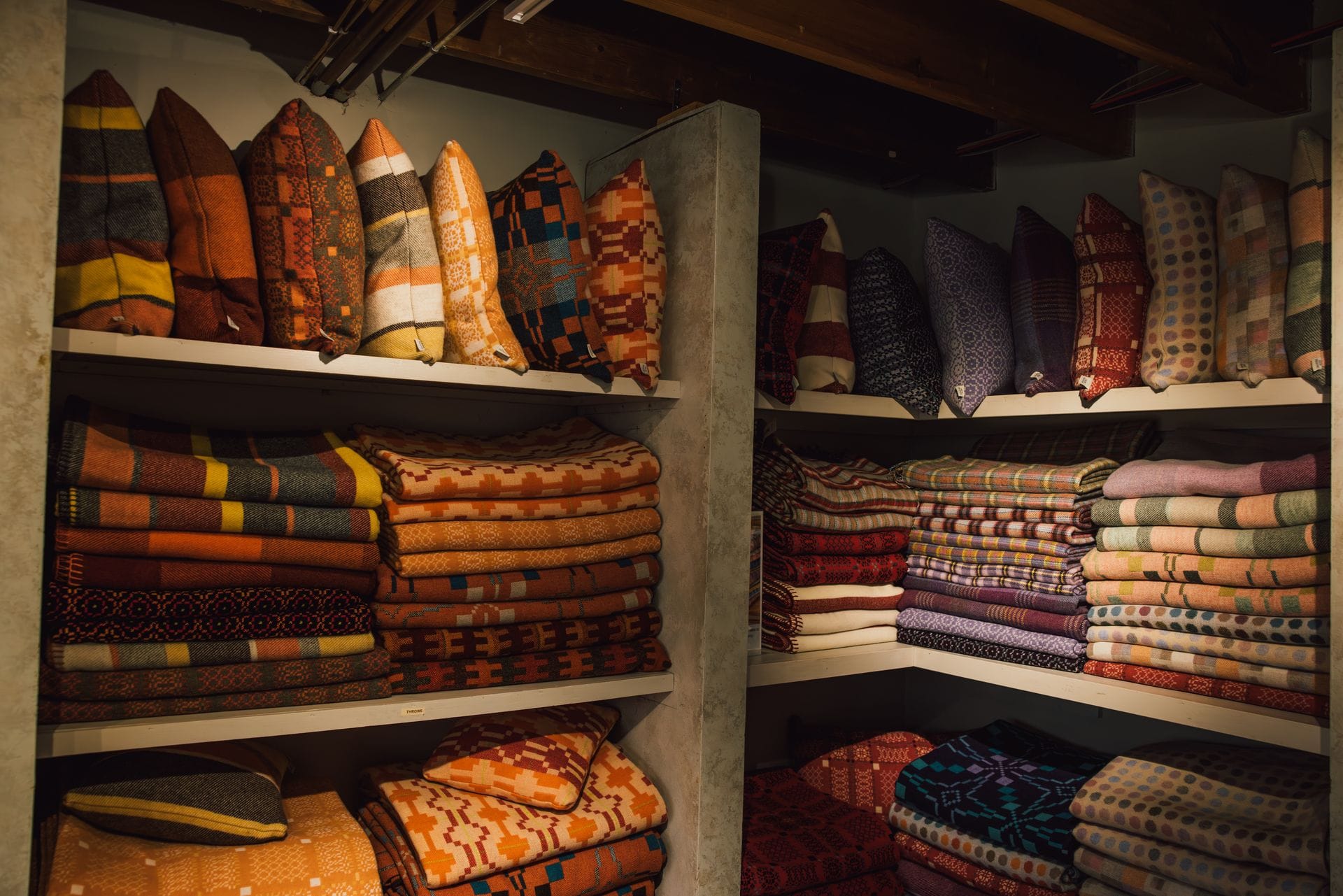
The mill shop is usually the main event for most visitors – genuine mill-made throws and blankets cost more than a mass-produced souvenir, but they’re made on site by the people you can watch working. © Crown copyright Cymru Wales 2026
- Every mill in this guide is free to enter. They make their money on the shop, not admission – there’s no ticket to book or pay for in advance.
- These are working businesses, not costumed reenactments. The looms you see are producing real stock for sale, so the exact machinery in operation on any given day depends on what’s being made that week.
- Weekdays give the best chance of seeing weaving in progress. Several mills reduce or pause demonstrations at weekends and over the winter off-season – check the specific mill’s current hours before a special trip.
- The shop is usually the main event for most visitors. Genuine mill-made throws, blankets and rugs cost more than a mass-produced souvenir, but they’re made on site by the people you can watch working.
Check demonstration days before travelling. Weaving schedules vary by mill and season – Trefriw’s demonstrations run mid-February to mid-December on weekdays only, for example. If watching a loom in action is the main reason for the trip, call ahead or check the mill’s own website for that week’s schedule.
Frequently Asked Questions: Welsh Wool Mills
Are there any working wool mills left in Wales?
Yes, several. Trefriw Woollen Mills in the Conwy Valley has been run by the same family since 1859 and still generates its own hydroelectric power. In Pembrokeshire, Melin Tregwynt and Solva Woollen Mill are both genuinely working mills – Pembrokeshire had 26 woollen mills in 1900 and these two are the only survivors. The National Wool Museum in Dre-fach Felindre, Carmarthenshire, also houses an active working mill inside a museum setting.
What is the oldest woollen mill in Wales?
Trefriw Woollen Mills traces its site back to the 1820s and has been run continuously by the Williams family since Thomas Williams took it over in 1859, making it one of the longest continuously family-run mills in Wales. Solva Woollen Mill, operating since 1907, holds the specific title of oldest working woollen mill in Pembrokeshire, and is now one of only two mills left in that county.
Can you watch Welsh wool being woven?
Yes. Trefriw Woollen Mills has weaving demonstrations from mid-February to mid-December, Monday to Friday, and visitors can view the mill’s turbine and machinery free of charge. Melin Tregwynt lets visitors watch the mill working on weekdays, also free of charge. Solva Woollen Mill welcomes visitors to walk through the weaving sheds and talk to the weavers directly. The National Wool Museum has a raised walkway giving a unique view of textiles in production in its Weaving Shed.
What is Welsh tapestry cloth?
Welsh tapestry is a distinctive double-cloth weave traditionally used for blankets and bedspreads, woven on a jacquard loom to create bold, reversible geometric patterns. It became one of the defining products of the Welsh woollen industry through the 19th and 20th centuries and is still made today at mills including Trefriw and Melin Tregwynt, whose contemporary tapestry designs are stocked internationally. The Welsh word carthen (plural carthenni) simply means a woven blanket or bedcover of any kind, though in practice it’s most often applied to these traditional double-cloth tapestry blankets, since that’s what most surviving Welsh blankets are.
Related Wales.org Guides

Pembrokeshire-born travel writer and founder of Wales.org. Born in Haverfordwest, now based in Hertfordshire — covering Welsh castles, national parks, festivals and family staycations across all 22 Welsh counties.