
Welsh Cakes Recipe: The Authentic Traditional Method
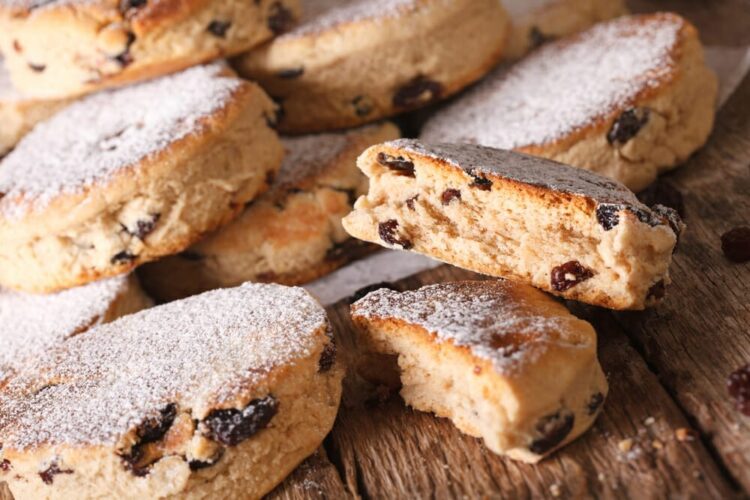
Traditional Welsh cakes (picau ar y maen) dusted with caster sugar, fresh from the bakestone.
Welsh cakes are a traditional Welsh teatime treat made from flour, butter, sugar, currants and mixed spice, cooked on a flat cast-iron bakestone or griddle for around 3 to 4 minutes each side, then dusted with caster sugar while still warm. Known in Welsh as picau ar y maen (cakes on the stone), they take their name from the traditional bakestone used to cook them. The recipe dates back to the late 18th century, when most Welsh homes lacked an oven and griddle cooking was the standard way to bake. They remain the single most popular sweet treat in Welsh kitchens, eaten in vast quantities every St Davids Day on 1 March and year-round in homes, bakeries and tea rooms across Wales.
This guide gives the authentic traditional recipe, the equipment you need, a step-by-step method tested against the Visit Wales and Be-Ro classic recipes, and the small adjustments that separate a good batch from a great one. The ingredient list and method are below. Skip ahead to the recipe card, or read on for the history and the tips that make the difference.
Planning this trip? Ask Branwen, our free AI trip planner →
At a Glance: Welsh Cakes
- Welsh name: Picau ar y maen (also pice bach, cacennau cri)
- Origin: Wales, 19th century (in their modern spiced-fruit form)
- Cooked on: A flat iron bakestone or griddle, not in an oven
- Total time: Around 25 to 30 minutes from start to finish
- Skill level: Beginner-friendly. No proving, no eggs to whisk, no oven temperature to manage
- Key technique: Keep the griddle on a low-to-medium heat. High heat will burn the outside before the inside cooks
- Best eaten: Warm from the griddle on the day of baking, dusted with caster sugar
A Short History of Welsh Cakes
The earliest forms of Welsh cake date back to a time when Welsh rural communities had no domestic ovens. Cooking was done over the open hearth, with a flat iron bakestone laid directly on the embers or suspended on a chain. Oat-based flatbreads were the original recipe, and the spiced fruit cake version known today emerged during the mid-19th century with the wider availability of butter, lard, refined sugar and dried fruit.
The cakes have a parallel tradition across the Celtic world. The Scottish girdle scone, the Cornish hevva cake and the Irish griddle bread all share the same basic technique. In Wales, the bakestone (Welsh: maen, meaning stone, or planc, board) remains a household staple. Many Welsh families still keep one passed down across generations.
For more on the broader food tradition Welsh cakes belong to, see our guide to traditional and modern Welsh cuisine, which covers the principal Welsh dishes and the regional differences across the country.
Equipment You Need
- A cast-iron bakestone, griddle or heavy frying pan. The traditional bakestone is a circular cast-iron plate, around 25cm wide, with a curved handle. A modern flat griddle pan or solid cast-iron skillet works just as well. Avoid non-stick pans.
- A mixing bowl and round-bladed knife for combining the dough.
- A rolling pin.
- A 5cm round cutter, fluted or plain. A teacup or small glass works as an alternative.
- A wire cooling rack.
On the bakestone: Original Welsh bakestones are still made in Wales and available from independent ironmongers and the St Fagans National Museum of History shop. A good cast-iron baking stone from any kitchen shop performs the same job. The key feature is even, slow heat retention; aluminium or thin steel pans tend to hot-spot and burn.
Traditional Welsh Cakes Recipe
Traditional Welsh Cakes (Picau ar y Maen)
Authentic Welsh cakes cooked on a bakestone or heavy griddle. Soft, lightly spiced, dusted with caster sugar. Ready in under 30 minutes.
Ingredients
- 225g self-raising flour (or 225g plain flour plus 1 tsp baking powder)
- 125g cold butter, cubed (or 60g butter and 65g lard for a more traditional finish)
- 75g caster sugar, plus extra for dusting
- 75g currants (or a mix of currants and sultanas)
- 1 large free-range egg, beaten
- 1 to 2 tablespoons cold milk, only if needed
- Half a teaspoon mixed spice
- A pinch of fine sea salt
- Butter or lard for greasing the griddle
Method
- Combine the dry ingredients. Sift the flour, baking powder if using, mixed spice and salt into a large mixing bowl. Stir together so the spice is evenly distributed.
- Rub in the fat. Add the cubed cold butter (and lard, if using). Rub into the flour using your fingertips until the mixture resembles fine breadcrumbs. Keep the fat cold for a tender cake.
- Add sugar and fruit. Stir in the caster sugar and currants. Make a well in the centre.
- Bring the dough together. Pour in the beaten egg and mix with a round-bladed knife until the dough begins to clump. Add a little cold milk only if the dough is too dry. The finished dough should hold together firmly, like a slightly stiff shortcrust pastry.
- Roll and cut. Tip the dough onto a lightly floured surface and roll out to around 5mm (a quarter of an inch) thick. Cut into rounds with a 5cm fluted cutter. Re-roll the offcuts once.
- Heat the bakestone. Heat a cast-iron griddle, bakestone or heavy-based frying pan over a low-to-medium heat. Grease lightly with butter or lard. The griddle is ready when a few drops of water sizzle and skip across the surface.
- Cook the cakes. Place the cakes on the griddle, leaving room between them. Cook for 3 to 4 minutes on each side, until golden brown and risen slightly. Resist moving them while the first side cooks. Test the centre with a skewer if unsure; it should come out clean.
- Dust and serve. Transfer the cooked Welsh cakes to a wire rack, dust generously with caster sugar while still warm, and serve immediately or within a few hours. They are at their best the same day.
Tips That Make the Difference
Keep the heat low
The single most common reason home-made Welsh cakes fail is too high a heat. The outside browns and crisps before the centre has cooked through, leaving a raw interior. A medium-low heat (around 4 on a standard hob dial) is correct. The cakes should take a slow 3 to 4 minutes on each side, not 30 seconds.
Keep the dough cool
Like shortcrust pastry, Welsh cake dough is best handled cold. Cold butter rubbed into cold flour gives a more tender, flaky cake. If the kitchen is warm, chill the dough for 15 minutes before rolling.
Roll to exactly 5mm
Too thick and the cakes will not cook through; too thin and they dry out. A 5mm (quarter-inch) dough thickness is the traditional benchmark. Cut a small wooden spacer or use a pair of 5mm dowels alongside the rolling pin to control thickness exactly.
Use the right cutter
The traditional Welsh cake is around 5cm wide. Smaller cakes cook unevenly; larger ones may not rise properly. A fluted cutter gives the classic decorative edge.
Dust with caster sugar, not icing sugar
Caster sugar gives the slight crunch that is part of the traditional finish. Icing sugar dissolves into the warm cake and disappears within minutes.
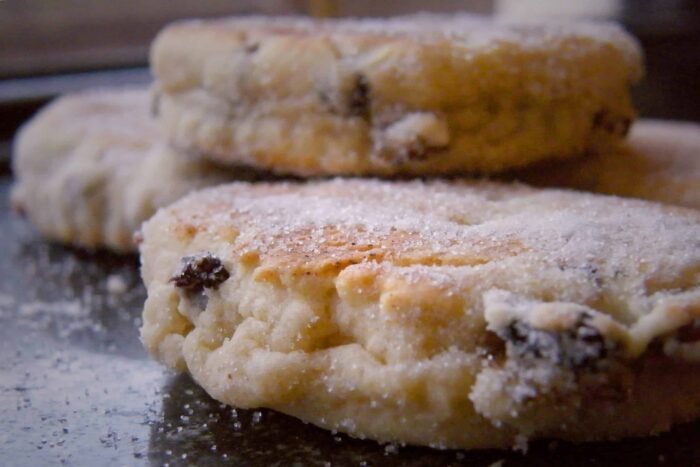
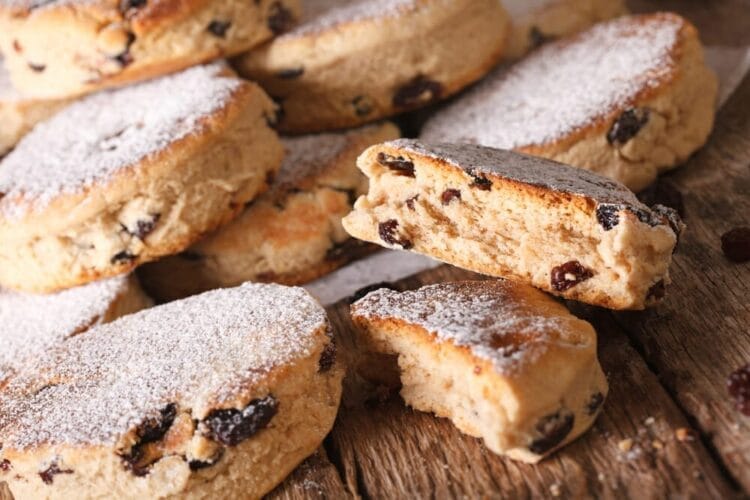
A close-up stack of traditional sugar-dusted Welsh cakes showing their flaky texture.
Variations and Modern Twists
The traditional recipe is the standard, but modern Welsh bakers have introduced several popular variations:
- Lemon and poppyseed: Add 1 tsp grated lemon zest and 1 tsp poppyseeds to the dry mix. Omit the mixed spice.
- Chocolate chip: Replace the currants with 75g dark chocolate chips. Popular with children.
- Apple and cinnamon: Replace 50g of the currants with finely diced dried apple, and use cinnamon instead of mixed spice.
- Savoury cheese: Omit the sugar and currants. Add 75g grated mature Welsh cheddar, 1 tsp Dijon mustard and a pinch of cayenne pepper. Excellent with soup or a warming bowl of Welsh cawl.
- Gluten-free: Substitute the self-raising flour with a 1:1 gluten-free self-raising blend. The texture is slightly different but the technique remains the same.
What to Serve with Welsh Cakes
Welsh cakes are most often served plain or split and spread with butter and jam. Traditional Welsh tea pairings include:
- A pot of strong Welsh-brewed tea, particularly Glengettie or Welsh Brew
- A glass of cold milk for children
- Welsh salted butter, particularly with the savoury cheese variation
- Welsh-made jam (strawberry or raspberry are classic)
- A small wedge of mature Welsh cheddar for an unusual but traditional pairing
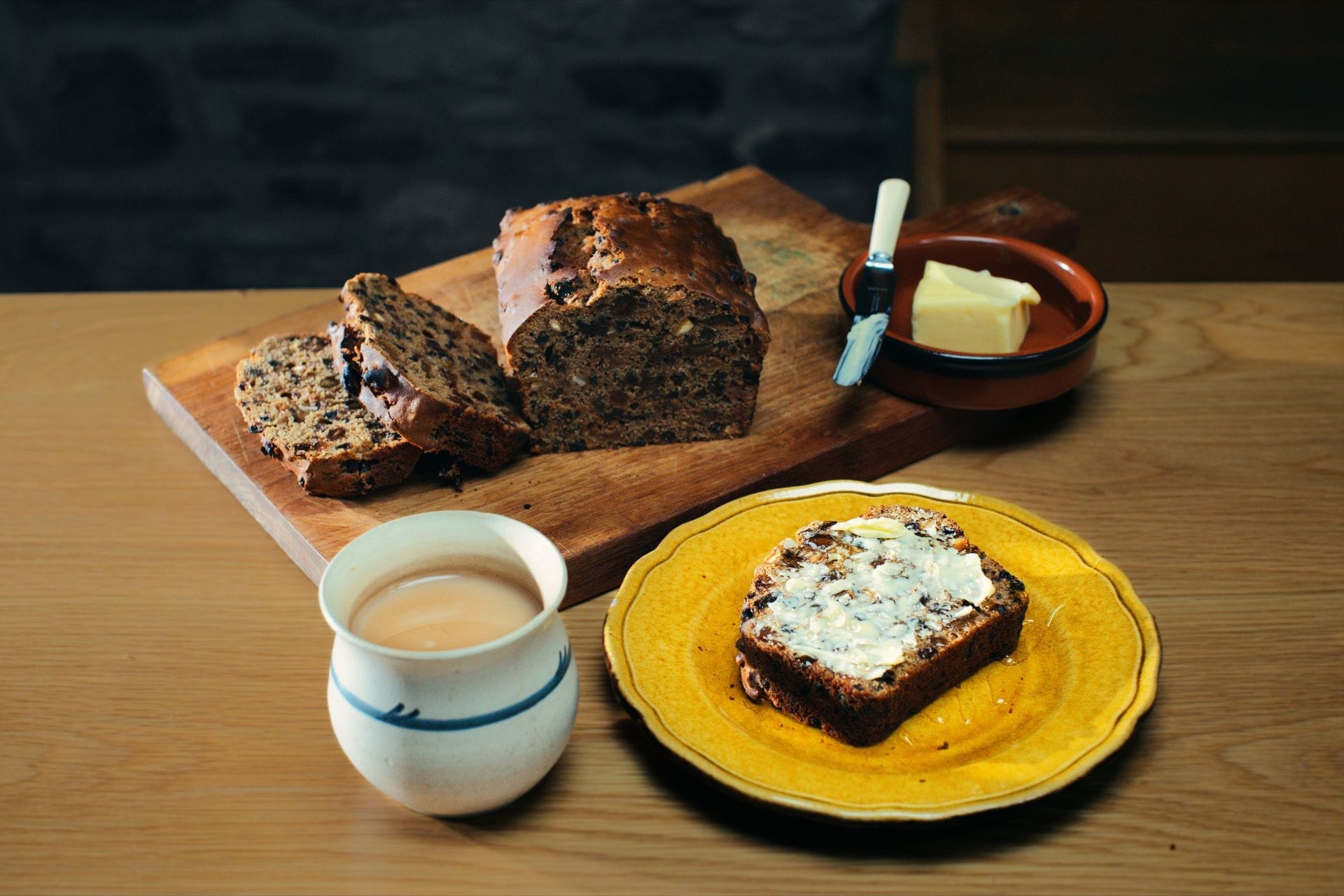
For a fuller Welsh afternoon tea spread, combine with other dishes from the Welsh kitchen such as bara brith, leek and cheese tartlets, and Welsh rarebit on toast.
Where to Buy Welsh Cakes in Wales
Visitors travelling in Wales will find Welsh cakes for sale in almost every bakery, café and food hall in the country. Notable specialists include:
- Cardiff Central Market: The legendary stall Bakestones has been baking traditional Welsh cakes fresh on a hot griddle right in front of customers for decades.
- Mamgu Welshcakes (Solva): A famously popular, contemporary Welsh cake bakery and café based in the beautiful Pembrokeshire coastal village of Solva, offering both traditional and adventurous modern flavours.
- Penylan Pantry, Cardiff: independent deli with daily fresh Welsh cakes.
- St Davids Cathedral coffee shop: simple, home-made traditional cakes, often baked the same morning.
- Local Welsh agricultural shows: particularly the Royal Welsh Show in Builth Wells (July), where home bakers compete for the best Welsh cakes prize.
Welsh Food Tours – Nerys Howell’s Welsh Cake Workshop
For a hands-on alternative to baking at home, Nerys Howell runs a group Welsh Cake Workshop in a historic Cardiff chapel, taking groups of 8-40 people. For all 8 verified Welsh food tour operators with 2026 pricing, see our complete guide to Welsh Food Tours.
Plan a Welsh Food Tour
Wales has become one of the most exciting food destinations in the UK over the past decade. From Michelin-starred restaurants to traditional bakeries and farm-to-table country pubs, browse the interactive map below to see hotels in Wales’s best food destinations.
For visitors making a Welsh food pilgrimage: Cardiff, Abergavenny and the Conwy Valley are the three strongest concentrations of Welsh food culture. Abergavenny hosts the annual Food Festival in September, one of the largest in the UK.
Frequently Asked Questions: Welsh Cakes
What are Welsh cakes?
Welsh cakes (picau ar y maen in Welsh, also known as bakestones or griddle cakes) are a traditional flat round Welsh teatime treat made from flour, butter, sugar, currants, egg and mixed spice. They are cooked on a heavy iron griddle or bakestone over a low-to-medium heat for around 3 to 4 minutes each side. The cakes are dusted with caster sugar while warm and are most commonly eaten on St Davids Day (1 March), though they are also enjoyed year-round throughout Wales.
What does picau ar y maen mean?
Picau ar y maen is the Welsh name for Welsh cakes. It translates literally as “cakes on the stone”, referring to the traditional method of cooking them on a flat iron bakestone (Welsh: maen) over an open fire. Other Welsh names include pice bach (small cakes), cacennau cri (crisp cakes) and teisennau gradell (griddle cakes).
Do you need a bakestone to make Welsh cakes?
No, although a traditional bakestone gives the best result. A heavy cast-iron griddle, cast-iron frying pan or solid heavy-based steel frying pan work equally well. Modern non-stick pans are not recommended because the cakes can burn easily and the surface does not deliver the same even, gentle heat. The most important factor is the heat: keep the griddle on a low-to-medium temperature and the cakes will cook through without burning.
Should Welsh cakes use butter or lard?
Traditional Welsh cakes use a mix of butter and lard, in roughly equal parts. The lard gives a flakier, more shortbread-like texture; the butter adds flavour. A modern all-butter version is still excellent and is the standard recipe today. The 19th-century original recipes nearly always used lard alone, as it was cheaper and more widely available than butter in working-class Welsh kitchens.
How long do Welsh cakes keep?
Welsh cakes are at their best on the day they are made. They keep for 2 to 3 days in an airtight tin and can be gently refreshed in a low oven or a few seconds in the microwave. They also freeze well for up to 3 months; defrost at room temperature and warm briefly before serving. Like all griddle-cooked breads they harden as they cool, so plan to eat them sooner rather than later.
When are Welsh cakes traditionally eaten?
Welsh cakes are most strongly associated with St Davids Day on 1 March, when they are baked in homes and schools across Wales as part of the national celebrations. They are also a year-round teatime staple in Welsh kitchens, packed in school and work lunchboxes, sold in bakeries on every Welsh high street, and offered at agricultural shows and eisteddfodau. They are not a seasonal food, but St Davids Day is when production peaks.
Why are my Welsh cakes burning on the outside but raw in the middle?
The griddle is too hot. Welsh cakes need a low-to-medium heat to cook through evenly. A useful test: a drop of water flicked onto the griddle should skip across the surface, not vanish instantly in steam. Reduce the heat, allow the griddle to cool slightly, then continue. Cakes that are too thick can also stay raw inside; aim for 5mm thickness when rolling, no more.
More Welsh Food and Recipe Guides
- Bara Brith Recipe: Traditional Welsh Tea Bread
- Guide to Welsh Food: Traditional and Modern Cuisine
- A Welsh Feast: 12 Dishes You Can Make at Home
- How to Make Cawl: The Traditional Welsh Stew
- Michelin Star Restaurants in Wales
- The Best Traditional Pubs in Wales
- The Best Distilleries in Wales
- Welsh Food and Drink

Pembrokeshire-born travel writer and founder of Wales.org. Born in Haverfordwest, now based in Hertfordshire — covering Welsh castles, national parks, festivals and family staycations across all 22 Welsh counties.