
Bara Brith Recipe: Traditional Welsh Tea Bread
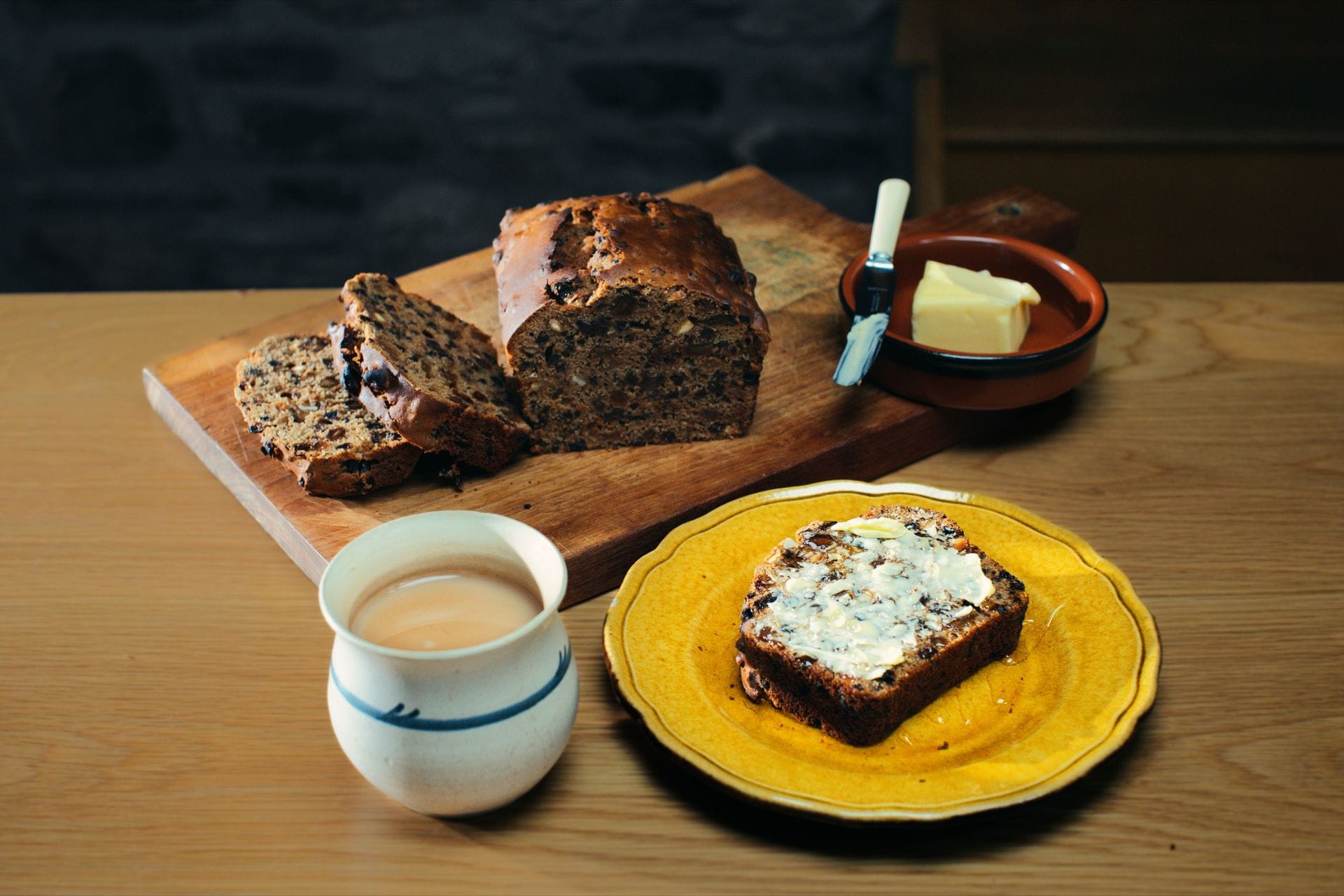
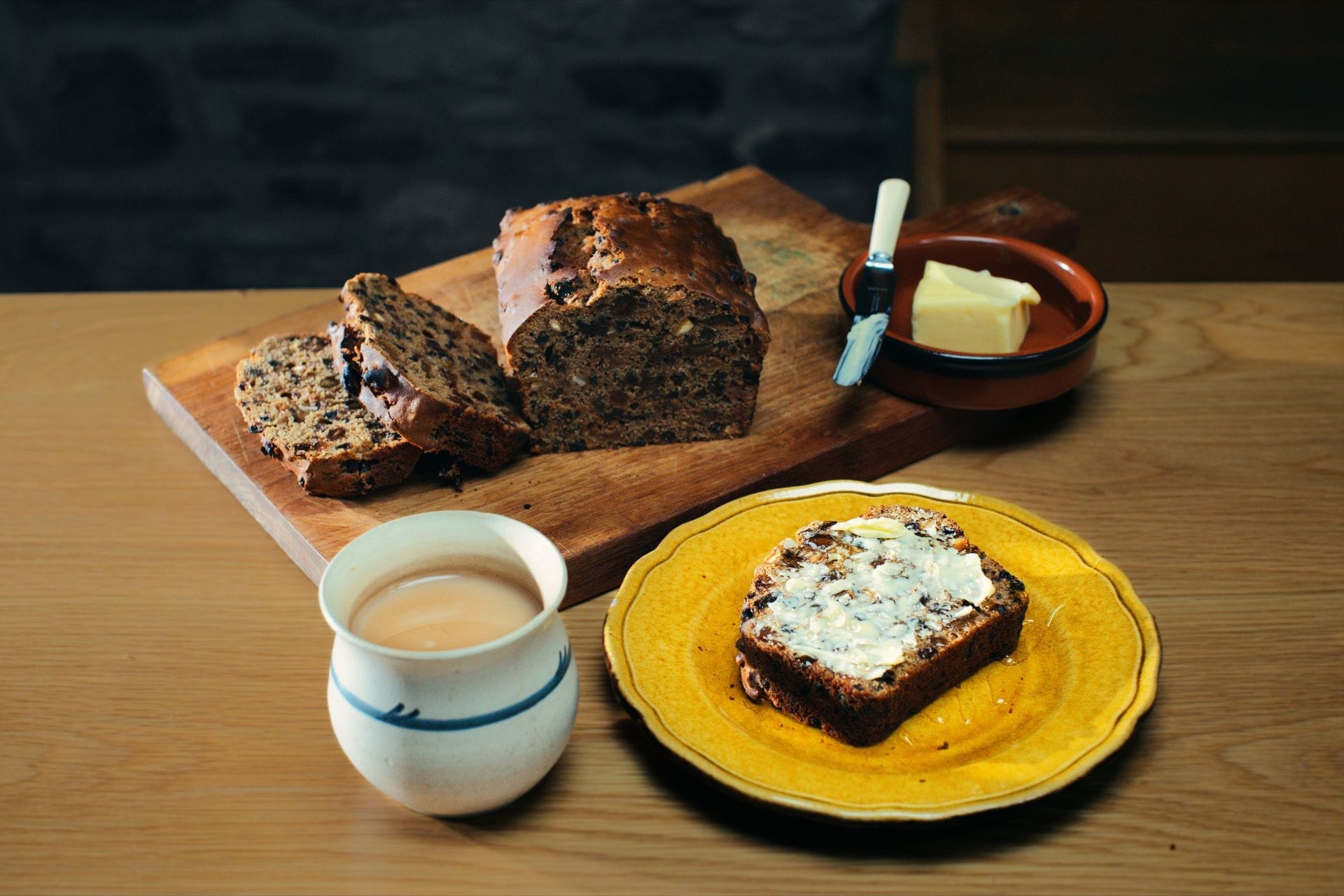
Bara brith — Welsh “speckled bread” — sliced thick and served with salted butter and strong tea. © Hawlfraint y Goron / © Crown copyright 2026 Cymru Wales
Bara brith is a traditional Welsh tea bread made by soaking dried fruit and brown sugar overnight in strong black tea, then folding the mixture with self-raising flour, mixed spice and a beaten egg and baking in a loaf tin for around an hour and a quarter at 160°C. Known in Welsh as bara brith (literally speckled bread), it takes its name from the dried fruit that runs through the moist, dense crumb. It is one of the most recognisable foods of Welsh cuisine, served thickly sliced with salted Welsh butter, eaten at teatime in homes, cafés and tea rooms across Wales, and a fixture of every St Davids Day celebration on 1 March.
This guide gives the authentic modern recipe (the version widely served across Wales today), the older yeasted recipe and how it differs, the equipment you need, a step-by-step method, and the small adjustments that produce a moist, well-flavoured loaf every time. The full recipe is below. Read on for the history and the tips, or skip ahead to the recipe card.
Planning this trip? Ask Branwen, our free AI trip planner →
At a Glance: Bara Brith
- Welsh name and meaning: Bara brith — literally “speckled bread
- Type: Traditional tea loaf, made with dried fruit soaked overnight in tea
- Origin: Wales, 19th century (in its modern spiced-fruit form); older yeasted ancestors date back to the late 18th century
- Cooked: Baked in a 900g loaf tin at 160°C for around 1 hour 15 minutes
- Skill level: Beginner-friendly. The only technical step is timing the overnight soak
- Total time: 12 hours including overnight soak, plus 15 minutes prep and 75 minutes baking
- Best served: Thickly sliced, at room temperature, spread generously with salted Welsh butter
A Short History of Bara Brith
The original bara brith was a yeasted bread, not a loaf cake. In rural Welsh kitchens of the 18th and 19th centuries, bakers would set aside a portion of their daily bread dough on baking day, enrich it with dried fruit, sugar and spices, then allow it to prove a second time before baking. The result was a sweet, slightly dense bread that made use of ingredients on hand and could be eaten through the week. The version widely served today, using self-raising flour and an overnight tea-soak, came later and is now the standard recipe in Welsh kitchens and tea rooms.
Bara brith is sometimes confused with the related Welsh teisen lap (a flatter, eggier cake) or with the Irish barmbrack (an even closer cousin, also using tea-soaked fruit). The three share a common British and Irish tea-bread heritage, with each region adapting the basic method to local ingredients and traditions.
For more on where bara brith fits in the wider tradition, see our guide to Welsh food and a Welsh feast of 12 dishes you can make at home.
Equipment You Need
- A 900g (2lb) loaf tin. The standard rectangular tin. A silicon or non-stick tin works equally well as a traditional metal one.
- Baking parchment or a loaf liner. Worth the few extra pence; bara brith is moist and can stick if the tin is not properly lined.
- A large mixing bowl with a lid or cover for the overnight soak.
- A teapot, kettle and two teabags for brewing the soaking tea.
- A wooden spoon or spatula for folding the batter. Avoid electric mixers; bara brith should be gently combined, not whipped.
- A wire cooling rack.
- A skewer or cocktail stick for testing the centre.
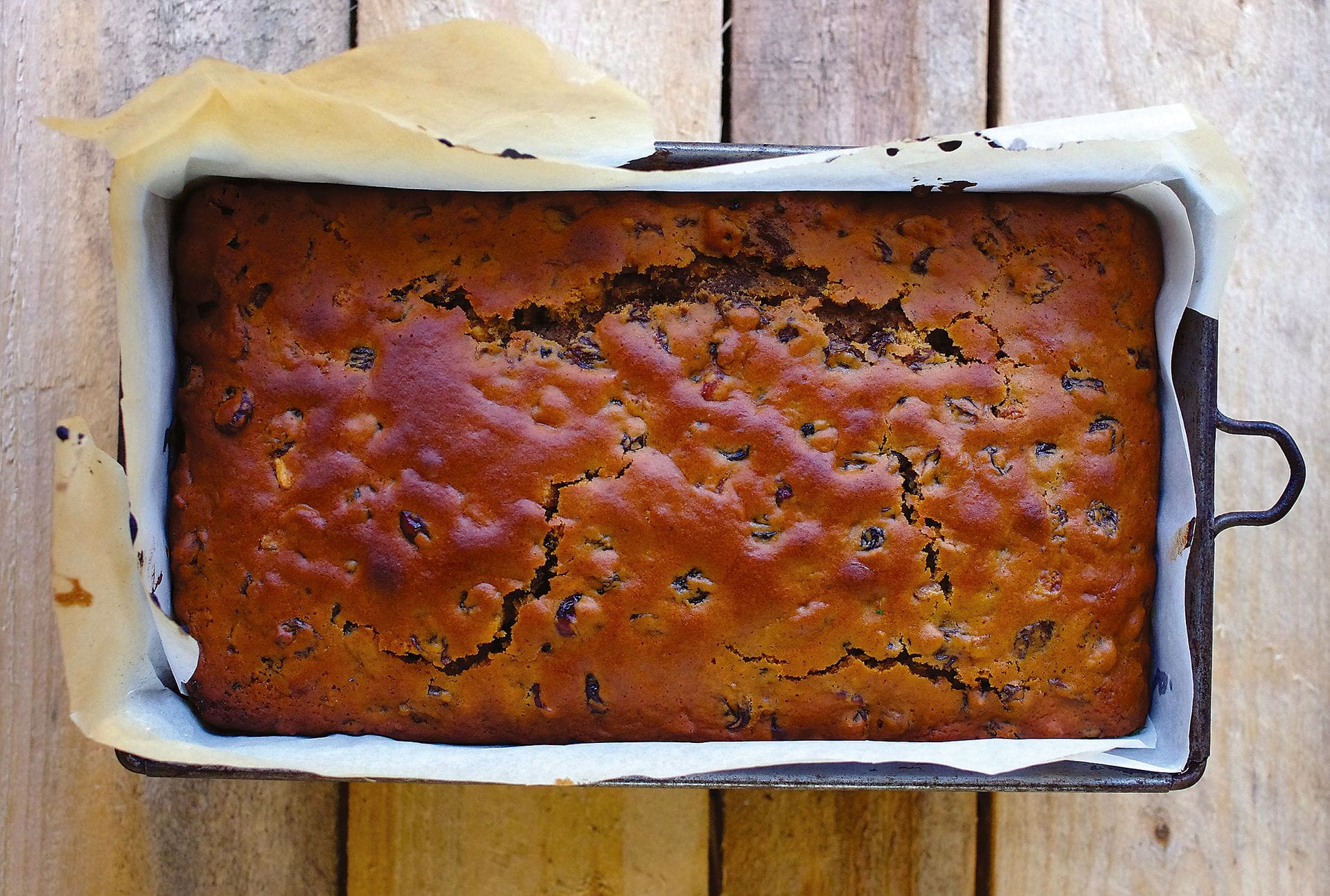
A freshly baked loaf of bara brith cooling inside a lined loaf tin. © Hawlfraint y Goron / © Crown copyright 2026 Cymru Wales
Traditional Bara Brith Recipe
Traditional Welsh Bara Brith
Authentic Welsh tea bread with dried fruit soaked overnight in strong black tea. Moist, dense, lightly spiced. Best served thickly sliced with salted Welsh butter.
Ingredients
- 400g mixed dried fruit (sultanas, raisins, currants in roughly equal parts)
- 300ml hot strong black tea (preferably Welsh Brew or Yorkshire)
- 175g soft light brown sugar
- 250g self-raising flour
- 1 large free-range egg, beaten
- 1 teaspoon mixed spice
- Half a teaspoon ground cinnamon
- Butter or oil for greasing the loaf tin
Method
- Soak the fruit overnight. Place the dried fruit and brown sugar in a large mixing bowl. Pour over the hot tea and stir well until the sugar has dissolved. Cover the bowl with a tea towel or cling film and leave to soak for at least 6 hours, or preferably overnight. The fruit will plump up and absorb most of the tea.
- Prepare the tin and oven. The next day, preheat the oven to 160°C (140°C fan / 325°F / Gas mark 3). Grease and line a 900g (2lb) loaf tin with baking parchment, leaving a small overhang to make removal easier.
- Add flour, spice and egg. Sift the flour, mixed spice and cinnamon into the bowl of soaked fruit and tea. Add the beaten egg. Mix gently with a wooden spoon or spatula until just combined. Do not over-mix; small lumps in the batter are acceptable.
- Transfer to the tin. Spoon the mixture into the prepared loaf tin. Level the top with the back of a spoon. The mixture should fill the tin to roughly three-quarters full.
- Bake. Bake on the middle shelf of the oven for 1 hour 15 minutes to 1 hour 30 minutes. Test with a skewer inserted into the centre; it should come out clean or with only a few moist crumbs. If the top is browning too quickly, cover loosely with foil after 45 minutes.
- Cool fully. Leave the bara brith to cool in the tin for 15 minutes, then turn out onto a wire rack and cool completely. Once cold, wrap in baking parchment and store in an airtight tin.
- Mature for best flavour. Bara brith is at its best 1 to 2 days after baking, once the flavours have developed. Slice thickly and serve at room temperature, spread generously with salted Welsh butter.
Tips That Make the Difference
Use the strongest tea you can brew
Two teabags steeped for 5 minutes in 300ml of boiling water gives a tea around twice as strong as the cup you would drink. This concentration is the right level for soaking; weaker tea gives a less flavourful bara brith. Welsh Brew and Yorkshire Tea are favoured by Welsh home bakers for their robust flavour.
Don’t skip the overnight soak
Six hours is the absolute minimum; overnight is better. The soak is the single most important step. It plumps the fruit, infuses it with the tea flavour and ensures the finished loaf is moist rather than dry. Soaked fruit can also be kept in the fridge for up to 3 days, so prep a batch on Sunday and bake later in the week.
Fold the batter, don’t beat it
Bara brith is not a sponge cake. Over-mixing develops the gluten in the flour and makes the loaf tough. Use a wooden spoon or spatula and fold the dry ingredients into the wet just until combined. A few lumps of unmixed flour are acceptable and disappear during baking.
Check for doneness with a skewer
Bara brith is dense and slow to cook through. The 75-minute baking time is a guide; the real test is a skewer inserted into the centre. It should come out clean or with only a couple of moist crumbs. If it comes out wet, return the loaf to the oven for another 10 minutes and re-test.
Let it mature
Resist the urge to slice into the bara brith on baking day. The flavour develops noticeably over 24 to 48 hours as the tea-soaked fruit settles through the loaf. Wrap the cooled loaf in baking parchment, store in an airtight tin, and slice from the second day onwards.
Variations and Modern Twists
The recipe above is the standard modern method. Welsh home bakers have a wide range of variations:
- Orange marmalade addition: Stir 2 tbsp of orange marmalade into the soaked fruit before adding the flour. Adds a subtle citrus note popular in Penrhyn Castle’s Victorian kitchens. The National Trust serves bara brith with marmalade as a classic Welsh combination.
- Mixed peel and glacé cherries: Replace 50g of the dried fruit with chopped mixed peel and quartered glacé cherries. Christmas variation, particularly popular in mid-Wales.
- Glazed top: Brush the top of the cooled loaf with warm honey or a glaze made from caster sugar and a tablespoon of milk. Adds a slight crunch.
- Yeast version (the older recipe): Replace the self-raising flour with strong bread flour, add 7g fast-action yeast and 50g softened butter, knead and prove twice as for normal bread, then bake at 180°C for 40 minutes. The original Welsh bara brith.
- Stout version: Replace the tea with strong Welsh stout. Surprising but well-balanced; the dark malt of Welsh ales pairs beautifully with the dried fruit.
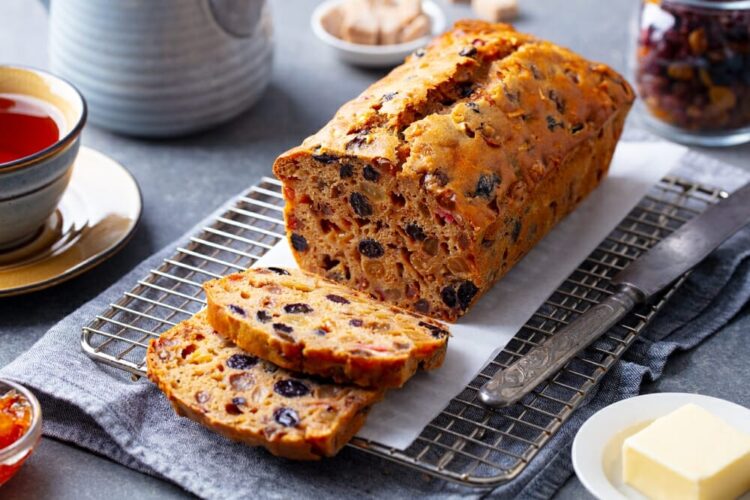
A freshly sliced loaf of traditional tea loaf cooling on a wire rack. © Hawlfraint y Goron / © Crown copyright 2026 Cymru Wales
How to Serve Bara Brith
Bara brith is traditionally served at room temperature, thickly sliced (around 1cm thick), with cold salted Welsh butter spread generously. The contrast of the dense, sweet, moist loaf with the cold butter is the essence of the experience.
Other traditional pairings:
- A pot of strong Welsh-brewed tea (the same tea used in the loaf)
- Welsh-made jam or honey, particularly heather honey
- A wedge of Welsh cheese such as Caerphilly or mature Welsh cheddar — an unusual but traditional combination, often served at Welsh agricultural shows
- Toasted under the grill until lightly crisp at the edges, with butter melting into the surface
Bara Brith and Welsh Cakes Together
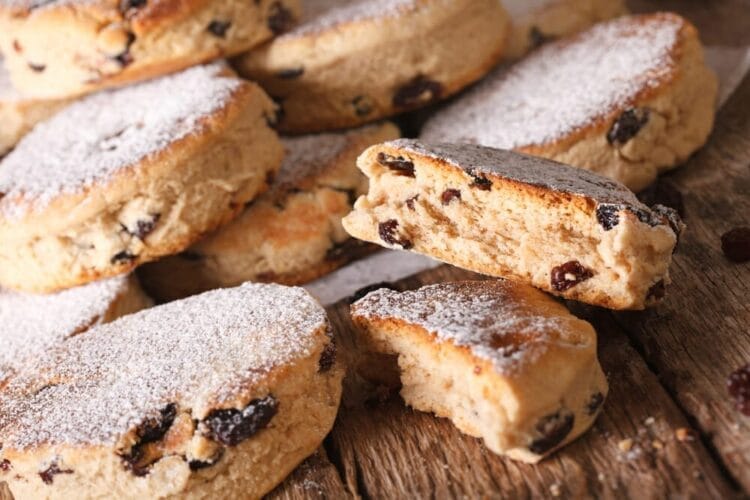
Bara brith and Welsh cakes form the heart of the Welsh teatime tradition. The two are most often served alongside each other on St Davids Day, at agricultural shows, and in tea rooms across Wales. The two recipes are sometimes baked on the same day; the fruit can soak overnight for the bara brith while you bake the Welsh cakes the same morning.
For a full Welsh teatime spread, combine bara brith and Welsh cakes with traditional Welsh cawl (the lamb and leek stew), Welsh rarebit, Welsh shortbread (similar to but simpler than the Scottish version), and a pot of strong tea. Our Welsh feast guide covers the full menu in detail.
Plan a Welsh Food Break
Wales has emerged as one of the most exciting food destinations in the UK over the past decade. From Michelin-starred restaurants to traditional tea rooms and farm-to-table country pubs, browse the interactive map below to see hotels and cottages in Wales’s best food destinations.
The best Welsh tea rooms for bara brith: Penrhyn Castle (National Trust) near Bangor serves a celebrated version from the castle’s original Victorian recipe. The Hive on the Quay in Aberaeron is world-famous for its unique honey ice cream alongside exceptional harbourside tea service. Bodnant Welsh Food in the Conwy Valley, and Wally’s Delicatessen in Cardiff are also highly known for their bara brith.
Where to Buy Bara Brith in Wales
Bara brith is available across Wales in bakeries, delis, farm shops, supermarkets and tea rooms. Notable suppliers include:
- Penrhyn Castle Tearoom (Bangor): National Trust property serving bara brith made to the Victorian kitchen recipe.
- Bodnant Welsh Food (Conwy Valley): in-house bakery selling fresh bara brith daily.
- Wally’s Delicatessen (Cardiff): long-running independent deli in the Royal Arcade.
- The Hive on the Quay (Aberaeron): iconic harbourside spot perfect for pausing for traditional tea bread or their legendary honey ice cream while looking out over Cardigan Bay.
- Local Welsh agricultural shows: particularly the Royal Welsh Show in Builth Wells (July), where home bakers compete for the best bara brith.
Welsh Food Tours – taste bara brith and more with a local guide
Loving Welsh Food’s Cardiff market and tasting tours include traditional bara brith alongside other Welsh classics, guided by a local expert. For all 8 verified Welsh food tour operators with 2026 pricing, see our complete guide to Welsh Food Tours.
Frequently Asked Questions: Bara Brith
What is bara brith?
Bara brith is a traditional Welsh tea bread made by soaking dried fruit and brown sugar overnight in strong black tea, then folding the mixture with flour, spice and egg and baking in a loaf tin for around 1 hour 15 minutes. The name translates from Welsh as “speckled bread”, referring to the dried fruit running through the loaf. It is one of the most recognisable foods of Welsh cuisine and is traditionally served thickly sliced with salted Welsh butter.
How do you pronounce bara brith?
Bara brith is pronounced BA-ra BREETH. Both words have the stress on the first syllable. The “th” at the end of brith is the soft th sound, as in the English word “thin”. In Welsh, bara means bread and brith means speckled or mottled, referring to the dried fruit speckling the loaf.
Why is the fruit soaked overnight?
Soaking the dried fruit in hot tea overnight plumps it up and infuses it with the flavour of the tea. This is the most distinctive step in bara brith and the one that gives the loaf its characteristic moist, dense texture. The tea also adds a subtle background note to the final flavour. Skipping or shortening the soak gives a drier, less flavourful loaf.
What is the original bara brith recipe?
The original bara brith was a yeasted bread. Welsh bakers would set aside a portion of their daily bread dough and enrich it with sugar, dried fruit and spices, creating a sweet teatime treat from existing ingredients. The modern recipe widely served today uses self-raising flour instead of yeast, with the fruit soaked in tea overnight to add flavour. The yeasted version still exists and is sometimes called the “true” or “old-style” bara brith.
What tea should I use for bara brith?
Strong English breakfast tea is the standard choice. Welsh Brew or Yorkshire Tea give a particularly robust flavour and are widely used by Welsh home bakers. Earl Grey adds a subtle bergamot note for a slightly different flavour profile. Decaffeinated tea works fine for the recipe and is often preferred for evening or children’s baking. The tea should be brewed at full strength, around twice as strong as you would drink it.
How long does bara brith keep?
Bara brith keeps well for up to 7 days in an airtight tin at room temperature. It improves with age for the first 2 to 3 days as the flavours develop and the fruit settles through the loaf. It also freezes well, sliced or whole, for up to 3 months. Defrost slices individually at room temperature; a 30-second blast in the microwave works for quicker thawing.
Can I make bara brith without overnight soaking?
For best results, plan ahead and soak overnight. If pressed for time, a minimum 4-hour soak in hot tea gives an acceptable result. Some modern recipes use boiling tea poured straight onto the fruit and a 30-minute soak, but the flavour is noticeably less developed. If you regularly bake bara brith, soak a batch of fruit in tea on Sunday for baking through the week; it keeps in the fridge for 3 days.
More Welsh Food and Recipe Guides

Pembrokeshire-born travel writer and founder of Wales.org. Born in Haverfordwest, now based in Hertfordshire — covering Welsh castles, national parks, festivals and family staycations across all 22 Welsh counties.