


West Wales 2026: The Complete Visitor Guide to Beaches, Coast & Countryside
West Wales is where the country meets the Atlantic. This is a coastline of towering limestone cliffs, vast sweeping sandy bays, and some of the cleanest, most consistently awarded beaches in Britain. It is also home to the UK’s only predominantly coastal National Park, the birthplace of the Welsh surfing scene, and a food culture rooted in salt-marsh lamb, hand-dived scallops, and some of the finest seafood restaurants outside of London.
West Wales at a Glance
- Sub-Regions Covered: Pembrokeshire, Gower Peninsula, Carmarthenshire, and Swansea Bay.
- National Park: The Pembrokeshire Coast — the UK’s only coastal National Park (240 square miles).
- Coastline Highlights: 186-mile Pembrokeshire Coast Path, Rhossili Bay, Barafundle Bay, Three Cliffs Bay, Tenby’s North and South beaches.
- Nearest Major City: Swansea (population approx. 245,000) — the gateway to the region.
- Drive Times: London to Pembrokeshire: approximately 4.5 hours via the M4. Cardiff to Tenby: approximately 2 hours.
- Best For: Beach holidays, surfing, coasteering, coastal walking, family holidays, food lovers, and couples.
The region stretches from Swansea Bay in the east — where the city of Swansea sits at the foot of the spectacularly beautiful Gower Peninsula — through the rolling agricultural heartland of Carmarthenshire, and all the way out to the wild, wave-battered headlands of Pembrokeshire in the far west. Despite containing Wales’ second-largest city, the overwhelming character of West Wales is deeply rural, fiercely independent, and dominated by the sea.
This guide covers everything you need to plan a West Wales holiday in 2026 — from choosing the right sub-region for your interests, to understanding the transport realities, seasonal pricing, and where to find the best experiences for families, couples, and adventure seekers.
4 West Wales Sub-Regions: Quick Compare
Each area has a completely different character. Match your priorities to the right base.
← Swipe left and right to view the full table →
| Sub-Region | Known For | Best For | Top Town / Base |
|---|---|---|---|
| Pembrokeshire | Coastal National Park, beaches, coast path, puffins | Families, walkers, coasteering, wildlife | Tenby (SA70) / St Davids (SA62) |
| Gower Peninsula | UK’s first AONB, Rhossili, Three Cliffs Bay, surfing | Surfers, couples, short breaks, photographers | Mumbles (SA3) / Rhossili (SA3) |
| Carmarthenshire | Garden of Wales, castles, Dylan Thomas, rural heartland | Heritage lovers, foodies, garden enthusiasts | Laugharne (SA33) / Llandeilo (SA19) |
| Swansea Bay | City culture, waterfront, markets, LC2, Mumbles | City breakers, families, nightlife, sport | Swansea (SA1) / Mumbles (SA3) |
Pembrokeshire: Britain’s Only Coastal National Park
Pembrokeshire is the jewel of West Wales and the single biggest draw for visitors to the region. The Pembrokeshire Coast National Park covers 240 square miles of wild, protected coastline — the only National Park in the UK designated primarily for its coastal landscape. National Geographic ranked it the second-best coastal destination in the world, and once you stand on the clifftops above Barafundle Bay or watch the sun set from the headland at St Davids, you will understand exactly why.
The 186-mile Pembrokeshire Coast Path is a National Trail running the entire length of the coastline from Amroth in the south to St Dogmaels in the north. The total ascent and descent along the route exceeds 35,000 feet — greater than the height of Mount Everest. You do not need to walk the entire thing; dozens of circular day walks break the path into manageable, spectacular sections accessible for families and casual walkers alike.
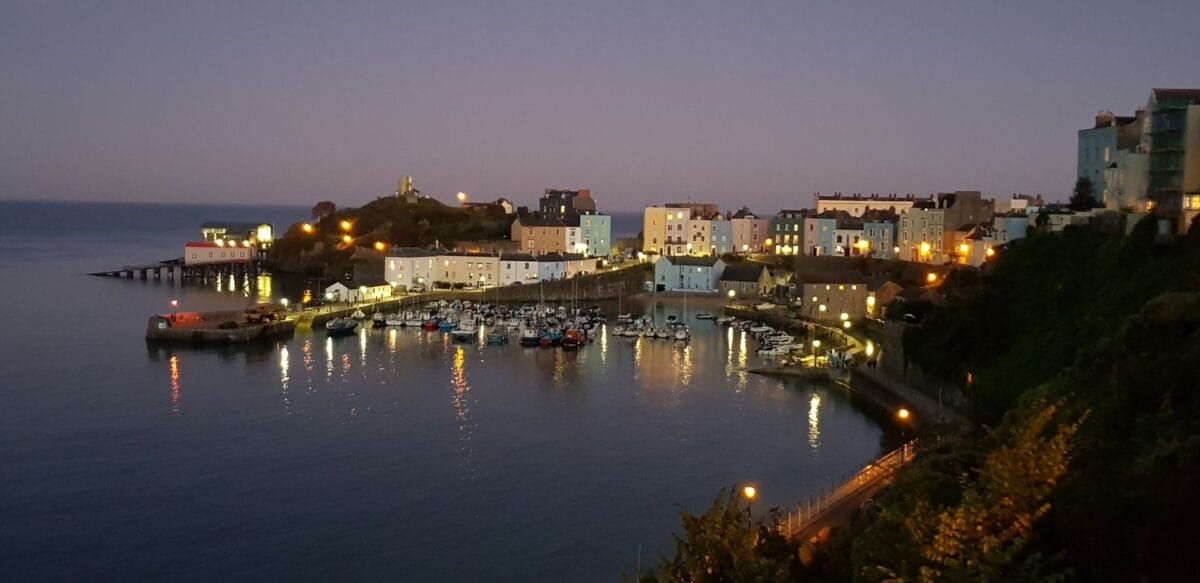
Tenby is the most popular town in Pembrokeshire — a stunning walled medieval harbour town with three distinct sandy beaches, pastel-painted Georgian townhouses, and a network of independent shops, restaurants, and galleries crammed into its narrow streets. In the far northwest, the tiny city of St Davids (population: 1,600) is the smallest city in Britain, built around a magnificent 12th-century cathedral hidden in a valley. The coastline around St Davids is the epicentre of Welsh coasteering — a sport invented in Pembrokeshire that combines cliff jumping, rock scrambling, and open-water swimming along the base of the cliffs.
For wildlife, the offshore islands of Skomer and Skokholm are home to one of the largest Atlantic puffin colonies in southern Britain (roughly 40,000 birds from April to July), as well as breeding grey seals, Manx shearwaters, and a resident population of bottlenose dolphins in Cardigan Bay. Our Pembrokeshire days out guide covers the full range of family attractions, while our dog-friendly Pembrokeshire beaches post maps out exactly which stretches allow dogs year-round.
The Gower Peninsula: Where Wales Learned to Surf
In 1956, the Gower Peninsula became the very first area in the United Kingdom to be designated an Area of Outstanding Natural Beauty (AONB). Over half a century later, it remains one of the most visually dramatic stretches of coastline in Britain — a compact, 19-mile-long peninsula jutting out into the Bristol Channel just west of Swansea.
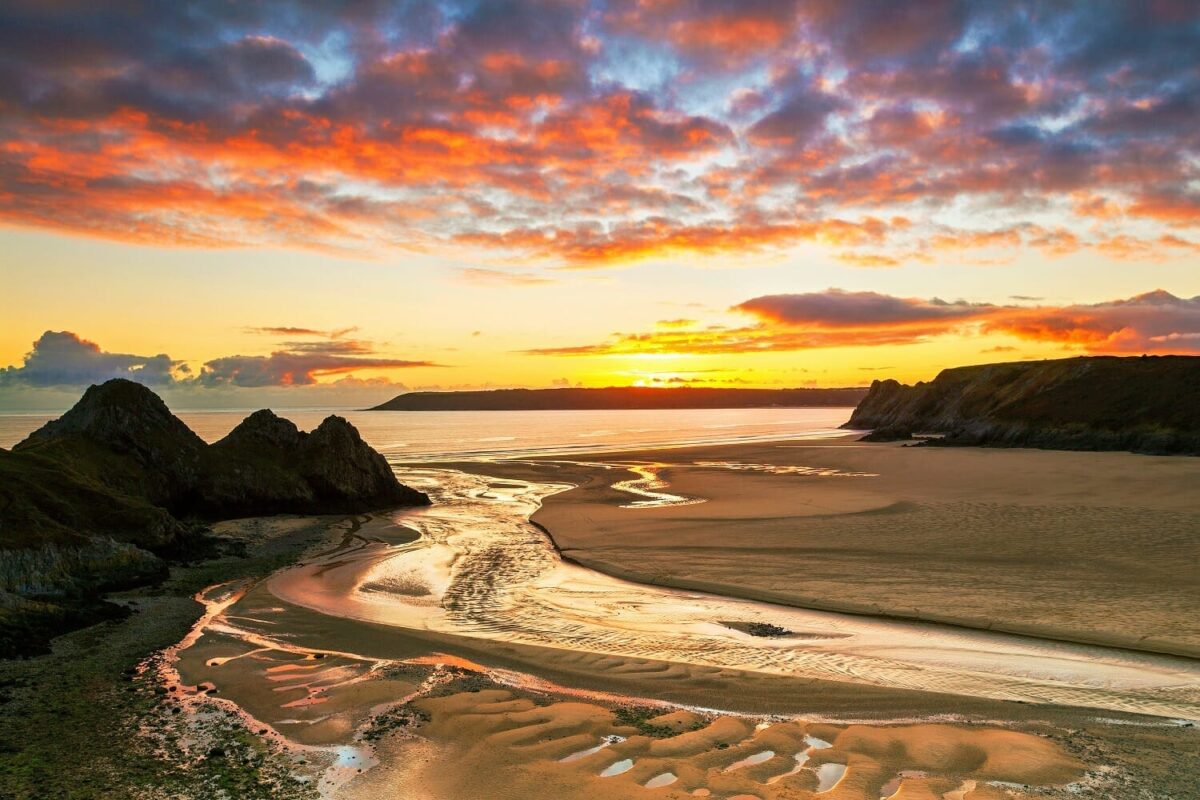
The headline attraction is Rhossili Bay — a 3-mile crescent of golden sand backed by the dramatic Rhossili Downs and the tidal island of Worms Head. It is consistently ranked among the top 10 beaches in Europe by TripAdvisor and is one of the finest surfing beaches in Wales, with reliable Atlantic swells rolling in from the southwest. On the south coast, Three Cliffs Bay is arguably the most photographed beach in Wales — a hidden cove accessed via a coastal walk, framed by three jagged limestone pinnacles.
The Gower is also home to some of the finest coastal golf in Wales. Pennard Golf Club, perched on the clifftops above Three Cliffs Bay with the ruins of Pennard Castle on the 7th fairway, offers one of the most dramatic settings in world golf. For walkers, the entire Gower coast can be traversed in two to three days, taking in hidden coves, blowhole formations, and the Arthur’s Stone Neolithic burial chamber on Cefn Bryn. Our detailed scenic walks in South Wales guide includes the best Gower routes.

Carmarthenshire: The Garden of Wales
If Pembrokeshire is the coast and the Gower is the surf, Carmarthenshire is the soul. This sprawling, deeply rural county is known as the Garden of Wales — a rolling landscape of lush river valleys, ancient market towns, and a surprising density of castles that rivals anywhere in the country. The 11 castles of Carmarthenshire include the dramatically perched Carreg Cennen — widely considered one of the most atmospherically located castle ruins in all of Britain, sitting on a sheer limestone cliff 90 metres above the Cennen Valley.
The town of Laugharne on the Taf estuary is forever associated with Dylan Thomas, who wrote some of his most celebrated works — including Under Milk Wood — in the small writing shed overlooking the water. Today, the Boathouse where Thomas lived with his family is a pilgrimage site for literature lovers from around the world. Nearby, the market town of Llandeilo has emerged as the foodie capital of West Wales, packed with independent restaurants, delis, and artisan producers.
Carmarthenshire is also home to the National Botanic Garden of Wales near Llanarthne — featuring the world’s largest single-span glasshouse, designed by Norman Foster, housing a spectacular collection of Mediterranean plants from six global regions. For those interested in Welsh food culture, the Carmarthen market (one of the oldest continuously operating markets in Wales) is the best place to sample local cheeses, Welsh cakes cooked on the griddle, and cured meats.
The Carmarthenshire Food & Castles Trail (4-Day Itinerary)
Combine the best of the Garden of Wales with this easy-paced driving route.
- Day 1: Market Towns & Estates. Start in Llandeilo. Browse the boutique shops, grab local produce from the delis, and spend the afternoon wandering the deer park at the Dinefwr Estate before climbing to Dinefwr Castle.
- Day 2: Dramatic Ruins & Glasshouses. Drive into the Brecon Beacons fringe to explore Carreg Cennen Castle, perched dizzyingly high on a limestone crag. In the afternoon, head to the National Botanic Garden of Wales.
- Day 3: The Dylan Thomas Coast. Head south to the Taf Estuary. Explore Laugharne Castle, visit the Dylan Thomas Boathouse, and enjoy a pint at Browns Hotel (Thomas’s favourite watering hole).
- Day 4: Estuary Views & Local Cheese. Drive to the sleepy village of Llansteffan. Walk up to the imposing Llansteffan Castle overlooking the River Towy, and stop at a local farm shop for world-class Carmarthenshire cheese.
Swansea Bay: Urban Culture Meets the Sea
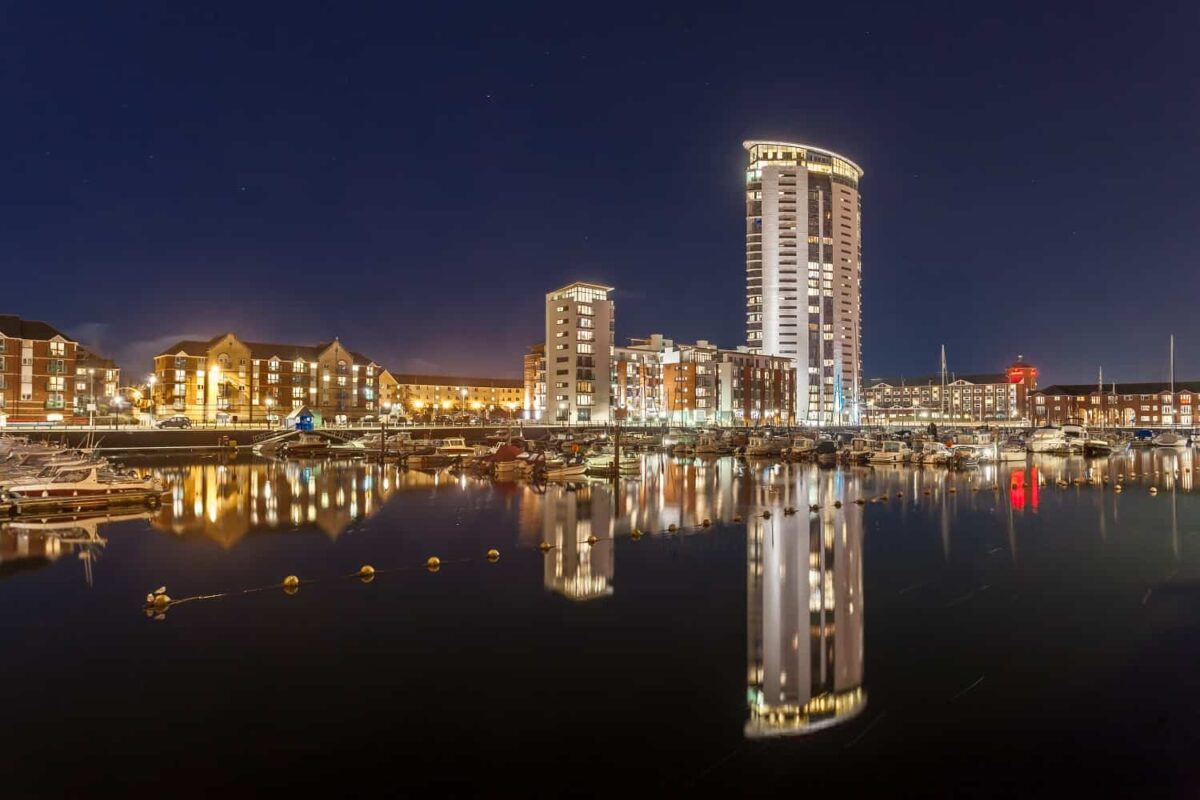
Swansea is the gateway to West Wales and the natural starting point for most visitors arriving from England. As Wales’ second-largest city, it provides the urban infrastructure — restaurants, nightlife, shopping, sport — that the surrounding rural coastline does not. The redeveloped Maritime Quarter and SA1 waterfront district now house a cluster of independent restaurants and bars alongside the National Waterfront Museum, which is free to visit and covers the industrial and maritime heritage of Wales.
Swansea Market, housed in a vast indoor hall in the city centre, is one of the largest covered markets in Wales. It is famous for its fresh cockles and laverbread (a traditional Welsh delicacy made from seaweed), while the legendary Joe’s ice cream parlour located nearby is a must-visit. For our full guide to local dining, see our Swansea waterfront restaurants post.
The promenade from the Marina to Mumbles is a 5-mile traffic-free walking and cycling route hugging the sweeping arc of the bay. Mumbles itself is a charming Victorian seaside village at the western end, marking the gateway to the Gower. Beyond Mumbles Head, Bracelet Bay and Langland Bay are sheltered, family-friendly beaches with rock pools, cafes, and surf hire. For families visiting with children, our Swansea family attractions guide covers the best days out in and around the city.

Beyond the Guidebooks: West Wales Hidden Gems
If you want to escape the peak-season crowds at Tenby or Rhossili, West Wales has plenty of quieter, wilder alternatives that rival the main attractions.
- The Preseli Hills: Head inland from the Pembrokeshire coast to this wild, heather-clad moorland. It is an ancient, mystical landscape (the source of Stonehenge’s bluestones) offering panoramic views across to Ireland on a clear day, with a fraction of the coastal foot traffic.
- Mwnt (SA43 1QH): A perfectly formed, sheltered sandy cove owned by the National Trust just north of the Pembrokeshire border in Ceredigion. The brilliant white 14th-century Church of the Holy Cross overlooks the bay, which is a prime spot for dolphin watching.
- Cwm yr Eglwys: A tiny, picturesque hamlet nestled in a valley on the Dinas Island peninsula. The beach is overlooked by the romantic ruins of a 12th-century church that was largely destroyed by an 1859 storm.
- Broad Haven South: Not to be confused with the more commercial Broad Haven (North), this spectacular beach is accessed by walking past the enchanting lily ponds at Bosherston. It features soft sand, sea caves, and the iconic Church Rock rising from the waves.
Top 10 Experiences in West Wales
The absolute must-do activities and attractions across the region, with addresses and pricing.
| Experience | Location | Price | Best For |
|---|---|---|---|
| Walk the Pembrokeshire Coast Path | Full coast, SA70–SA43 | Free | Walkers, all levels |
| Coasteering at St Davids | St Davids, SA62 | From £45 | Adventure seekers, groups |
| Surf Rhossili Bay | Rhossili, Gower, SA3 1PR | From £35 (lesson) | Surfers, couples |
| Boat trip to Skomer Island | Martin’s Haven, SA62 3BJ | From £20 | Wildlife lovers, families |
| Visit Carreg Cennen Castle | Trapp, Llandeilo, SA19 6UA | Approx. £8.50 | Heritage, photographers |
| National Botanic Garden | Llanarthne, SA32 8HN | From £12.50 | Families, garden lovers |
| Explore Tenby’s 3 beaches | Tenby, SA70 7AJ | Free | Families, bucket-and-spade |
| Three Cliffs Bay walk | Pennard, Gower, SA3 2HB | Free | Photographers, couples |
| Dylan Thomas Boathouse | Laugharne, SA33 4SD | Approx. £5 | Literature, culture lovers |
| Swansea Market cockles & laverbread | Swansea, SA1 3PF | Free entry | Foodies, culture seekers |
Plan Your Route: The West Wales Interactive Map
Want to see exactly where these beaches, castles, and coastal towns are located? Use our Interactive Map of Wales to filter by sub-region, find parking spots, and easily map out your perfect coastal road trip.
Getting to West Wales and Getting Around
By car: The M4 motorway runs directly to Swansea (junction 42) from London (approximately 3 hours) and Cardiff (approximately 1 hour). From Swansea, the A48 and A40 continue west through Carmarthen to Pembrokeshire. Tenby is roughly 2 hours from Cardiff; St Davids is approximately 2.5 hours. The roads narrow significantly west of Carmarthen — expect single-carriageway driving on the A40 and A477.
By train: Great Western Railway operates direct services from London Paddington to Swansea (approximately 3 hours). Transport for Wales continues the line westward from Swansea through Carmarthen to Pembroke Dock, Tenby, and Milford Haven. The Pembroke Dock line runs through some of the most beautiful coastal scenery in Wales, passing directly through Tenby station — which is located just a short walk inland from the medieval town walls.
Getting around: A car is the most practical way to explore West Wales, especially for reaching remote beaches and rural attractions. However, the seasonal Pembrokeshire Coastal Bus Services (the Puffin Shuttle, Celtic Coaster, and Poppit Rocket) are excellent for linear coast path walks — allowing you to walk a section of the path and catch a bus back to your starting point. Cycling the Celtic Trail (National Cycle Route 4) is a superb way to explore the quieter lanes of Carmarthenshire and Pembrokeshire under your own power.
Accessibility and Inclusion
West Wales is increasingly catering to visitors of all mobility levels. Several major beaches, including Saundersfoot, Broad Haven (North), and Whitesands, offer all-terrain beach wheelchairs for hire (advance booking highly recommended through the Pembrokeshire Coast National Park Authority). For walkers, the spectacular stretch of the Coast Path between Saundersfoot and Coppet Hall is fully paved, flat, and ideal for wheelchairs, mobility scooters, and prams. The National Botanic Garden of Wales is also widely praised for its extensive accessible pathways and shuttle buggy service.
Where to Stay in West Wales
West Wales accommodation ranges from colourful Georgian townhouses in Tenby to remote farmhouses deep in the Carmarthenshire hills. Here are our best guides:
- Holiday Cottages in Wales — Self-catering stays from seaside apartments to mountain farmhouses.
- Best Hotels in Swansea Bay — Our top-rated Swansea and Mumbles accommodation picks.
- Coastal Campsites in Tenby — The best pitches within walking distance of the beaches.
- Family Caravan Parks in Pembrokeshire — Static caravans and touring parks for families.
- Pet-Friendly Cottages in Tenby — Dog-friendly self-catering stays near the beach.
- Seaside Cottages across Wales — Our pick of the best coastal cottage properties.
- Camping by the Sea in St Davids — Coastal campsites on the Pembrokeshire headland.
- Glamping in Wales — Bell tents, pods, and yurts across the region.
When to Visit West Wales
May and June are the sweet spot. The weather is generally warm and dry, the coastal wildflowers are at their peak, the puffins are nesting on Skomer Island, and the summer holiday crowds have not yet arrived. Accommodation is significantly cheaper than July and August, and popular beaches like Barafundle and Rhossili are blissfully quiet on weekdays.
July and August are peak season. Tenby, Saundersfoot, and the Gower beaches are extremely busy. Accommodation books out months in advance, and prices for holiday cottages in coastal Pembrokeshire can exceed £2,000 per week for a 3-bedroom property. If you are visiting in peak summer, arrive early to secure beach parking — popular car parks at Barafundle, Freshwater West, and Rhossili fill completely by mid-morning.
September and October offer outstanding value. The Atlantic swells build for autumn surfing on the Gower, the coast path is quiet, and the Pembrokeshire landscape turns golden. The annual Narberth Food Festival (a major highlight of the Pembrokeshire calendar) and the Tenby Arts Festival both run in September. October is also peak grey seal pupping season along the Pembrokeshire cliffs — an incredible wildlife spectacle visible from the coast path.
Winter is dramatically underrated. Storm-watching from the Pembrokeshire clifftops is a genuinely thrilling experience, with massive Atlantic waves crashing into the headlands. Tenby and Mumbles both run Christmas markets and festive events through November and December. Accommodation prices drop to their lowest, and many cottages with log burners offer short breaks from as little as £200 for three nights.
Key Annual Events in West Wales
Planning your trip around a major festival or sporting event can make it truly memorable (or help you avoid the busiest weekends!). For a complete, updated list of what is on, check our Events in Wales calendar. Highlights include:
- July: The Gower Festival. Two weeks of world-class classical, folk, and world music hosted in ancient churches across the beautiful Gower Peninsula.
- August: Pembrokeshire County Show. Held in Haverfordwest, this is Wales’ largest county agricultural show, packed with local food, livestock judging, show jumping, and family entertainment.
- September: Ironman Wales. The town of Tenby completely transforms as thousands of athletes tackle one of the toughest Ironman courses in the world. The atmosphere is electric, but be aware that road closures are extensive.
Explore More of Wales
West Wales is just one corner of the country. Explore our other regional destination guides:
- North Wales — Snowdonia, Anglesey, Zip World, and the castle towns.
- Mid Wales — Brecon Beacons, Cambrian Mountains, and the Elan Valley.
- South Wales — Cardiff, the Valleys, and the Wye Valley.
- Adventures & Activities — Surfing, hiking, horse riding, and more across the country.
- Romantic Breaks — Hot tub cottages, spa hotels, and coastal escapes.
A Quick Welsh Language Survival Guide
While English is spoken everywhere, West Wales (especially Carmarthenshire and northern Pembrokeshire) is home to thriving Welsh-speaking communities. Trying a few words is always deeply appreciated by locals!
- Bore da (Pronounced: Bore-eh dah) — Good morning.
- Diolch (Pronounced: Dee-olch, with a soft ‘ch’ like the Scottish ‘loch’) — Thank you.
- Iechyd da (Pronounced: Yech-id dah) — Cheers / Good health.
- Pronunciation Tip: ‘ll’ — Seen in towns like Llandeilo or Llansteffan. Put your tongue to the roof of your mouth as if to say ‘L’, and blow air out the sides of your mouth.
- Pronunciation Tip: ‘dd’ — Always pronounced as a hard ‘th’, like in the English word “breathe”. (So, Gwynedd is pronounced Gwin-eth).
Frequently Asked Questions: Visiting West Wales
What is West Wales best known for?
West Wales is best known for the Pembrokeshire Coast National Park — the UK’s only predominantly coastal National Park — and its extraordinary beaches, which include Barafundle Bay, Rhossili Bay, and Three Cliffs Bay. The region is also the birthplace of Welsh coasteering and surfing, home to one of Britain’s largest puffin colonies on Skomer Island, and the literary homeland of Dylan Thomas in Laugharne.
Is West Wales good for a family holiday?
West Wales is one of the best family holiday destinations in Britain. Tenby alone has three sandy beaches within walking distance of the town centre, plus Caldey Island boat trips and Folly Farm (one of the most popular family attractions in Wales). Pembrokeshire’s beaches are generally sheltered, clean, and lifeguarded during summer. The Gower also has excellent family beaches at Caswell Bay and Langland Bay. Accommodation options range from family caravan parks to large self-catering cottages with gardens.
How do I get to Pembrokeshire from London?
The fastest route by car is the M4 westbound to Carmarthen, then the A40 and A477 to Tenby or the A40 to Haverfordwest and St Davids. Total drive time is approximately 4 to 5 hours depending on traffic. By train, Great Western Railway runs from London Paddington to Swansea, where you can change to a Transport for Wales service continuing to Carmarthen, Tenby, and Pembroke Dock. The total rail journey takes approximately 5 hours.
What is the difference between the Gower and Pembrokeshire?
The Gower Peninsula is a compact, 19-mile-long headland directly west of Swansea, famous for surfing, dramatic cliff scenery, and being the UK’s first AONB. It is best for short breaks, day trips from Swansea, and surf holidays. Pembrokeshire is much larger — covering an entire county and a full National Park — with a wider range of beaches, towns (including Tenby and St Davids), and outdoor activities. Pembrokeshire is typically the choice for week-long family holidays, while the Gower suits weekend escapes.
When is the best time to see puffins in Pembrokeshire?
Puffins arrive on Skomer and Skokholm islands in late March and early April, with the best viewing from mid-April to mid-July. Boat trips to Skomer depart from Martin’s Haven (SA62 3BJ) and should be booked well in advance — the island has a daily visitor cap to protect the breeding colony. Late May and June offer the highest chance of seeing puffins up close at their burrows with fish in their beaks, feeding their chicks.
Is West Wales dog-friendly?
West Wales is one of the most dog-friendly holiday regions in Britain. Many beaches allow dogs year-round, and the coast path is almost entirely accessible to well-behaved dogs on leads. During the summer months (typically May to September), some of the most popular beaches in Tenby and on the Gower enforce seasonal dog bans, but there are always dog-friendly alternatives nearby. Our guides to dog-friendly beaches in Pembrokeshire cover exactly which beaches allow dogs and when.
Planning a trip to Wales?
Find the perfect holiday cottage for your Welsh adventure.
 Share icon below and select Add to Home Screen to install the free app.