

5 Wonderful Wildlife Walks in Anglesey
Wildlife Walks in Anglesey 2026: Red Squirrels, Seabirds and Seals
By the Wales.org Travel Team | Updated April 2026

The Isle of Anglesey is one of the best wildlife destinations in Wales. Its island position — separated from the mainland by the Menai Strait — has created a haven where species thrive in relative isolation. Anglesey is the only county in Wales where red squirrels outnumber grey squirrels, thanks to a pioneering eradication programme. Over 9,000 seabirds nest on the South Stack cliffs each summer. Grey seals haul out on the western headlands. And three internationally important fens support rare orchids, carnivorous plants, and insects found almost nowhere else in Britain.
⚡ At a Glance: Anglesey Wildlife Walks
- Best for red squirrels: Newborough Forest — flat pine trails, best early morning, pushchair-friendly.
- Best for seabirds: Porth Dafarch to South Stack — 9,000+ nesting birds, RSPB reserve, Ellin’s Tower.
- Best for seals: Rhoscolyn Headland — grey seals on the rocks below, peregrine falcons above.
- Best for rare plants: Cors Bodeilio — National Nature Reserve, orchids, carnivorous plants, medicinal leech.
- Best for wading birds: Red Wharf Bay to Pentraeth Forest — purple sandpipers, curlew, shelduck.
- Best for terns: Cemlyn Bay — Arctic, common, and Sandwich terns, one of the most important colonies in Wales.
- Best season: April–July for seabirds and orchids. September–November for seal pups. Year-round for red squirrels.
The best way to see all of this is on foot. The 130-mile Anglesey Coastal Path passes through most of the island’s key wildlife habitats, but you do not need to walk the whole thing. This guide covers seven of the best wildlife walks on Anglesey — from flat forest trails for red squirrel spotting to dramatic cliff walks above seabird colonies — with practical details on distance, difficulty, and what you are most likely to see.
Anglesey Wildlife Walks at a Glance
| Walk | Distance | Difficulty | Key Wildlife | Best Season |
|---|---|---|---|---|
| Newborough Forest | 2–5 miles | Easy (flat) | Red squirrels | Year-round (mornings) |
| Red Wharf Bay to Pentraeth | 3–4 miles | Easy | Waders, red squirrels | Winter (waders), year-round (squirrels) |
| Porth Dafarch to South Stack | 4 miles | Moderate | 9,000+ seabirds, choughs | April–July |
| Rhoscolyn Headland | 3–4 miles | Moderate | Grey seals, peregrines | Year-round (seals), Apr–Jul (birds) |
| Holyhead Mountain | 5 miles | Moderate | Migrating birds, butterflies | May–September |
| Cors Bodeilio | 1–2 miles | Easy (boardwalk) | Rare orchids, damselflies | May–July |
| Cemlyn Bay | 2 miles | Easy | Tern colony, waders | May–August |
Red Squirrel Walks
Newborough Forest — Best Walk for Red Squirrels
Newborough Forest on the southern tip of Anglesey is one of the most reliable places in the UK to see red squirrels. Thanks to a pioneering grey squirrel eradication programme — run by the Red Squirrels Trust Wales, Natural Resources Wales, and the Red Squirrels in South Scotland project — Anglesey became the first county in Wales to remove grey squirrels entirely. The result is a thriving red squirrel population that has expanded from around 40 individuals in 1998 to an estimated 700+ today.
The forest is planted predominantly with Corsican pine, which provides the seed cones that red squirrels depend on. Walk quietly along the well-maintained forest paths in the early morning (before 9am is ideal) and scan the canopy and ground level for movement. Red squirrels are smaller and more agile than greys, with distinctive russet fur and tufted ears. The main trails are flat and pushchair-friendly. The forest connects to Newborough Warren and Llanddwyn Beach — so you can combine a squirrel walk with a beach day. Free to walk; NRW car park charges apply (approximately £5–£7/day, free for disabled badge holders).
Red Wharf Bay to Pentraeth Forest — Waders and Squirrels

Red Wharf Bay on the east coast sits between the villages of Pentraeth and Benllech. The bay is a designated nature reserve attracting birdlife rarely seen elsewhere in the UK — purple sandpipers, shelduck, and long-billed curlew feed on the mudflats and salt marshes, particularly in winter when wading bird numbers peak. The bordering dunes support rare plant species, including the purple pyramidal orchid which favours rocky, calcareous terrain.
At the eastern edge of the bay, the walk enters Pentraeth Forest — another stronghold for red squirrels. The undisturbed pine woodland is one of the last refuges for this species on Anglesey, with conservationists fiercely protecting the habitat. The walk from Red Wharf Bay to Pentraeth is approximately 3–4 miles, flat, and suitable for most fitness levels. Combine with lunch at The Tavern on the Bay (see our Anglesey restaurants guide).
Seabird and Raptor Walks
Porth Dafarch to South Stack — Best Seabird Walk in Wales
This walk starts at Porth Dafarch beach (popular with snorkellers and divers exploring the 1886 wreck of the steamer Missouri) and follows the coastal path to the RSPB South Stack Cliffs reserve on Holy Island — one of the largest and most accessible seabird colonies in Britain.
The route crosses heathland that, depending on the season, blazes with purple heather and wild thyme. But the destination is the star. Over 9,000 seabirds nest on the South Stack cliffs between April and July — guillemots, razorbills, kittiwakes, and fulmars packed onto narrow rock ledges in their thousands. Choughs (Wales’s rarest breeding crow, with distinctive red bills and legs), peregrine falcons, and ravens soar above. Climb Ellin’s Tower for the best viewing platform — the RSPB provides telescopes and binoculars during peak season, and knowledgeable volunteers can help identify species.
The walk is approximately 4 miles one way along the coastal path. Moderate difficulty — some clifftop sections with steep drops (not fenced). The RSPB visitor centre at South Stack has a café. Free entry to the reserve; car parking charge at South Stack. One of the best birdwatching walks in Wales.
Holyhead Mountain Circular — Migrating Birds, Butterflies and Basking Sharks

The Holyhead Mountain Circular is an 8.4-kilometre loop starting from Breakwater Country Park near Holyhead. The park itself is a rewarding wildlife site — migrating swifts and swallows fill the summer skies, and peregrine falcons hunt near the old quarries. Silver-studded blue butterflies, ruby tiger moths, and buff-tip moths fertilise the heathland during warmer months.
As the path climbs towards Holyhead Mountain (220 metres — Anglesey’s highest point), lizards and slow worms hide in the rocky terrain. The higher coastal sections offer chances to spot marine wildlife below, including grey seals and (rarely) basking sharks. On a clear day, the summit views stretch to Ireland, the Llŷn Peninsula, and Eryri (Snowdonia). The ancient remains of the Iron Age hillfort Caer y Tŵr crown the summit. Moderate difficulty — some rough, exposed paths. Allow 3 hours.
Rhoscolyn Headland — Best Walk for Grey Seals
Rhoscolyn lies in the south-western corner of Holy Island, overlooking the Irish Sea towards the Llŷn Peninsula. The dramatic coastline features hidden coves, offshore islands, and the Rhoscolyn Beacon — a navigational marker warning ships of jagged outcrops. The clifftop walk loops around the headland between Rhoscolyn Head and Silver Bay, providing the perfect vantage point to spot families of grey seals lounging on the rocks and sand below.
Above, the skies are alive with peregrine falcons, ravens, and kestrels. The walk is approximately 3–4 miles and moderate in difficulty — clifftop paths with some uneven ground. Grey seal pups are best seen in autumn (September–November), but adult seals are present year-round. Combine with a swim at Rhoscolyn’s beautiful beach in summer.
Nature Reserve Walks
Cors Bodeilio National Nature Reserve — Best Walk for Rare Plants and Insects
Anglesey has three fens of international importance, and Cors Bodeilio is the most accessible. This National Nature Reserve offers a completely different landscape from the coastal walks — a mire without forest cover, governed by peat-forming plants that has developed over thousands of years.
At first glance, the swampy ground may seem lifeless. On closer inspection, it teems with precious plant, insect, and amphibious life. Among the common reeds and black bog rush grow orchids (including the extraordinary fly orchid, which has evolved over millennia to attract pollinators with an insect-shaped lip), carnivorous sundew plants, giant algae, and stoneworts. The reserve also supports the medicinal leech — the only British leech that can bite through human skin. For something less alarming, damselflies arrive in spring, including the rare variable damselfly with its brilliant blue body and netted wings.
The walk is 1–2 miles on boardwalks and flat paths. Easy difficulty. Best visited May to July when the orchids are flowering and damselflies are active. Managed by Natural Resources Wales. Free entry.
Cemlyn Bay — Best Walk for Tern Colonies
© Crown copyright Cymru Wales
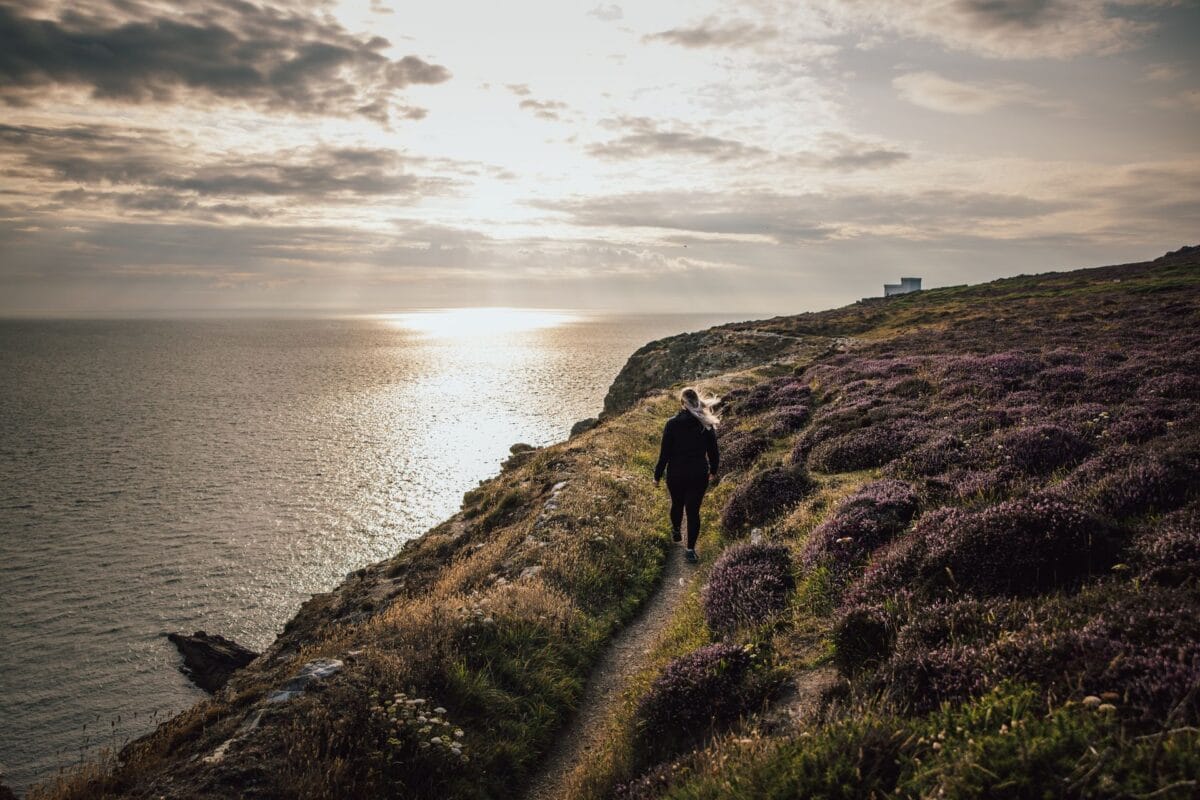
Cemlyn Bay on Anglesey’s northern coast is home to one of the most important tern colonies in Wales. A shingle ridge separates the bay from a brackish lagoon where Arctic terns, common terns, and Sandwich terns nest in large numbers between May and August. The lagoon is managed by the North Wales Wildlife Trust as a nature reserve, and the nesting area is protected — view from the marked paths and hides only.
The walk around the bay is approximately 2 miles and easy. Wading birds, shelduck, and oystercatchers also frequent the area. The terns are vocal, aggressive defenders of their nests — do not approach the colony. Binoculars recommended. Free entry. A quiet, often overlooked gem on the Anglesey wildlife walking circuit.
Planning Your Anglesey Wildlife Walks
What to bring: Binoculars (essential for South Stack and Rhoscolyn), walking boots (even easy walks can be muddy), waterproof jacket, and a wildlife identification guide. The RSPB and Collins bird guides are both excellent for seabird ID.
Dogs: Keep on a short lead at all times near nesting birds and livestock. Dogs are restricted from some beach areas May–September. Check individual reserve rules.
Accessibility: Newborough Forest main paths are pushchair-friendly. Cors Bodeilio has a boardwalk. South Stack visitor centre has accessible viewing platforms. The clifftop walks (Rhoscolyn, Holyhead Mountain, South Stack coastal path) involve uneven terrain and unfenced drops.
For accommodation near the walks, browse holiday cottages on Anglesey, campsites, and glamping. For more family activities, see our Anglesey with kids guide. For the full Anglesey Coastal Path, see our Anglesey destination guide.
Frequently Asked Questions About Wildlife Walks in Anglesey
Where can I see red squirrels in Anglesey?
Newborough Forest (southern tip) and Pentraeth Forest (east coast). Anglesey is the only county in Wales with a thriving red squirrel population — estimated 700+ individuals following the successful grey squirrel eradication. Arrive early morning, walk quietly.
What wildlife can you see on Anglesey?
Red squirrels, 9,000+ nesting seabirds at South Stack, grey seals, dolphins, harbour porpoises, rare orchids, carnivorous plants, and wading birds including purple sandpipers and curlew. See our wildlife in Wales guide.
When is the best time for wildlife walks?
April–July for seabirds and orchids. September–November for seal pups. Winter for wading birds. Year-round for red squirrels (best in early morning).
Is the Anglesey Coastal Path good for wildlife?
Excellent. The 130-mile path passes South Stack seabird cliffs, Rhoscolyn seal colonies, Newborough squirrel forest, Cemlyn tern colony, and Red Wharf Bay waders.
Are the walks suitable for families?
Newborough Forest is flat and pushchair-friendly. Cors Bodeilio has boardwalks. South Stack has accessible viewing platforms. Clifftop walks (Rhoscolyn, Holyhead Mountain) need close supervision with young children.
Do I need binoculars?
Binoculars significantly improve seabird watching (South Stack) and seal spotting (Rhoscolyn). The RSPB at South Stack sometimes lends binoculars. For Newborough Forest and Red Wharf Bay, the naked eye is sufficient for most sightings.
All information in this guide was verified in April 2026. Wildlife sightings can never be guaranteed — patience, early mornings, and the right season all improve your chances. For more wildlife in Wales, explore our guides to birds of prey, Tywi Valley wildlife, and hiking in Wales. For independent wildlife advice, visit the RSPB and Natural Resources Wales.

Pembrokeshire-born travel writer and founder of Wales.org. Born in Haverfordwest, now based in Hertfordshire — covering Welsh castles, national parks, festivals and family staycations across all 22 Welsh counties.