


Glamping in Wales 2027: Pods, Treehouses, Yurts & Hot Tubs
Wales is one of the best glamping destinations in the UK. Three national parks, over 870 miles of coastline and some of the darkest skies in Europe make it the perfect place to sleep under canvas, or in a shepherd’s hut, treehouse, geodesic dome or converted horsebox, without giving up a comfortable bed and a hot shower.
From luxury safari tents overlooking the Pembrokeshire coast to woodland pods hidden deep in the forests of Eryri (Snowdonia), the range of glamping experiences across Wales keeps growing. This guide covers every type, every region and how to book for 2027, plus the one financial change worth knowing about before you do.
Why Go Glamping in Wales?
Traditional camping is brilliant but it is not for everyone. Glamping strips away the worst parts, cold nights, leaky tents, sleeping on uneven ground, and keeps the best: fresh air, starlit skies, campfires and the sound of absolutely nothing.
Wales is uniquely suited to glamping because the landscape does most of the work. Pitch a shepherd’s hut on the edge of the Bannau Brycheiniog (Brecon Beacons) and you have an International Dark Sky Reserve on your doorstep. Book a treehouse in Powys and you are waking up at canopy level in ancient woodland. Choose a coastal pod in Pembrokeshire and the sea is your morning alarm.
Glamping also tends to be significantly cheaper than a hotel or holiday cottage while offering an experience that is far more memorable. A two-night midweek stay in a well-equipped glamping pod can cost from as little as £100–£150, less than a single night in many hotels.
For families, glamping is the gateway to outdoor adventure. Children love it. There are no screens, no schedules, and the kind of freedom that simply does not exist in a hotel. Many glamping sites in Wales offer fire pit cooking, wildlife walks, foraging sessions and dark sky events that turn a weekend break into an unforgettable experience.
Types of Glamping in Wales
Glamping pods — the most popular option. Insulated wooden pods with proper beds, lighting and heating. Many include en-suite shower rooms, kitchenettes and private decking. Available year-round and warm enough for winter breaks.
Shepherd’s huts — beautifully crafted small spaces built on wheels, inspired by the traditional shelters used by shepherds on the Welsh hills. Expect a double bed, a wood burner and often a private hot tub just outside. Perfect for couples.
Treehouses — Wales has some of the finest treehouse accommodation in the UK. Elevated among the canopy with rope bridges, wood-fired hot tubs and panoramic forest views. Living Room Treehouses near Machynlleth (SY20 9PZ) is one of the most acclaimed in Britain, rated #1 of 14 speciality lodgings in the town.
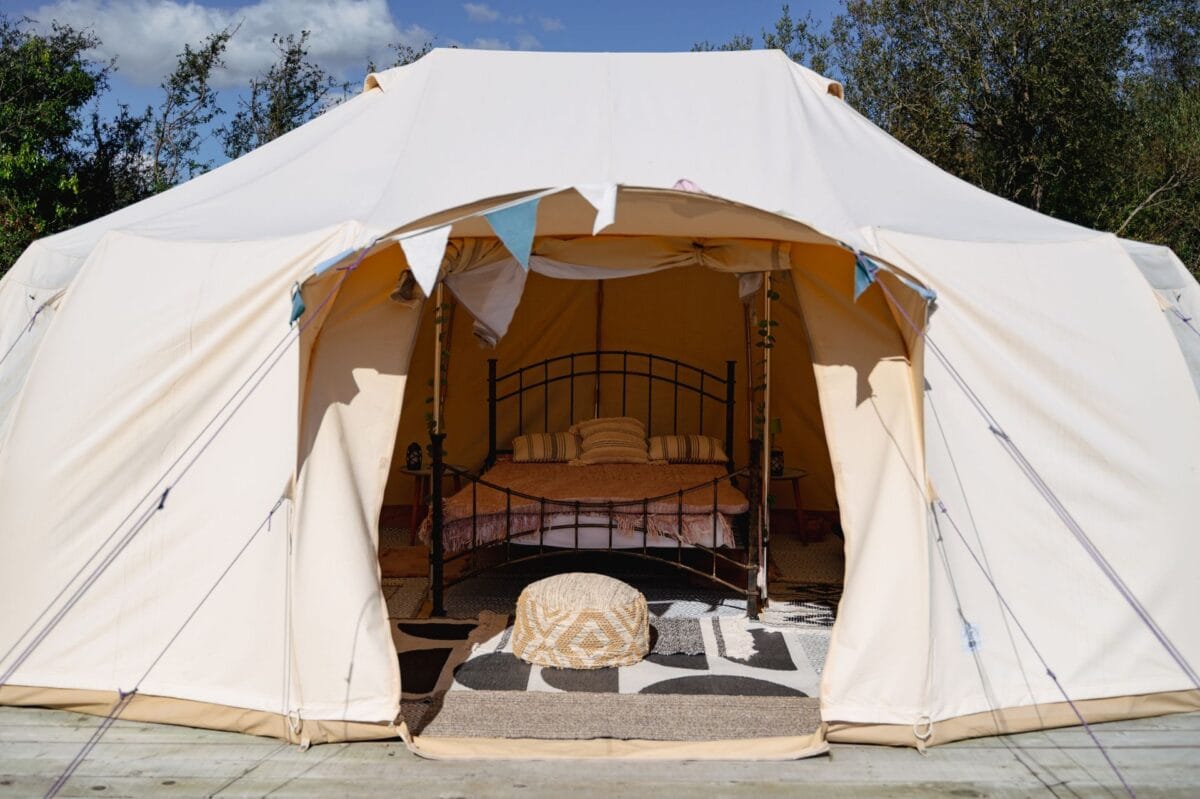
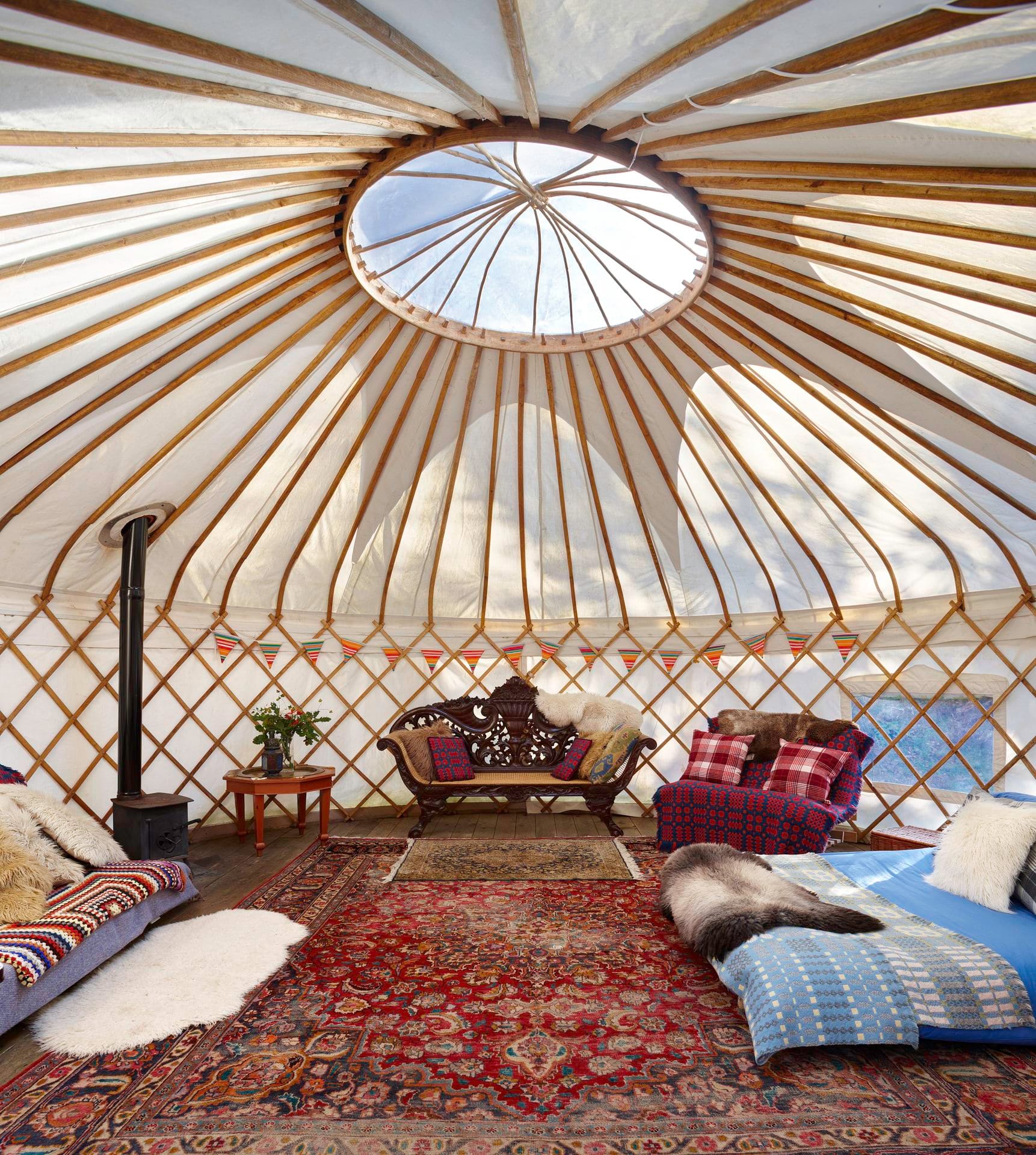
Yurts & bell tents — spacious circular canvas structures furnished with rugs, real beds and often wood burners, typically available Easter to October. They offer more space than pods and feel closer to nature, with canvas walls letting you hear the rain and the birdsong.
Safari tents — the most spacious option, with multiple bedrooms, full kitchens and living areas. Some sleep up to eight guests, ideal for family groups, blurring the line between camping and cottage.
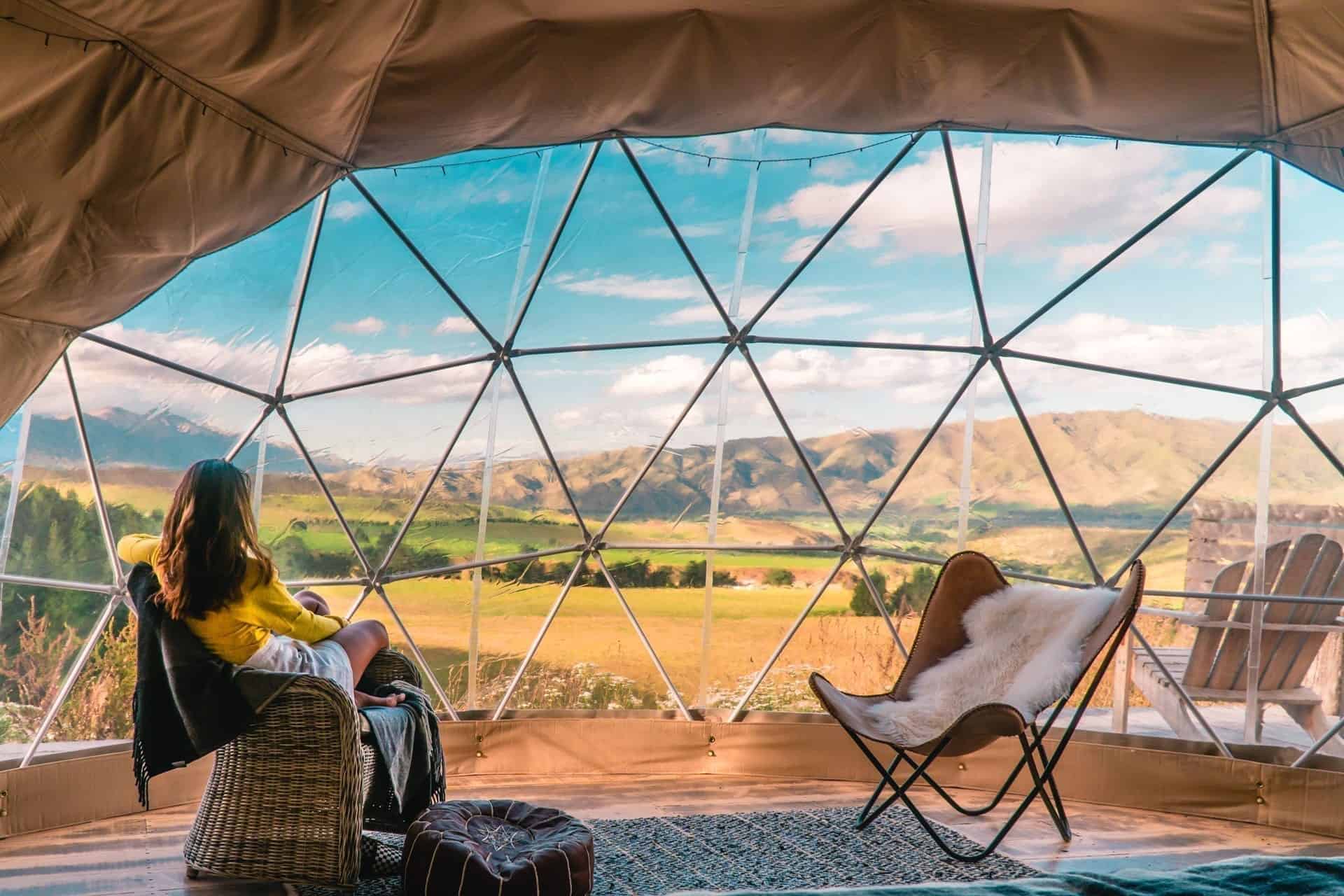
Geodesic domes — transparent or semi-transparent structures that let you stargaze from bed. Popular in the Bannau Brycheiniog and Elan Valley; some come with telescopes.
Converted vehicles — horseboxes, fire engines, double-decker buses and railway carriages have all been converted into quirky glamping accommodation across Wales. For the full picture, see our guide to the different types of glamping in Wales.
Glamping in Eryri (Snowdonia)
Eryri (Snowdonia National Park) offers the most dramatic backdrop for a glamping break in Wales. Imagine stepping out of your pod or shepherd’s hut to a view of Yr Wyddfa (Snowdon) rising above a morning mist, it is the kind of scene that stays with you long after the trip is over.
The Nant Gwynant valley (LL55), between Beddgelert and Pen-y-Pass, has several excellent glamping sites surrounded by some of the finest mountain scenery in Britain. From here you can walk Yr Wyddfa via the Watkin Path or kayak on Llyn Gwynant without leaving the valley; the celebrated mountain biking trails at Coed y Brenin forest park are also reachable, but it’s a genuine excursion rather than a quick ride, around 20 miles and 40 minutes’ drive south near Dolgellau.
For a more sheltered experience, the Conwy Valley and the foothills around Betws-y-Coed (LL24) have glamping pods tucked into woodland with easy access to waterfalls and gorge walks. Dolgarrog, further down the valley, is home to Adventure Parc Snowdonia, which reopened in 2025 under new ownership with zip lines, a climbing wall, high ropes and a ninja assault course; the artificial surf lagoon that made the site famous as Surf Snowdonia closed permanently in 2023 and hasn’t reopened. Eryri glamping is popular year-round, winter stays are particularly special, with the mountains dusted with snow, the valleys quiet, and the wood burner in your pod crackling away while the temperature outside drops to single figures.
Glamping in Pembrokeshire
Sir Benfro (Pembrokeshire) is the top destination for coastal glamping in Wales. The combination of world-class beaches, the Coast Path, wildlife (puffins on Skomer, seals at Ramsey Island) and outstanding food makes it hard to beat; see our full Welsh islands visitor guide for boat trip details.
The north Pembrokeshire coast around Newport and Fishguard has a cluster of excellent eco-glamping sites. Many are small, family-run operations with just a handful of units, meaning you get a genuine sense of privacy and connection to the landscape.
Near Tenby and Saundersfoot, the glamping options tend to be more family-oriented, with larger sites offering safari tents and pods alongside play areas, farm animals and organised activities for children.
St Davids (SA62) is a superb base for a glamping break. Britain’s smallest city has a 12th-century cathedral, independent galleries and restaurants, and the beaches at Whitesands and Caerfai are within walking distance. Several glamping sites operate on the surrounding farmland with sea views that rival anything in Cornwall.
Glamping in the Bannau Brycheiniog (Brecon Beacons)
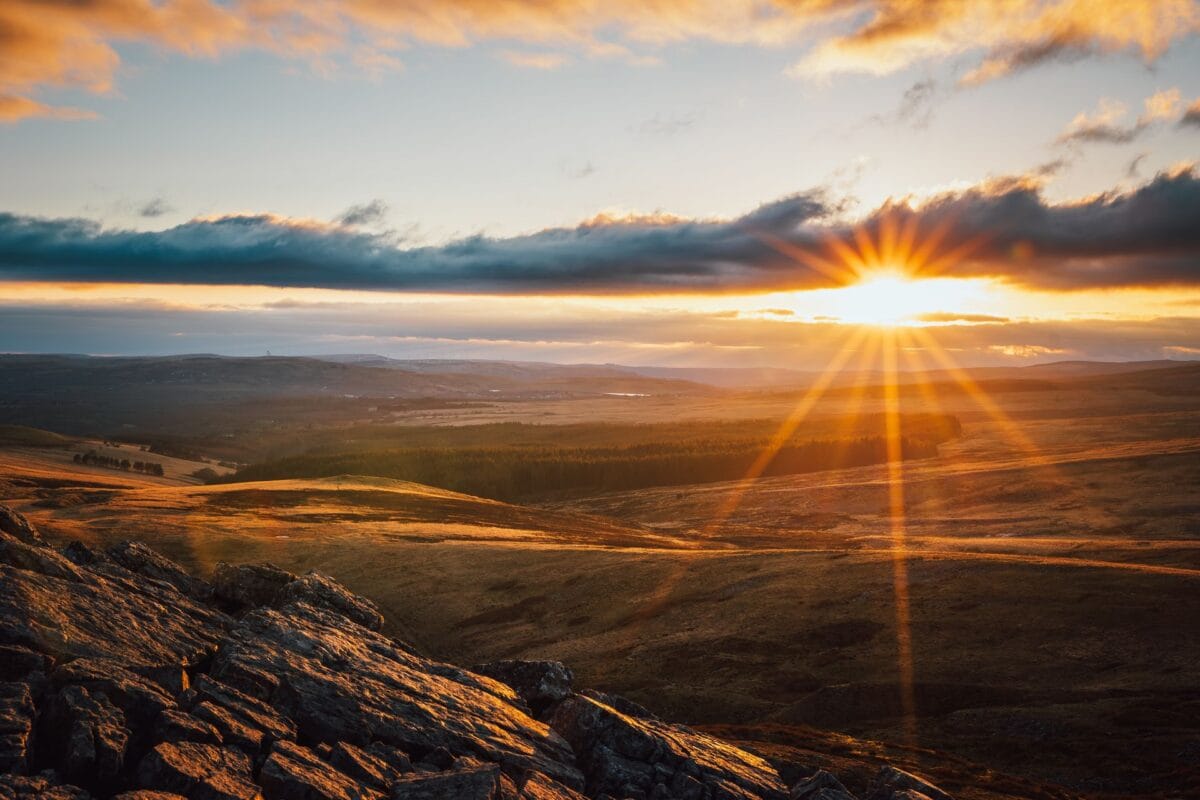
The Bannau Brycheiniog (Brecon Beacons National Park) is an International Dark Sky Reserve, one of only a handful in the world. That alone makes it one of the best glamping locations in Wales. On a clear night, the Milky Way stretches overhead in a way that is simply impossible to see from a city.
The area around Brecon (LD3) and Crickhowell (NP8) has a strong concentration of glamping sites offering pods, yurts and shepherd’s huts, many positioned on hillside farms with uninterrupted views across the national park. Waterfall Country in the southern Bannau is another popular base, the four waterfalls walk near Ystradfellte is one of the most popular hikes in Wales, and several glamping sites sit within easy reach, with the village of Pontneddfechan (SA11 5NR) as the main trailhead.
For stargazing enthusiasts, look for glamping sites that specifically promote their dark sky credentials. Some offer telescopes, astronomy guides and transparent dome roofs designed for watching the stars from bed.
Glamping on the Gower Peninsula
The Gower Peninsula is compact, beautiful and perfectly suited to a glamping weekend. The entire peninsula is just 19 miles long, so every beach, pub, restaurant and walking trail is within easy reach no matter where you are based.
Glamping sites on the Gower tend to be small and well-managed, with shepherd’s huts and pods set back from the coast and views across the Bristol Channel. Rhossili and Llangennith (SA3 1HU) on the western tip are the most popular spots for surfers and walkers, the three-mile sweep of Rhossili Bay is regularly voted among the best beaches in Europe, and the sunset views from the clifftop are extraordinary. The Gower is also one of the easiest glamping destinations to reach in Wales, less than an hour from the M4, making it ideal for a last-minute weekend escape from Bristol, Cardiff or the Midlands.
Glamping with Hot Tubs
A private hot tub takes a glamping break from good to unforgettable. Soaking in hot water while looking up at a dark sky full of stars, or across a misty valley at dawn, is the definition of a luxury escape without the luxury price tag.
Hot tub glamping is available in every region of Wales. The most in-demand sites are in Eryri (mountain views from the tub), the Bannau Brycheiniog (stargazing from the tub) and coastal locations in Pembrokeshire and the Gower (sea sounds while you soak). Most hot tub glamping units are designed for couples, shepherd’s huts and pods with a wood-fired or electric tub on the private decking. Some larger safari tents and lodges also include hot tubs for families and groups. Always check whether the hot tub is private to your unit or shared with other guests, private tubs are standard at most Welsh glamping sites but it is worth confirming at the time of booking.
Hot tub glamping sites in Wales book up fastest for Valentine’s Day, bank holidays and the October half term. If you have specific dates in mind, book at least two to three months in advance to secure your preferred site.
Dog-Friendly Glamping in Wales
Many glamping sites in Wales welcome dogs, making it easy to bring the whole family, including the four-legged members. The outdoor nature of glamping is perfectly suited to travelling with a dog, and the Welsh countryside offers endless opportunities for walks, swims and off-lead adventures. For region-specific ideas, see our Anglesey destination guide, one of the best dog-friendly bases in North Wales.
The best dog-friendly glamping sites offer enclosed decking or garden areas around each unit so your dog can relax safely while you cook or sit outside. Some sites go further with dog shower stations, treat baskets on arrival and recommendations for local dog-friendly pubs and beaches. Pembrokeshire, the Gower and Mid Wales are particularly good choices for dog owners, with coastal paths, forest trails and open moorland providing the kind of varied walking dogs thrive on.
As with holiday cottages, always check the site’s rules on the number and size of dogs allowed, and be aware of livestock in surrounding fields. Keep your dog on a lead near farmland at all times.
Glamping for Families
Glamping is arguably the best type of accommodation for a family holiday in Wales. Children love the adventure of it, sleeping in a treehouse, toasting marshmallows over a fire pit, spotting bats at dusk, waking up to birdsong instead of an alarm clock. It is the kind of holiday they will remember for years.
For families, safari tents and large yurts are the best options as they provide the most space, with many sleeping four to eight guests across separate sleeping areas, a proper kitchen and living space. Some sites also offer interconnected pods for families who want individual sleeping units with a shared outdoor area. The best family sites go beyond just providing a place to sleep: look for nature trails, pond dipping, bushcraft sessions, farm animal feeding and outdoor play areas. Many sites in Pembrokeshire and Carmarthenshire are working farms that double as glamping destinations, giving children the chance to collect eggs, feed lambs and learn about rural life.
Safety-wise, most glamping sites are car-free around the accommodation areas, giving children the freedom to play outside without constant supervision; always check whether fire pits and hot tubs are fenced or covered when not in use. Price-wise, glamping is often the most cost-effective family accommodation in Wales, a safari tent sleeping six for a week in Carmarthenshire can cost less than a three-star hotel room for the same period, and the memories will be infinitely better. Pack wellies, waterproofs and a sense of adventure.
How to Book Your Welsh Glamping Break
The glamping season in Wales runs year-round for pods and shepherd’s huts (insulated and heated) and typically Easter to October for canvas-based accommodation like yurts, bell tents and safari tents.
Peak booking periods are summer school holidays (mid-July to early September), bank holiday weekends and the October half term. For these dates, book at least two to three months in advance, the most popular sites sell out much earlier. For the best value, midweek breaks outside school holidays offer the lowest prices and the quietest sites. September is particularly good, the weather is often still warm, the summer crowds have gone and prices drop significantly.
Use the interactive map at the top of this page to search for available stays near your preferred area. You can filter by area, dates, guests and features to find the perfect stay.
From April 2027, Welsh councils that adopt the visitor levy can charge 75p per person per night on campsites and glamping sites (£1.30 for most other accommodation types), on top of your pitch or unit rate. It’s a fixed national rate but adoption is decided council by council, so check directly with your chosen site for your dates.
Frequently Asked Questions
What is the best type of glamping in Wales?
It depends on your priorities. Shepherd’s huts are best for couples wanting a romantic break. Safari tents are best for families who need space. Glamping pods are the most practical all-year option with insulation and heating. Treehouses offer the most unique experience. Geodesic domes are best for stargazing.
How much does glamping in Wales cost?
Prices start from around £80–£120 per night for a basic pod or bell tent. A shepherd’s hut with a hot tub typically costs £150–£250 per night. Luxury treehouses and large safari tents can reach £300+ per night in peak season. Midweek and off-season stays are significantly cheaper.
Is glamping in Wales available in winter?
Yes, glamping pods, shepherd’s huts and some cabins are available year-round as they are insulated and heated. Canvas-based accommodation like yurts and bell tents typically closes from November to March. Winter glamping in the Bannau Brycheiniog is particularly popular for dark sky stargazing.
Can I bring my dog glamping in Wales?
Many glamping sites in Wales welcome dogs. Look for sites that offer enclosed decking areas, nearby walking trails and dog-friendly beaches. Always check the site’s specific pet policy before booking, as rules vary on the number and size of dogs permitted.
Where is the best place to go glamping in Wales?
Eryri (Snowdonia) is best for mountain scenery and adventure. Pembrokeshire is best for beaches and coastal walks. The Bannau Brycheiniog (Brecon Beacons) is best for dark sky stargazing. The Gower Peninsula is best for a quick weekend escape. Mid Wales is best for total peace and seclusion.
Will the 2027 visitor levy affect my glamping booking?
If your chosen council has adopted it, yes, 75p per person per night from April 2027, the lower of the two national rates, applied to campsites and glamping sites. Adoption is decided locally, so check with your site directly.

Pembrokeshire-born travel writer and founder of Wales.org. Born in Haverfordwest, now based in Hertfordshire — covering Welsh castles, national parks, festivals and family staycations across all 22 Welsh counties.