

The Four UNESCO Welsh Castles: Complete Visitor Guide

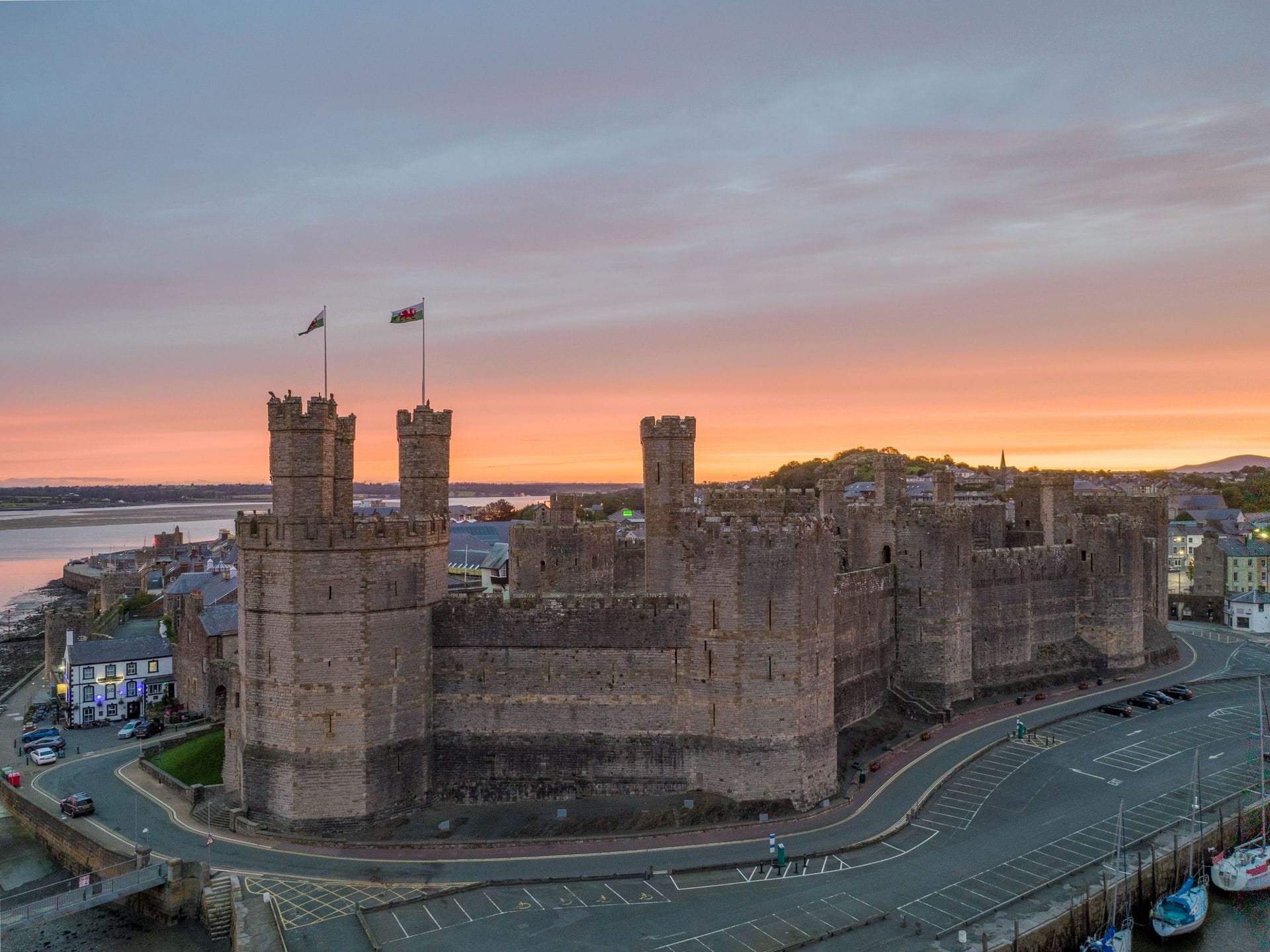
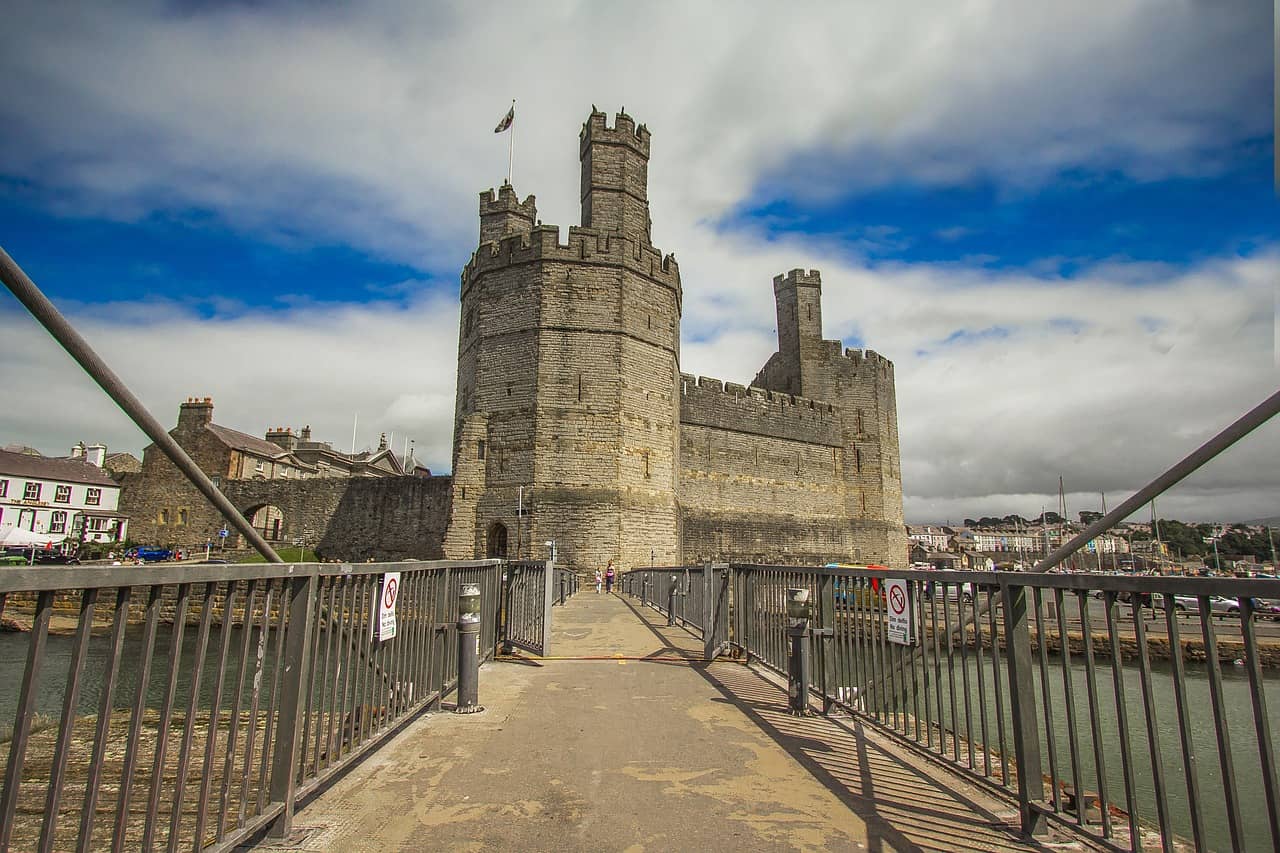
Caernarfon Castle — the greatest and most architecturally dramatic of Edward I’s Welsh fortresses.
Wales has four UNESCO World Heritage castles: Beaumaris, Caernarfon, Conwy and Harlech. Together they form a single World Heritage Site called the Castles and Town Walls of King Edward in Gwynedd, inscribed in 1986 and recognised as the finest examples of late 13th and early 14th century military architecture in Europe. All four were built by King Edward I of England between 1283 and 1330 as part of his campaign to subjugate the Welsh princes, and all four are the work of the same architect — Master James of St George, the greatest castle-builder of his era. All four sit within Gwynedd and Anglesey in North Wales, close enough to visit in a two to three-day self-drive tour, and all four are managed today by Cadw, the Welsh Government’s historic environment service.
This guide covers each castle in turn — what makes it distinctive, admission and opening hours, how to get there, and how to combine all four into one trip. It also covers the best places to stay, the Cadw Explorer Pass as the cheapest way to see them all, and the bookable guided tours that add expert historical context. All information has been verified against Cadw, the UNESCO World Heritage Centre and Visit Wales as of June 2026.
Planning this trip? Ask Branwen, our free AI trip planner →
At a Glance: The Four UNESCO Welsh Castles
- Caernarfon Castle: The scale and drama masterpiece. Polygonal towers, King’s Gate, site of 1969 Prince of Wales investiture. Allow 2 to 3 hours.
- Conwy Castle: Best-preserved medieval town walls in Britain, castle plus 1.3km of walkable walls. Allow 3 to 4 hours.
- Harlech Castle: The setting masterpiece — clifftop position with Eryri backdrop. 108-step “Way from the Sea”. Allow 2 hours.
- Beaumaris Castle: The design masterpiece and unfinished dream. Britain’s finest example of symmetrical concentric design. Allow 2 hours.
- All UNESCO-listed since: 1986
- Best value ticket: Cadw Explorer Pass (3 or 7 days, all Cadw sites in Wales)
- Suggested trip length: Two to three days from a Bangor, Caernarfon or Conwy base
Why These Four Castles Are UNESCO World Heritage
Edward I inherited the English throne in 1272 with a clear ambition: to reduce the semi-independent Welsh princes to subjects of the English crown. After defeating and killing Llywelyn ap Gruffudd, the last native Prince of Wales, at Cilmeri in December 1282, Edward launched the most ambitious military building programme of medieval Britain. Over the next 47 years he constructed a ring of great stone castles around the mountains of Eryri (Snowdonia) — the “iron ring” designed to hold the newly-conquered land in perpetuity.
Four of these fortresses survived intact enough to be considered by UNESCO as one composite site. Beaumaris and Harlech, both by Master James of St George, are considered the finest examples of symmetrical concentric design in Europe. Caernarfon and Conwy pair immense castles with the largely-intact medieval town walls that Edward built around the English settlements he planted alongside them. Together they represent the peak of medieval military engineering and the only completely documented royal building project of the medieval period — the accounts, wages and origins of every workman survive in the English Royal Archives.
The UNESCO criteria: The site was inscribed in 1986 under Criteria (i) — a masterpiece of human creative genius — and (iii) — a unique testimony to a cultural tradition. UNESCO specifically noted that the completeness of the surviving construction accounts is itself an exceptional cultural asset, giving us the wages, place of origin and skill of every single worker.
Castle 1: Caernarfon Castle — The Scale Masterpiece
Castell Caernarfon kair-NAR-von
Caernarfon is the most architecturally ambitious of the four. Edward’s chosen capital in Wales, it was built to project imperial power — the polygonal towers and multi-coloured masonry echo the walls of Constantinople, and the King’s Gate is one of the grandest medieval castle entrances in Europe. The 47-year building programme cost £25,000 (an enormous sum equivalent to more than 20 times a wealthy baron’s annual income), and even then the castle was never fully completed. For the full history, ticket prices and everything to see on site, read our complete Caernarfon Castle guide.
What to see at Caernarfon
- The King’s Gate: One of the most sophisticated castle entrances built in medieval Europe. Now includes a lift for accessibility to the upper levels.
- The Eagle Tower: The tallest and most important of the polygonal towers, with 18-foot-thick walls and a triple-turret design.
- The Royal Welch Fusiliers Museum: Housed inside two of the castle towers, covering over 300 years of regimental history including Victoria Crosses. Included free with castle admission.
- The town walls: Caernarfon’s near-complete medieval town walls with two gates and eight massive towers surround the town centre. Free to walk.
- The Investiture Site: Where Charles was famously invested as Prince of Wales on 1 July 1969.
Caernarfon practical information
- Custodian-led tours: 45-minute walking tours at 11am and 3pm on selected days, £5 per person on top of admission.
- Parking: Long-stay public car park at the Caernarfon waterfront, adjacent to the castle.
- Rail: Nearest station is Bangor (10 miles / 16km); bus routes 5, 5A and 5B run Bangor–Caernarfon frequently.
- Accessibility: King’s Gate has a lift. Many towers and staircases are steep and not wheelchair-accessible. Assistance dogs only.
- Food and drink: Pop-up kiosk daily April to October; King’s Gate café weekends until end of September.
Castle 2: Conwy Castle — The Town Walls Masterpiece
Castell Conwy CON-wee
Conwy is the castle that comes with the entire medieval town intact. Built between 1283 and 1289 in just six years, Conwy Castle is a linear design — eight massive towers linked by high curtain walls, running along a narrow rocky outcrop above the Conwy Estuary. Surrounding the castle is the walled town of Conwy, with 1.3km of intact medieval town walls, 21 towers and three original gates. It is the most complete walled town in Britain and one of the most complete in Europe.
What to see at Conwy
- The Great Hall and Royal Chambers: Better-preserved than at any of the other three UNESCO castles.
- The town walls walk: 1.3km circuit around the medieval town, free to walk. The best-preserved medieval town wall walk in Britain.
- The three bridges: Thomas Telford’s Conwy Suspension Bridge (1826), Robert Stephenson’s tubular railway bridge (1849) and the modern road bridge — all sitting side by side beneath the castle walls.
- Plas Mawr: Britain’s best-preserved Elizabethan town house, on the High Street, run separately by Cadw. Combined tickets available.
- The Smallest House in Britain: A 3.05m-wide 16th century cottage on the quay, still open to visitors.
Conwy practical information
- Rail: Conwy station on the North Wales Main Line, 5 minutes’ walk from the castle.
- Parking: Pay-and-display car parks throughout the walled town.
- Accessibility: Ground floor and inner ward accessible. Upper levels involve narrow spiral stairs.
- Dogs: Assistance dogs only inside the castle. Dogs allowed on the town walls.
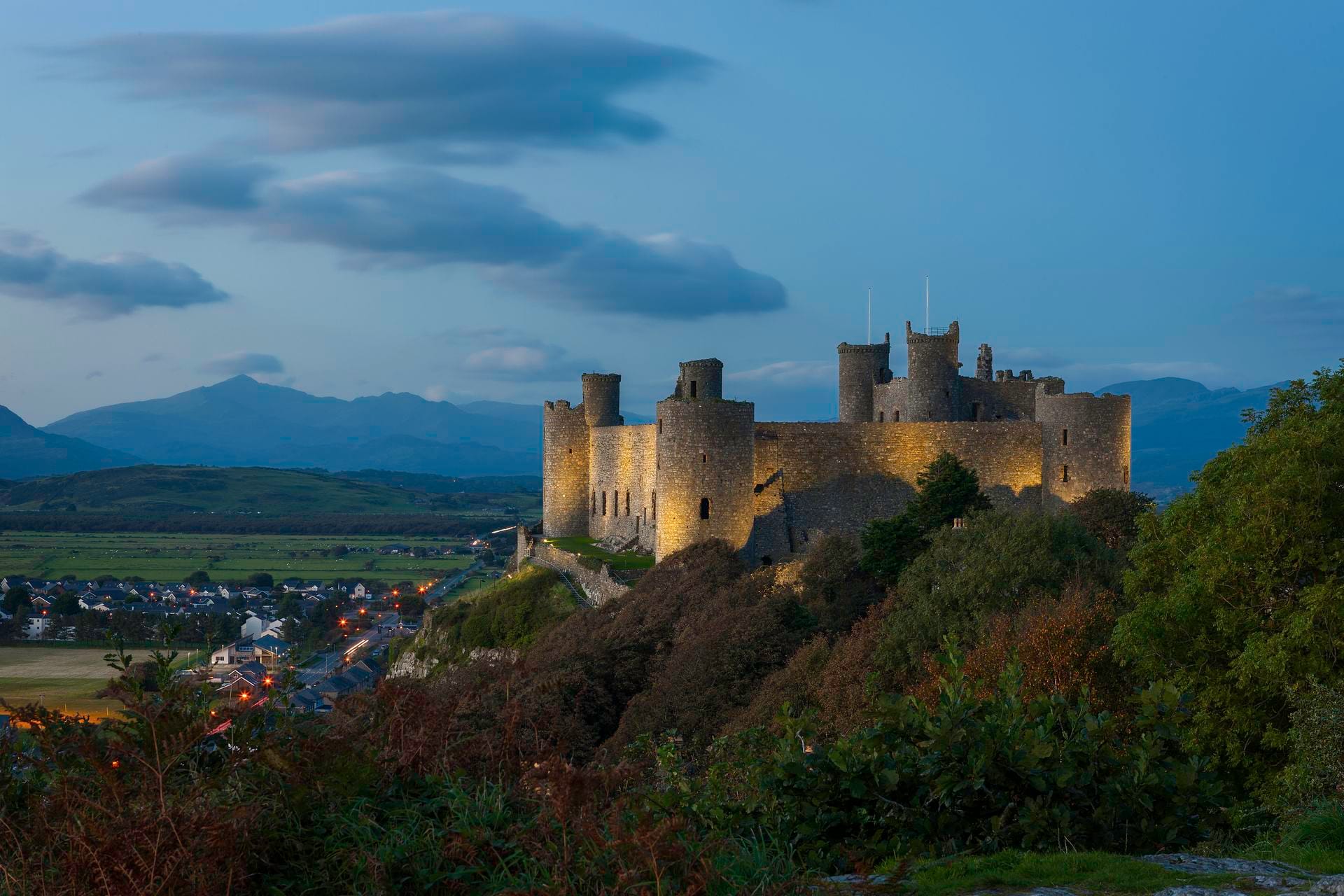
The dramatic silhouette of Harlech Castle illuminated at dusk, standing proudly on its rocky crag against the mountainous backdrop of Eryri. © Hawlfraint y Goron / © Crown copyright (2026) Cymru Wales
Castle 3: Harlech Castle — The Setting Masterpiece
Castell Harlech HAR-lekh
Harlech has the most dramatic setting of any castle in Wales — perched on a sheer rocky crag 60 metres above what was, in the 13th century, the seashore. The sea has since retreated over a kilometre from the base of the rock. Harlech was completed from ground to battlements in just seven years under Master James of St George, who served as its constable from 1290 to 1293. The castle’s classic concentric design and its position above the coast made it almost impregnable — during the rebellion of Madog ap Llywelyn in 1294–95, when the castle was completely cut off by land, the defenders were resupplied by boat via the “Way from the Sea”, a 108-step stairway carved into the rock. For the full history, ticket prices and everything to see on site, read our complete Harlech Castle guide.
What to see at Harlech
- The Gatehouse: The mightiest surviving twin-tower gatehouse of any Edwardian castle in Wales.
- The Way from the Sea: The 108-step staircase down the seaward side of the rock, still walkable in dry weather.
- The view of Eryri: The castle wall walks give an uninterrupted view of the mountains of Eryri and the peaks of Rhinogydd.
- The floating bridge: A dramatic modern pedestrian bridge from the visitor centre to the castle, opened in 2015.
- The Men of Harlech Song: Written to commemorate a seven-year siege of the castle during the Wars of the Roses. The Cadw exhibition tells the full story.
Harlech practical information
- Rail: Harlech station on the Cambrian Coast Line, 200m from the castle.
- Parking: £2 for 1 hour, £3 for 2 hours, £4 for 3 hours (maximum stay 3 hours). Free for disabled visitors.
- Cadw holiday accommodation: Uniquely among the four, Harlech has Cadw-managed holiday cottages available to hire next to the castle.
- Dogs: Dogs on short leads welcome on ground floor levels.
- Caffi Castell: The on-site café serves local produce, from breakfasts to afternoon tea.
Castle 4: Beaumaris Castle — The Design Masterpiece
Castell Biwmares byoo-MAR-iss
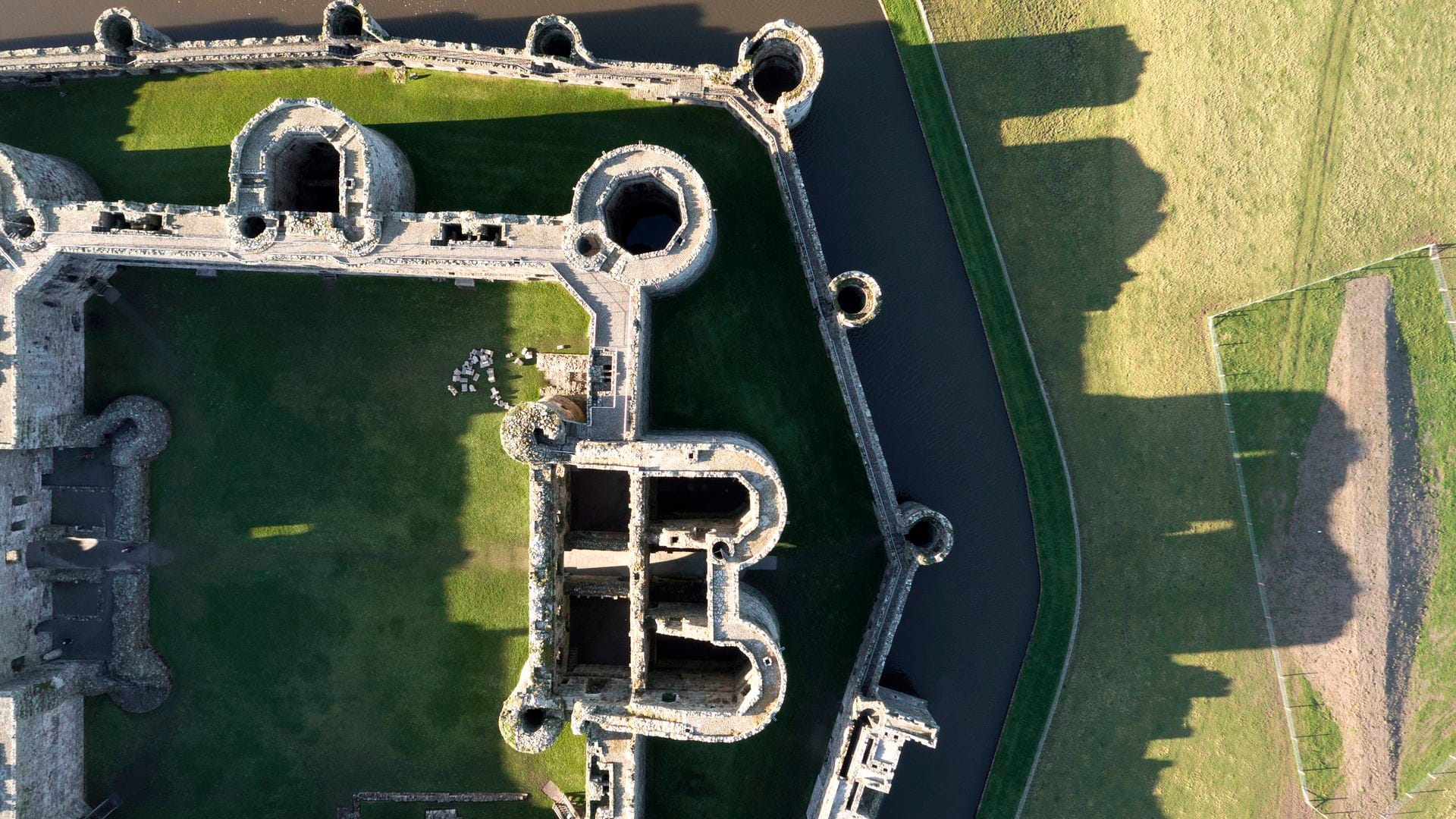
Beaumaris is described by historian Arnold Taylor as “Britain’s most perfect example of symmetrical concentric planning” — the crowning achievement of Edward I’s Welsh castle-building programme, designed to make Beaumaris the castle to end all castles. Two concentric rings of walls, twelve towers on the outer wall, six massive towers on the inner ward, a water-filled moat with its own dock, and 300 arrow loops on the outer walls alone. And yet Beaumaris was never finished. Edward’s wars in Scotland diverted the funds and building work petered out by the 1330s, leaving the great inner towers unfinished, the Llanfaes gate barely started, and the whole castle sitting today as “the greatest castle never built.” Its name comes from the Norman-French beau mareys — “beautiful marsh”. For the full history, ticket prices and everything to see on site, read our complete Beaumaris Castle guide.
What to see at Beaumaris
- The concentric design: Walk between the inner and outer walls to understand how a medieval killing ground was engineered.
- The moat and dock: The water-filled moat still surrounds most of the castle, and the tidal dock inside the walls — where ships once docked with supplies — is visible.
- The unfinished towers: The six great towers of the inner ward stop abruptly two-thirds of the way up, giving the castle its distinctive squat silhouette.
- The Menai Strait views: The seaward walls give panoramic views across the Menai Strait to Bangor and Eryri.
Beaumaris practical information
- Rail: Nearest station is Bangor (9 miles); bus routes 53, 57 and 58 run Bangor–Beaumaris.
- Parking: Large pay-and-display car park directly opposite the castle.
- Accessibility: Ground level is more accessible than any of the other three castles — flat grassy inner courtyards. Wall walks involve external stone steps.
- Dogs: Dogs on short leads welcome on ground floor. The only UNESCO castle in Wales that welcomes non-assistance dogs beyond ground level restrictions.
- Combine with: Beaumaris Gaol (Victorian jail, 2 minutes’ walk), Beaumaris Pier, the town’s pubs and cafés.
How to Visit All Four Castles
The classic three-day route
- Day 1 — Caernarfon and Beaumaris. Morning at Caernarfon Castle (allow 3 hours including the walls and museum). Afternoon: drive over the Menai Bridge to Beaumaris (30 minutes) for the concentric castle plus the town.
- Day 2 — Conwy. Full day at Conwy Castle plus the 1.3km town walls walk, Plas Mawr, and the Smallest House in Britain. Optional: extend to Aberconwy House (National Trust) and Bodnant Garden nearby.
- Day 3 — Harlech. Drive south down the Cambrian Coast (allow 1 hour 20 minutes from Conwy). Morning at Harlech Castle, afternoon walking the dunes to the sea. Continue south into Eryri from Harlech.
The efficient two-day route
If you have only two days, combine Caernarfon and Beaumaris on Day 1 (both close together on the Menai Strait) and Conwy plus Harlech on Day 2 with a longer drive down the coast. This is a heavier itinerary but achievable, particularly for visitors already comfortable with three-castle days.
The public transport option
All four castles are reachable by public transport. Conwy station is a 5-minute walk from the castle. Harlech station is 200m from the castle. Caernarfon and Beaumaris require a bus connection from Bangor railway station. The Transport for Wales Rover ticket gives unlimited travel on all Wales rail services and North Wales bus services.
Guided Welsh castle tours from Cardiff, Liverpool and Manchester with expert historian guides — booking castle-focused Welsh tours through Viator gives you skip-the-line entry and transport between the four sites in a single day. Browse available options below.
The Cadw Explorer Pass: The Best Value Ticket
For visitors doing all four UNESCO castles, the Cadw Explorer Pass is by some margin the cheapest way to see them all. The pass is available in two formats:
- 3-day pass: Three days of entry to any Cadw sites within a 7-day period. Best for a two-castle-a-day trip.
- 7-day pass: Seven days of entry within a 14-day period. Best for a longer North Wales trip taking in castles beyond the UNESCO four.
Either pass gives access to all four UNESCO castles plus over 100 other Cadw sites across Wales — including Caerphilly, Kidwelly, Raglan, Chepstow and Pembroke castles, plus Cadw’s abbeys and prehistoric sites. Available from Cadw direct.
For frequent Welsh castle visitors: a full-year Cadw membership costs less than four individual adult admissions and gives unlimited free entry to every Cadw site in Wales for 12 months, plus reciprocal free entry at English Heritage properties in England. Joint household memberships are available. Full-year membership pays for itself if you’re doing three castle visits in a year.
Where to Stay for a UNESCO Castles Tour
The best bases for a four-castle tour are Caernarfon, Conwy, Beaumaris or Bangor. Caernarfon and Conwy both give walking access to their castles and are the most accommodation-rich of the four. For a rural base in Eryri instead, Betws-y-Coed and Beddgelert give quick access to Conwy, Caernarfon and Harlech within an hour’s drive each. For an island base, Beaumaris and the wider Isle of Anglesey combine well with day trips across the Menai Bridge to the mainland castles.
Find Hotels and Cottages Near the UNESCO Welsh Castles
Browse the interactive map below to see real-time hotel and cottage prices in Caernarfon, Conwy, Beaumaris, Harlech and the wider North Wales region — perfect for planning a multi-castle UNESCO tour.
What Else to Combine with the Castles
North Wales has more to offer than just the UNESCO castles. Natural combinations include:
- Eryri National Park: the mountains that form the backdrop to all four castles. Yr Wyddfa (Snowdon), the highest peak in Wales, is reachable by train from Llanberis, 15 minutes from Caernarfon.
- The Isle of Anglesey: the island of Beaumaris. Beyond the castle, the island has South Stack Lighthouse, Ynys Llanddwyn (the setting for our St Dwynwen’s Day guide), and 125 miles of coastal path.
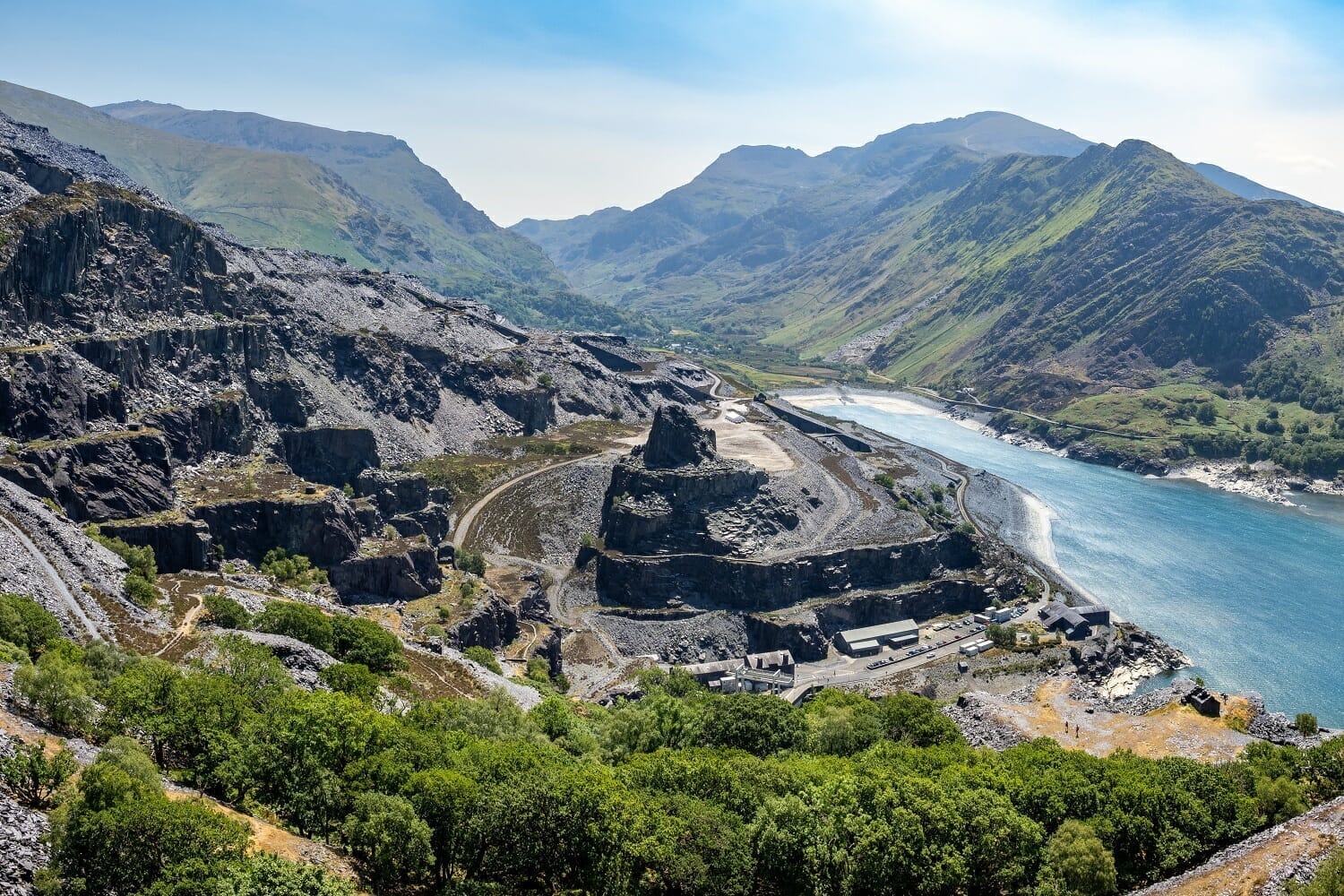
- The Slate Landscape UNESCO Site: Wales’s second UNESCO cultural site, inscribed 2021, covering the industrial slate-quarrying heritage of Blaenau Ffestiniog and Bethesda. Naturally combines with a Harlech visit.
- The Welsh Highland Railway: heritage steam railway from Caernarfon to Porthmadog, passing through Eryri.
- Portmeirion: Sir Clough Williams-Ellis’s Italian-style coastal village, a 15-minute drive from Harlech.
When to Visit the Welsh UNESCO Castles
The four castles are open year-round (closed Christmas Day) but opening hours are seasonal:
- March to October: Full opening hours (typically 9.30am to 5pm or 6pm in high summer). Custodian-led tours run at Caernarfon.
- November to February: Shorter hours (typically 10am to 4pm). Fewer visitors, dramatic winter light on the coast for photography.
- Peak summer (July–August): Book Caernarfon online in advance. School holidays are the busiest. Fine weather makes the wall walks and Beaumaris grassy courtyards particularly rewarding.
- Shoulder season (May–June, September): The best time to visit — full opening, better weather, lower crowds.

An aerial view of the perfectly symmetrical Beaumaris Castle and its surrounding moat, looking across the town towards the Menai Strait.
Frequently Asked Questions: Welsh UNESCO Castles
How many UNESCO castles are there in Wales?
Wales has four UNESCO World Heritage castles: Beaumaris, Caernarfon, Conwy and Harlech. Together they form a single UNESCO World Heritage Site called the Castles and Town Walls of King Edward in Gwynedd, inscribed in 1986. All four were built by Edward I of England between 1283 and 1330 as part of his campaign to subjugate the last Welsh princes. All four are managed today by Cadw, the Welsh Government’s historic environment service. Wales also has three other UNESCO World Heritage Sites (all cultural): the Blaenavon Industrial Landscape (2000), the Pontcysyllte Aqueduct and Canal (2009), and the Slate Landscape of Northwest Wales (2021).
Why are Welsh castles a UNESCO World Heritage Site?
The four Welsh castles were awarded UNESCO World Heritage status in 1986 because they are considered the finest examples of late 13th and early 14th century military architecture in Europe. UNESCO cited two criteria. First, Beaumaris and Harlech are the masterpieces of Master James of St George, Edward I’s chief architect, combining the double-wall concentric structure of the period with a highly concerted central plan. Second, the four royal castles are unique in medieval history because the construction accounts, wages and origins of the workmen were fully recorded, giving historians rare complete documentation of a medieval royal building project.
Who built Caernarfon, Conwy, Harlech and Beaumaris castles?
All four castles were commissioned by King Edward I of England as part of his conquest of Wales after defeating the last independent Welsh prince, Llywelyn ap Gruffudd, in 1282. The castles were designed by Edward’s chief military architect, Master James of St George, a Savoyard engineer regarded as the greatest castle-builder of his era. Master James served as constable of Harlech from 1290 to 1293. The workforce came from across Edward’s realm — masons and carpenters brought from England, ironworkers from Kent, quarrymen from Yorkshire. Edward’s total castle-building programme in Wales cost over £80,000 between 1277 and 1304, roughly six times his annual royal income.
Which is the best UNESCO castle in Wales to visit?
For sheer scale and dramatic architecture, Caernarfon Castle is the most impressive of the four, with its polygonal towers, King’s Gate and links to the 1969 investiture of Charles as Prince of Wales. For setting, Harlech is unmatched — perched on a rocky crag with Eryri (Snowdonia) as a backdrop. For architectural perfection, Beaumaris is considered by historians as Britain’s finest example of symmetrical concentric castle design. For the complete town-walls experience, Conwy pairs its castle with the best-preserved medieval town walls in Britain. Most visitors do the full circuit over two to three days from a base in Gwynedd or the Isle of Anglesey.
How much does it cost to visit the Welsh UNESCO castles?
Individual adult admission ranges from approximately £8 for Beaumaris to around £14 for Caernarfon. Child tickets are around half the adult price and under-5s are free. The best-value option for visitors doing all four castles is the Cadw Explorer Pass — a 3-day pass valid over 7 days or a 7-day pass valid over 14 days, giving access to all Cadw sites in Wales including all four UNESCO castles, plus over 100 other historic monuments. Cadw membership offers unlimited free entry for annual visitors. All prices are set by Cadw, the Welsh Government heritage service. Booking online in advance is recommended for Caernarfon, particularly in July and August.
How do I visit all four UNESCO Welsh castles?
The four castles are all located in Gwynedd and Anglesey in North Wales, close enough to visit in a two to three-day self-drive tour. The recommended route from a Bangor or Caernarfon base is: Day 1 Caernarfon Castle (a half day) plus Beaumaris Castle (a half day via the Menai Bridge to Anglesey). Day 2 Conwy Castle plus a walk around the medieval town walls. Day 3 Harlech Castle, then continue south into Eryri. All four are also accessible by public transport — Caernarfon and Beaumaris via Bangor railway station, Conwy has its own station on the North Wales Main Line, and Harlech has its own station on the Cambrian Coast Line.
Are the Welsh UNESCO castles suitable for children?
Yes. All four castles are popular family attractions. Beaumaris is the flattest and most family-friendly, with wide grassy inner courtyards where children can run around safely. Caernarfon has extensive wall walks and the King’s Gate lift for accessibility, with a Royal Welch Fusiliers Museum included free with admission. Conwy has the medieval town walls surrounding the castle, giving families a genuine walled-town experience. Harlech’s dramatic clifftop setting is stunning but involves the most stairs of the four. Cadw offers free family activity sheets at all four sites, and under-5s enter free everywhere.
More Welsh Travel Guides
- Welsh Castles: The Complete Guide
- Caernarfon Castle Guide
- Harlech Castle Guide
- Beaumaris Castle Guide
- Caerphilly Castle Visiting Guide
- North Wales Destination Guide
- The Isle of Anglesey
- Eryri (Snowdonia) Guide
- The Slate Landscape UNESCO Site
- Welsh Place Name Pronunciation Guide
- Picturesque Steam Railways in Wales

Pembrokeshire-born travel writer and founder of Wales.org. Born in Haverfordwest, now based in Hertfordshire — covering Welsh castles, national parks, festivals and family staycations across all 22 Welsh counties.