

St Dwynwen’s Day 2027: Welsh Valentine’s Day Complete Guide
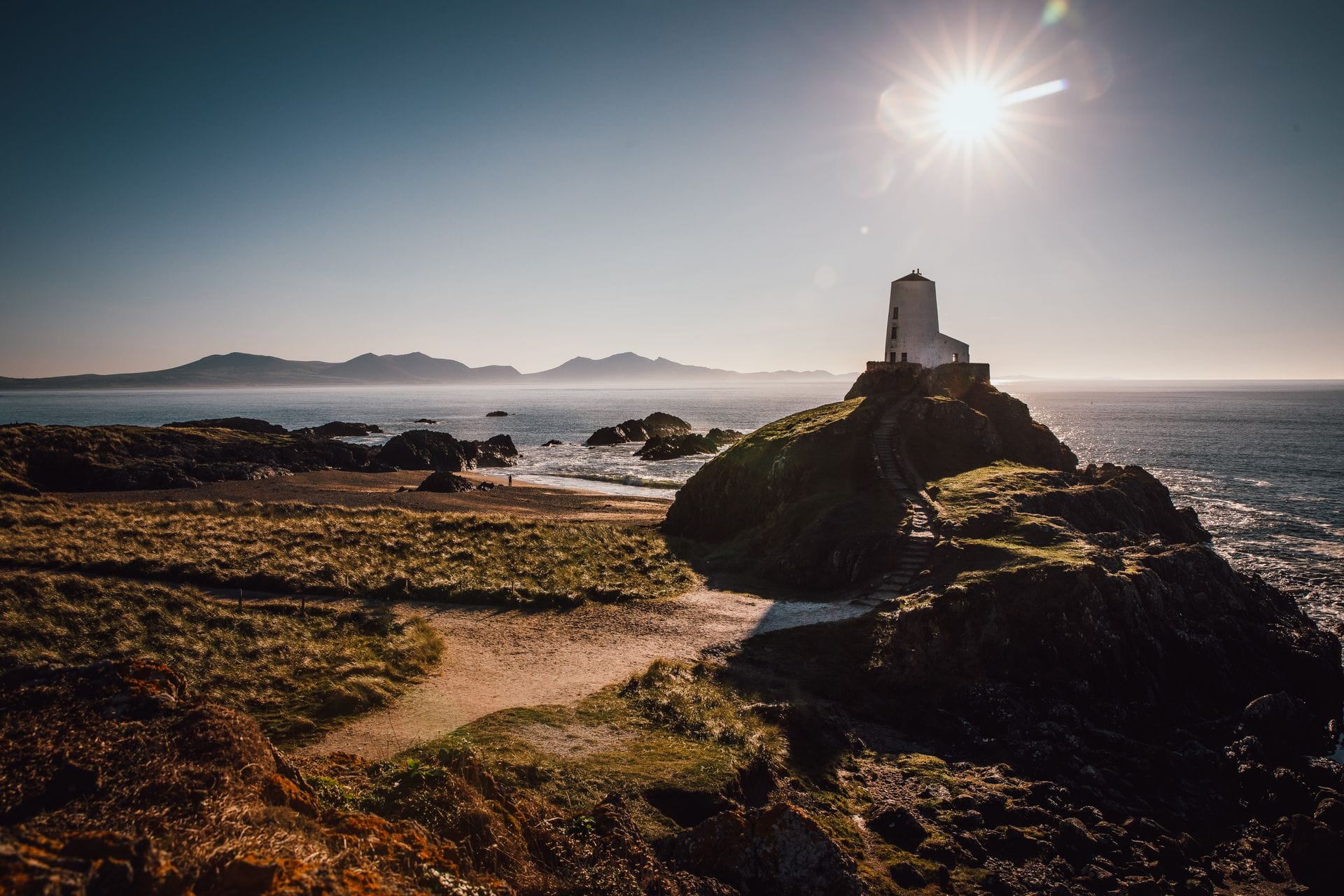
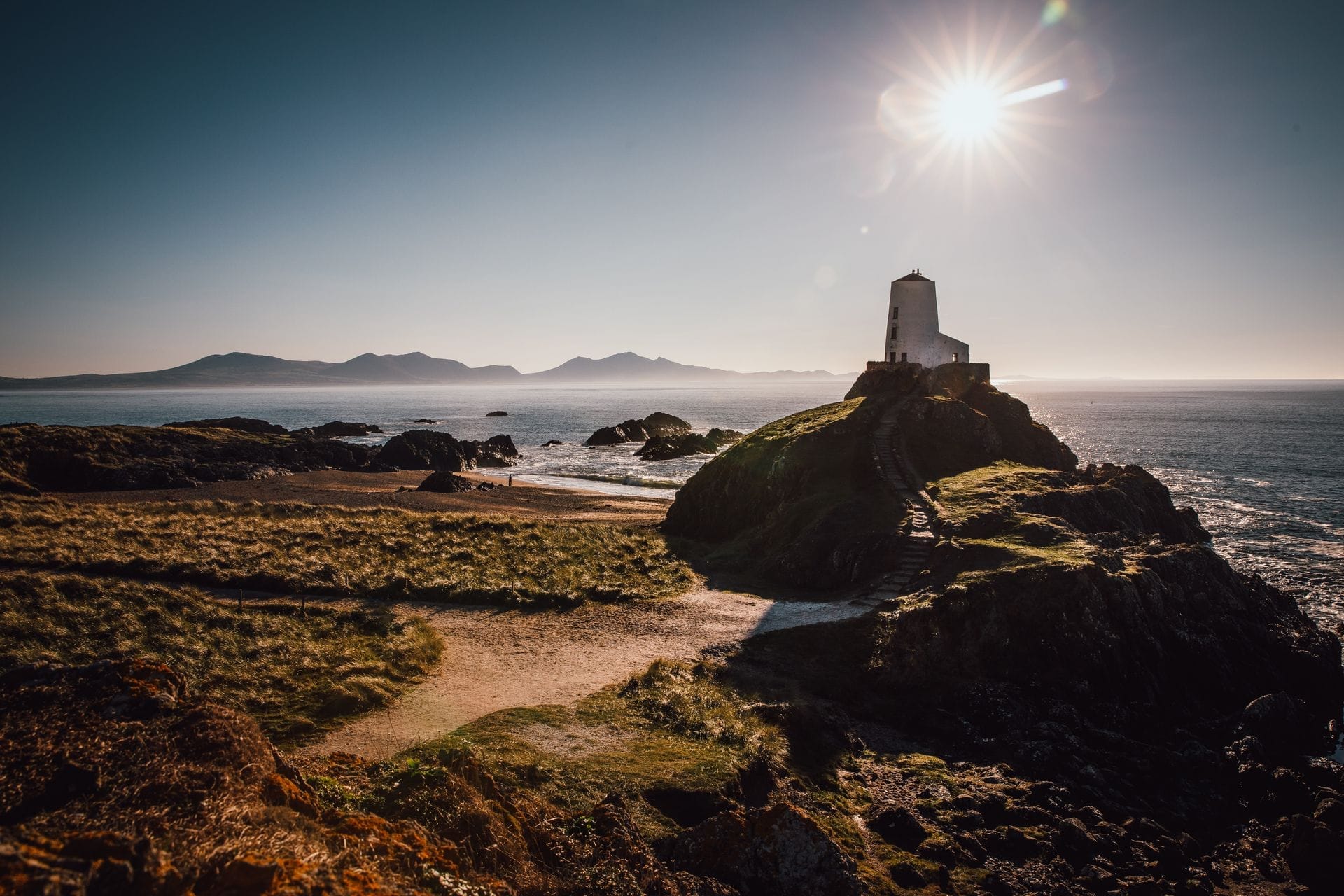
Ynys Llanddwyn, the spiritual home of St Dwynwen and the most atmospheric place to mark Welsh Valentine’s Day.
St Dwynwen’s Day — Dydd Santes Dwynwen in Welsh — is celebrated across Wales on 25 January each year. It honours the Welsh patron saint of lovers and is widely considered the Welsh equivalent of Valentine’s Day, though the tradition pre-dates the global St Valentine’s celebrations and is rooted in a far older, distinctly Welsh story.
This guide covers everything you need to know to celebrate Dydd Santes Dwynwen in 2027: the full legend of St Dwynwen, how to pronounce her name, where to visit on the day itself, the most romantic places to stay in Wales for a 25 January break, and how Welsh people mark the occasion at home and away.
Planning this trip? Ask Branwen, our free AI trip planner →
At a Glance: St Dwynwen’s Day
- Date: 25 January every year
- Welsh name: Dydd Santes Dwynwen (pronounced deeth SANT-ess DOO-in-wen)
- Celebrates: St Dwynwen, the Welsh patron saint of lovers (and, lesser known, of sick animals)
- Best place to visit: Ynys Llanddwyn, a tidal island off Anglesey where St Dwynwen lived
- Traditional gifts: Welsh love spoons, Welsh-language greetings cards, Welsh produce, romantic getaways
- Spotlight romantic destinations: Anglesey, the Llŷn Peninsula, Bannau Brycheiniog (Brecon Beacons), and the Cambrian Coast
- Public holiday status: No — culturally significant but a normal working day
The Legend of St Dwynwen
The story of Dwynwen is one of the most enduring tales in Welsh mythology, though the version most people know today was largely codified in the 19th century by the antiquarian Iolo Morganwg. The earliest written reference to Dwynwen dates from the mid-14th century, in a poem by the celebrated medieval Welsh bard Dafydd ap Gwilym, who invoked her as llatai — a messenger between lovers — in his poem Galw ar Ddwynwen (Beseeching St Dwynwen).
Dwynwen and Maelon Dafodrill
Dwynwen lived during the 5th century and was reputedly one of the most beautiful of the twenty-four daughters of King Brychan Brycheiniog, the semi-legendary ruler of Brycheiniog — the historic kingdom that gave its name to today’s Bannau Brycheiniog (Brecon Beacons) National Park.
She fell deeply in love with a young prince called Maelon Dafodrill. The match was a problem from the start: her father had already promised her hand to another prince. When their love was discovered, Maelon was sent away — and in some versions of the legend, the rejection turned bitter.
Heartbroken and unable to forget him, Dwynwen fled to the forest and prayed to God to release her from her love. She fell asleep and was visited by an angel carrying a sweet potion. The potion erased Dwynwen’s memory of Maelon — and in the same moment, turned Maelon himself into a block of ice.
The Three Wishes
God then granted Dwynwen three wishes. She used them carefully:
- First wish: that Maelon be thawed and restored.
- Second wish: that God meet the hopes and dreams of all true lovers.
- Third wish: that she herself would never marry.
All three were granted. In gratitude, Dwynwen dedicated the rest of her life to God’s service. She travelled north from Brycheiniog and founded a small convent on a remote tidal island off the west coast of Ynys Môn (Anglesey). The island became known as Ynys Llanddwyn — literally, “the island of the church of Dwynwen.”
The name’s meaning: The name Dwynwen is sometimes translated from Old Welsh as “she who leads a blessed life” — a fitting epithet given her decision to abandon the kingdom of Brycheiniog for a life of solitude and prayer on Llanddwyn.
Visiting Ynys Llanddwyn — Dwynwen’s Island
Ynys Llanddwyn — Llanddwyn Island in English — is the most meaningful place to visit on St Dwynwen’s Day, or at any time of year. It sits off the south-west coast of Anglesey, accessible on foot from Newborough Beach at low tide. The island forms part of the Newborough Warren National Nature Reserve and is one of the most photographed locations in North Wales.
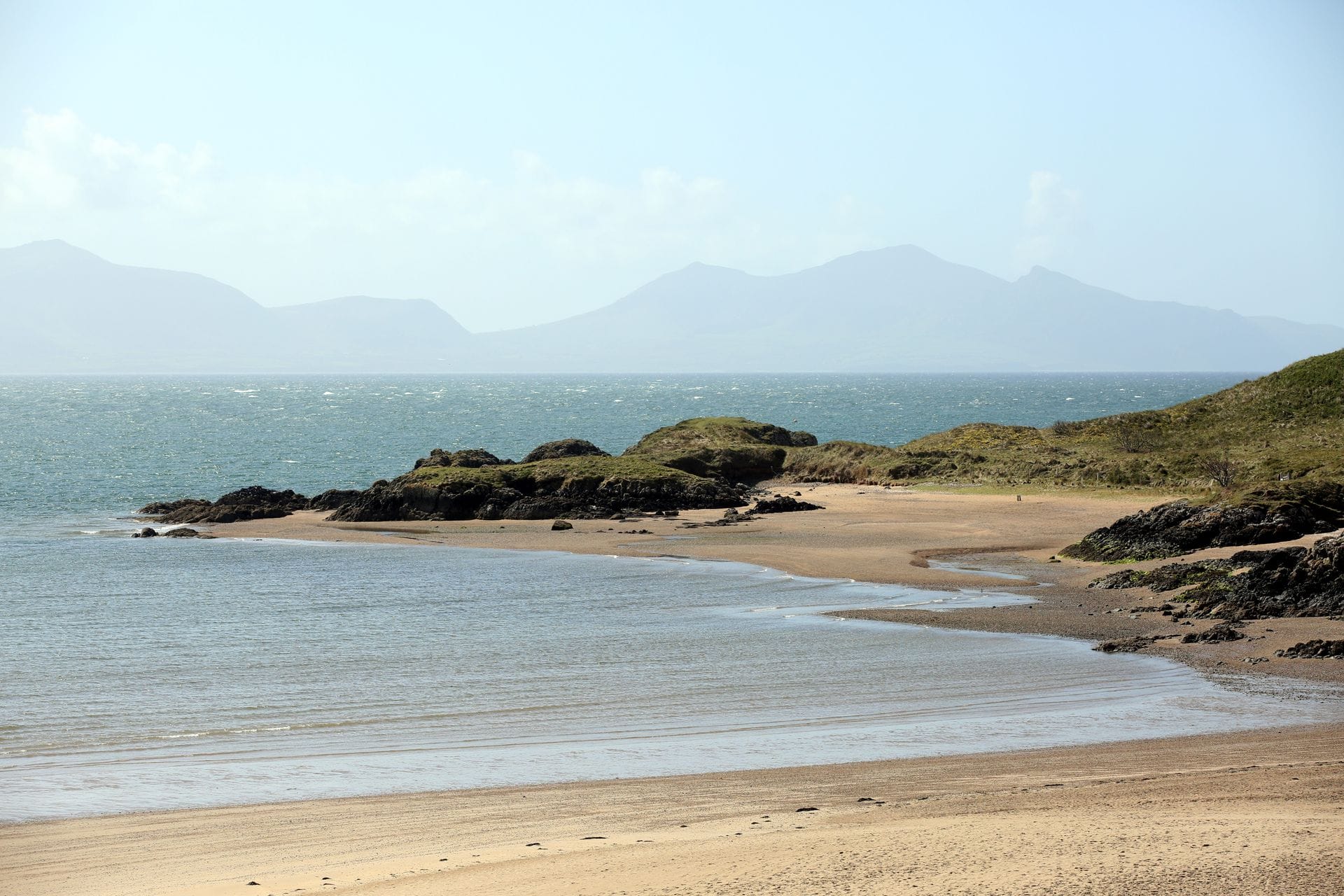
Newborough Beach and the path out to Ynys Llanddwyn — accessible only at low tide.
What you can see on the island
Despite its small size, Ynys Llanddwyn packs in a remarkable amount of history and atmosphere:
- St Dwynwen’s Church (Eglwys Llanddwyn): The ruined chapel where Dwynwen lived as a nun. The stone foundations and broken walls remain, slowly returning to the landscape.
- The Celtic Cross: A more elaborate Celtic cross erected in the 19th century by Baron Newborough to honour the saint. It stands at the highest point of the island and is the most photographed landmark.
- St Dwynwen’s Well (Ffynnon Dwynwen): A small natural spring on the island that became a pilgrimage site in medieval Wales. Legend has it a sacred fish swims in the well, and that its movements predict the future fortunes of couples who come to ask.
- Twr Mawr Lighthouse: A whitewashed lighthouse built in 1845 at the western tip of the island, modelled on the windmills of Anglesey. It remains active and serves as the island’s most striking visual landmark.
- The pilots’ cottages: A row of restored 19th-century cottages built for the Caernarfon Bar pilots. One now serves as a small visitor centre during the summer months.
Getting there and tide times
The walk to Ynys Llanddwyn starts at Newborough Beach car park (LL61 6SG), about 12 miles south of Llandudno and 8 miles south-west of the Britannia Bridge crossing onto Anglesey. From the car park it’s a 20-minute walk through Newborough Forest, then across the wide sandy beach to the island itself.
Crucial — check the tides before you go: Ynys Llanddwyn becomes a true island at high tide, when the causeway is cut off. Plan to walk across at low tide and allow at least 90 minutes to explore comfortably. Tide times for Llanddwyn are available from the official UK Admiralty EasyTide service. If you’re staying nearby, ask your hotel or B&B for the local tide table — most have them to hand.
Romance recommendation: A January walk across to Llanddwyn at sunset is one of the most atmospheric experiences in Wales. The island faces west towards the open sea, with the Eryri mountains rising behind. Wrap up warm — temperatures are typically 3–7°C in late January, and the sea breeze across Newborough Beach is bracing even on a still day.
The Most Romantic Places to Stay in Wales for St Dwynwen’s Day
If you’re planning to make a weekend of it, Wales offers some genuinely exceptional romantic accommodation — from boutique hotels on the Llŷn Peninsula and country house hotels in the Wye Valley to luxury self-catering cottages in Eryri. The Llanddwyn pilgrimage works best as part of a two-night Anglesey base; further afield, our complete guide to romantic Welsh getaways covers the best spots region by region.
Find Romantic Welsh Hotels and Cottages
Browse the interactive map below to see real-time hotel prices and availability across Anglesey, the Llŷn Peninsula, the Brecon Beacons and the rest of Wales — perfect for planning your St Dwynwen’s Day weekend.
Booking tip for 25 January 2027: Welsh romantic accommodation books up well in advance for St Dwynwen’s weekend, particularly on Anglesey and in the Llŷn Peninsula where demand spikes from couples making the Llanddwyn pilgrimage. Aim to book by mid-October for best choice. Midweek 25 Januarys (as in 2027, when 25 January falls on a Monday) tend to be quieter and cheaper than weekend feast days.
How to Celebrate St Dwynwen’s Day
The day is observed quite differently from global Valentine’s Day — less commercial, more rooted in Welsh culture. The traditions worth knowing about:
Welsh love spoons (llwyau caru)
The Welsh love spoon is one of the most distinctive folk-art traditions in Britain. Hand-carved from a single piece of wood, traditionally given by a young man to his sweetheart as a sign of his intentions, love spoons feature symbolic motifs: hearts for love, keys for security, wheels for hard work, Celtic knots for eternity, and tiny wooden balls trapped inside a cage (representing the number of children hoped for in the marriage). The tradition dates from at least the 17th century and is unique to Wales.
Original hand-carved love spoons are sold across Wales — particularly at craft centres on the Llŷn Peninsula, in Hay-on-Wye, and at the Royal Welsh Craft Centre in Cardiff. Expect to pay £25 for a small simple spoon and £150–£300 for an elaborate hand-carved heirloom piece.
Welsh-language greetings cards
Welsh St Dwynwen’s Day cards have become increasingly common since the 1990s — both in the Welsh language and bilingual. The standard greeting is Dydd Santes Dwynwen Hapus (Happy St Dwynwen’s Day). For something more personal, Cariad (love/sweetheart) or Cariad i Ti (love to you) are widely used.
A Welsh romantic dinner
A St Dwynwen’s Day dinner traditionally features Welsh produce. The classic centrepiece is salt marsh lamb (PGI-protected and at its best in late winter), perhaps with leeks and a Welsh-cheese gratin. Pudding is often Bara Brith with Welsh butter, or Welsh cakes warm from the griddle. Wales now has world-class producers across every category — see our guide to Michelin-star restaurants in Wales for the ultimate dining experience, or our guide to traditional and modern Welsh cuisine for the produce and dishes you should seek out.
Things to Do on St Dwynwen’s Day Beyond Llanddwyn
If Anglesey isn’t practical, there are plenty of romantic Welsh experiences worth booking for the day or weekend itself.
Cadw historic sites and free memberships
Cadw, the Welsh Government’s historic environment service, regularly runs St Dwynwen’s Day promotions at its castles and monuments — including, in some recent years, free one-year memberships for couples who became engaged at a Cadw site on 25 January. Check the official Cadw website in early January for that year’s offers. Romantic Cadw venues include Conwy Castle, Caerphilly Castle, and the windswept clifftop ruin of Tintern Abbey in the Wye Valley.
A walking dinner along the Wales Coast Path
For active couples, a winter walk along a scenic section of the Wales Coast Path followed by an early dinner in a country pub is a quietly perfect way to spend the day. The Pembrokeshire Coast section between Solva and St Davids, or the Anglesey Coastal Path around South Stack lighthouse, both work well in January when crowds are sparse and the light is gold-low.
A spa or wellness break
Late January is a quiet time for Welsh spa hotels — meaning better availability and often better rates than the spring or summer peaks. Our guide to luxury spa hotels in Wales covers the best from the Vale of Glamorgan to Eryri.
St Dwynwen’s Day in Modern Welsh Culture
For most of the 20th century, St Dwynwen’s Day was a relatively niche observance — kept alive in Welsh-speaking communities, schools and chapels but largely overlooked in English-speaking Wales. That has changed substantially in the past three decades. The growth of Welsh-medium education, the rise of S4C and Welsh-language media, and a broader interest in distinctively Welsh cultural identity have all helped make Dydd Santes Dwynwen a date almost universally recognised across Wales today.
Welsh schools, particularly Welsh-medium primary schools, often mark the day with classroom activities, the exchange of cards, and lessons on the Dwynwen legend. Bookshops carry St Dwynwen’s Day stationery from early January. S4C, the Welsh-language broadcaster, typically airs Dwynwen-themed children’s programming around 25 January.
It remains, in the truest sense, the Welsh patron saint’s day for lovers. Quieter than global Valentine’s Day. Older than the commercial February tradition. And — for anyone willing to brave a January walk across to a tidal island in north-west Wales — far more atmospheric.
Frequently Asked Questions: St Dwynwen’s Day
When is St Dwynwen’s Day?
St Dwynwen’s Day falls on 25 January every year. It is celebrated across Wales as the Welsh equivalent of Valentine’s Day — a celebration of love, romance and friendship that pre-dates the global Valentine’s Day tradition. In Welsh, the day is known as Dydd Santes Dwynwen.
How do you pronounce Dwynwen?
Dwynwen is pronounced DOO-in-wen — the “Dw” is a soft “doo” sound, the “y” in Welsh sounds like a short “i”, and “wen” rhymes with “hen”. The full Welsh phrase Dydd Santes Dwynwen is roughly deeth SANT-ess DOO-in-wen. Dydd means day, Santes means saint, and Dwynwen is the name.
Who was St Dwynwen?
St Dwynwen was a 5th-century Welsh princess, the daughter of King Brychan Brycheiniog who ruled the historic kingdom of Brycheiniog (now part of the Bannau Brycheiniog area of mid Wales). She is the Welsh patron saint of lovers, celebrated for the tragic love story behind her decision to dedicate her life to God. She is also the patron saint of sick animals — a lesser-known second patronage.
What is the legend of St Dwynwen?
The most common version of the legend tells that Dwynwen fell in love with a prince named Maelon Dafodrill but was unable to marry him because her father had already promised her to another. After praying for release from her love, Dwynwen was visited by an angel who gave her a potion that turned Maelon into a block of ice. God then granted her three wishes: that Maelon be thawed, that God help all true lovers, and that she herself never marry. All three were fulfilled, and Dwynwen dedicated the rest of her life to God’s service, founding a convent on Ynys Llanddwyn off the coast of Anglesey.
Where can I visit on St Dwynwen’s Day?
The most meaningful place to visit is Ynys Llanddwyn, the small tidal island off the west coast of Anglesey where St Dwynwen lived and is believed to be buried. The island is accessible on foot from Newborough Beach at low tide and features the ruins of St Dwynwen’s Church, a Celtic cross, and St Dwynwen’s Well. Newborough Forest and the surrounding nature reserve make it one of the most beautiful walks in North Wales — particularly atmospheric on a crisp January day. Always check the tide times before crossing.
How do Welsh people celebrate St Dwynwen’s Day?
Welsh St Dwynwen’s Day traditions include exchanging cards (Welsh-language greetings cards have become widespread in the past two decades), giving hand-carved love spoons (a centuries-old Welsh courting tradition), enjoying a romantic dinner with Welsh produce such as salt marsh lamb and Welsh cakes, and walking together on Ynys Llanddwyn or another meaningful Welsh location. Many Welsh hotels, restaurants and Cadw historic sites run special St Dwynwen’s Day events and offers.
Is St Dwynwen’s Day a public holiday in Wales?
No, St Dwynwen’s Day is not an official public holiday in Wales. Schools, businesses and government offices remain open on 25 January. However, it is widely recognised culturally — particularly through Welsh-medium schools, eisteddfodau, and Welsh-language media. The day is celebrated with greetings cards, romantic dinners and trips to Llanddwyn Island rather than time off work.
More Romantic Wales Guides

Pembrokeshire-born travel writer and founder of Wales.org. Born in Haverfordwest, now based in Hertfordshire — covering Welsh castles, national parks, festivals and family staycations across all 22 Welsh counties.