

The Complete Guide to Caernarfon Castle: Wales’s Grandest Fortress
Caernarfon Castle Guide 2026: Tickets, History, Tours & Visitor Tips
Ready to visit? Book your Caernarfon Castle tickets directly with Cadw, the castle’s official custodian — booking online guarantees a 5% saving on the gate price.
Book Caernarfon Castle Tickets →
Caernarfon Castle (Castell Caernarfon) is the largest and most architecturally distinctive of Edward I’s Welsh fortresses — a UNESCO World Heritage Site built not just as a military stronghold but as a deliberate statement of imperial power, its polygonal towers and colour-banded stone walls modelled on the walls of Constantinople. It’s also the site of the 1969 investiture of Charles as Prince of Wales, watched by an estimated 500 million people worldwide. Whether you’re visiting for the history, the architecture or the town and harbour around it, this complete guide covers everything you need to know — tickets, opening times, parking, transport, accessibility and what to see — for a Caernarfon Castle visit in 2026.
Planning this trip? Ask Branwen, our free AI trip planner →
Caernarfon Castle history: why was it built?
Caernarfon Castle was begun in 1283 by Edward I of England, immediately after his conquest of the last independent Welsh principality, under the direction of his military architect Master James of St George. Edward built the castle, the town walls and a working quay on the Menai Strait all at the same time — a project that eventually took 47 years to complete in full and cost around £25,000, an enormous sum for the period.
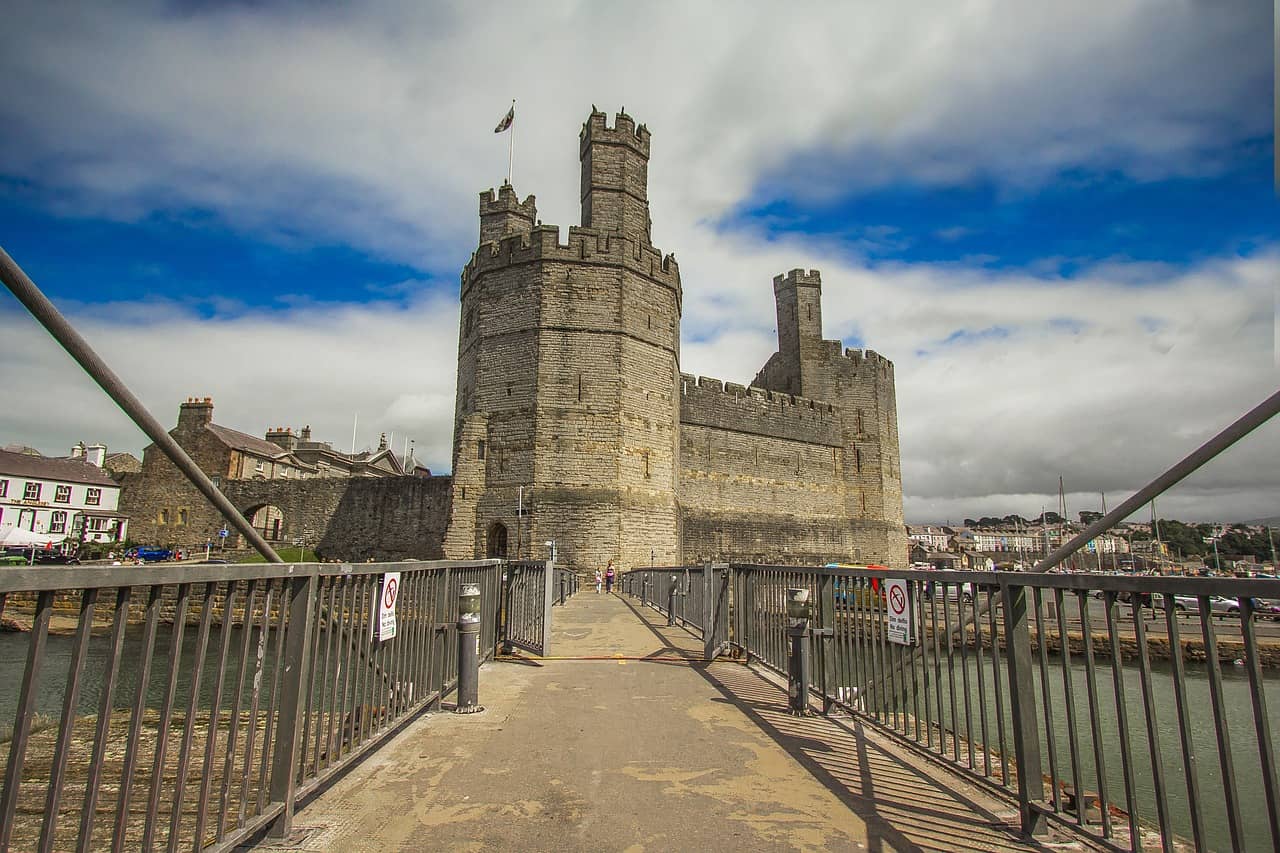
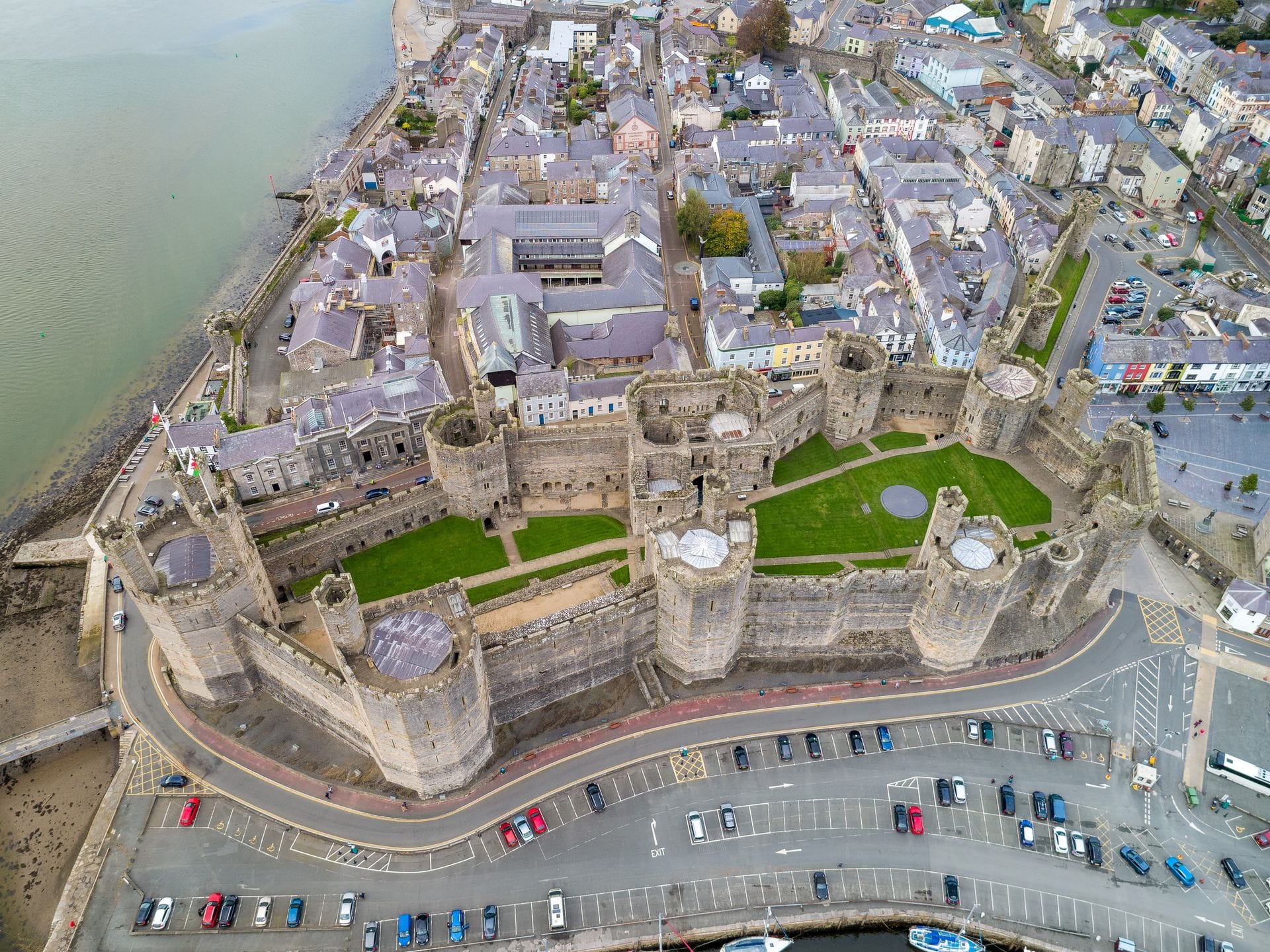
Unlike Edward’s other Welsh castles, which favour round towers, Caernarfon is built around seven great polygonal towers, two turrets, and two twin-towered gatehouses — the King’s Gate and the Queen’s Gate — all joined by curtain walls tracing a rough figure of eight. The walls are built in bands of different coloured stone. This wasn’t decorative accident: the design deliberately echoed the walls of Constantinople and the architecture of Imperial Rome, a calculated piece of political theatre asserting Edward’s authority as the new ruler of Wales. The design also drew on a Welsh legend, the medieval tale of Macsen Wledig, who dreamed of a great fort at a river mouth, “the fairest that man ever saw” — a myth Edward’s architects seem to have known and consciously built into stone.
The castle has remained in Crown possession continuously since it was built. It was besieged during the Welsh uprisings of the 1290s and again during Owain Glyndŵr’s rebellion in the early 15th century, but was never taken by direct assault. Today it houses the Royal Welch Fusiliers Museum, with free entry included in the standard admission ticket.
For wider context on Wales’s castle-building history, see our guides to how many castles there are in Wales and the best castles in north Wales.
The 1969 investiture of the Prince of Wales
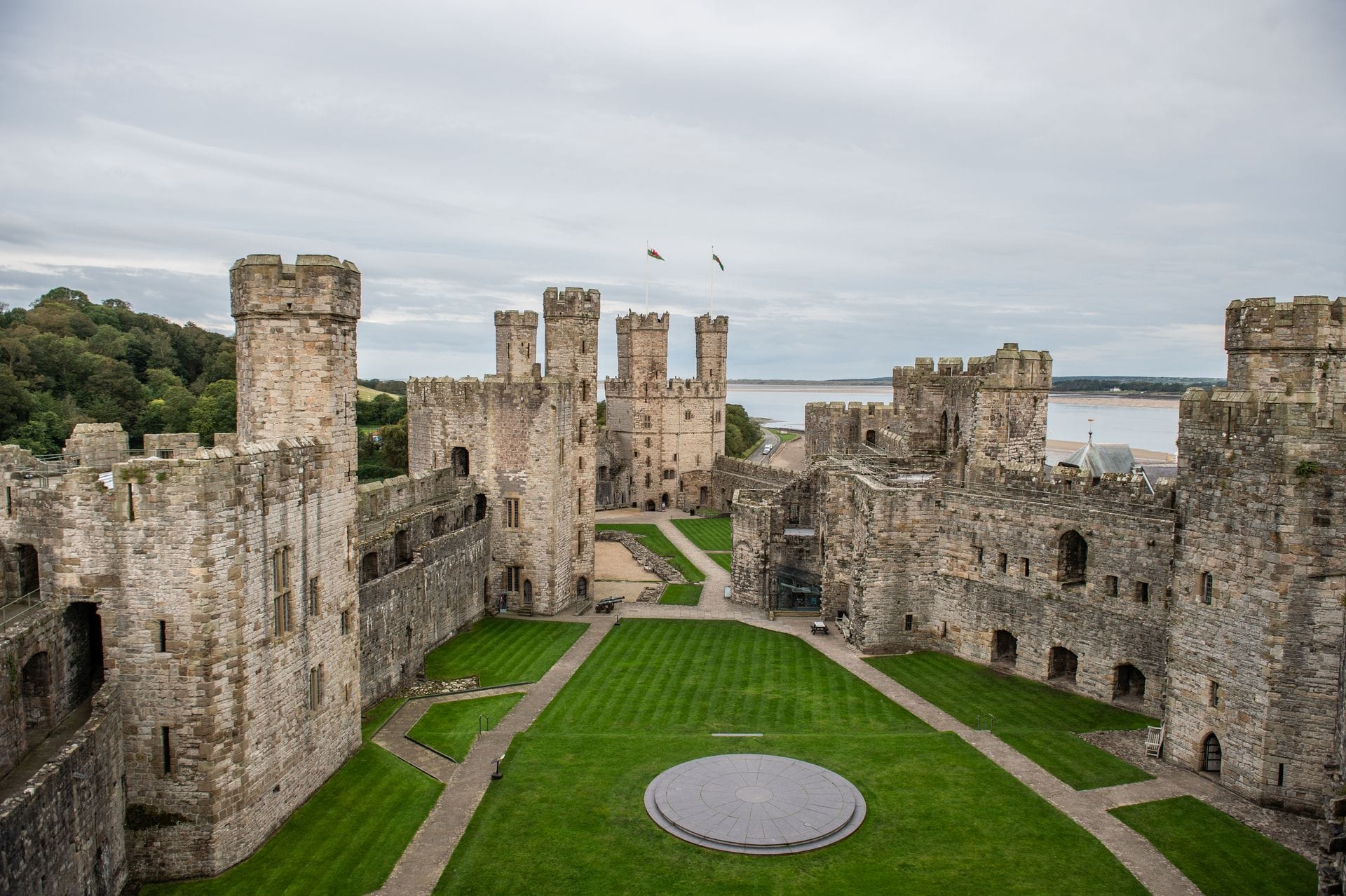
Caernarfon Castle’s best-known modern moment came on 1 July 1969, when Charles was formally invested as Prince of Wales in a ceremony held in the castle’s outer bailey, broadcast to an estimated 500 million people worldwide. A purpose-built dais and canopy were installed for the occasion; the site of the ceremony is marked and forms part of the visitor route and the castle’s on-site exhibitions today.
The title Prince of Wales has since passed to Prince William, who became Prince of Wales when his father acceded to the throne as King Charles III in September 2022. No formal investiture ceremony for William has taken place or been announced at the time of writing, and modern royal practice suggests a repeat of the 1969 ceremony is considered unlikely. The 1969 investiture remains a specific historical event covered in the castle’s own exhibitions, rather than an ongoing tradition.
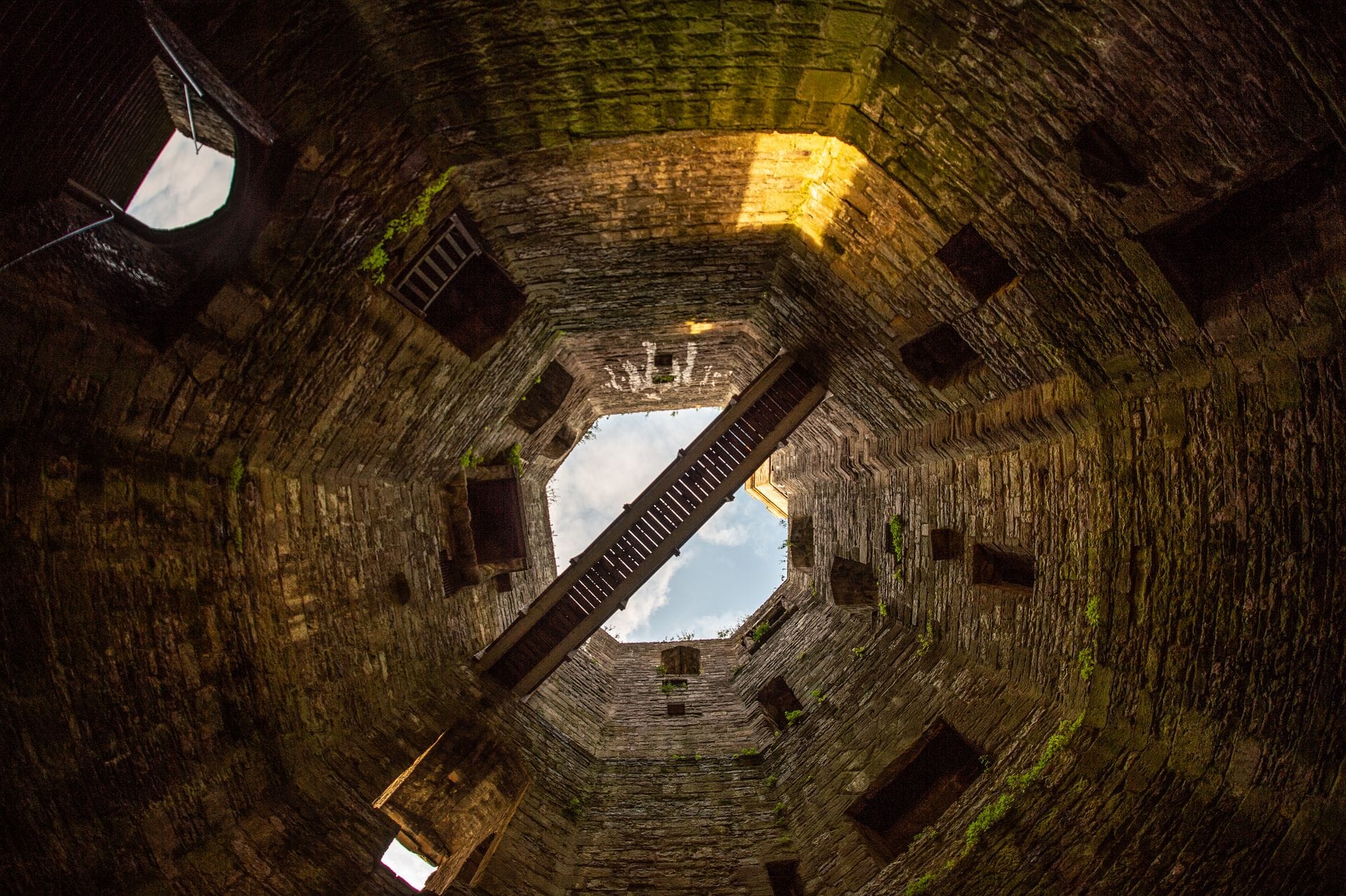
Looking straight up inside one of Caernarfon Castle’s towers, where wooden staircases zigzag between floor levels once used by the garrison. © Crown copyright Cymru Wales 2026
Caernarfon Castle tickets & prices 2026
You can purchase tickets on arrival or book online to save 5% — online ticket prices are non-refundable but guarantee the best price and let you skip straight to the gate on busy days. Book directly with Cadw here.
| Ticket category | 2026 entry fee |
|---|---|
| Adult | £14.90 |
| Family (2 adults + up to 3 children) | £47.70 |
| Family (1 adult + up to 3 children) | £32.80 |
| Senior (65+) | £13.40 |
| Junior (5–17) / Student | £10.40 |
| Official members | FREE |
| Under 5s | FREE |
| Disabled visitor & companion | FREE |
Last entry is 30 minutes before the gates close. Caernarfon Castle is closed on 24, 25 and 26 December and 1 January, and may close at short notice in extreme weather — check Cadw’s social media channels before travelling if conditions look poor.
Caernarfon Castle opening times
Caernarfon Castle is open year-round, with longer hours in summer and shorter hours in winter. Last entry is always 30 minutes before the gates close.
| Period | Opening hours | Last entry |
|---|---|---|
| 1 March – 30 June | 09:30 – 17:00 | 16:30 |
| 1 July – 31 August | 09:30 – 18:00 | 17:30 |
| 1 September – 31 October | 09:30 – 17:00 | 16:30 |
| 1 November – 28 February | 10:00 – 16:00 | 15:30 |
| 24–26 Dec, 1 Jan | Closed | — |
Best time of day to visit
Arrive at opening time (09:30) in summer for the quietest experience and the best photographs, particularly of the Eagle Tower against the harbour. The castle gets noticeably busier from late morning onwards, and cruise-ship and coach-tour groups can create short queues at the King’s Gate in peak season. Late afternoon light over the Menai Strait is also excellent for photography.
Explorer Pass: best value for multi-castle visits
If your Welsh trip includes more than two or three castles, a Cadw Explorer Pass usually pays for itself. It covers entry to all of Cadw’s staffed heritage sites, including Caernarfon, Conwy, Beaumaris, Harlech, Caerphilly, Castell Coch and Plas Mawr.
| Pass type | Single adult | Two adults | Family* |
|---|---|---|---|
| 3-day pass (use within 7 days) | £28.00 | £42.00 | £67.20 |
| 7-day pass (use within 14 days) | £42.00 | £63.00 | £78.50 |
*Family = 2 adults plus up to 3 children or grandchildren under 18. Children under 16 must be accompanied by an adult.
Discounts & concessions
£1 Universal Credit tickets
Heritage sites across Wales, including Caernarfon Castle, offer £1 tickets to visitors in receipt of qualifying Universal Credit or other named benefits. Bookable in advance on the official Cadw website only. Up to six tickets per household per visit; every individual must show UC ID on arrival. Children under 5, and disabled visitors with a companion, don’t need tickets at all.
Blue Light Card & military veterans
Blue Light Card holders and HM Armed Forces personnel and veterans get a 10% discount at the gate on production of valid ID. This discount is not available on online bookings — pay in person to claim it, or weigh it against the 5% online booking saving depending on which is worth more for your group.
Caernarfon Castle parking, postcode & directions
Sat-nav postcode for Caernarfon Castle: LL55 2AY. There are several car parks in and around Caernarfon town, including a long-stay public car park at the waterfront directly beside the castle.
By road: Caernarfon sits on the A4085, A487(T) and B4366, and is well signposted from all directions. From the A55 North Wales Expressway, follow signs for Caernarfon via the A487.
Getting to Caernarfon Castle
Caernarfon does not have its own mainline railway station, which makes it slightly less straightforward to reach by train than Conwy or Chepstow — but bus and cycle links are good.
By train and bus
The nearest mainline station is Bangor, around 16km (10 miles) away on the Crewe–Bangor/Holyhead line, served by Transport for Wales and Avanti West Coast. From Bangor, local buses run onward into Caernarfon. The Caernarfon Penllyn bus stop is just 200m from the castle, served by routes 5, 5A and 5B between Bangor and Caernarfon.
By car
Caernarfon sits on the A4085, A487(T) and B4366. See parking details above.
By bike
National Cycle Network Route 8 runs directly through Caernarfon, making it a realistic stop on a longer cycling tour of north Wales.
From Snowdonia and Anglesey
Caernarfon sits at the gateway to Eryri (Snowdonia), with the Welsh Highland Railway running directly from the town into the mountains, and is a short drive from the Menai Bridge onto the Isle of Anglesey — making it a natural base for exploring both in the same trip.
What to see inside Caernarfon Castle
The Eagle Tower
The largest and most architecturally elaborate of the castle’s seven towers, the Eagle Tower takes its name from stone eagle statues, now heavily eroded, that once crowned its three turrets. It’s thought to have been intended as the residence of the castle’s constable and is one of the best vantage points in the castle, with views across the Menai Strait to Anglesey.
The King’s Gate
The main entrance to the castle, the King’s Gate was designed as an almost impregnable defensive statement in its own right, originally planned with multiple portcullises and murder holes, though it was never fully completed to Edward’s original design. The upper levels are normally reachable by lift, though as of September 2026 this lift is out of service while Cadw works to reinstate it — check current status before relying on it for accessible access.
The outer bailey and investiture site
The large open outer bailey is where the 1969 investiture of the Prince of Wales took place, and the site is marked as part of the visitor route. On-site exhibitions here and around the castle cover both the medieval building history and the 1969 ceremony.
The Royal Welch Fusiliers Museum
Housed within the castle walls, this regimental museum is included free with standard castle admission and covers the history of the Royal Welch Fusiliers regiment through several centuries of British military history.
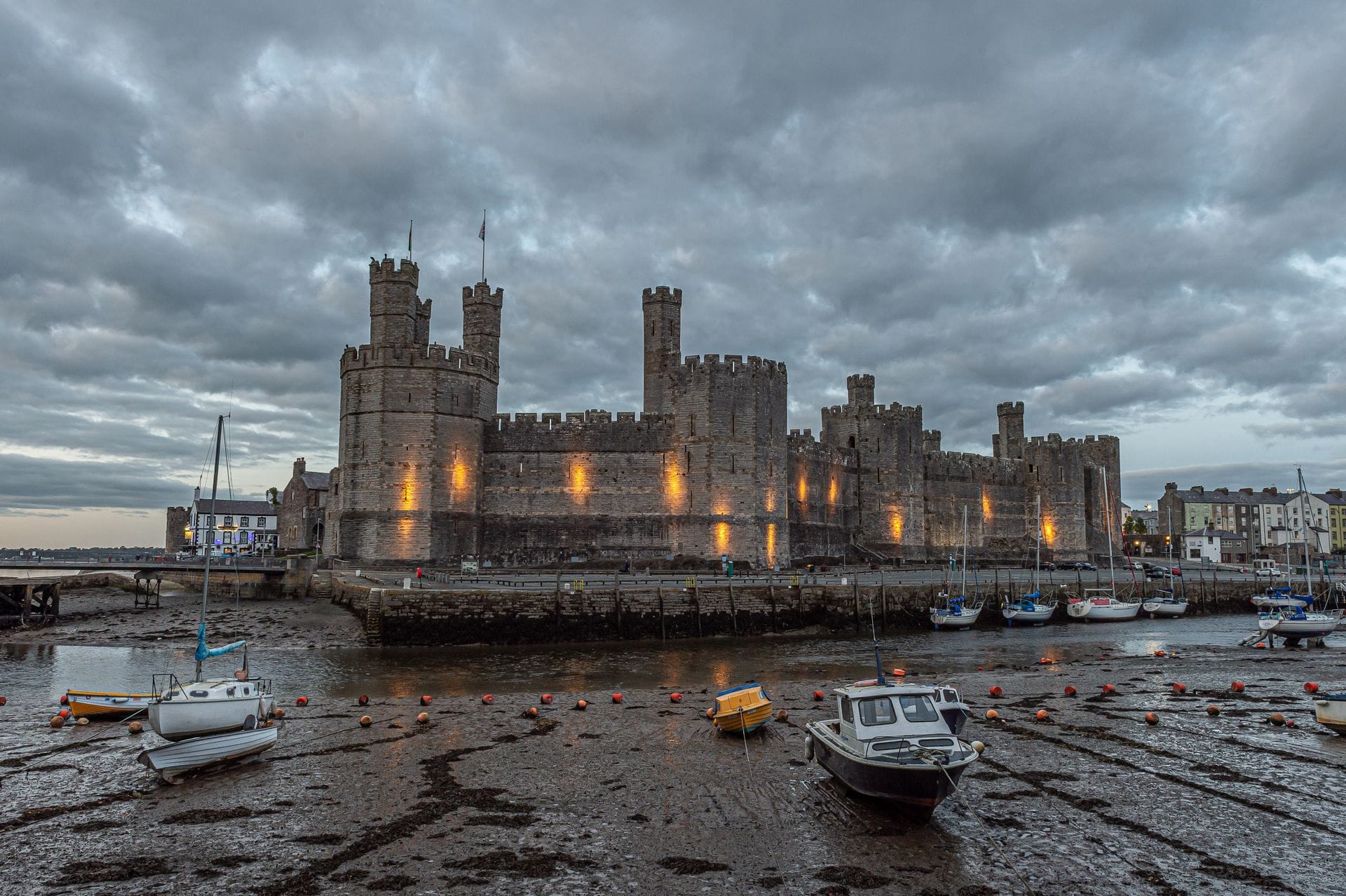
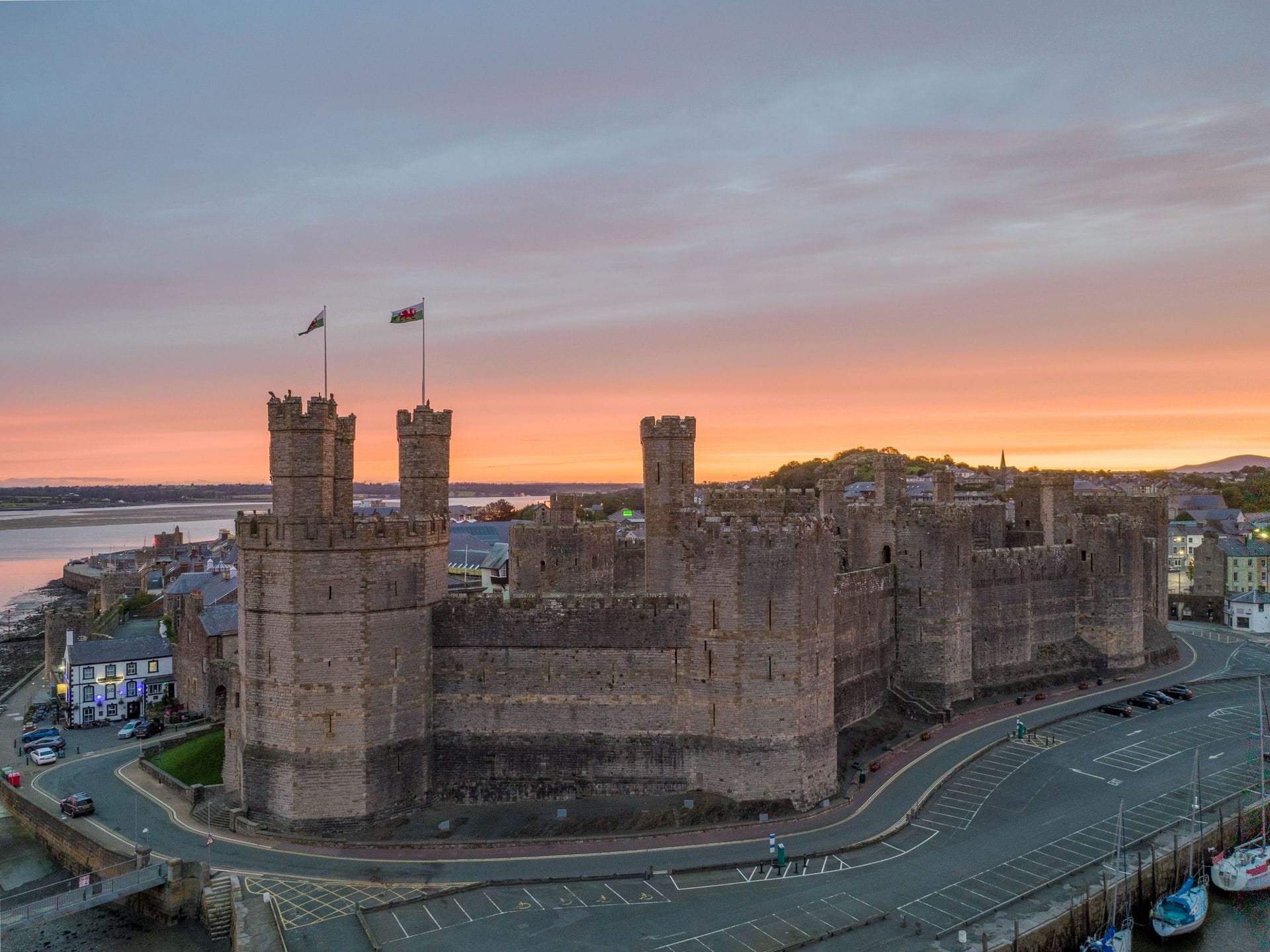
Caernarfon Castle at dusk, seen from the harbour below – the same waterfront Edward I used to bring in materials for a fortress that took 47 years to build. © Crown copyright Cymru Wales 2026
Guided tours of Caernarfon Castle 2026
Cadw custodians run a 45-minute guided walking tour of the castle, covering its history and the many strands of the site’s story, with tours typically at 11am and 3pm. The standard tour route involves a limited number of stairs; accessible alternatives are available on request — contact the site directly to arrange one. Tours cost normal admission plus an additional £5 per person, available on a first-come, first-served basis from the front desk when buying your admission ticket.
Audio guides are available to purchase on arrival in the visitor centre, in English and Welsh.
What else to do in Caernarfon: nearby attractions & cafés
Segontium Roman Fort
A short walk from the castle, the remains of a Roman auxiliary fort that predates Caernarfon Castle by more than a thousand years, marking the town’s origins as a Roman garrison settlement.
Welsh Highland Railway
A narrow-gauge heritage steam railway running directly from Caernarfon into the heart of Eryri (Snowdonia), one of the longest heritage railway journeys in Britain and an easy pairing with a castle visit.
Caernarfon town walls and waterfront
Caernarfon’s own medieval town walls, built at the same time as the castle, survive largely intact with two twin-towered gateways and eight towers. The waterfront below the castle looks directly across the Menai Strait to Anglesey.
Cafés & lunch spots
A pop-up café operates on site serving light refreshments, though hours vary seasonally and the King’s Gate café has been closed at times in 2026 — check current on-site catering before relying on it for lunch. Caernarfon town itself has plenty of options within a short walk:
- Coffi Castell — the castle’s own café when open, serving local Welsh food and drink
- Independent cafés and restaurants around Castle Square and the waterfront
- Pubs overlooking the harbour with castle views
Dogs & accessibility
Is Caernarfon Castle dog friendly?
Dog policy at Caernarfon Castle is seasonal. From April to October, only assistance dogs are permitted inside the castle and its grounds. From 1 November to 27 March, dogs on short leads are welcome on the ground floor levels of the site. Caernarfon’s waterfront and town are generally dog-friendly year-round.
Accessibility
Cadw rates the terrain at Caernarfon Castle as strenuous. Specific access notes:
- The King’s Gate: Upper levels are normally reachable by lift, though this is currently out of service as of September 2026 — check before your visit if this affects you.
- The rest of the castle: Involves steep, uneven historic stairs throughout the towers and wall walks.
- Hearing loop: A portable induction loop is available on site.
- Guided tours: The standard 45-minute tour involves a limited number of stairs; accessible alternatives can be arranged by contacting the site directly in advance.
- Assistance dogs: Welcome (pet dogs are not).
- Companions: Disabled visitors with a companion enter free — the companion does not need a ticket.
Contact Cadw directly ahead of your visit if accessibility is a significant concern, particularly if you’re interested in a guided tour.
Where to stay near Caernarfon Castle
Caernarfon town has guesthouses and B&Bs within walking distance of the castle, and the wider Eryri (Snowdonia) and Anglesey areas offer a much broader range of hotels and holiday cottages within a 20–30 minute drive. For a base that lets you explore both the mountains and the Menai Strait coastline, Caernarfon itself is one of the more central options in north Wales.
Book your Caernarfon Castle break
Find hotels, cottages and B&Bs within easy reach of Caernarfon Castle.
Caernarfon holiday cottages →For wider recommendations, see our guides to Eryri (Snowdonia), the Isle of Anglesey and our short breaks in Wales guide.
Visitor tips for Caernarfon Castle
- Book online for the 5% discount — online tickets are non-refundable but save money and let you skip straight to the gate on busy days.
- Wear sensible shoes — Cadw rates the terrain as strenuous, with steep, uneven historic stairs throughout.
- Allow 90 minutes to 2.5 hours depending on whether you take the guided tour and visit the Royal Welch Fusiliers Museum.
- Combine with Segontium Roman Fort — a short walk away and a genuinely different layer of the town’s history.
- Photograph from the waterfront — the classic view of the castle’s towers is from across the harbour, especially at sunset.
- Bring a layer — the towers and wall walks are exposed to wind off the Menai Strait.
- Check café opening hours before relying on them for lunch — on-site catering has changed hours through 2026; the town itself always has options.
- Pair with the Welsh Highland Railway if you want to combine the castle with a scenic trip into Eryri on the same day.
Frequently asked questions about Caernarfon Castle
How much do Caernarfon Castle tickets cost in 2026?
Adult £14.90, Junior (5–17) and Student £10.40, Senior (65+) £13.40, Family (2 adults + up to 3 children) £47.70, Family (1 adult + up to 3 children) £32.80. Children under 5, official members and disabled visitors with a companion enter free. Blue Light Card holders and HM Armed Forces personnel and veterans get a 10% discount at the gate (not available online). Booking online saves 5% instead.
What are Caernarfon Castle’s opening times?
09:30–17:00 from March to June and September to October; 09:30–18:00 in July and August; 10:00–16:00 from November to February. Last entry is 30 minutes before closing. Closed 24–26 December and 1 January.
Can you book Caernarfon Castle tickets online?
Yes. Booking online at cadw.gov.wales guarantees entry and saves 5% compared with paying on arrival. Online tickets are non-refundable. You can also simply purchase tickets on arrival at the visitor centre if you prefer.
Where can I park for Caernarfon Castle?
There are several car parks in and around Caernarfon town, including a long-stay public car park at the waterfront directly beside the castle. The full postcode for sat-nav is LL55 2AY.
Is Caernarfon Castle dog friendly?
Dog policy is seasonal. From April to October, only assistance dogs are permitted inside the castle and its grounds. From 1 November to 27 March, dogs on short leads are welcome on the ground floor levels. Caernarfon’s waterfront and wider town are dog-friendly year-round.
Why was Prince Charles invested at Caernarfon Castle?
Caernarfon was chosen for the 1969 investiture of Charles as Prince of Wales for its historical and symbolic significance as the site of Edward I’s medieval seat of power in north Wales. The ceremony was held in the castle’s outer bailey and broadcast to an estimated 500 million people worldwide. The title Prince of Wales now belongs to Prince William, who has not had a public investiture ceremony.
Is Caernarfon Castle wheelchair accessible?
Access is limited and Cadw rates the terrain as strenuous. The King’s Gate upper levels are normally reachable by lift, but this lift is currently out of service as of September 2026. Most of the castle involves steep, uneven historic stairs. A portable hearing loop is available, and disabled visitors with a companion enter free.
How do I get to Caernarfon Castle by public transport?
Caernarfon does not have its own mainline railway station. The nearest is Bangor, around 16km (10 miles) away on the Crewe–Bangor/Holyhead line, with onward local buses (routes 5, 5A, 5B) into Caernarfon. The Caernarfon Penllyn bus stop is 200m from the castle.
Is Caernarfon Castle a UNESCO World Heritage Site?
Yes. Caernarfon Castle is part of the “Castles and Town Walls of King Edward in Gwynedd” UNESCO World Heritage Site, alongside Conwy, Beaumaris and Harlech, inscribed in 1986.
How long should I spend at Caernarfon Castle?
Most visitors spend 90 minutes to 2 hours exploring the towers, King’s Gate and Royal Welch Fusiliers Museum. Add the guided walking tour and Segontium Roman Fort nearby for a half-day in Caernarfon.
Explore more north Wales castle & heritage guides

Pembrokeshire-born travel writer and founder of Wales.org. Born in Haverfordwest, now based in Hertfordshire — covering Welsh castles, national parks, festivals and family staycations across all 22 Welsh counties.