

Visiting Wales From the USA: 2026 First-Time Guide
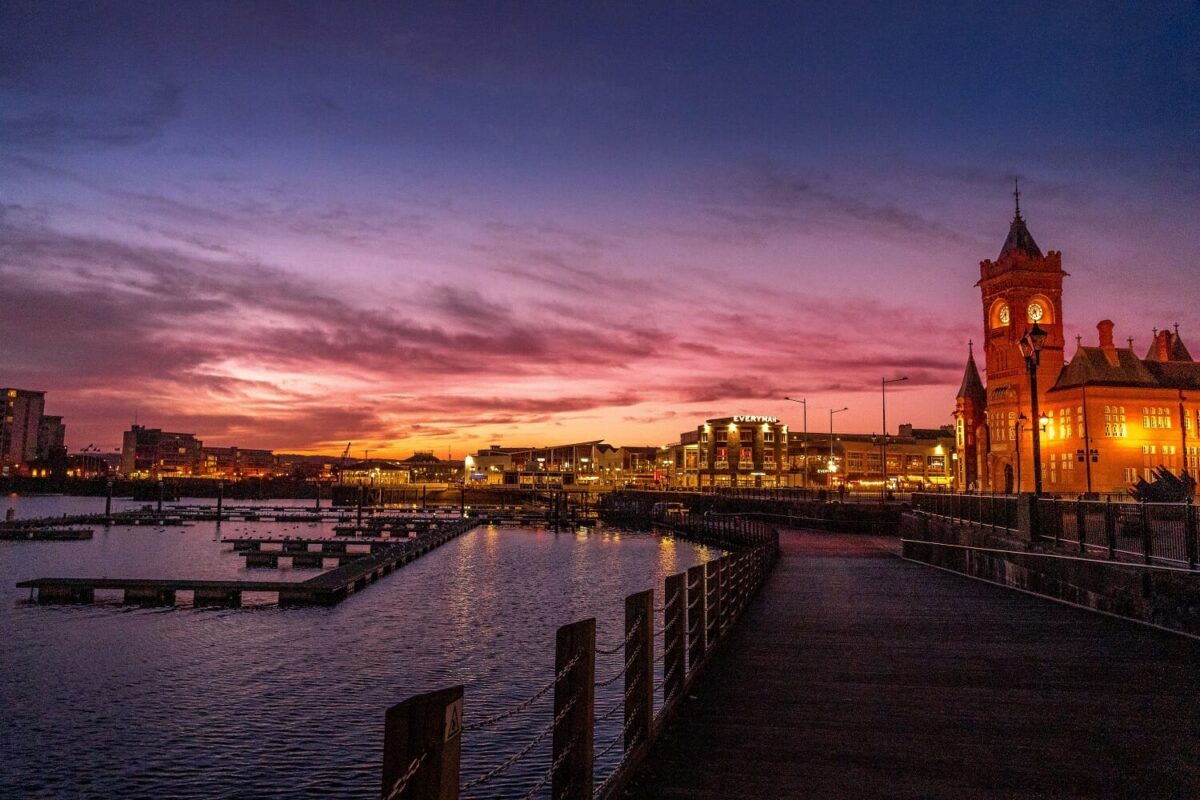
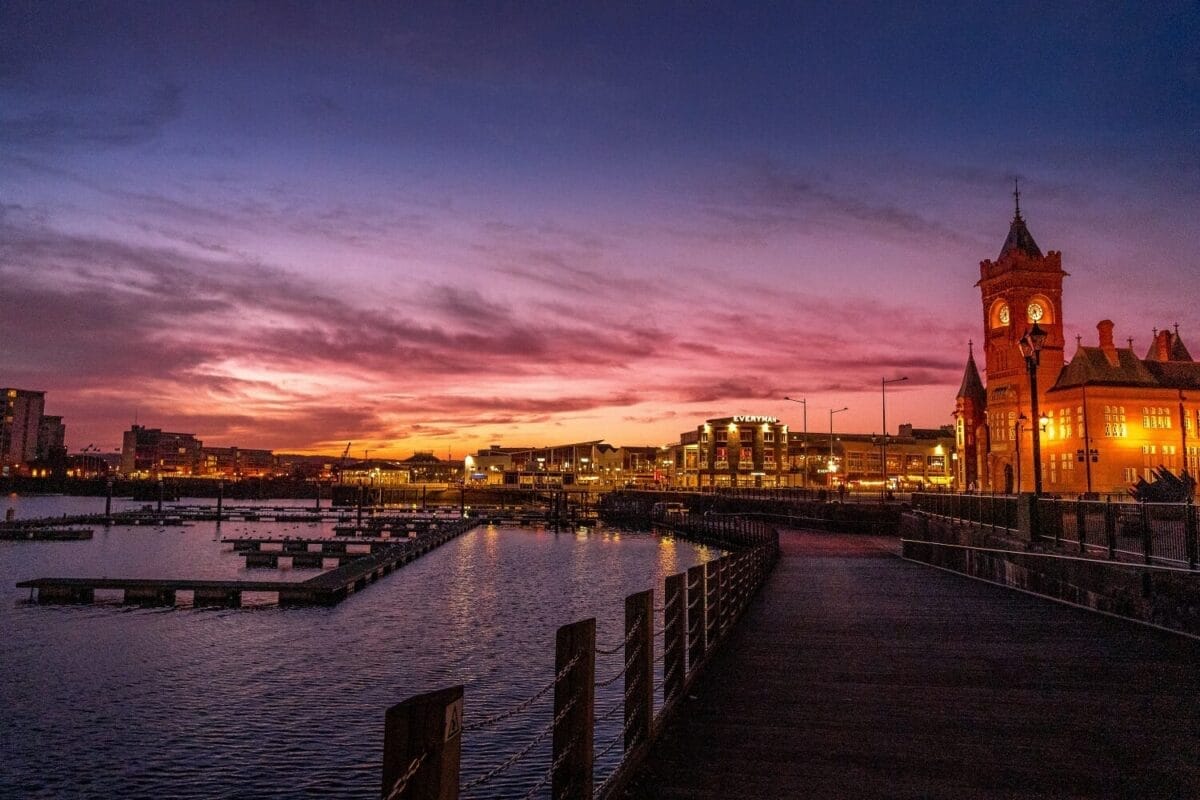
The historic Pierhead Building and Cardiff Bay waterfront illuminated under a vibrant sunset. © Crown copyright Cymru Wales 2026
Wales is a country in its own right, one of the four nations of the United Kingdom alongside England, Scotland and Northern Ireland. It has its own language (Welsh, or Cymraeg), its own capital city (Cardiff), its own parliament (the Senedd) and its own patron saint (Dewi Sant — Saint David). For Americans planning a first UK visit, Wales offers what many first-time visitors say they hoped London would give them but doesn’t: uncrowded castles, dramatic Atlantic coastline, dark skies, medieval villages, and locals who welcome US visitors warmly and are quietly proud of their distinct culture. Wales is smaller than the US state of New Jersey — a road trip covering the main sights takes about a week — but packs in four UNESCO World Heritage Sites, three national parks, 641 castles (the highest density of any country in the world), and one of the oldest living languages in Europe.
This guide covers everything an American visitor needs to plan a first trip. From 25 February 2026 US citizens need a UK Electronic Travel Authorisation (ETA) before boarding — that is the most important practical change to know. Beyond the ETA, this guide covers how to get to Wales (no direct US flights), how many days to spend, when to visit, how driving works, how much things cost, what to eat, cultural etiquette, and a suggested 7 to 10-day route. All information has been verified against the US Embassy in London, the UK Home Office, Transport for Wales, and Visit Wales as of July 2026.
Planning this trip? Ask Branwen, our free AI trip planner →
At a Glance: Wales for Americans
- Do you need a visa? No visa, but yes to a UK ETA (£20, valid 2 years, apply via GOV.UK app)
- Currency: British Pound (£), roughly $1.25 = £1 as of July 2026
- Language: English is spoken everywhere; Welsh is co-official and visible on all road signs and public buildings
- Time zone: GMT (winter) / BST (summer) — 5 hours ahead of US Eastern time year-round
- Getting there: No direct US-to-Cardiff flights. Fly London Heathrow, Gatwick or Manchester and take the train
- How long to stay: 7 to 10 days for a first trip covers Cardiff, one national park, Pembrokeshire and several castles
- Driving: On the left. US license accepted (no IDP required). Automatic cars must be reserved well in advance
- Best time to visit: May, June and September for the balance of weather, daylight and lower crowds
- Currency of politeness: Welsh people appreciate visitors who know Wales is not England
Is Wales the Same as England?
No — and this is the single most important thing for a first-time American visitor to understand. Wales is a separate country, one of the four nations that together form the United Kingdom. Wales has its own government (the Welsh Government), its own parliament (the Senedd, based in Cardiff Bay), its own official language (Welsh, or Cymraeg), and its own laws in areas including health, education, transport and the environment.
The historical picture: Wales was conquered by King Edward I of England in 1282, formally annexed to England by the Laws in Wales Acts of 1535 and 1542 under Henry VIII, and existed as part of a single legal jurisdiction called “England and Wales” for nearly 500 years. In 1997, the people of Wales voted narrowly to establish their own parliament, which met for the first time in 1999. Since then, the Welsh Parliament has taken back growing amounts of self-government. Wales is not an “independent” country in the way the United States is — the UK Parliament in London still legislates on defence, foreign policy and immigration — but it is a distinct nation with its own laws, culture and identity.
Practical translation for American visitors: use “the UK” or “Britain” when speaking about the whole country, and “Wales” or “Welsh” specifically when speaking about Wales. Do not call a Welsh person English. This is roughly equivalent to calling a Canadian an American — polite people forgive it, but it is noticed. See our guide to pronouncing Welsh place names for the second-most-appreciated courtesy a US visitor can make.
The UK ETA: What Americans Need Before Booking
As of 25 February 2026, every US citizen travelling to the UK — including Wales — must have an approved Electronic Travel Authorisation (ETA) before boarding a flight, ferry or train to Britain. This applies to tourism, business trips, visiting family, and transit connections. Airlines will deny boarding to US passport holders without a valid ETA.
Key facts:
- Cost: £20 (approximately $25) per person, non-refundable
- Validity: 2 years from date of issue, or until your US passport expires (whichever comes first)
- Entries: Multiple entries allowed within the 2-year period
- Length of each visit: Up to 6 months
- How to apply: Via the official UK ETA app (Apple App Store or Google Play) or at GOV.UK/eta. Both are official. Avoid third-party services that add fees.
- Processing time: Most decisions in minutes; the UK Home Office recommends allowing up to 3 working days for safety
- Who needs one: Every traveller including babies and children. There is no group application
The ETA is NOT a visa. It is a digital pre-screening linked to your US passport, similar to the American ESTA that European visitors need for the US. It does not guarantee entry — Border Force at the UK airport makes the final decision — but denials for straightforward tourism are extremely rare.
Apply early: The moment your trip is booked, apply for the ETA. It becomes active immediately upon approval and lasts 2 years. Applying weeks or months ahead costs nothing extra and eliminates last-minute stress. The official GOV.UK ETA page is the cheapest and most reliable route.
How Americans Get to Wales
There are no direct flights from the United States to Cardiff Airport. This is the single biggest logistical decision for a US visitor. Americans have four main routes:
Option 1: Fly London Heathrow (most common)
Heathrow (LHR) is the largest UK airport with the most US direct flights. From New York, Chicago, Boston, Miami and Los Angeles, direct daily flights are available on multiple airlines. From Heathrow, take the Elizabeth Line or Heathrow Express to Paddington station (about 25 to 35 minutes), then a direct Great Western Railway train to Cardiff Central. The fastest London Paddington to Cardiff Central train takes 1 hour 44 minutes, with services roughly every 30 minutes.
Option 2: Fly London Gatwick
Gatwick (LGW) is the second-largest London airport, with more limited but growing US routes. From Gatwick, take the Thameslink train to St Pancras then transfer across London to Paddington, or take a direct National Express coach to Cardiff. Slightly longer overall than Heathrow.
Option 3: Fly Manchester Airport (best for North Wales)
Manchester (MAN) has direct daily flights from Atlanta, Boston, Chicago, New York, Orlando and Philadelphia. This is the best US airport for visitors focused on North Wales — direct trains from Manchester Piccadilly reach Llandudno Junction (for Conwy and the North Wales coast) in about 1 hour 45 minutes, or connect through Crewe to Bangor and Caernarfon.
Option 4: Connect via Amsterdam, Dublin or Toronto
KLM operates multiple daily direct Amsterdam-Cardiff flights, making Schiphol a strong European connection point from any US city with direct AMS service. Aer Lingus operates Dublin-Cardiff, useful for visitors combining Wales with Ireland. WestJet operates a seasonal direct route from Toronto to Cardiff between June and September, potentially useful for US visitors flying with a Canadian connection.

The Welsh countryside — smaller in scale than an American road trip, but denser in castles, coast and culture.
How Long Should Americans Spend in Wales?
| Length | What you can see |
|---|---|
| 3 to 4 days | Cardiff (2 days) plus a day trip to Caerphilly Castle and the Brecon Beacons. Enough for a “did Wales” city break but rushed. |
| 5 to 6 days | Cardiff, Pembrokeshire coast, one castle-heavy region. Comfortable pace for South and West Wales. |
| 7 to 10 days | The recommended first-visit length. Covers Cardiff, one national park (Eryri or Bannau Brycheiniog), Pembrokeshire, several castles, and one Welsh island day trip (Skomer or Bardsey). |
| 14 days | A full Welsh loop: Cardiff, Bannau Brycheiniog, Pembrokeshire, Aberystwyth, Eryri, the North Wales coast, Anglesey. All four UNESCO castles. |
| 2 to 3 weeks (with London and Edinburgh) | A classic first-time UK trip. Wales fits naturally between London and Edinburgh, or as a self-contained west-coast extension. |
When to Visit Wales
Wales is a year-round destination but each season has a distinct character. American visitors should note that Wales has significantly wetter weather than most US regions — a good waterproof jacket is essential year-round, even in July.
- April to early May: Cool, changeable. Lambs in the fields, daffodils (Wales’s national flower) at St Davids Day. Lowest visitor numbers.
- Mid-May to June: The optimum period for a first visit. Longest days (sunset around 9:30pm in June), mildest weather, all attractions open, before peak crowds arrive.
- July to August: Warmest and busiest. UK and European school holidays. Book accommodation months ahead. Skomer puffins visible until 31 July.
- September to October: An excellent shoulder season. Warm early-autumn light, quieter attractions, dark-sky stargazing improves as evenings lengthen. Welsh concessionary travel schemes begin 1 October.
- November to March: Short days (dark by 4pm in December), atmospheric coastal walks, cheaper accommodation. Some rural attractions close for winter. St Davids Day on 1 March is the biggest single Welsh cultural event.
Money, Currency and Costs
Wales uses the British Pound Sterling (£), not the Euro. As of July 2026, $1 US ≈ £0.80 (so £1 ≈ $1.25). Rates fluctuate; check the current rate before you travel.
Typical daily budget
| Level | Per person per day | What it covers |
|---|---|---|
| Budget | £75 to £120 (~$95 to $150) | B&Bs or self-catering, pub food, self-drive, castle admissions |
| Mid-range | £150 to £250 (~$190 to $315) | Boutique hotel, mixed restaurants and pubs, rental car, all major admissions |
| Luxury | £400+ (~$500+) | Country-house hotels, fine dining, private tours, castle stays |
Practical money tips
- Use a credit card with no foreign transaction fees. Chase Sapphire, Capital One Venture, most travel cards. This alone saves 2-3% on every transaction.
- Contactless payment is universal. Apple Pay, Google Pay and tap-to-pay cards work everywhere from castle gift shops to farmers’ market cake stalls. UK contactless is far more advanced than US contactless.
- Cash is rarely needed beyond small rural pubs and market stalls. Withdraw a small amount (£50-100) at the airport ATM on arrival for peace of mind.
- Never use airport currency exchange counters. Their rates are the worst in the country. Use an ATM (British: “cash machine” or “cashpoint”) instead.
- Tipping is different from the US. Restaurants: 10-12.5% (often already added as a “service charge”), never above 15%. Taxis: round up to the nearest pound. Hotels: £1-2 per bag for porters, optional. Pubs: no tipping.
Driving in Wales
Renting a car is the best way to see Wales beyond Cardiff. Public transport is good on main lines but limited in rural areas and impractical for reaching the best castles, coast paths and mountain landscapes.
Practical driving facts for Americans
- Which side: Britain drives on the left. Steering wheel on the right side of the car. Overtake on the right (which is the outside lane on multi-lane roads).
- License: A valid US driver’s license is accepted for visits up to 12 months. Americans do not need an International Driving Permit (IDP). Bring your license plus your US passport.
- Transmission: Most UK rental cars are manual (stick shift). Automatic cars are available but significantly more expensive and must be reserved well in advance. If you cannot drive stick, book early and pay the premium — the alternative is being stranded at the airport.
- Fuel: Called “petrol” (not “gas”). Priced per litre, not per gallon. As of July 2026, roughly £1.40 per litre (approximately $6.50 per US gallon). Diesel cars are common; know which fuel your rental takes.
- Roads: Motorways (“M” roads, e.g. M4) are US-style limited-access highways. A-roads are main roads, sometimes single carriageway. B-roads are minor roads. Rural single-track roads with “passing places” are common in mid and North Wales.
- Speed limits: 20 mph in urban Wales (Wales was the first UK nation to make 20 the urban default in 2023), 30 or 40 mph in towns, 60 mph on single carriageway rural roads, 70 mph on motorways.
- Traffic circles: Called “roundabouts”. Cars already on the roundabout have right of way. Give way to your right.
- Parking: Most Welsh town centres have pay-and-display or app-based parking. Pay in advance. Fines are enforced.
Trust the sat-nav (GPS): Welsh place names look intimidating and rural signs can be Welsh-only in the west and north. Google Maps and Apple Maps both handle Welsh place names correctly. Set your destination when parked and follow the voice instructions.
Suggested 10-Day Wales Itinerary for Americans
Days 1 to 2: Arrival and Cardiff
Fly overnight to London Heathrow, take the direct train to Cardiff Central (1 hour 45 minutes). Overnight in central Cardiff. Day 2: Cardiff Castle, Cardiff Bay, the Wales Millennium Centre, dinner in Cardiff’s Old Brewery Quarter.
Day 3: Bannau Brycheiniog (Brecon Beacons National Park)
Pick up rental car from Cardiff. Drive north into Bannau Brycheiniog for the Four Waterfalls Walk. Overnight in Brecon or Crickhowell. Try Welsh cakes for the first time.
Day 4: Pembrokeshire South
Drive west to Tenby (2 hours 30 minutes). Afternoon in the walled medieval town. Overnight in Tenby or nearby.
Day 5: St Davids and the Pembrokeshire Coast
Drive to St Davids, Britain’s smallest city. St Davids Cathedral and the Bishop’s Palace ruins. Wildlife boat trip to Ramsey Island or (in season) Skomer for puffins. Overnight in St Davids.
Day 6: Aberystwyth and Mid Wales
Drive north up the Cardigan Bay coast to Aberystwyth. Cliff Railway, seafront promenade, university town atmosphere. Overnight Aberystwyth or continue north.
Days 7 to 8: Eryri (Snowdonia National Park)
Drive to Eryri. Take the Snowdon Mountain Railway from Llanberis to Yr Wyddfa (Mount Snowdon) summit. Overnight Betws-y-Coed or Beddgelert. Day 8: Portmeirion Italian-style village, Ffestiniog heritage railway, or drive the Snowdonia mountain roads.
Day 9: The UNESCO Castles
Full day visiting the UNESCO castles: Caernarfon and Beaumaris (both close to the Menai Strait), or Conwy and Harlech. Overnight in Conwy or Caernarfon.
Day 10: North Wales coast and return
Llandudno seaside promenade or the Isle of Anglesey. Direct train from Llandudno Junction back to Manchester Airport (1 hour 30 minutes) for a US-bound flight. Alternatively drop the rental car in Manchester and fly home directly.

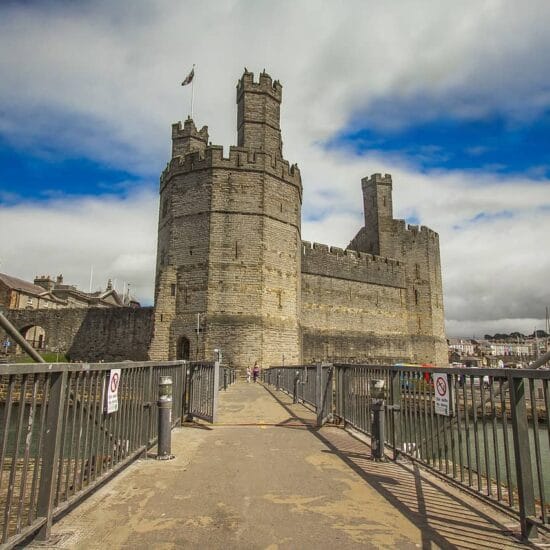
The approach to Caernarfon Castle across the footbridge over the River Seiont, highlighting its commanding waterfront position and unique polygonal towers. © Crown copyright Cymru Wales 2026
Where to Stay in Wales
Welsh accommodation ranges from country-house hotels and castle stays (rare and unforgettable) to boutique city hotels, coastal B&Bs and self-catering cottages. Americans should note the lack of large chain hotels outside Cardiff — most Welsh accommodation is independent, family-run and unique to Wales.
Find Hotels and Cottages in Wales
Browse the interactive map below to see real-time hotel and cottage prices across Wales. Filter by region — Cardiff for a city base, Pembrokeshire for beaches and boat trips, Eryri for the mountains, or the North Wales coast for castles.
Booking tip: UK B&B rooms tend to be smaller than US hotel rooms and often lack air conditioning (unnecessary in the Welsh climate). Expect a proper “full Welsh breakfast” included (eggs, bacon, sausage, laverbread, black pudding, mushrooms, tomato, toast). For US-style room size, book “hotel” rather than “B&B” or “guesthouse”.
Food and Drink for American Visitors
Welsh food has transformed over the past 20 years. Cardiff and Abergavenny now hold their own with any UK food destination, and rural pubs across Wales serve locally-sourced Welsh lamb, beef, seafood and cheese. Foods to try:
- Welsh cakes — small griddle-baked scone-like cakes, sold everywhere. See our recipe.
- Bara brith — Welsh tea bread with dried fruit. See our recipe.
- Cawl — the traditional Welsh lamb and root vegetable stew.
- Welsh rarebit — cheese on toast, but properly done with beer and mustard.
- Welsh lamb — protected geographical origin status, arguably the best in the UK.
- Laverbread — seaweed puree, traditional Welsh breakfast side.
- Welsh whisky — Penderyn Distillery in Bannau Brycheiniog produces some of Britain’s best single malts.
Cultural Etiquette for Americans
- Know that Wales is not England. Do not compliment a Welsh person on speaking such good English. Yes, this happens. Yes, it stings.
- Attempt Welsh place names. Even a bad attempt is respected. Refusing to try is not. See our pronunciation guide.
- Learn to say diolch. “DEE-olkh” means thank you. Using it once earns you a smile.
- Be gentle about volume. Restaurants and pubs are quieter than in the US. Match the volume of the room.
- Tip modestly. 10-12.5% at restaurants (often already added), not 20%. Over-tipping can be uncomfortable, not welcome.
- Queue politely. Britain takes queueing seriously. Never appear to jump a line, even by accident.
- Do not photograph private homes without asking. Especially in small Welsh villages where houses are lived in, not tourist attractions.
Phone, Wi-Fi and Practicalities
Phone and data
Most US phone plans (Verizon, T-Mobile, AT&T) offer international roaming in the UK — check with your carrier. T-Mobile in particular includes UK data on most plans. For heavier use, buy a UK eSIM before you fly (Airalo, Holafly, GigSky) — much cheaper than roaming charges.
Wi-Fi
Free Wi-Fi is available in every hotel, café, pub and train station in Wales. Speeds are excellent in cities, more variable in rural areas. Public Wi-Fi networks require a name and email registration.
Plugs and voltage
UK plugs are Type G (three rectangular pins). Voltage is 230V/50Hz. US electronics rated 100-240V (laptops, phone chargers, most modern devices) work with just a plug adapter. Older single-voltage US devices (hair dryers, curling irons) will fry — bring a dual-voltage travel version or buy a cheap UK equivalent on arrival.
Time zone
Wales is on Greenwich Mean Time (GMT) in winter, British Summer Time (BST, GMT+1) from late March to late October. Because the US and UK both change their clocks, the offset from US Eastern Time is 5 hours for most of the year — winter and summer alike. There are two short transition periods each year (typically 2 to 3 weeks in mid-March and one week in early November) when the US and UK clocks change on different weekends, and during those weeks the offset briefly becomes 4 hours. If you are travelling in those windows, double-check the current offset before scheduling calls home.
Emergency numbers
999 for police, fire, ambulance (the UK’s 911 equivalent). 112 also works. Non-emergency police: 101. NHS medical advice: 111.
Should Americans Combine Wales with London or Scotland?
Yes — most first-time American visitors do. Wales sits geographically between London (2 hours by train from Cardiff) and Edinburgh (roughly 5 hours by train via Manchester). A classic first-time UK trip splits time between the three:
- 2-week trip: London 4 nights, Wales 6 nights, Edinburgh 4 nights. Direct trains between all three.
- 3-week trip: London 5, Cotswolds 2, Wales 7, Lake District 2, Edinburgh 5. Comfortable pace.
- Wales-only week: Fly Heathrow, train straight to Cardiff, spend 7 days in Wales, train back for departure.
Frequently Asked Questions: Wales for Americans
Do Americans need a visa to visit Wales?
No visa, but yes to a UK ETA. Since 25 February 2026, all US citizens travelling to Wales (or anywhere else in the UK) must have an approved UK Electronic Travel Authorisation before boarding a flight, ferry or train to Britain. The ETA is not a visa. It costs £20 (approximately $25), is valid for 2 years, permits multiple entries, and allows stays of up to 6 months per visit. Apply through the official UK ETA app or GOV.UK/eta. Most applications are approved within minutes.
Is Wales a country separate from England?
Yes. Wales is a country in its own right, one of the four constituent nations of the United Kingdom alongside England, Scotland and Northern Ireland. Wales has its own language (Welsh, or Cymraeg), its own capital city (Cardiff), its own national parliament (the Senedd, based in Cardiff Bay), its own government (the Welsh Government), its own flag, its own patron saint (David), and its own currency badges on the British £ coin. Wales was formally incorporated into England by the Laws in Wales Acts of 1535 and 1542, but has held its own devolved parliament since 1999 and passes its own laws in areas including health, education, transport and language.
How do Americans get to Wales?
There are no direct flights from the United States to Cardiff Airport (CWL). Americans fly to London Heathrow, London Gatwick, or Manchester and connect. From London Heathrow, take the Elizabeth Line or a taxi to Paddington station, then a direct Great Western Railway train to Cardiff Central (about 1 hour 45 minutes). From Manchester, direct trains to North Wales run frequently, or connect through to South Wales via Crewe. Amsterdam and Dublin are also common connection points with onward direct flights to Cardiff. WestJet operates a seasonal direct Toronto to Cardiff route between June and September.
How many days should I spend in Wales?
For a first Welsh trip, most visitors need at least 7 to 10 days to see the highlights without rushing. A shorter 3 to 4 day trip works for Cardiff and the immediate South Wales coast. 7 to 10 days lets you cover Cardiff, one national park (either Eryri or Bannau Brycheiniog), Pembrokeshire, and one castle-heavy region. 14 days is ideal for a full Welsh loop covering all four regions, several castles, and a day trip to Skomer or Bardsey islands. Many US visitors combine Wales with London and Edinburgh over a two to three-week UK trip.
Can Americans drive in Wales with a US driver’s license?
Yes. A valid US driver’s license is accepted in the UK for visits up to 12 months. Americans do not need an International Driving Permit (IDP) to rent a car or drive in Wales. UK rental car companies accept US licenses directly. However, Americans should be aware of three practical differences: Britain drives on the left side of the road, rental cars are typically manual transmission (automatics cost significantly more and must be reserved in advance), and rural Welsh roads are narrow with many single-track sections and blind bends. Most first-time American visitors find the driving a challenge but manageable after the first day.
What is the best time of year to visit Wales?
May, June and September give the best balance of weather, daylight and lower crowds for American visitors. July and August are warmest and busiest, with the longest days (sunset around 9:30pm in June) but higher accommodation prices and school-holiday crowds. April can be beautiful in the west and south but chilly in the mountains. October to March offers atmospheric coastal walks, dark-sky stargazing and off-season accommodation prices, though days are shorter (dark by 4pm in December) and weather more changeable. Wales has significantly wetter weather than most of the US — Americans should pack waterproofs and layered clothing year-round.
How much money will an American spend in Wales?
A typical American visitor to Wales spends approximately £150 to £250 (about $190 to $315) per person per day, including hotel, food, admissions and transport. Budget travellers using B&Bs and self-catering can spend £75 to £120 (about $95 to $150) per person per day. Luxury travellers using country-house hotels and fine dining can spend £400+ (about $500+) per person per day. Costs are generally comparable to a UK city break in England but lower than London prices. Wales has more affordable accommodation, food and admissions than London, Edinburgh or Dublin. Rental car costs run £30 to £60 (about $38 to $75) per day for a small manual car.
More Welsh Travel Guides for First-Time Visitors

Pembrokeshire-born travel writer and founder of Wales.org. Born in Haverfordwest, now based in Hertfordshire — covering Welsh castles, national parks, festivals and family staycations across all 22 Welsh counties.